JPEdLab iconJPEdLab
Save history

Create an account and play

Explore first, then save your progress whenever you are ready. No email address is required.

Start free
  1. Japanese grammar
  2. JLPT N3 grammar
  3. 〜と言われています

〜と言われています~to iwarete imasu

To iwarete imasu (〜と言われています) means “widely reported saying”.

月つきtsukiをo見るみるmiruと、to、いいiiことkotoがgaあるaruとto言われいわれiwareてteいます。imasu。

It is said that good things will happen when you look at the moon.

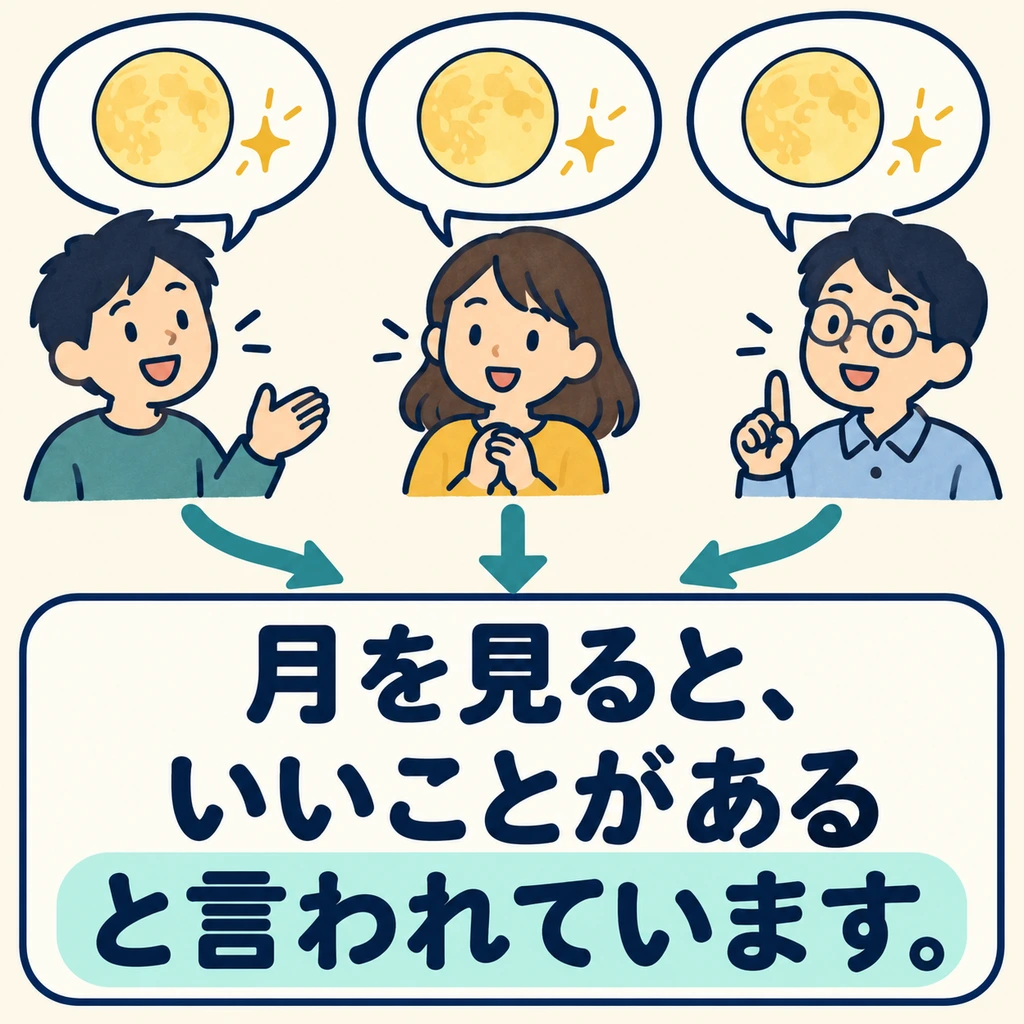
Use 「〜と言われています」 to report a widely shared saying without naming its source.

In the course›

How it works

  1. Everyone in the picture is saying the same thing. Use this pattern to report a saying that is widely shared.
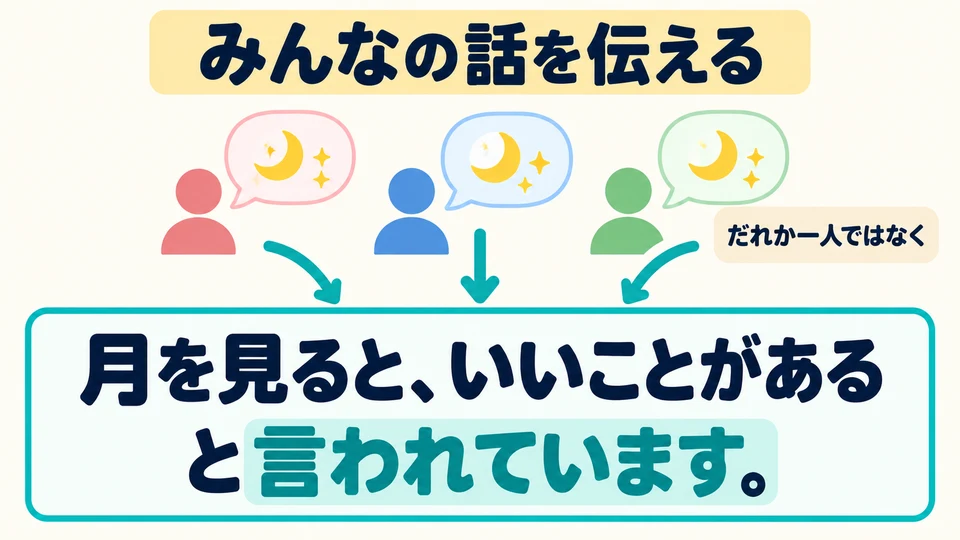
    Everyone in the picture is saying the same thing. Use this pattern to report a saying that is widely shared.

  2. When sharing a folk legend or a widely held view, you do not need to say exactly who said it.
    When sharing a folk legend or a widely held view, you do not need to say exactly who said it.

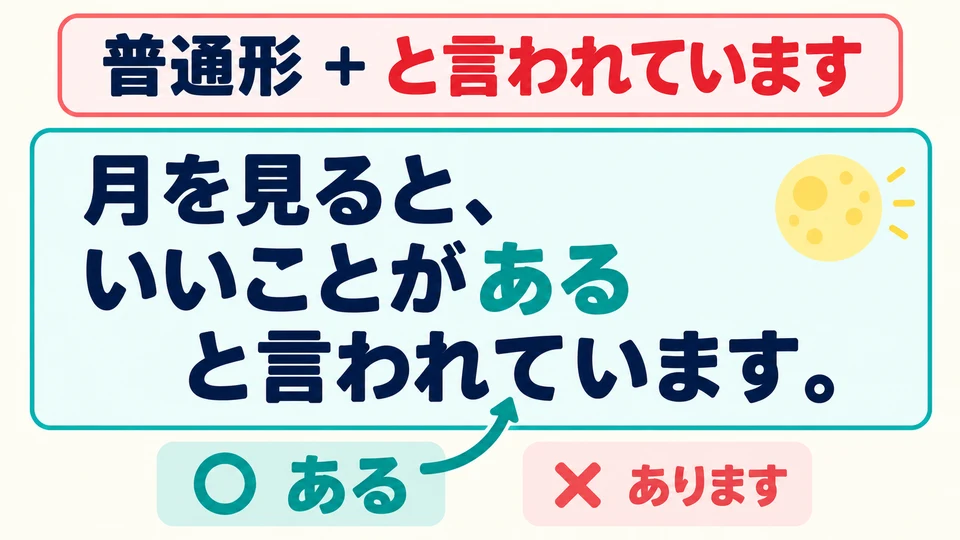
  3. Use the plain form before 「と」. The picture uses 「ある」, not 「あります」.
    Use the plain form before 「と」. The picture uses 「ある」, not 「あります」.

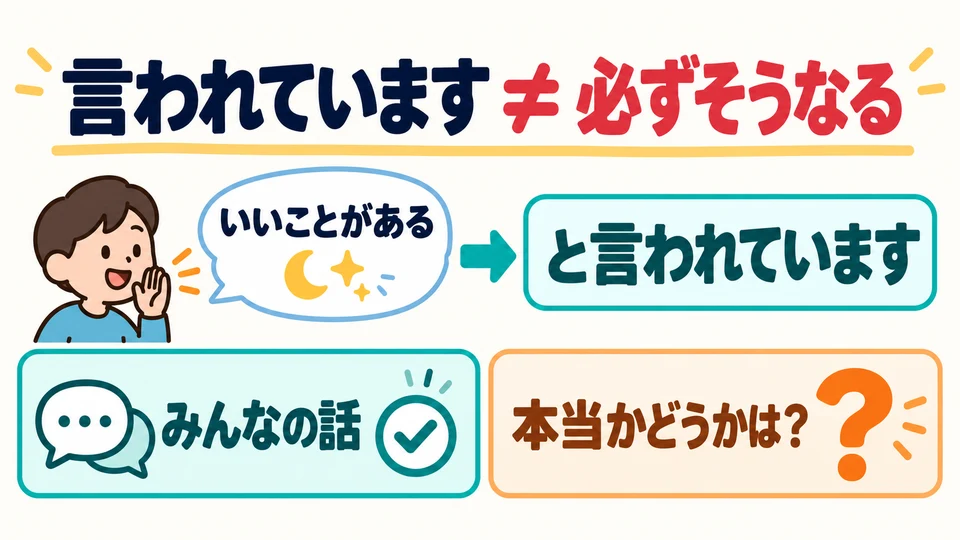
  4. This only reports a saying that circulates; the speaker does not guarantee that it will happen.
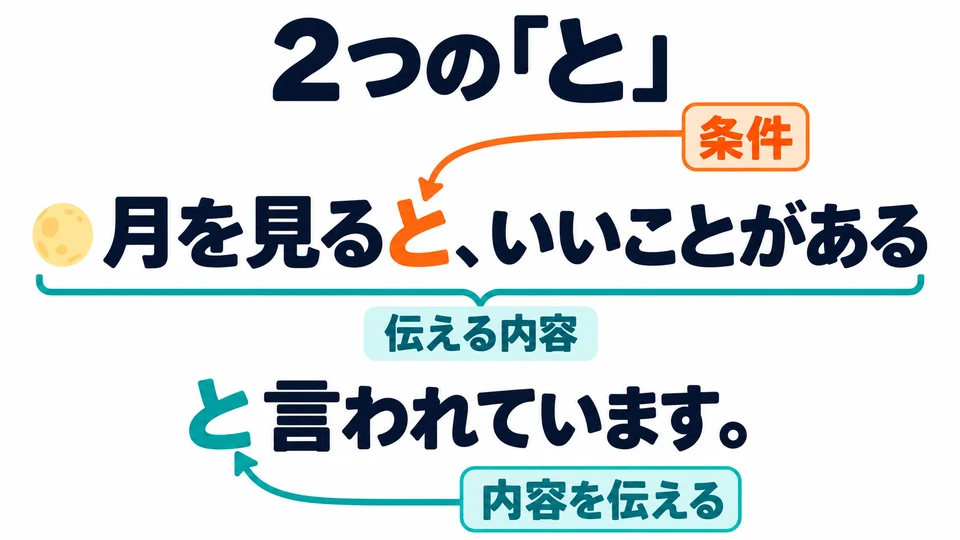
    This only reports a saying that circulates; the speaker does not guarantee that it will happen.

  5. In the moon and food examples, the first 「と」 marks a condition; the second marks the content of the reported saying.

    In the moon and food examples, the first 「と」 marks a condition; the second marks the content of the reported saying.

Example sentences

  • 月つきtsukiをo見るみるmiruと、to、いいiiことkotoがgaあるaruとto言われいわれiwareてteいます。imasu。

In a conversation

  • A
    満月まんげつの夜よるにお祈りおいのりをすると、願いねがいが叶うかなうと言われいわれていますよ。

    A: It is said that if you make a wish on the night of a full moon, your wish will come true.

Check yourself

  1. Level 1 · Recognise

    Which sentence is correct?

  2. Level 1 · Recognise

    Listen and choose the meaning

  3. Level 2 · Build

    Put the words in order

    It is said that if you look at the moon, something good will happen.

  4. Level 3 · Use

    What goes in the blank?

    月を見ると、いいことがある____。

    It is said that good things will happen when you look at the moon.

More grammar in this theme

  • 〜と言われていますwidely reported saying

More JLPT N3 grammar

Keep practising

Test your Japanese vocabulary12 adaptive questions, freeCheck your pronunciationRead aloud and get a scorePractise verb forms10-question conjugation quizSee the whole courseGrammar, vocabulary and quizzes by theme

It is said that good things will happen when you look at the moon.

  • このkono料理りょうりryouriをo食べるたべるtaberuとto一いちichi年ねんnen元気げんきgenkiに過ごせるにすごせるnisugoseruとto言われいわれiwareてteいます。imasu。

    It is said that eating this dish will keep you healthy for the whole year.

  • B
    本当ほんとうですか。じゃあ、今日きょうの夜よるにやってみます。

    B: Really? Then I'll give it a try tonight.

  • A
    ええ、きっといいことがありますよ。

    A: Yes, I'm sure something good will happen.

  • Intermediate 1
    Customs and Gifts
    More quizzesOpen this lesson’s quizzes in the course
    〜って何ですかask what something is
    〜というのは〜ですexplain what a term means
    〜のような〜something like; comparison
    〜かなI wonder if…
    〜ようかなconsidering whether to…
    〜なんかどうですかgentle suggestion
    〜がっていますshowing a feeling
    〜からですgiving a reason
    Previous〜というのは〜です
    Next〜のような〜
    See all 114
    Nばかり/Vてばかりいますkeep doing the same thing
    〜させられますbe made to do
    〜させてくれますkindly let me do
    〜させてもらいますgratefully be allowed to
    〜んだってcasual hearsay
    〜だけじゃなくて、〜もnot only A but also B
    〜てきましたchange continuing until now
    〜ためにcause: because of