JPEDLAB iconJPEDLAB
Save history

Create an account and play

Explore first, then save your progress whenever you are ready. No email address is required.

Start free
Read as articleCards
See the whole course›Intermediate 1›News and Social Topics

Japanese grammar · ≈ JLPT N3 · Intermediate 1

〜ために~tame ni

cause: because of

Use 〜ために to explain the cause of a change or event, especially in formal reports.

Start the interactive lessonIllustrated cards, audio and speaking practice

How it works

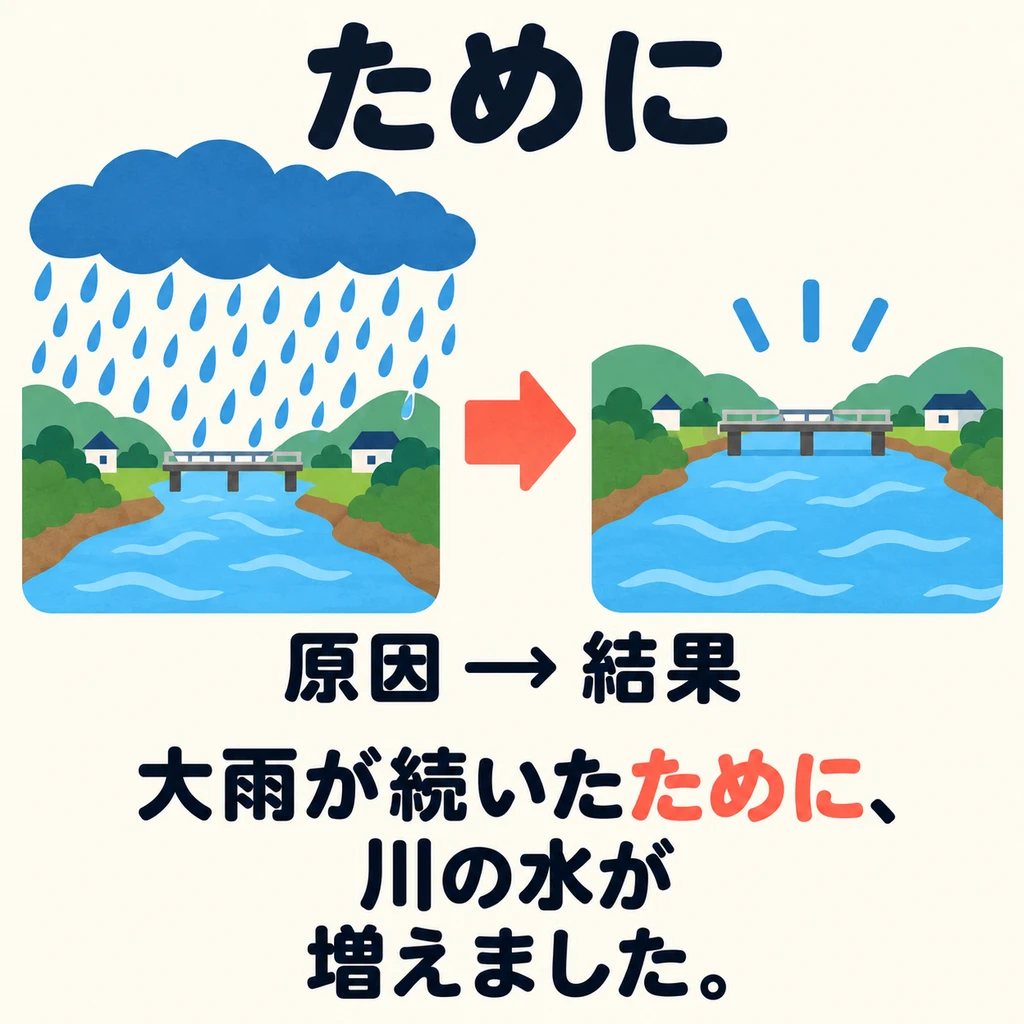
  1. Why did the river rise? Use 「ために」 to connect the cause of a change with its result.
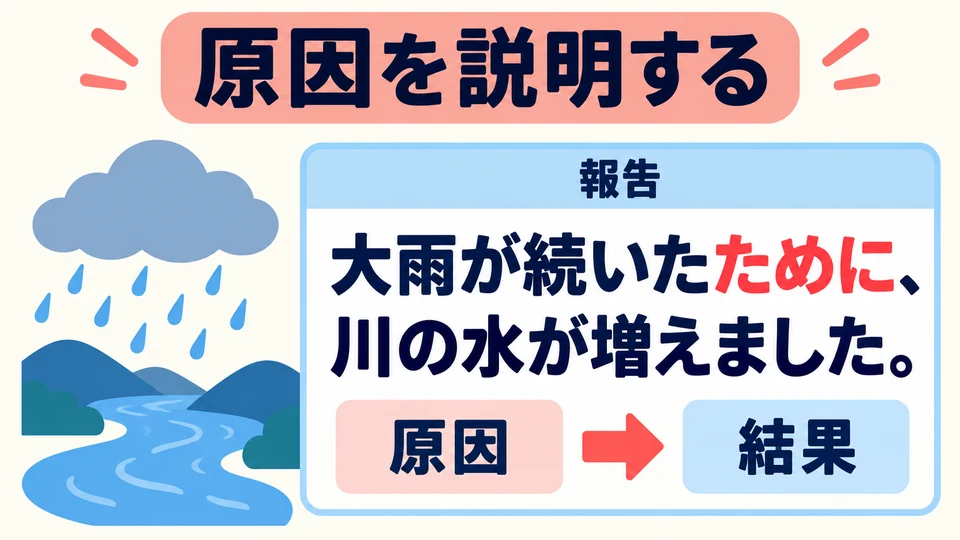
    Why did the river rise? Use 「ために」 to connect the cause of a change with its result.

  2. Use this pattern to explain why something happened. It is common in fairly formal reports and explanations.
    Use this pattern to explain why something happened. It is common in fairly formal reports and explanations.

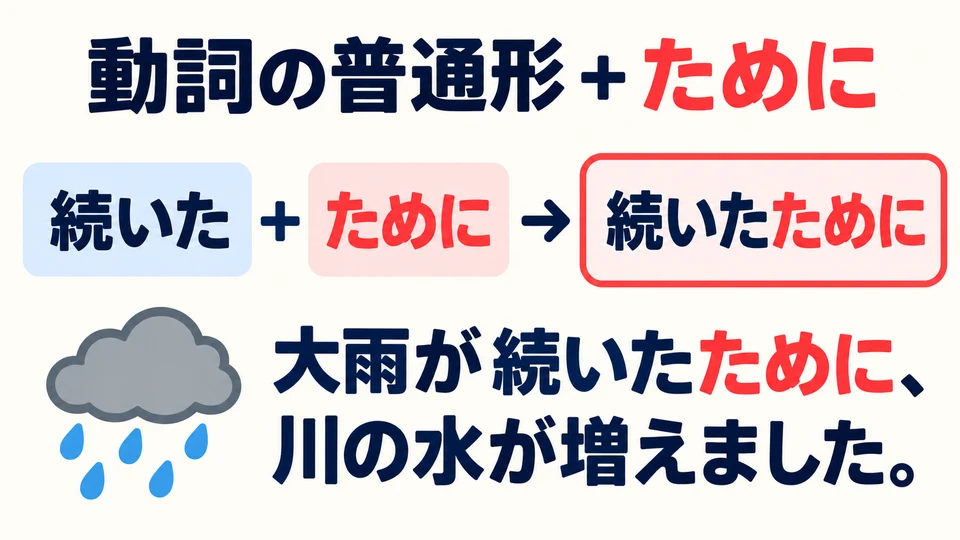
  3. Attach 「ために」 to a verb in plain form. In the example, 「続いた」 describes a cause that has already occurred.
    Attach 「ために」 to a verb in plain form. In the example, 「続いた」 describes a cause that has already occurred.

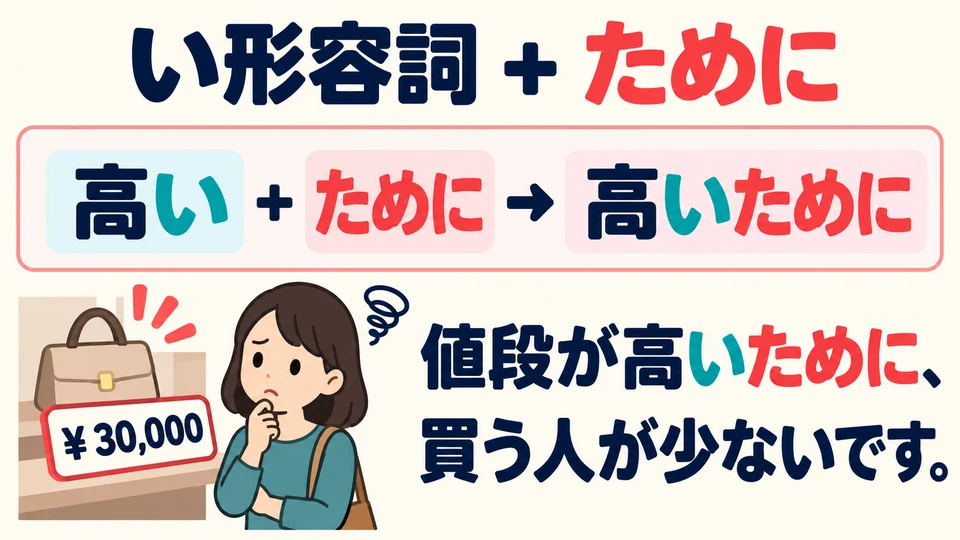
  4. Attach 「ために」 directly to an い-adjective to give a cause, as in 「高いために」.
    Attach 「ために」 directly to an い-adjective to give a cause, as in 「高いために」.

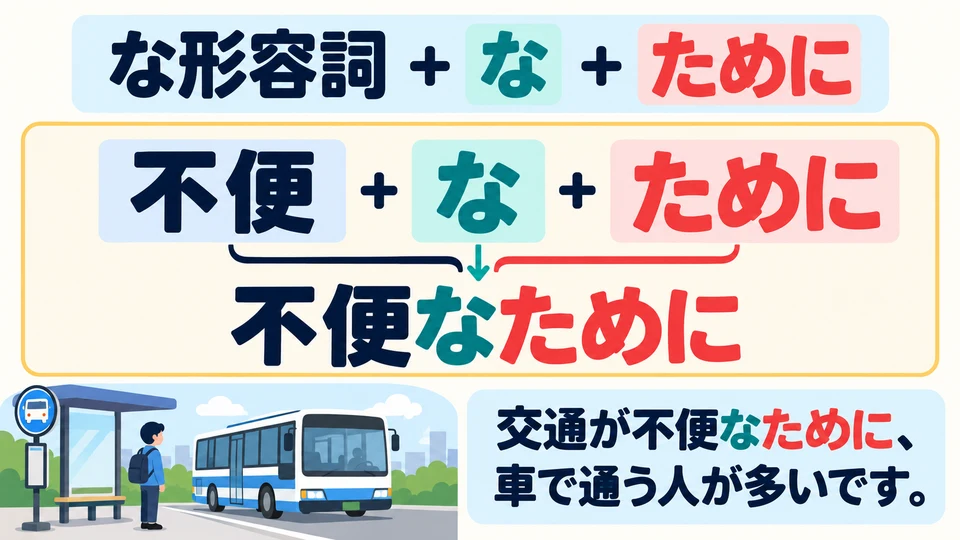
  5. Use 「な」 between a な-adjective and 「ために」 to give a cause, as in 「不便なために」.
    Use 「な」 between a な-adjective and 「ために」 to give a cause, as in 「不便なために」.

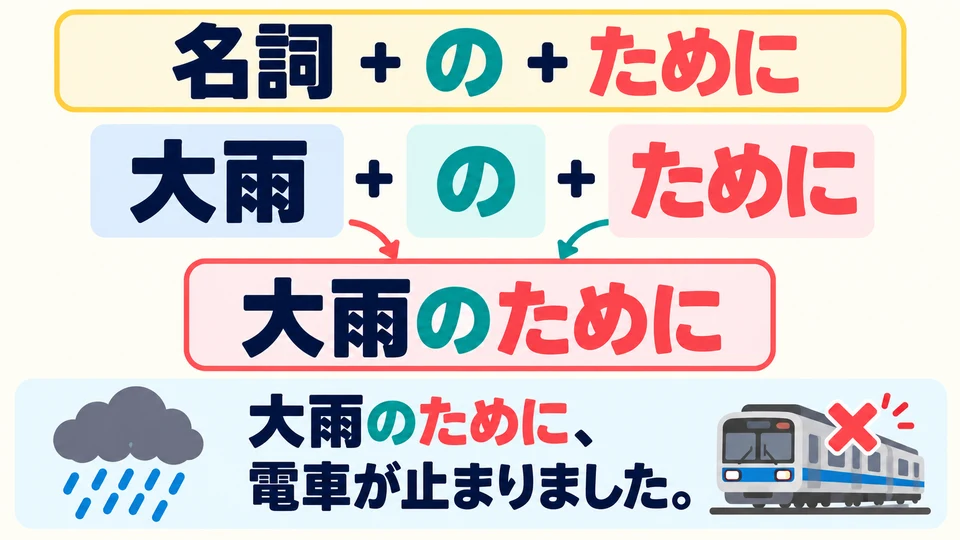
  6. Use 「の」 between a noun and 「ために」 to give a cause, as in 「大雨のために」.
    Use 「の」 between a noun and 「ために」 to give a cause, as in 「大雨のために」.

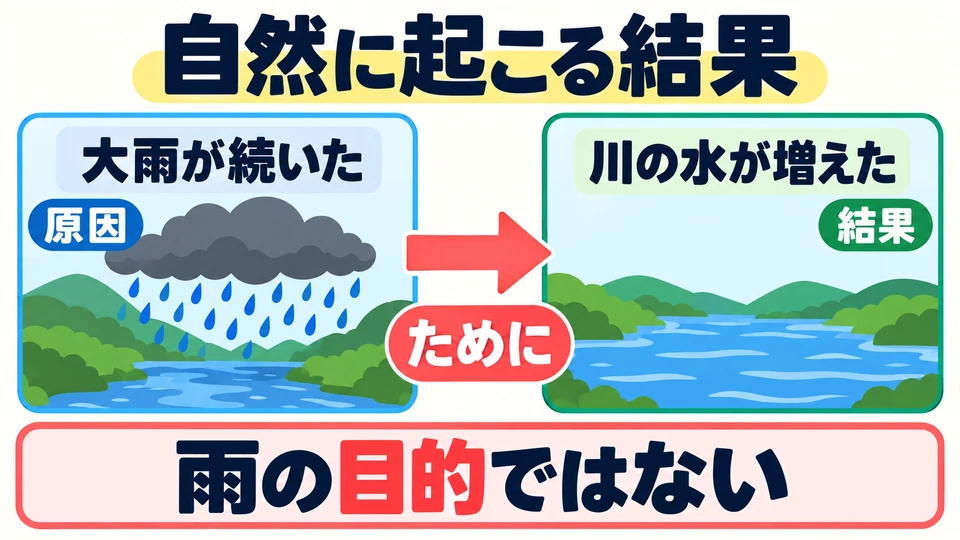
  7. In the example, continuing heavy rain caused the river to rise. The rain did not fall with the aim of raising the river level.
    In the example, continuing heavy rain caused the river to rise. The rain did not fall with the aim of raising the river level.

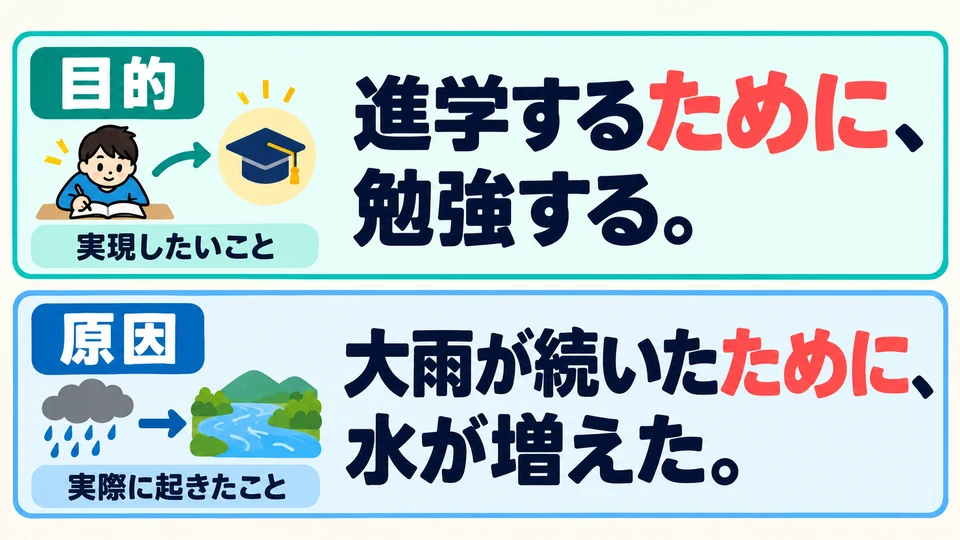
  8. The familiar 「進学するために」 expresses a goal someone wants to achieve. Here, 「続いた」 gives an actual cause.

    The familiar 「進学するために」 expresses a goal someone wants to achieve. Here, 「続いた」 gives an actual cause.

Example sentences

  • 物価ぶっかbukkaがga上がったためあがったためagattatameに、ni、生活せいかつseikatsuがga苦しくくるしくkurushikuなった人なったひとnattahitoもmoいます。imasu。

    Because prices have risen, some people's lives have become difficult.

In a conversation
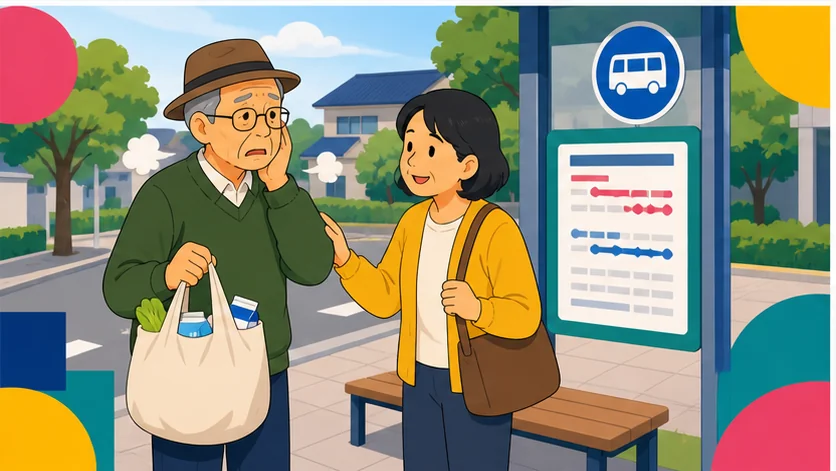
Check yourself

  1. Level 1 · Recognise

    Which sentence is correct?

  2. Level 1 · Recognise

    Listen and choose the meaning

  3. Level 2 · Build

    Put the words in order

    Because prices went up, some people have found life harder.

  4. Level 3 · Use

    What goes in the blank?

    物価が上がった____、生活が苦しくなった人もいます。

    Because prices rose, some people's lives have become harder.

More grammar in this theme

  • 〜ためにcause: because of

Keep practising

Test your Japanese vocabulary12 adaptive questions, freeCheck your pronunciationRead aloud and get a scorePractise verb forms10-question conjugation quizSee the whole courseGrammar, vocabulary and quizzes by theme
  • A
    最近、さいきん、この地域ちいきはわバスばすの数かずが少なくすくなくなったために、移動いどうが不便ふべんですね。

    A: Recently, moving around has been inconvenient in this area because the number of buses has decreased.

  • 大雨おおあめooameがga続いたためつづいたためtsuzuitatameに、ni、川かわkawaのno水みずmizuがga増えました。ふえました。fuemashita。

    Because the heavy rain continued, the river water increased.

  • B
    公共こうきょう交通こうつうの利用者りようしゃが減少げんしょうしたために、本数ほんすうを減らしたそうへらしたそうですよ。

    B: I heard they reduced the number of trips because the number of public transit users decreased.

  • A
    お年寄りおとしよりの負担ふたんが大きくおおきくなるので、早くはやく改善かいぜんしてほしいですね。

    A: Since the burden on the elderly will increase, I really hope it improves soon.

  • 〜んだってcasual hearsay
    〜のはどうですかhow about doing…?
    〜だけじゃなくて、〜もnot only A but also B
    〜ないと、〜if you don't…, then…
    〜てきましたchange continuing until now
    〜ていきますchange continuing into future
    Previous〜てきました
    Next〜ていきます