JPEdLab iconJPEdLab
Save history

Create an account and play

Explore first, then save your progress whenever you are ready. No email address is required.

Start free
  1. Japanese grammar
  2. JLPT N4 grammar
  3. 〜のはどうですか

〜のはどうですか~no wa dou desu ka

No wa dou desu ka (〜のはどうですか) means “how about doing…?”.

分からない言葉わからないことばwakaranaikotobaをo調べしらべshirabeながらnagara読むよむyomuのnoはわwaどうdouですdesuか。ka。

How about reading while looking up words you don't know?

Use 「〜のはどうですか」 to gently suggest an action and ask what the other person thinks.

In the course›

How it works

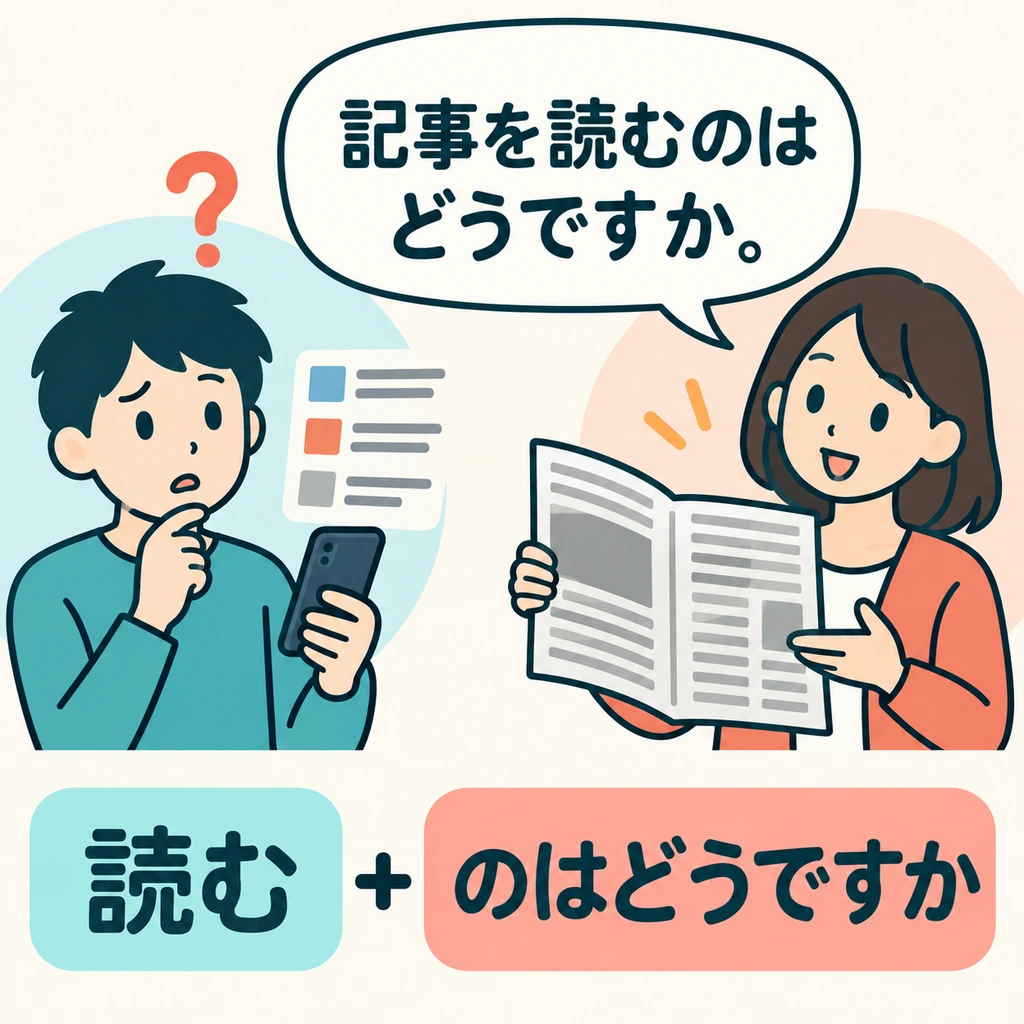
  1. The headlines alone are not enough to understand. Look at the picture: what solution does the friend suggest?
    The headlines alone are not enough to understand. Look at the picture: what solution does the friend suggest?

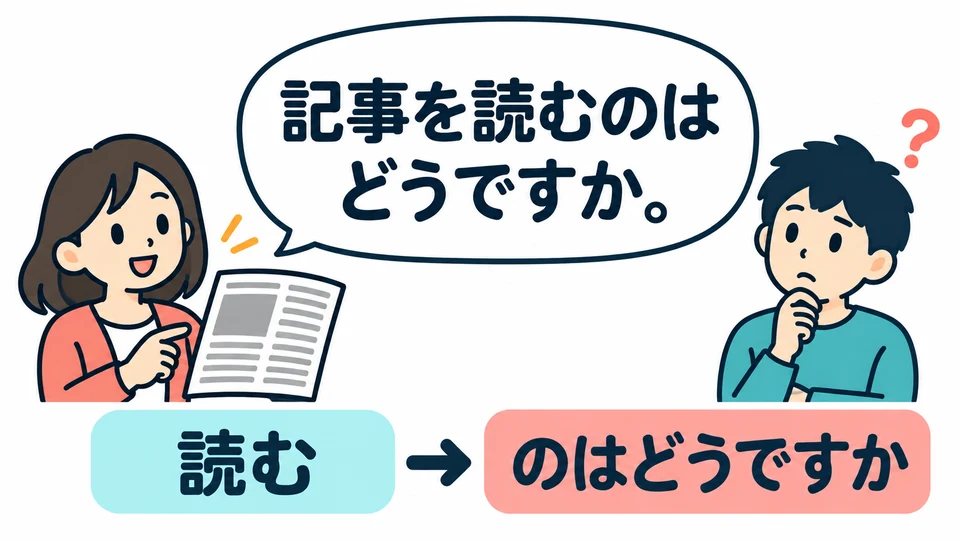
  2. Use this pattern to suggest an action and ask what the other person thinks of it.
    Use this pattern to suggest an action and ask what the other person thinks of it.

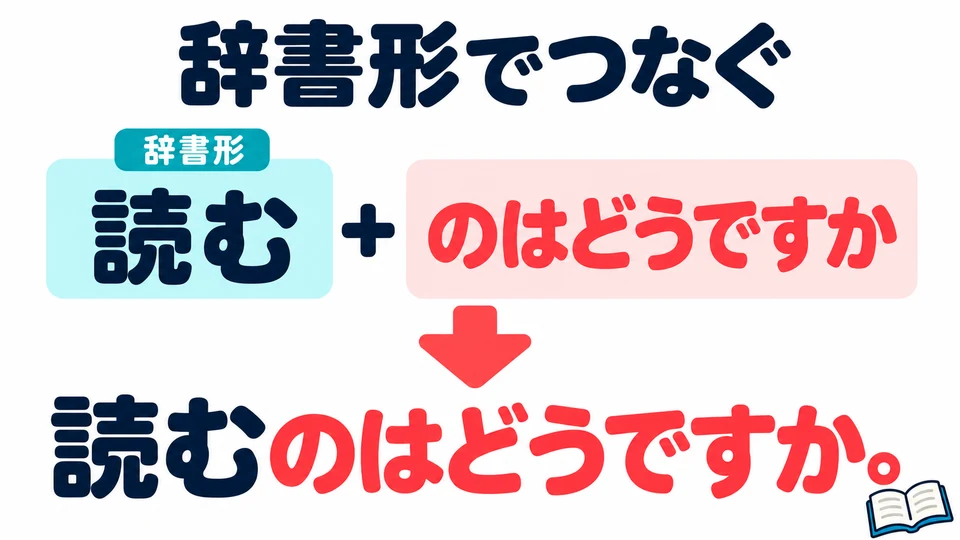
  3. Use the dictionary form of the verb: put 「読む」 before 「のはどうですか」.
    Use the dictionary form of the verb: put 「読む」 before 「のはどうですか」.

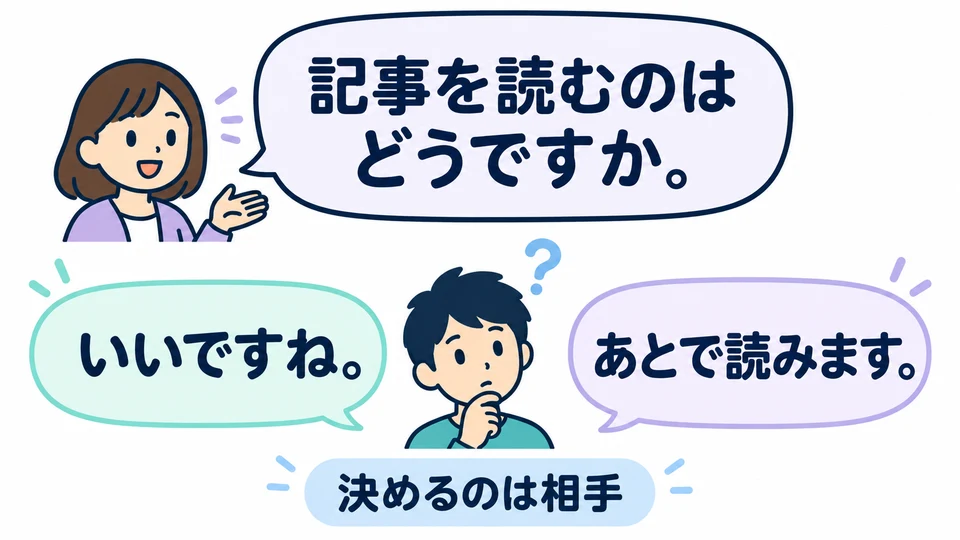
  4. This gently offers one possible solution. The other person decides whether to take the suggestion.
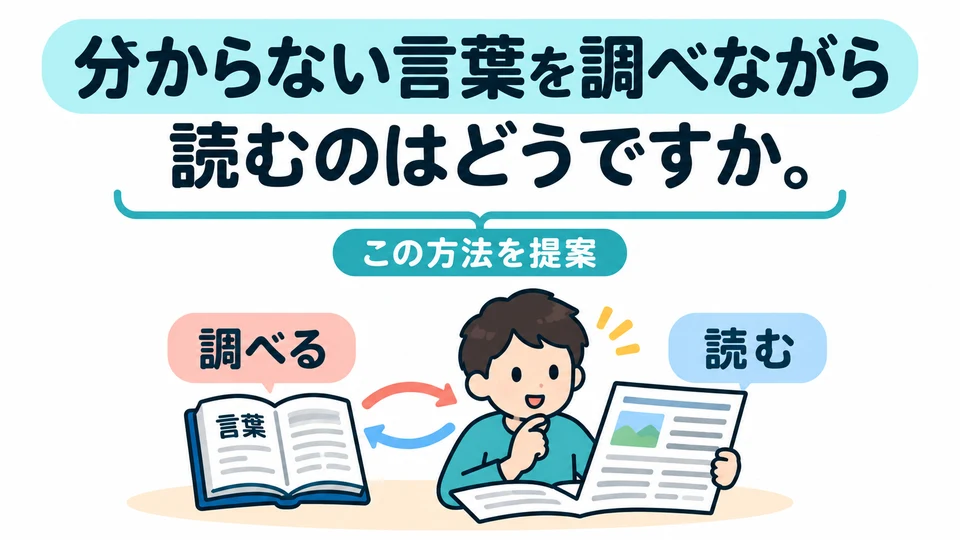
    This gently offers one possible solution. The other person decides whether to take the suggestion.

  5. The first sentence suggests the whole approach of reading while looking up words, rather than just looking them up.
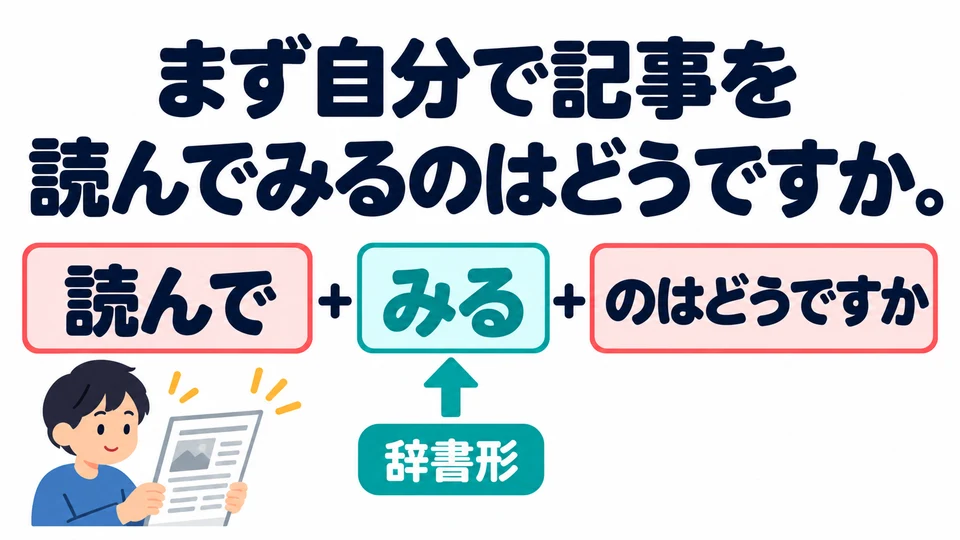
    The first sentence suggests the whole approach of reading while looking up words, rather than just looking them up.

  6. The second sentence suggests trying to read it yourself first. Even with 「てみる」, the final verb stays in the dictionary form 「みる」.

    The second sentence suggests trying to read it yourself first. Even with 「てみる」, the final verb stays in the dictionary form 「みる」.

Example sentences

  • 分からない言葉わからないことばwakaranaikotobaをo調べしらべshirabeながらnagara読むよむyomuのnoはわwaどうdouですdesuか。ka。

    How about reading while looking up words you don't know?

In a conversation

  • A
    ニュースにゅーすの見出しみだしだけ見みても、本当ほんとうの事実じじつがよく分からないわからないね。

    A: Just looking at news headlines doesn't really give you the actual facts, does it?

  • B

Check yourself

  1. Level 1 · Recognise

    Which sentence is correct?

  2. Level 1 · Recognise

    Listen and choose the meaning

  3. Level 2 · Build

    Put the words in order

    How about reading while looking up words you don't understand?

  4. Level 3 · Use

    What goes in the blank?

    分からない言葉を調べながら____。

    How about reading while looking up unfamiliar words?

More grammar in this theme

  • 〜のはどうですかhow about doing…?

More JLPT N4 grammar

Keep practising

Test your Japanese vocabulary12 adaptive questions, freeCheck your pronunciationRead aloud and get a scorePractise verb forms10-question conjugation quizSee the whole courseGrammar, vocabulary and quizzes by theme
まずmazu自分じぶんjibunでde記事きじkijiをo読んよんyonでdeみるmiruのnoはわwaどうdouですdesuか。ka。

How about trying to read the article by yourself first?

じゃあ、
新聞しんぶん
の
記事きじ
を
全部ぜんぶ
読んよん
で、
情報源じょうほうげん
を
調べるしらべる
の
はわ
どう
です
か。

B: Then, how about reading the entire newspaper article and checking the information source?

  • A
    そうだね。そうしたら、正しいただしい情報じょうほうを読みよみ取るとることができるね。

    A: That's true. If we do that, we'll be able to grasp the correct information.

  • Intermediate 1
    News and Social Topics
    More quizzesOpen this lesson’s quizzes in the course
    〜んだってcasual hearsay
    〜だけじゃなくて、〜もnot only A but also B
    〜ないと、〜if you don't…, then…
    〜てきましたchange continuing until now
    〜ためにcause: because of
    〜ていきますchange continuing into future
    Previous〜んだって
    Next〜だけじゃなくて、〜も
    See all 138
    〜かなI wonder if…
    〜なんかどうですかgentle suggestion
    〜がっていますshowing a feeling
    〜からですgiving a reason
    〜てほしいwant someone to do
    〜てもらいたいwant to receive someone’s help
    〜とか〜とかexamples among other things
    〜でしょう・〜だろうlikely; probably