JPEdLab iconJPEdLab
Save history

Create an account and play

Explore first, then save your progress whenever you are ready. No email address is required.

Start free
  1. Japanese grammar
  2. JLPT N4 grammar
  3. 〜てもらいたい

〜てもらいたい~te moraitai

Te moraitai (〜てもらいたい) means “want to receive someone’s help”.

参加者さんかしゃsankashaにniは、わ、wa、事前じぜんjizenにniお知らせおしらせoshiraseをoよくyoku読んよんyonでdeおいoiてteもらいたいです。moraitaidesu。

I would like the participants to read the notice carefully in advance.

Use 〜てもらいたい to say you want another person to do something that benefits or helps you.

In the course›

How it works

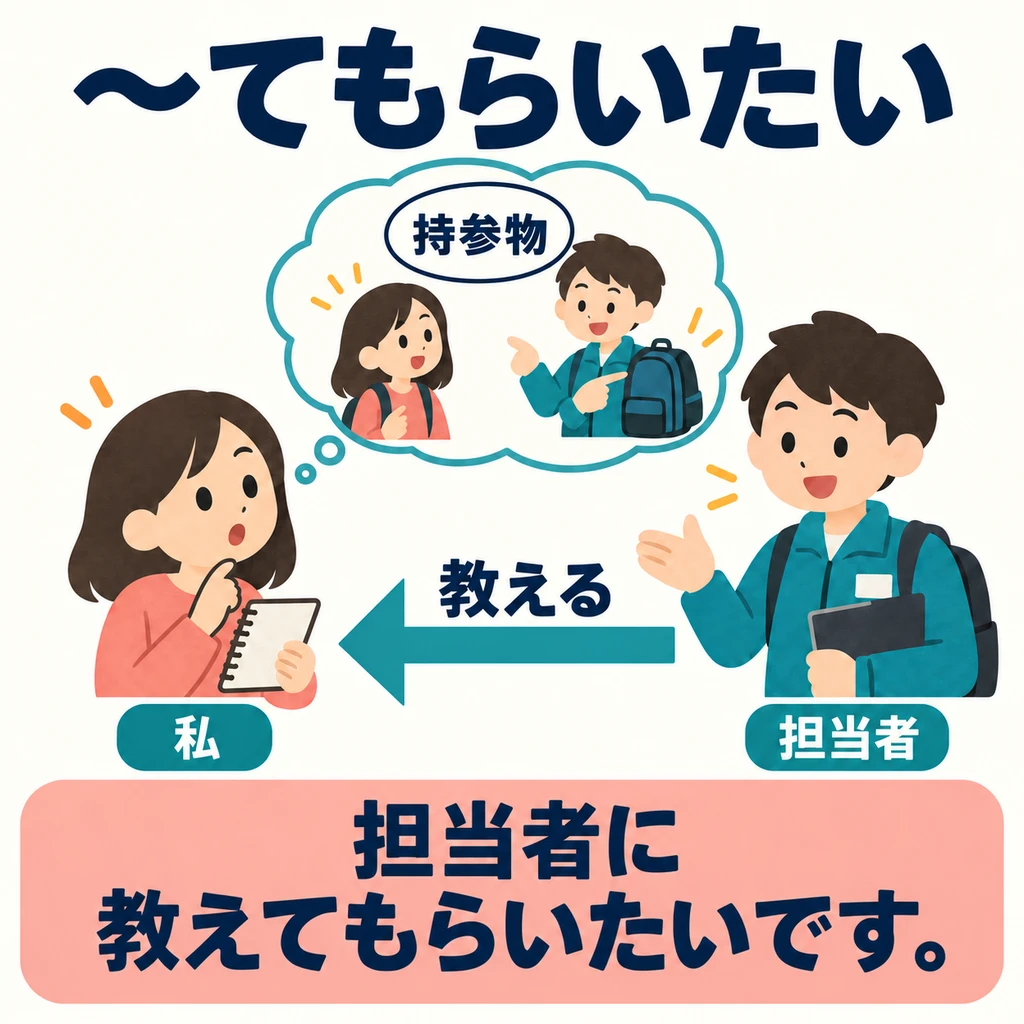
  1. When you do not know what to bring to an event, you can express your wish for the person in charge to tell you.
    When you do not know what to bring to an event, you can express your wish for the person in charge to tell you.

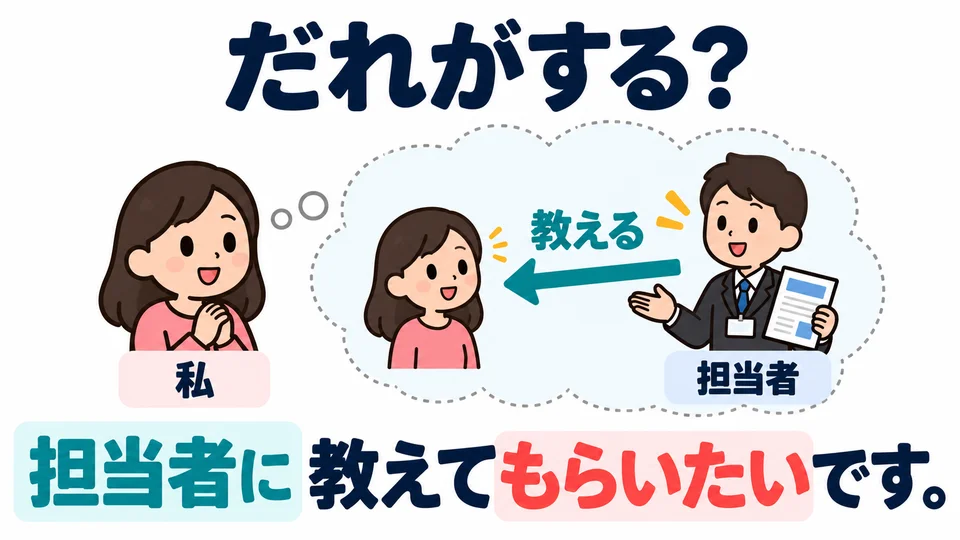
  2. The person you want to act is the listener or a third party; the speaker hopes to benefit from that action.
    The person you want to act is the listener or a third party; the speaker hopes to benefit from that action.

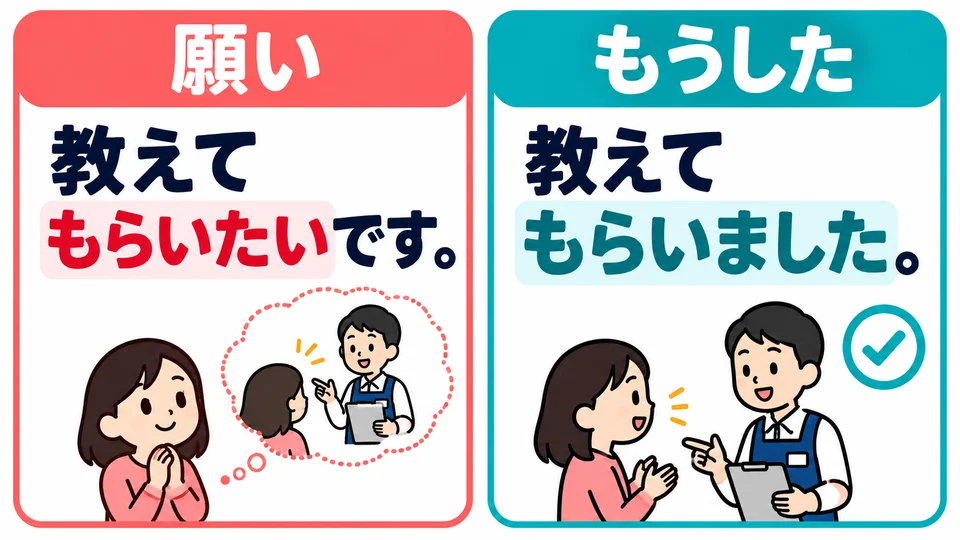
  3. This expresses a wish for the other person to do something; it does not mean they have already done it.
    This expresses a wish for the other person to do something; it does not mean they have already done it.

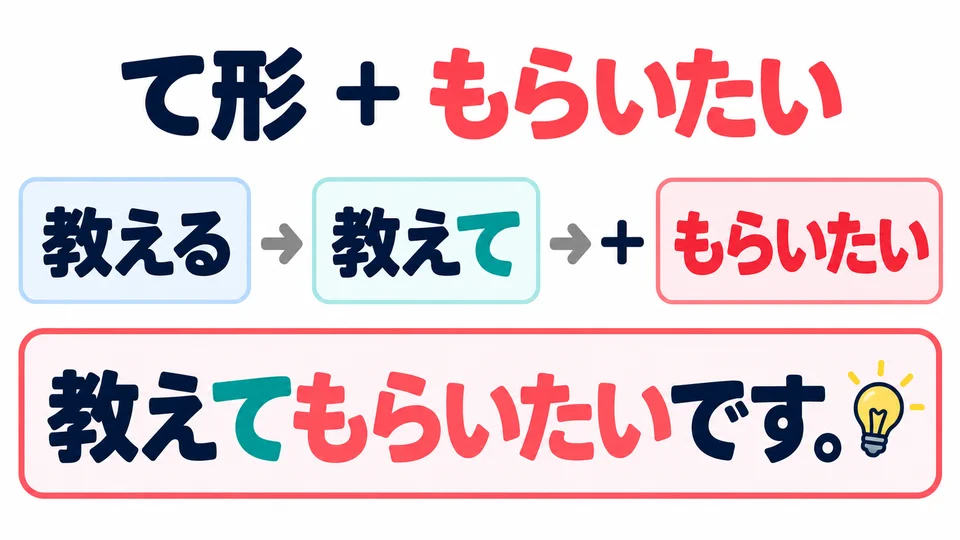
  4. Add 「もらいたい」 to a verb’s て-form: for example, 「教える」 becomes 「教えてもらいたい」.
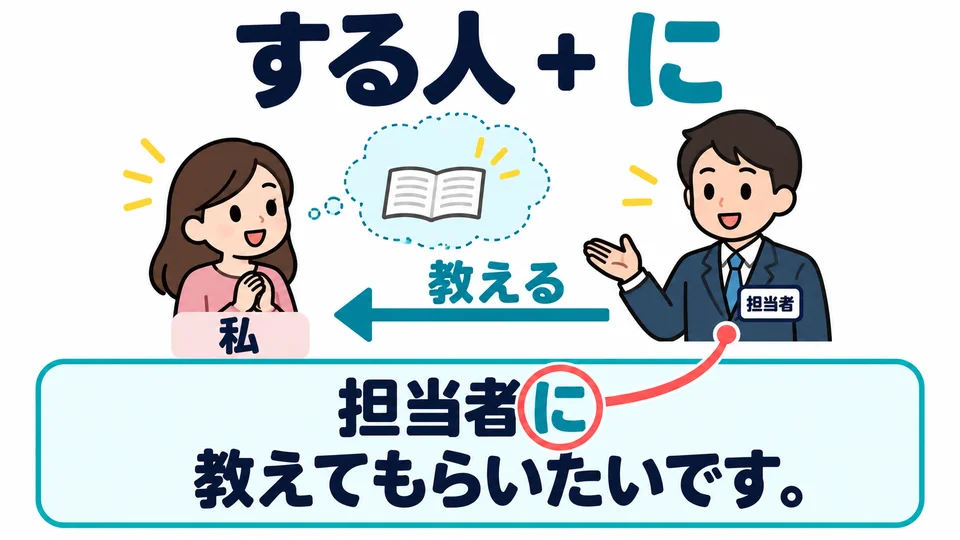
    Add 「もらいたい」 to a verb’s て-form: for example, 「教える」 becomes 「教えてもらいたい」.

  5. Mark the person doing the action with 「に」. In the picture, the person giving me information is 「担当者」.
    Mark the person doing the action with 「に」. In the picture, the person giving me information is 「担当者」.

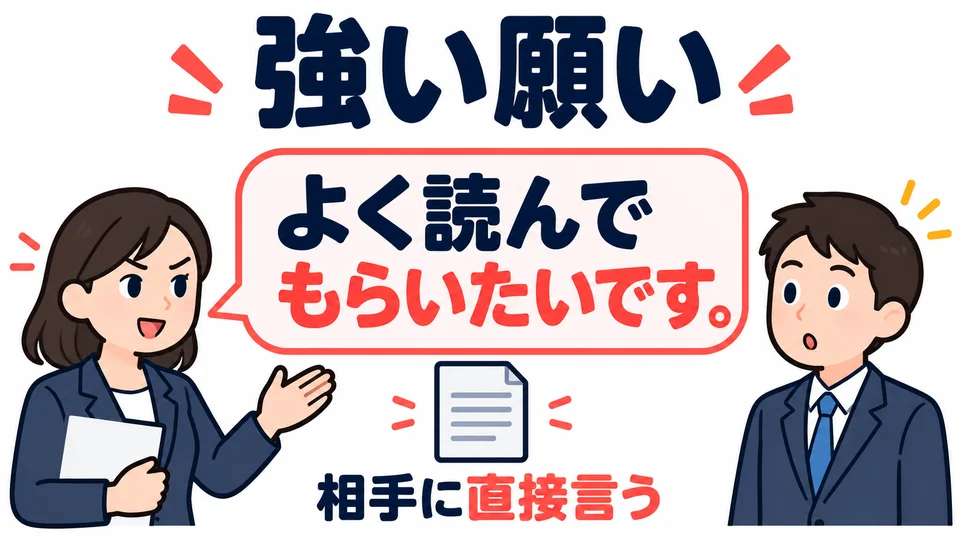
  6. It can express a strong wish. When said directly to the person concerned, it can also sound like a demand.
    It can express a strong wish. When said directly to the person concerned, it can also sound like a demand.

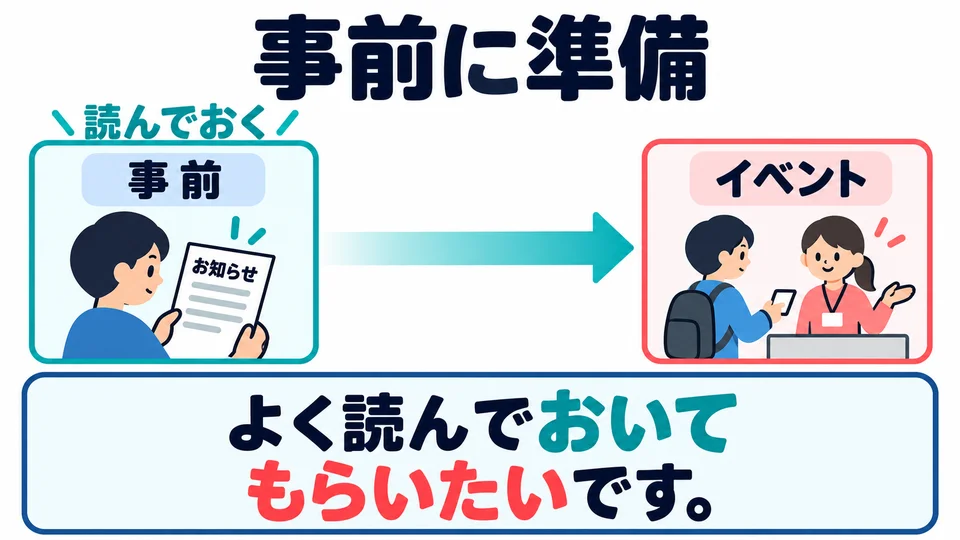
  7. In the example about the notice, 「読んでおいて」 emphasizes reading it in advance to prepare for the event.

    In the example about the notice, 「読んでおいて」 emphasizes reading it in advance to prepare for the event.

Example sentences

  • 参加者さんかしゃsankashaにniは、わ、wa、事前じぜんjizenにniお知らせおしらせoshiraseをoよくyoku読んよんyonでdeおいoiてte

In a conversation

  • A
    来週らいしゅうのイベントいべんとのことで、担当者たんとうしゃに連絡れんらくしましたか。

    A: Did you contact the person in charge regarding next week's event?

  • B
    はい。担当者たんとうしゃに

Check yourself

  1. Level 1 · Recognise

    Which sentence is correct?

  2. Level 1 · Recognise

    Listen and choose the meaning

  3. Level 2 · Build

    Put the words in order

    I want the participants to read the notice carefully in advance.

  4. Level 3 · Use

    What goes in the blank?

    参加者には、事前にお知らせをよく____(「読んでおく」を使って丁寧に)。

    I would like participants to read the notice carefully in advance.

More grammar in this theme

  • 〜てもらいたいwant to receive someone’s help

More JLPT N4 grammar

Keep practising

Test your Japanese vocabulary12 adaptive questions, freeCheck your pronunciationRead aloud and get a scorePractise verb forms10-question conjugation quizSee the whole courseGrammar, vocabulary and quizzes by theme
もらいたいです。moraitaidesu。

I would like the participants to read the notice carefully in advance.

  • 主催者しゅさいしゃshusaishaにniは、わ、wa、質問しつもんshitsumonできるdekiru時間じかんjikanをo作っつくっtsukuてteもらいたいです。moraitaidesu。

    I would like the organizers to make some time for asking questions.

  • は、わ、
    持参物じさんぶつ
    に
    つい
    て
    教えおしえ
    て
    もらいたいです。

    B: Yes. I would like the person in charge to tell me what to bring.

  • A
    そうですね。何なんを持っもっていくか分からないわからないと困りますこまりますからね。

    A: Right. It would be troublesome if we don't know what to bring.

  • Intermediate 1
    New Environments and Self-Introduction
    More quizzesOpen this lesson’s quizzes in the course
    〜において・〜におけるformal setting or field
    〜上でconditions for doing something
    〜た上でcomplete a step before deciding
    〜てほしいwant someone to do
    〜よねseek agreement or confirmation
    〜とか〜とかexamples among other things
    〜だけ・〜だけのonly; just enough for
    〜でしょう・〜だろうlikely; probably
    〜から〜にかけてapproximate time or place range
    〜とcondition and natural result
    〜がきっかけでtrigger for a change
    〜っぽいcharacteristic or impression
    〜でもeven in a situation
    Previous〜てほしい
    Next〜よね
    See all 138
    〜からですgiving a reason
    〜のはどうですかhow about doing…?
    〜ないと、〜if you don't…, then…
    〜ていきますchange continuing into future
    〜でしょうかgentle question or request
    〜はずがないcannot possibly; no way
    こんな・そんな・あんな・どんなthis, that, what kind
    〜ことがありますsometimes happens