
Japanese grammar · ≈ JLPT N3 · Intermediate 1
〜っぽい~ppoi
characteristic or impression
Use 「〜っぽい」 after a noun to describe a characteristic or impression, such as acting or sounding like someone.
How it works
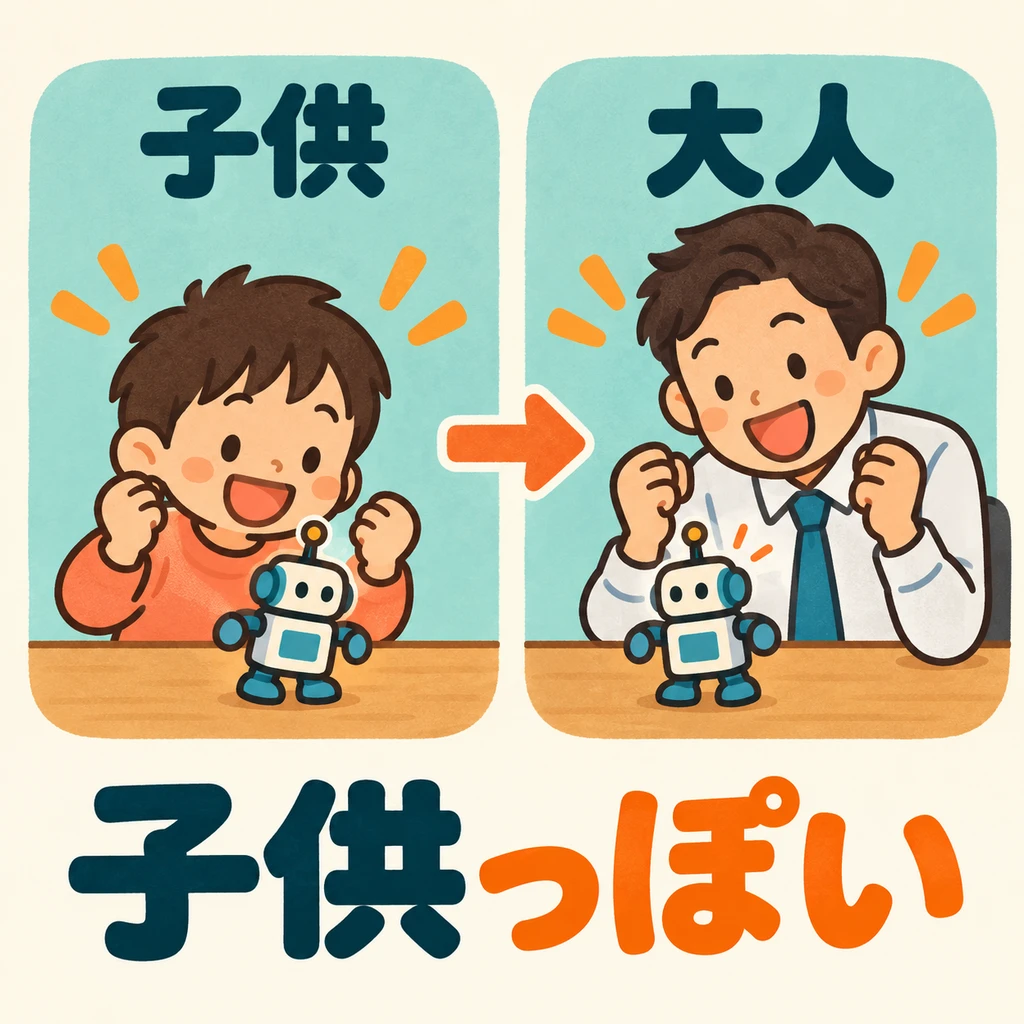
Adults can get excited like children too. Look at the picture: how do the two behave alike?
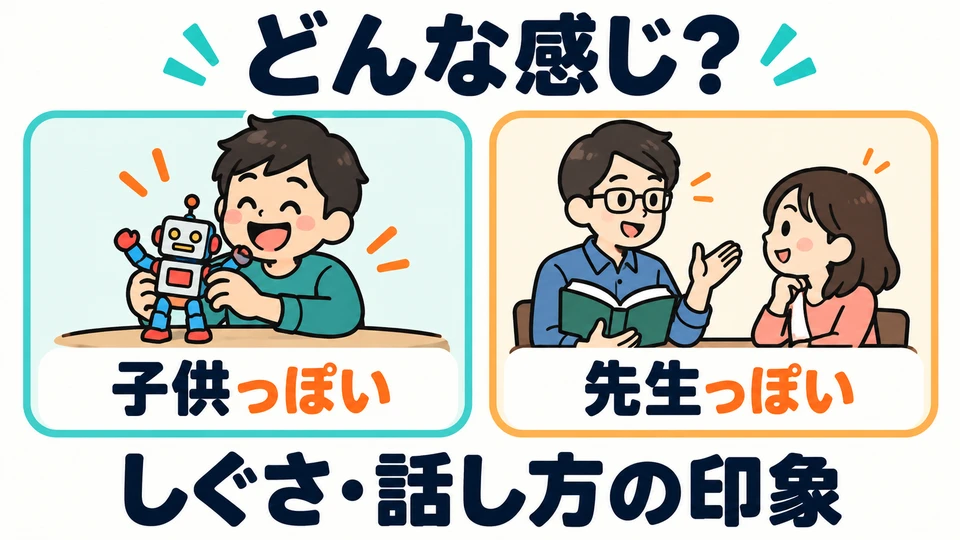
Use 「っぽい」 to express a characteristic or impression when describing how someone acts, speaks, and so on.
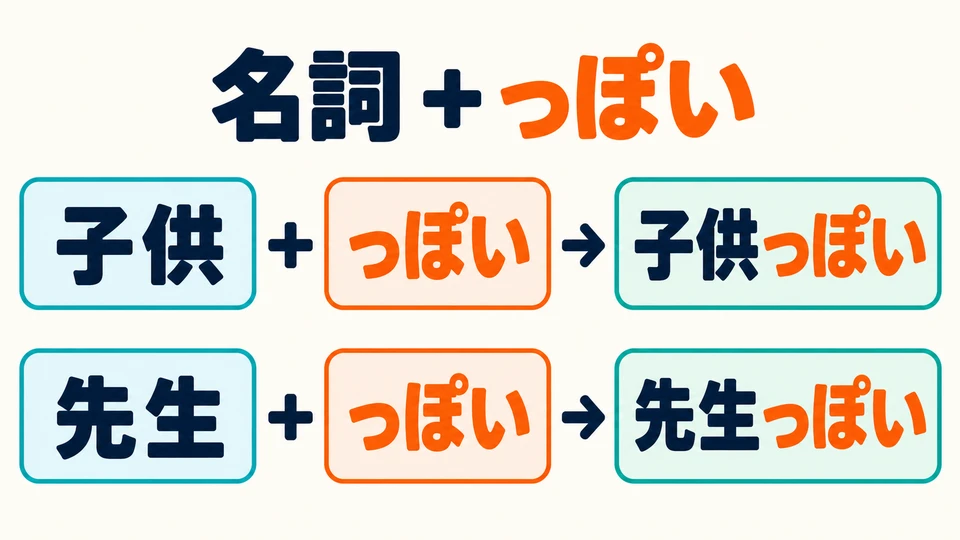
In this lesson, attach 「っぽい」 directly to a noun: 子供+っぽい→子供っぽい.
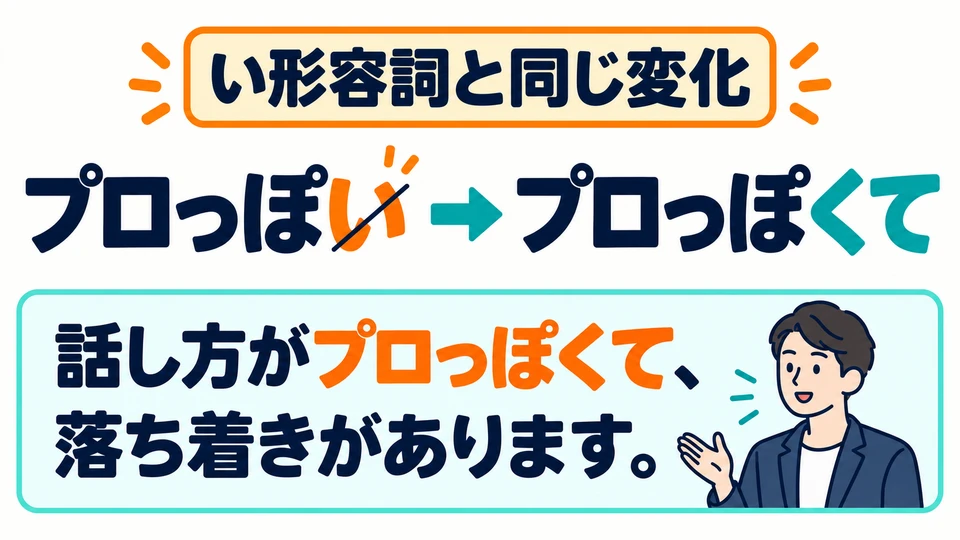
「っぽい」 changes like an い-adjective. To connect it to what follows: プロっぽい→プロっぽくて.
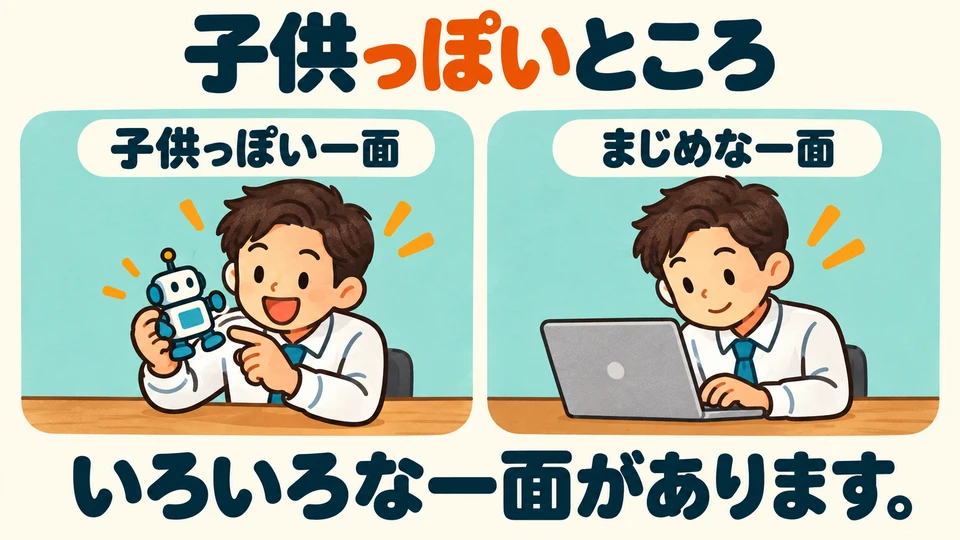
In the example, 「子供っぽいところ」 refers to a childish side, not an entirely immature person.
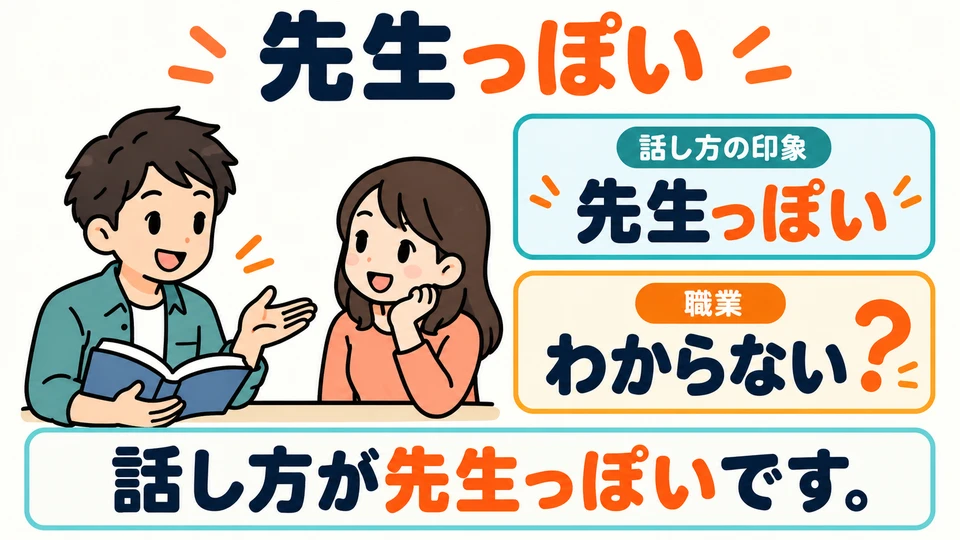
「先生っぽい」 means the person sounds like a teacher. It is an impression of their way of speaking, not a statement that they are a teacher.
Example sentences
- 子供っぽいkodomoppoiところtokoroもmoありますarimasuが、ga、好奇心koukishinがga強いtsuyoiのnoがga私watashiの
In a conversation

Check yourself
Level 1 · Recognise
Which sentence is correct?
Level 1 · Recognise
Listen and choose the meaning
Level 2 · Build
Put the words in order
The way I speak might sound a little teacher-like.
Level 3 · Use
What goes in the blank?
私の話し方は少し先生____かもしれません。
My way of speaking might be a bit teacher-like.
More grammar in this theme
- 〜っぽいcharacteristic or impression