JPEDLAB iconJPEDLAB
Save history

Create an account and play

Explore first, then save your progress whenever you are ready. No email address is required.

Start free
Read as articleCards
See the whole course›Intermediate 1›New Environments and Self-Introduction

Japanese grammar · ≈ JLPT N3 · Intermediate 1

〜っぽい~ppoi

characteristic or impression

Use 「〜っぽい」 after a noun to describe a characteristic or impression, such as acting or sounding like someone.

Start the interactive lessonIllustrated cards, audio and speaking practice

How it works

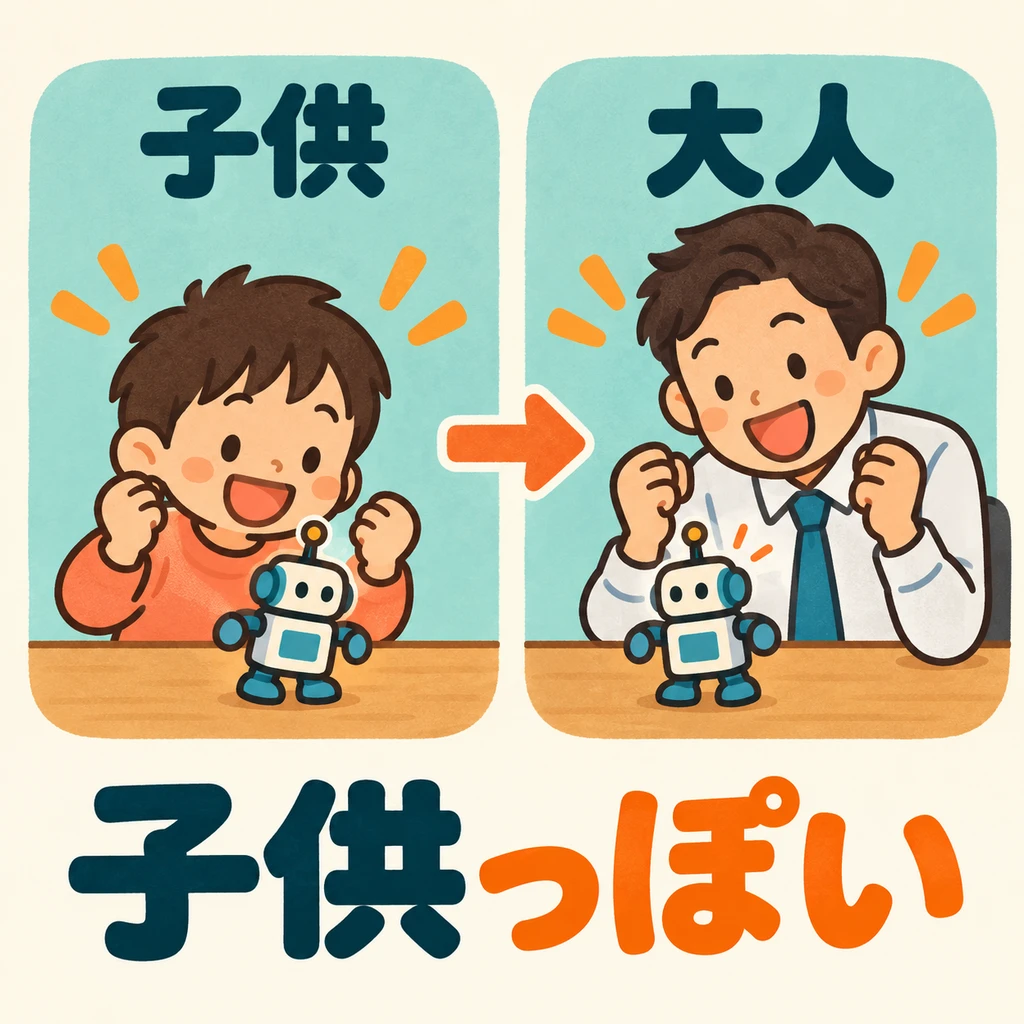
  1. Adults can get excited like children too. Look at the picture: how do the two behave alike?
    Adults can get excited like children too. Look at the picture: how do the two behave alike?

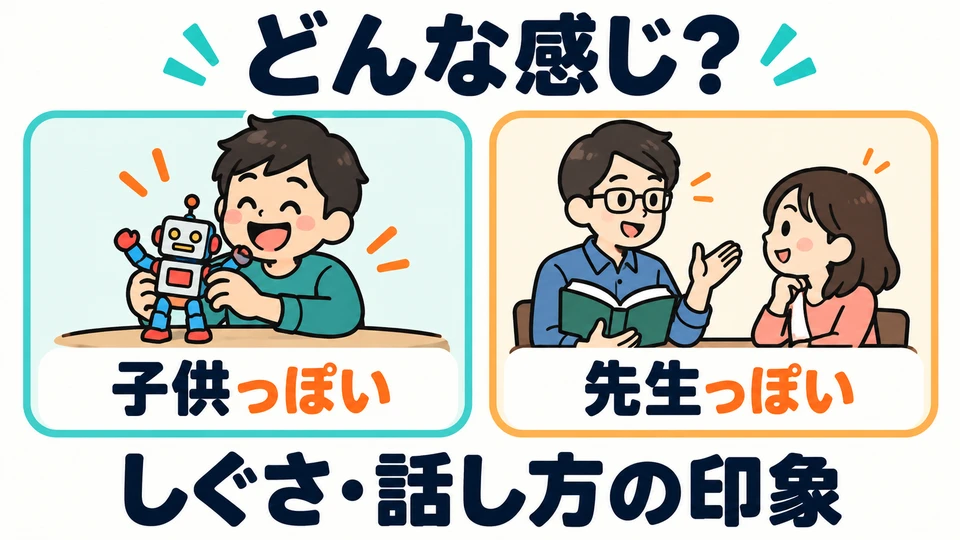
  2. Use 「っぽい」 to express a characteristic or impression when describing how someone acts, speaks, and so on.
    Use 「っぽい」 to express a characteristic or impression when describing how someone acts, speaks, and so on.

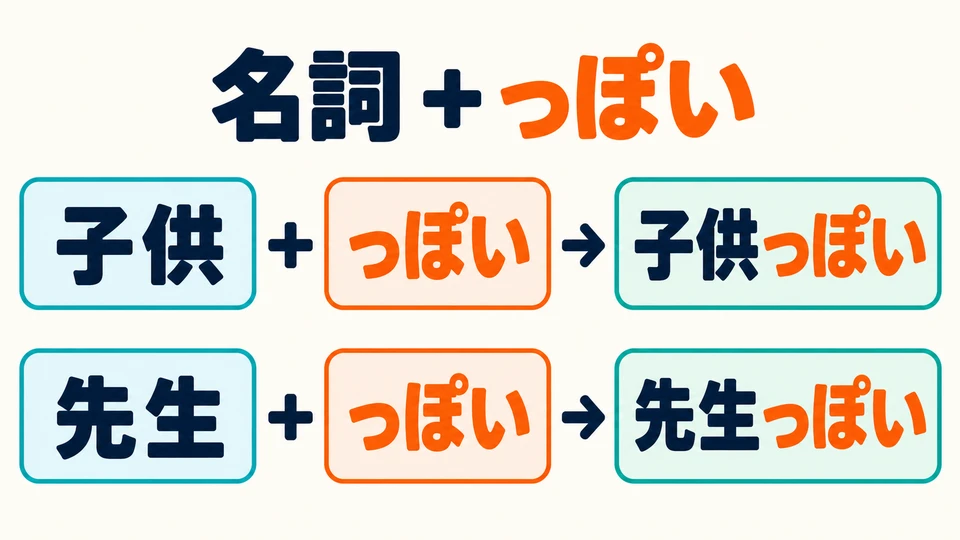
  3. In this lesson, attach 「っぽい」 directly to a noun: 子供+っぽい→子供っぽい.
    In this lesson, attach 「っぽい」 directly to a noun: 子供+っぽい→子供っぽい.

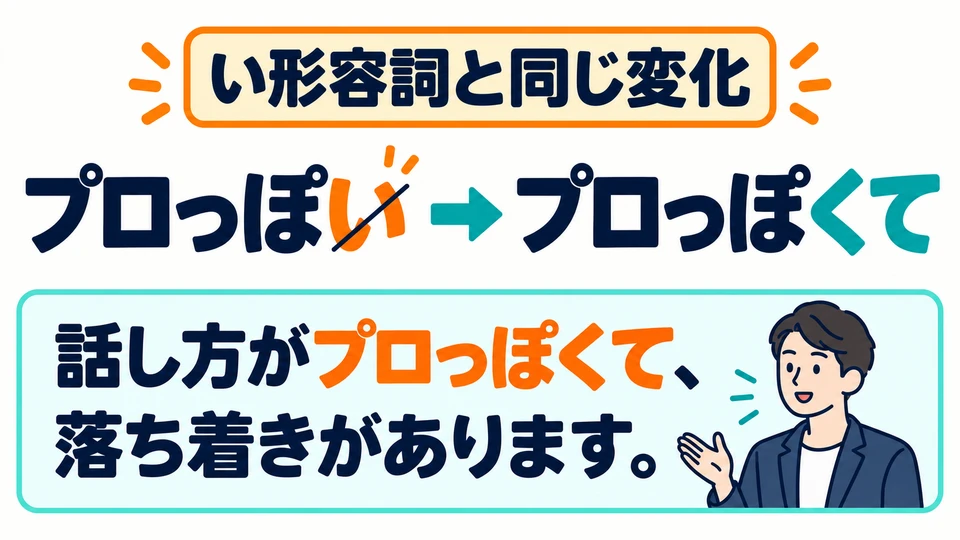
  4. 「っぽい」 changes like an い-adjective. To connect it to what follows: プロっぽい→プロっぽくて.
    「っぽい」 changes like an い-adjective. To connect it to what follows: プロっぽい→プロっぽくて.

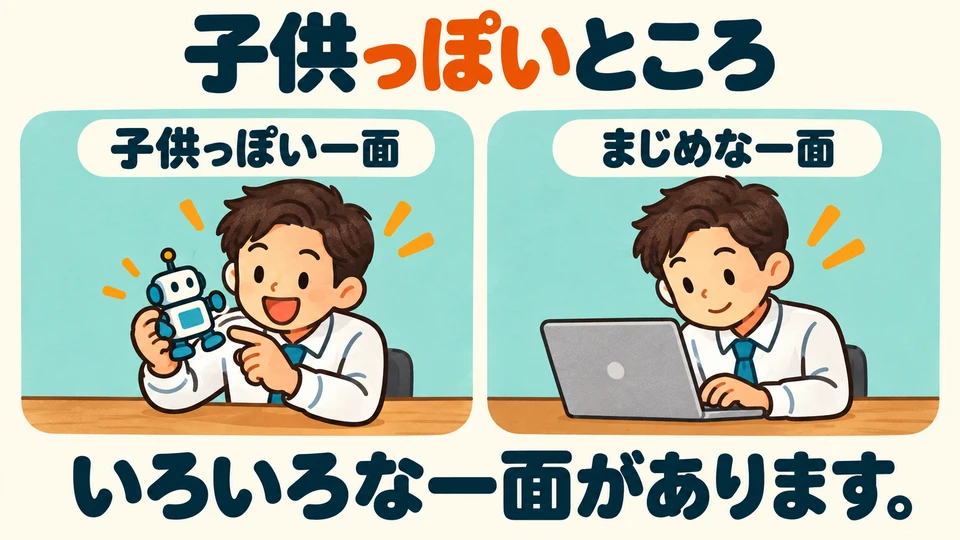
  5. In the example, 「子供っぽいところ」 refers to a childish side, not an entirely immature person.
    In the example, 「子供っぽいところ」 refers to a childish side, not an entirely immature person.

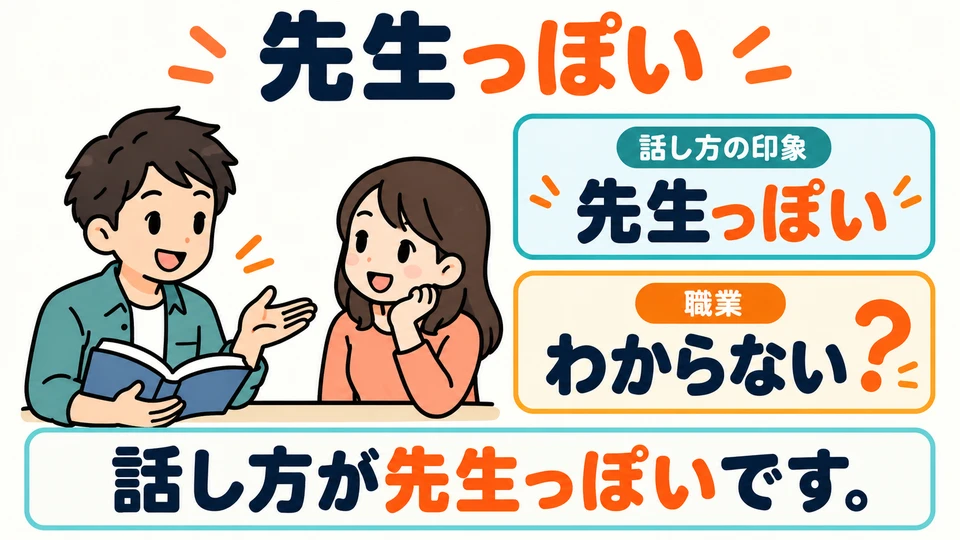
  6. 「先生っぽい」 means the person sounds like a teacher. It is an impression of their way of speaking, not a statement that they are a teacher.

    「先生っぽい」 means the person sounds like a teacher. It is an impression of their way of speaking, not a statement that they are a teacher.

Example sentences

  • 子供っぽいこどもっぽいkodomoppoiところtokoroもmoありますarimasuが、ga、好奇心こうきしんkoukishinがga強いつよいtsuyoiのnoがga私わたしwatashiの

In a conversation

Check yourself

  1. Level 1 · Recognise

    Which sentence is correct?

  2. Level 1 · Recognise

    Listen and choose the meaning

  3. Level 2 · Build

    Put the words in order

    The way I speak might sound a little teacher-like.

  4. Level 3 · Use

    What goes in the blank?

    私の話し方は少し先生____かもしれません。

    My way of speaking might be a bit teacher-like.

More grammar in this theme

  • 〜っぽいcharacteristic or impression

Keep practising

Test your Japanese vocabulary12 adaptive questions, freeCheck your pronunciationRead aloud and get a scorePractise verb forms10-question conjugation quizSee the whole courseGrammar, vocabulary and quizzes by theme
no
長所ちょうしょchousho
です。desu。

Although I have some childish aspects, my strong curiosity is my strength.

  • A
    新しいあたらしいリーダーりーだーの鈴木さん、すずきさん、どんな人ひとですか?か

    A: What kind of person is the new leader, Mr. Suzuki?

  • B
    話し方はなしかたがプロっぽくぷろっぽくて、とても落ち着きおちつきがある人ひとだよ。

    B: His way of speaking is very professional, and he is a very calm person.

  • 私わたしwatashiのno話し方はなしかたhanashikataはわwa少しすこしsukoshi先生っぽいせんせいっぽいsenseippoiかkaもmoしれません。shiremasen。

    My way of speaking might be a little teacher-like.

  • A
    第一だいいち印象いんしょうが良いよいと、一緒いっしょに仕事しごとがしやすそうで安心そうであんしんですね。

    A: If the first impression is good, it seems easy to work together, which is reassuring.

  • 〜において・〜におけるformal setting or field
    〜上でconditions for doing something
    〜た上でcomplete a step before deciding
    〜てほしいwant someone to do
    〜てもらいたいwant to receive someone’s help
    〜よねseek agreement or confirmation
    〜とか〜とかexamples among other things
    〜だけ・〜だけのonly; just enough for
    〜でしょう・〜だろうlikely; probably
    〜から〜にかけてapproximate time or place range
    〜とcondition and natural result
    〜がきっかけでtrigger for a change
    〜でもeven in a situation
    Previous〜がきっかけで
    Next〜でも