
Japanese grammar · ≈ JLPT N4 · Intermediate 1
〜と~to
condition and natural result
Use 「〜と」 for a condition followed by a regular or natural result, not a personal plan or request.
How it works
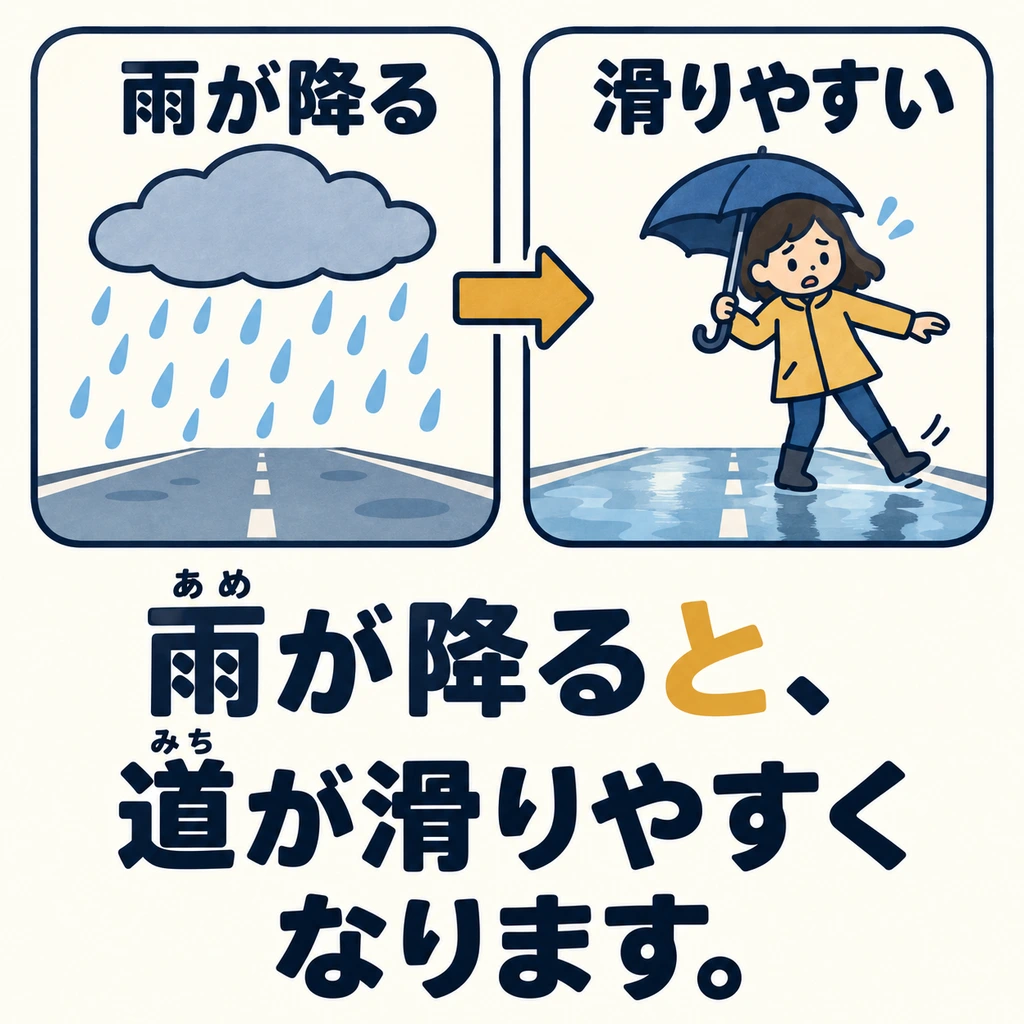
What happens to the road when rain falls? Follow the arrow: rain makes the road slippery.
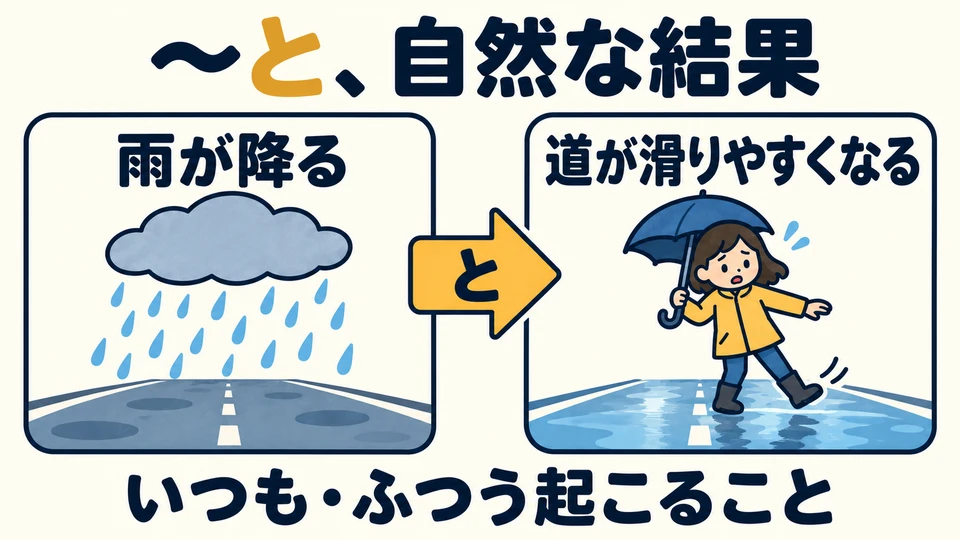
「と」 links a condition to a natural result. Use it for regular patterns or changes that usually happen.
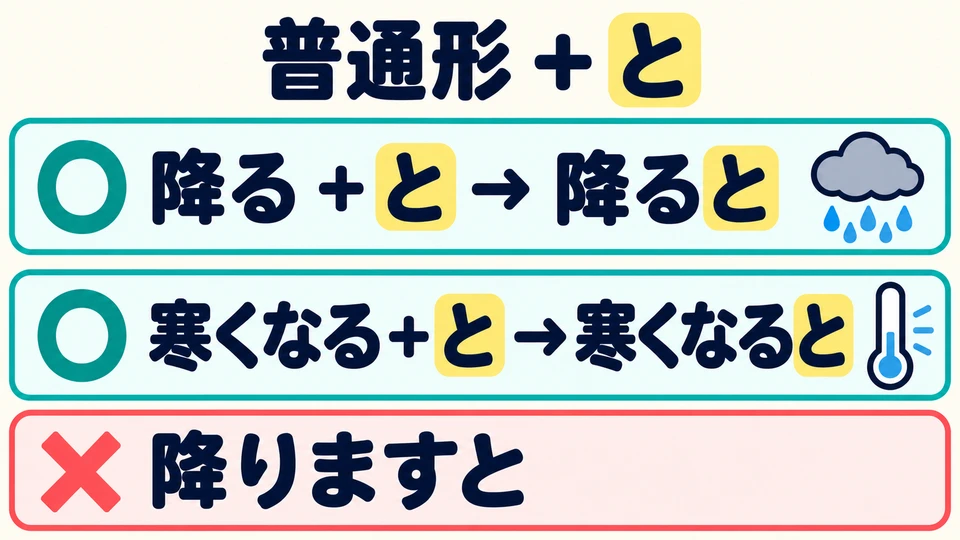
Attach 「と」 to the plain form of a verb: 降ると, 寒くなると. Do not use the ます form.
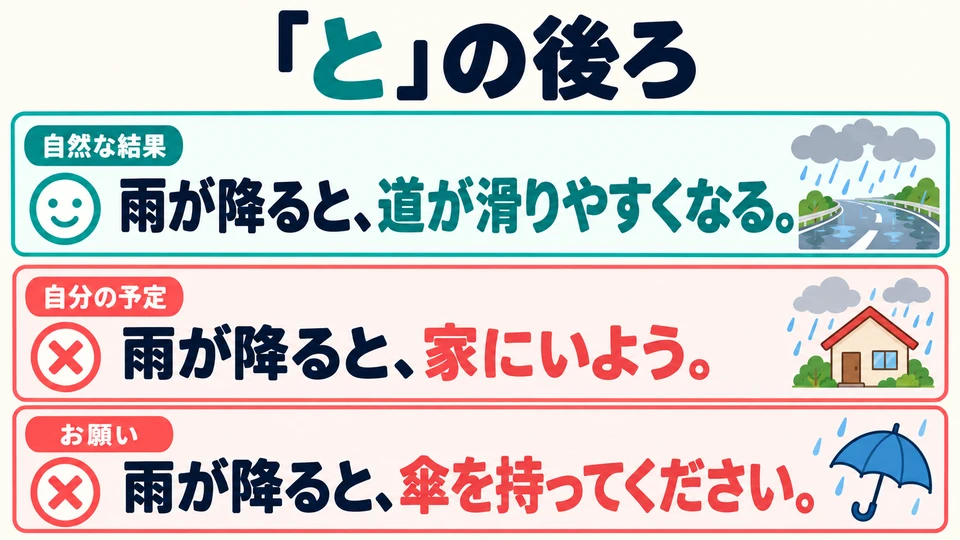
The following clause states an objective result. You cannot use 「と」 this way to express your own plans or a request.
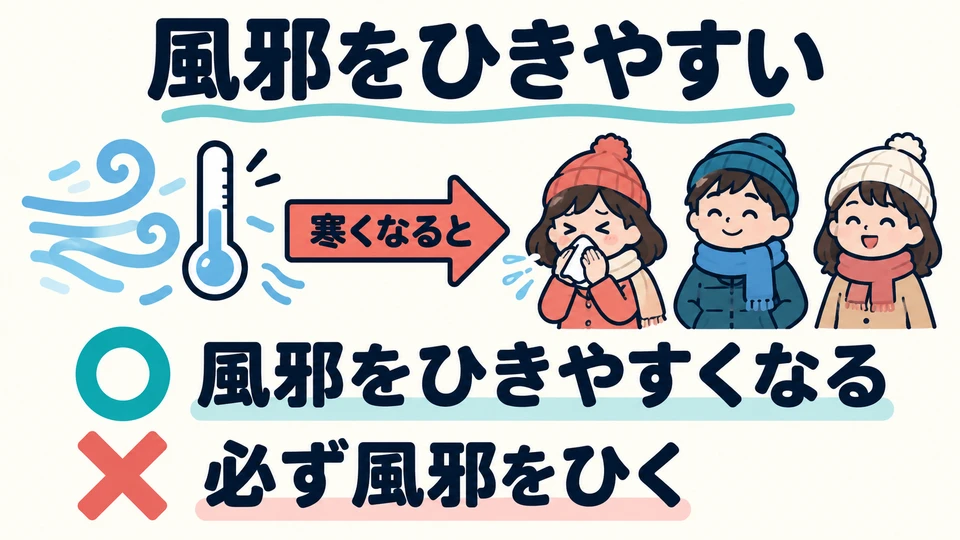
In the example, 「ひきやすい」 means you are more likely to catch a cold. It does not mean you always catch one as soon as it gets cold.
Example sentences
- 雨ameがga降るfuruと、to、道michiがga滑りやすくsuberiyasukuなります。narimasu。
When it rains, the roads become slippery.
In a conversation

- A冬に部屋が乾燥すると、風邪をひきやすくなりますよ。
A: When a room gets dry in winter, it becomes easy to catch a cold.
- Bそうですね。
Check yourself
Level 1 · Recognise
Which sentence is correct?
Level 1 · Recognise
Listen and choose the meaning
Level 2 · Build
Put the words in order
When it rains, the roads become slippery.
Level 3 · Use
What goes in the blank?
雨が降る____、道が滑りやすくなります。
When it rains, the road becomes slippery.
More grammar in this theme
- 〜とcondition and natural result