
Japanese grammar · ≈ JLPT N3 · Intermediate 1
〜だけ・〜だけの~dake / ~dake no
only; just enough for
Use 〜だけ to limit an action or thing, and 〜だけの before a noun for a limited amount or sufficient degree.
How it works
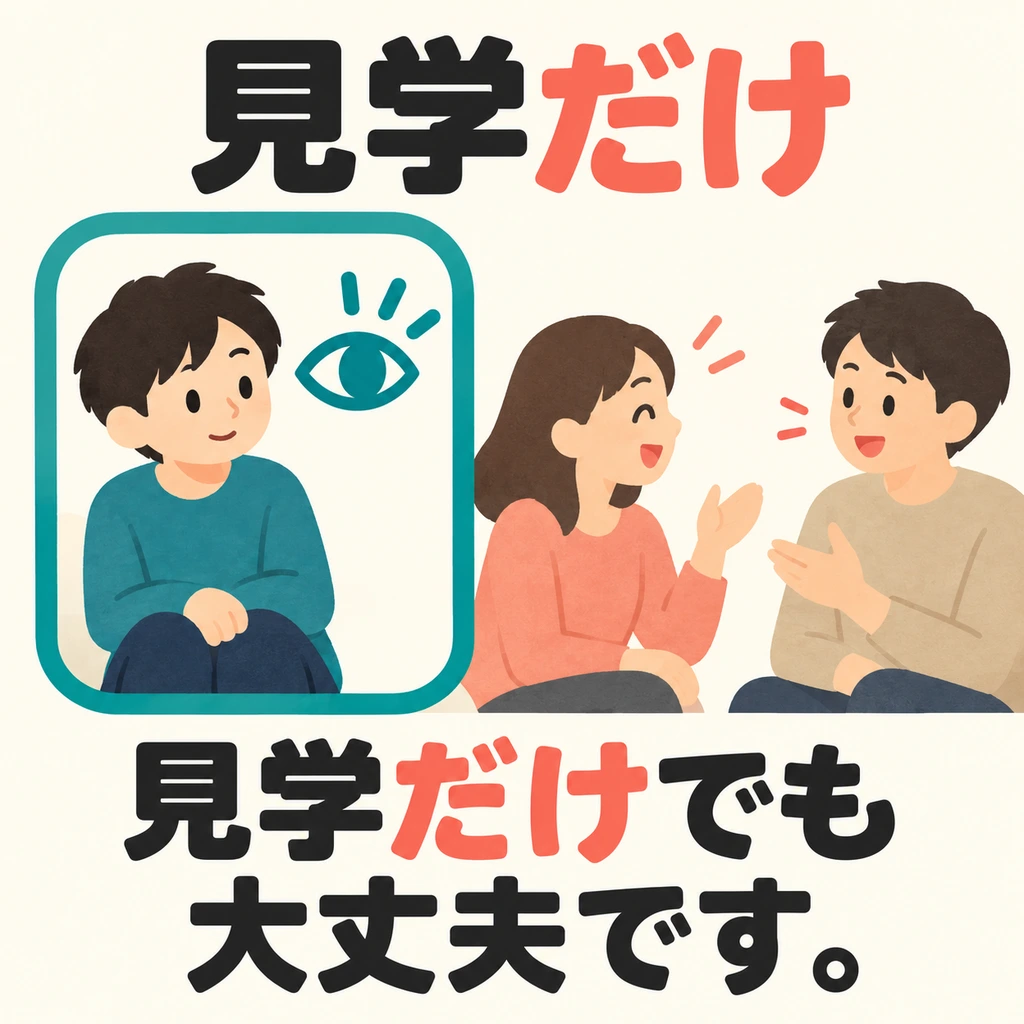
At a meet-up, use 「だけ」 to limit your action to observing: just watching.
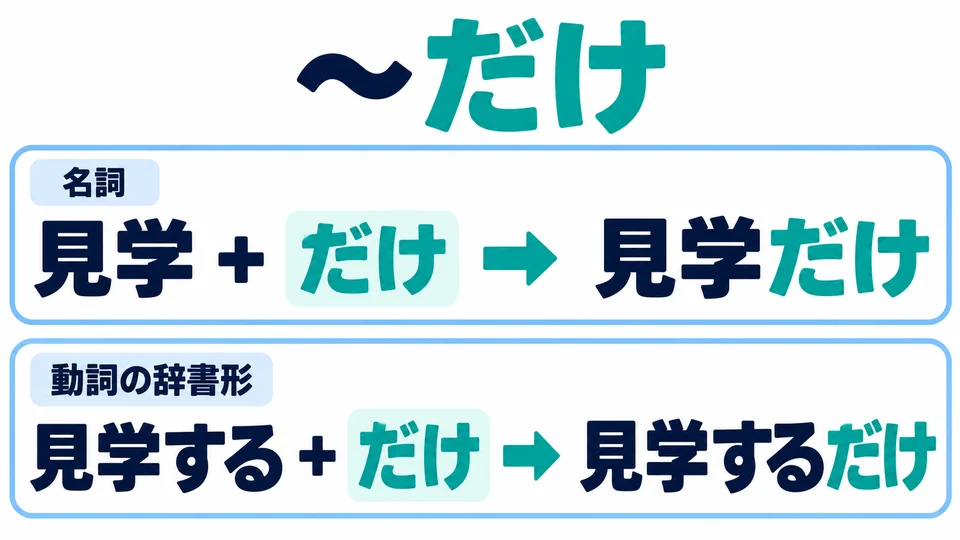
Attach 「だけ」 to a noun or a verb in dictionary form: 見学だけ, 見学するだけ.
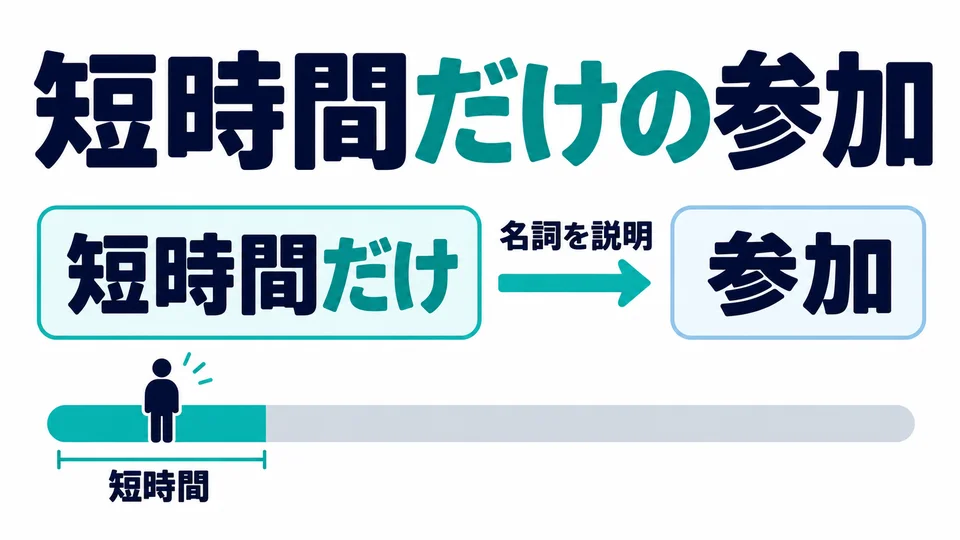
Use 「だけの」 when the limited content modifies a noun: 短時間だけの参加, participation for only a short time.
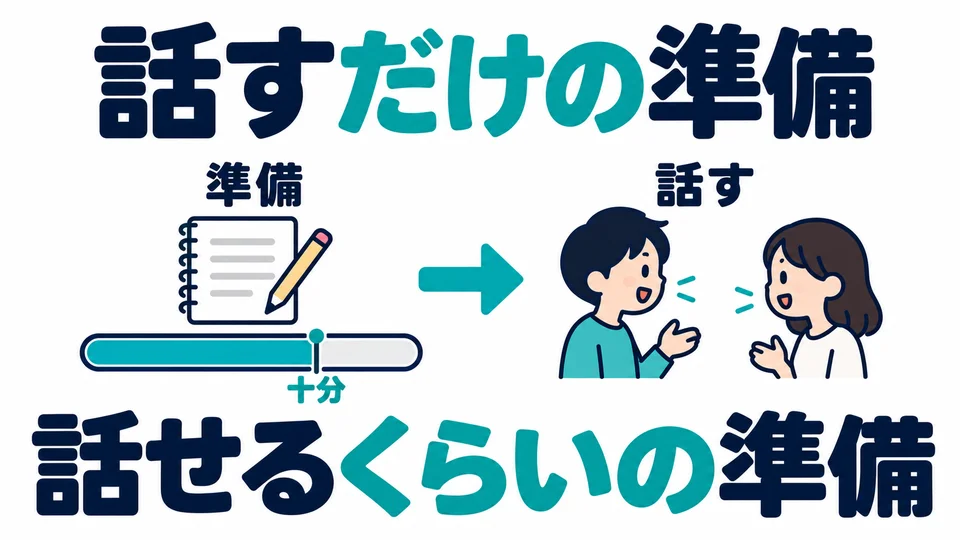
「話すだけの準備」 means enough preparation to have a conversation, emphasizing the amount needed.
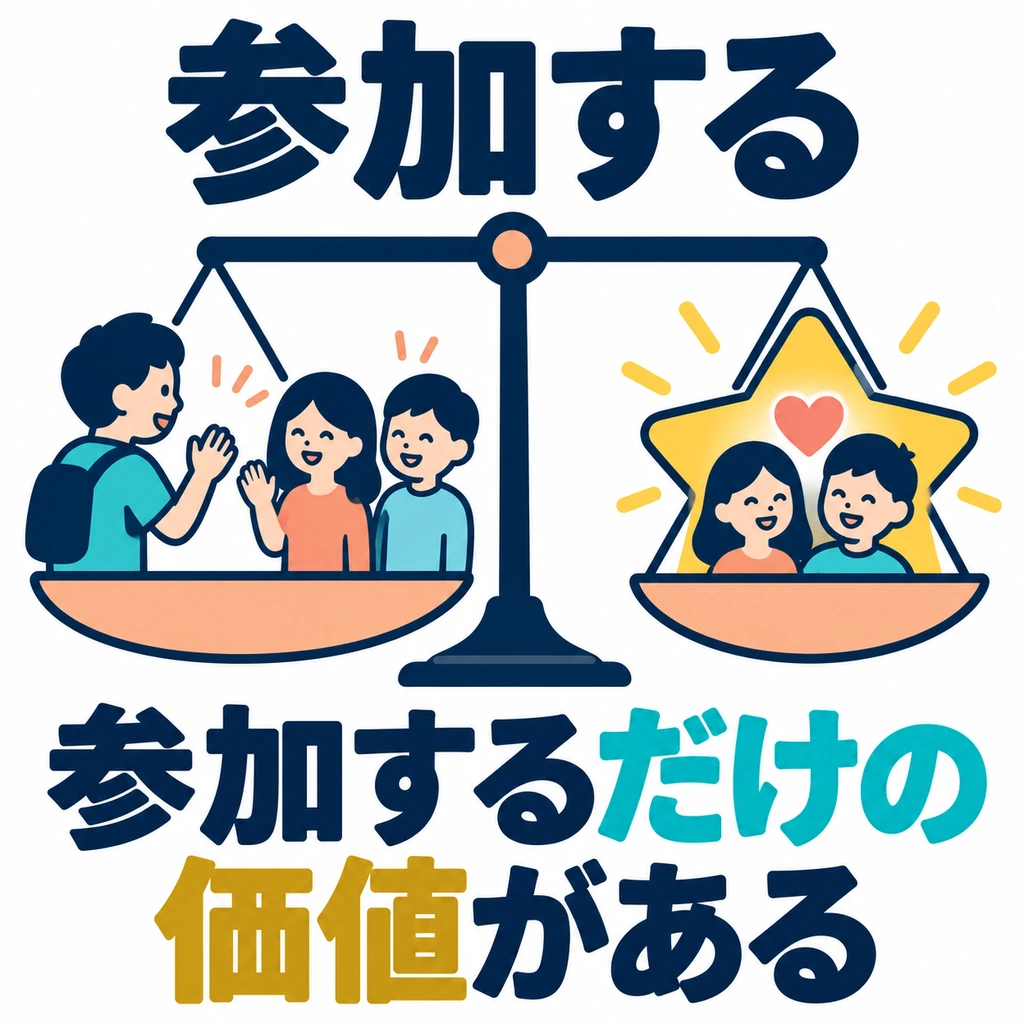
When participation brings worthwhile benefits, 「参加するだけの価値」 means it is worth taking part.
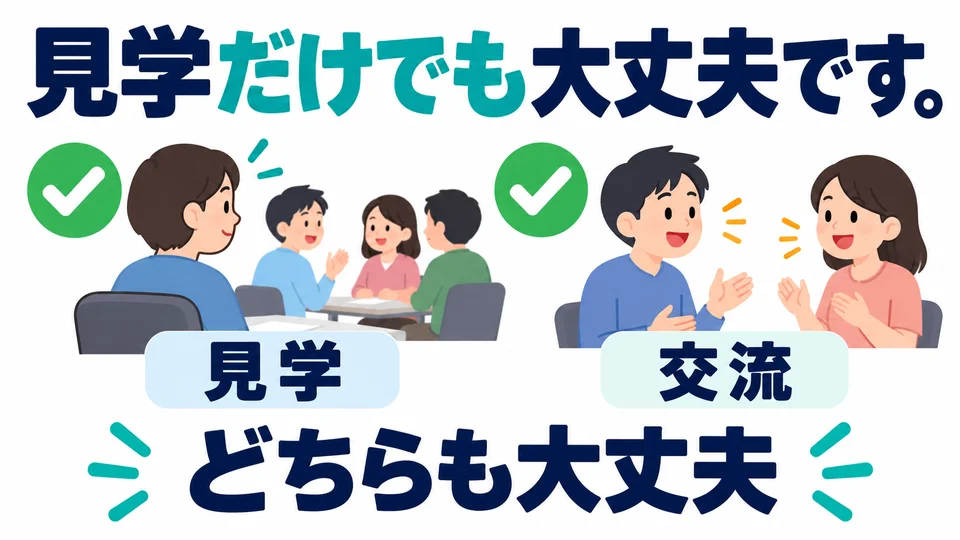
In the example, 「見学だけでも」 says that just observing is fine; joining the conversation is also allowed.
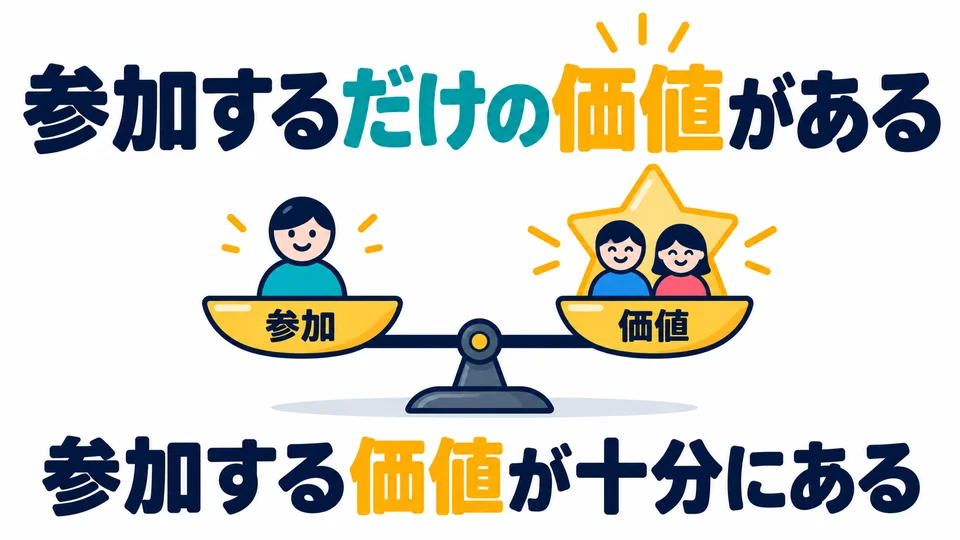
The other example says the event has enough value to make participation worthwhile, not that only participating has value.
Example sentences
- 見学kengakuだけdakeでdeもmo大丈夫です。daijoubudesu。
Just observing is fine.
- このkonoイベントibentoにni
In a conversation

- A明日の交流会は申込不要だから、ちょっと見学するだけでも大丈夫だよ。
A: You don't need to sign up for tomorrow's meet-up, so it's fine just to take a quick look.
Check yourself
Level 1 · Recognise
Which sentence is correct?
Level 1 · Recognise
Listen and choose the meaning
Level 2 · Build
Put the words in order
It is fine even if you only observe.
Level 3 · Use
What goes in the blank?
____でも大丈夫です。
It's fine even if you just observe.
More grammar in this theme
- 〜だけ・〜だけのonly; just enough for