JPEDLAB iconJPEDLAB
Save history

Create an account and play

Explore first, then save your progress whenever you are ready. No email address is required.

Start free
Read as articleCards
See the whole course›Intermediate 1›New Environments and Self-Introduction

Japanese grammar · ≈ JLPT N3 · Intermediate 1

〜だけ・〜だけの~dake / ~dake no

only; just enough for

Use 〜だけ to limit an action or thing, and 〜だけの before a noun for a limited amount or sufficient degree.

Start the interactive lessonIllustrated cards, audio and speaking practice

How it works

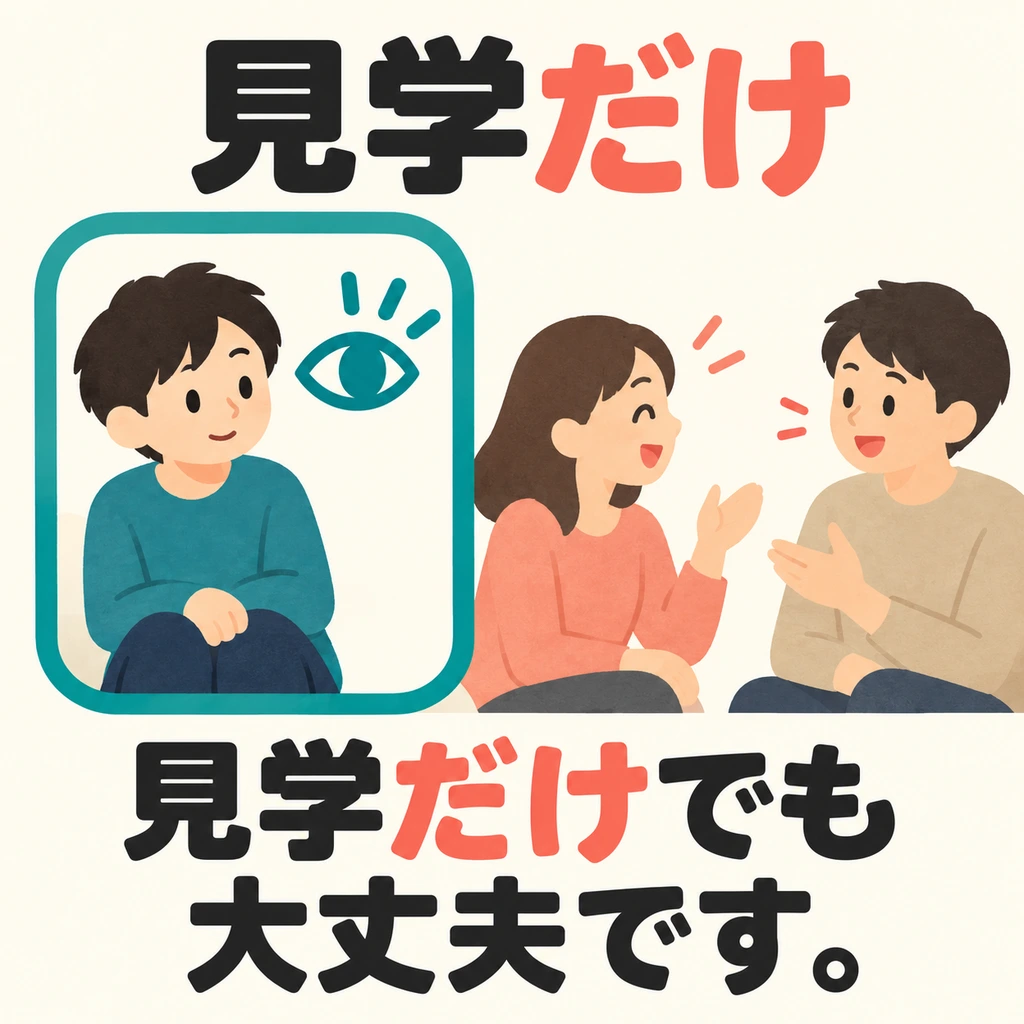
  1. At a meet-up, use 「だけ」 to limit your action to observing: just watching.
    At a meet-up, use 「だけ」 to limit your action to observing: just watching.

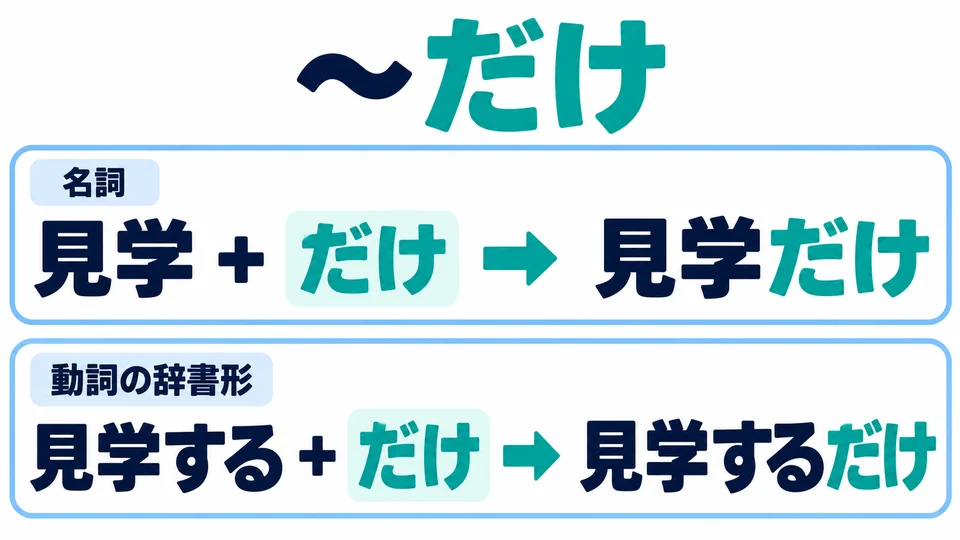
  2. Attach 「だけ」 to a noun or a verb in dictionary form: 見学だけ, 見学するだけ.
    Attach 「だけ」 to a noun or a verb in dictionary form: 見学だけ, 見学するだけ.

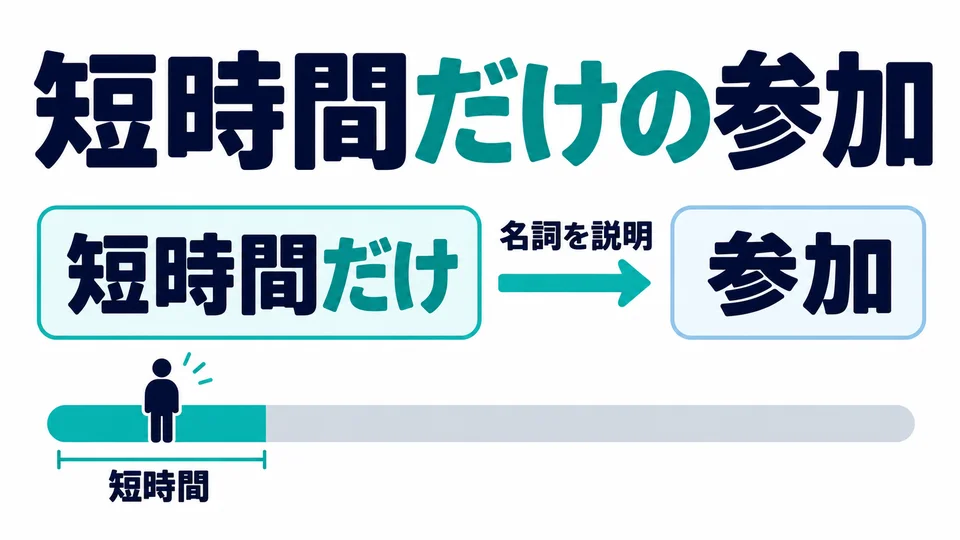
  3. Use 「だけの」 when the limited content modifies a noun: 短時間だけの参加, participation for only a short time.
    Use 「だけの」 when the limited content modifies a noun: 短時間だけの参加, participation for only a short time.

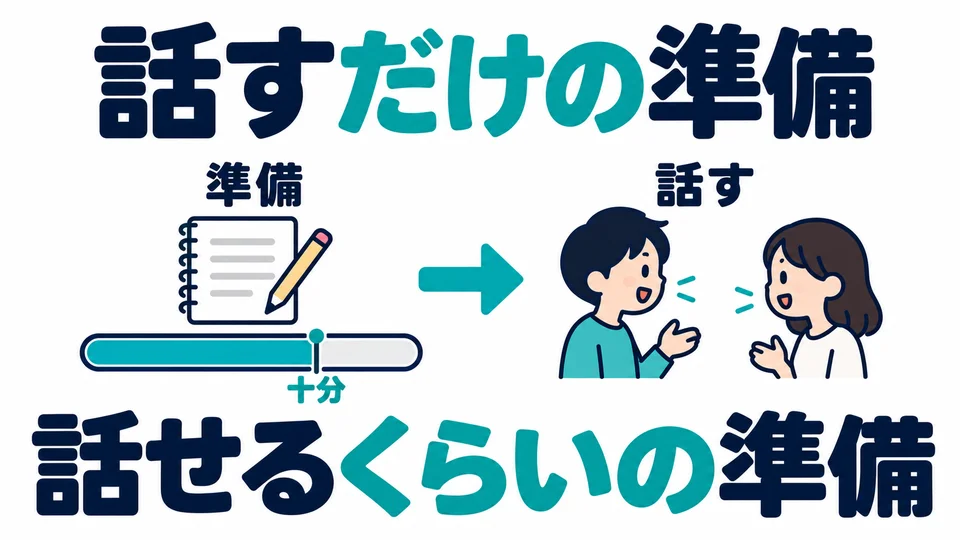
  4. 「話すだけの準備」 means enough preparation to have a conversation, emphasizing the amount needed.
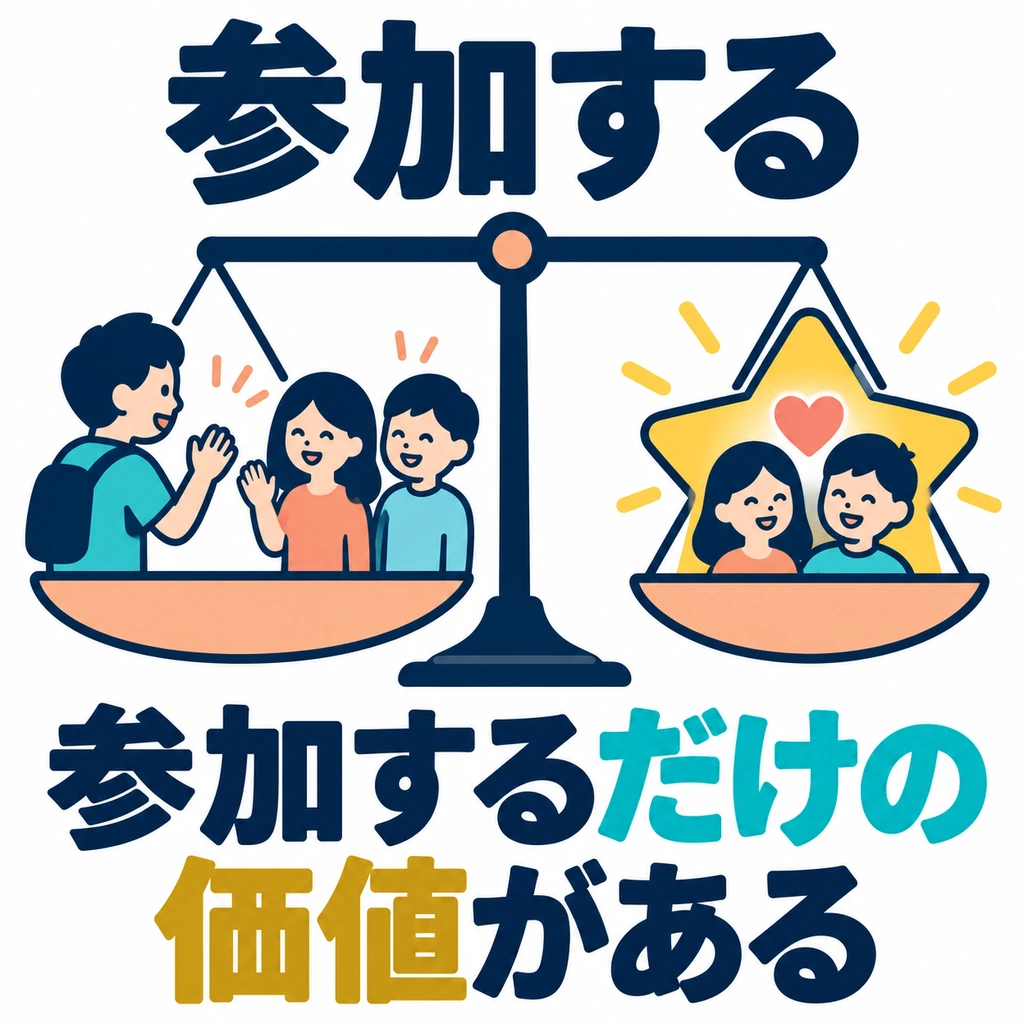
    「話すだけの準備」 means enough preparation to have a conversation, emphasizing the amount needed.

  5. When participation brings worthwhile benefits, 「参加するだけの価値」 means it is worth taking part.
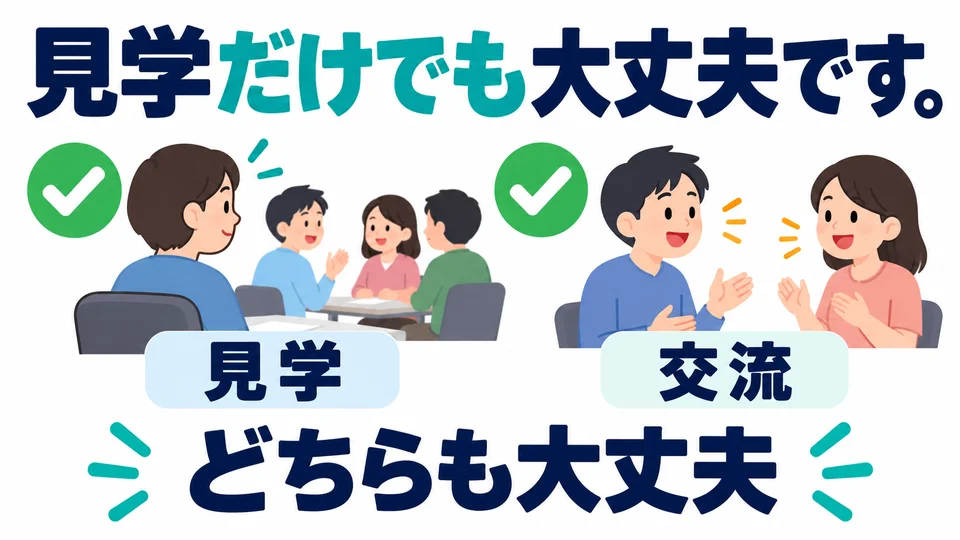
    When participation brings worthwhile benefits, 「参加するだけの価値」 means it is worth taking part.

  6. In the example, 「見学だけでも」 says that just observing is fine; joining the conversation is also allowed.
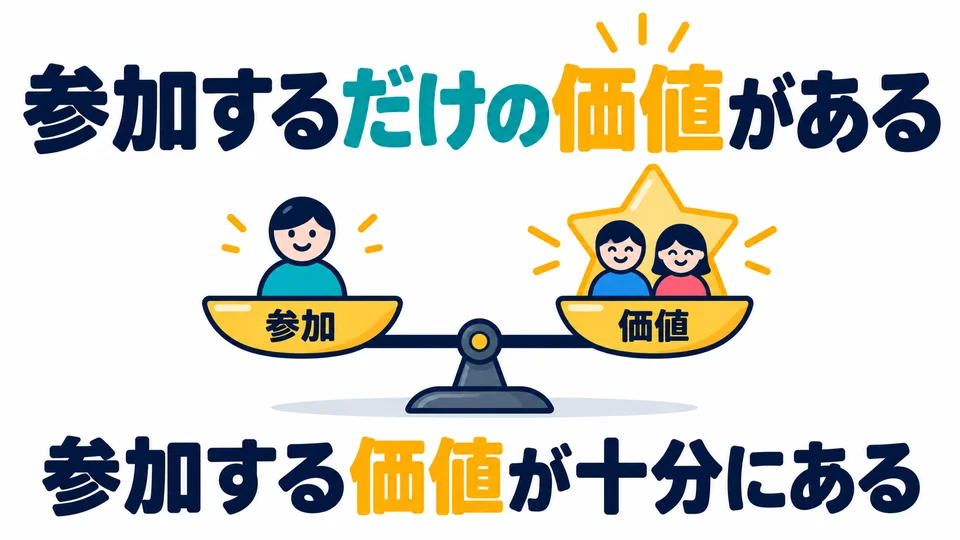
    In the example, 「見学だけでも」 says that just observing is fine; joining the conversation is also allowed.

  7. The other example says the event has enough value to make participation worthwhile, not that only participating has value.

    The other example says the event has enough value to make participation worthwhile, not that only participating has value.

Example sentences

  • 見学けんがくkengakuだけdakeでdeもmo大丈夫です。だいじょうぶです。daijoubudesu。

    Just observing is fine.

  • このkonoイベントいべんとibentoにni

In a conversation

  • A
    明日あすの交流こうりゅう会かいはわ申込もうしこみ不要だふようだから、ちょっと見学けんがくするだけでも大丈夫だだいじょうぶだよ。

    A: You don't need to sign up for tomorrow's meet-up, so it's fine just to take a quick look.

Check yourself

  1. Level 1 · Recognise

    Which sentence is correct?

  2. Level 1 · Recognise

    Listen and choose the meaning

  3. Level 2 · Build

    Put the words in order

    It is fine even if you only observe.

  4. Level 3 · Use

    What goes in the blank?

    ____でも大丈夫です。

    It's fine even if you just observe.

More grammar in this theme

  • 〜だけ・〜だけのonly; just enough for

Keep practising

Test your Japanese vocabulary12 adaptive questions, freeCheck your pronunciationRead aloud and get a scorePractise verb forms10-question conjugation quizSee the whole courseGrammar, vocabulary and quizzes by theme
は、わ、
wa、
参加さんかsanka
するsuru
だけdake
のno
価値かちkachi
がga
あるaru
とto
思います。おもいます。omoimasu。

I think this event is worth just participating in.

  • B
    そうなんだ。でも、せっかく行くなら、いくなら、自由じゆう交流こうりゅうの時間じかんに話すはなすだけの準備じゅんびはわしたいな。

    B: I see. But if I'm going through the trouble of going, I want to do at least enough preparation to talk during the free-flowing conversation time.

  • A
    いいね。短時間たんじかんだけの参加さんかでも、新しいあたらしい友達ともだちを作るつくるチャンスちゃんすはわたくさんあるよ。

    A: That's good. Even if it's just a short participation, there are plenty of chances to make new friends.

  • 〜において・〜におけるformal setting or field
    〜上でconditions for doing something
    〜た上でcomplete a step before deciding
    〜てほしいwant someone to do
    〜てもらいたいwant to receive someone’s help
    〜よねseek agreement or confirmation
    〜とか〜とかexamples among other things
    〜でしょう・〜だろうlikely; probably
    〜から〜にかけてapproximate time or place range
    〜とcondition and natural result
    〜がきっかけでtrigger for a change
    〜っぽいcharacteristic or impression
    〜でもeven in a situation
    Previous〜とか〜とか
    Next〜でしょう・〜だろう