
〜てほしい~te hoshii
Te hoshii (〜てほしい) means “want someone to do”.
I want the participants to be on time.
Use 〜てほしい to express the speaker’s wish for another person to do something; it can sound direct as a request.
In the course
How it works
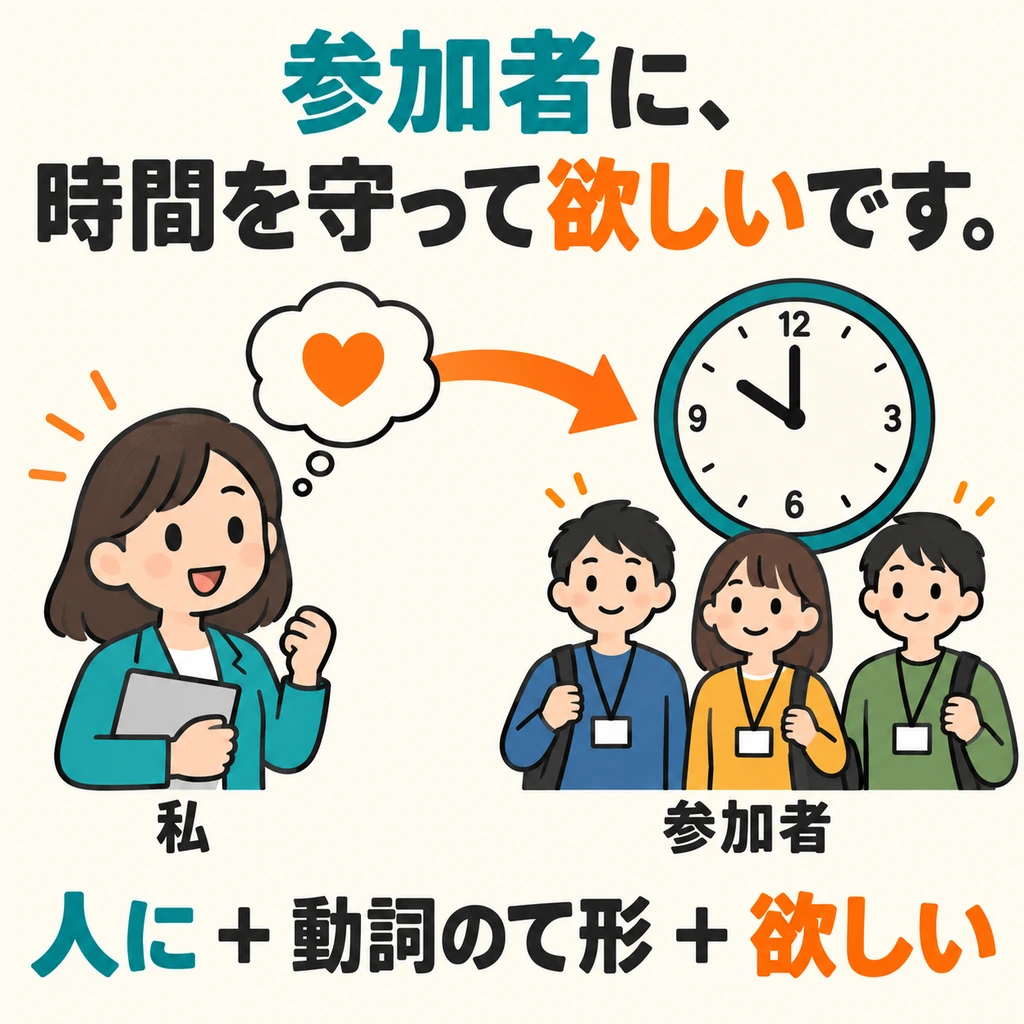
Who has the wish, and who acts? The organizer wants the participants to be punctual. The wish belongs to the speaker.
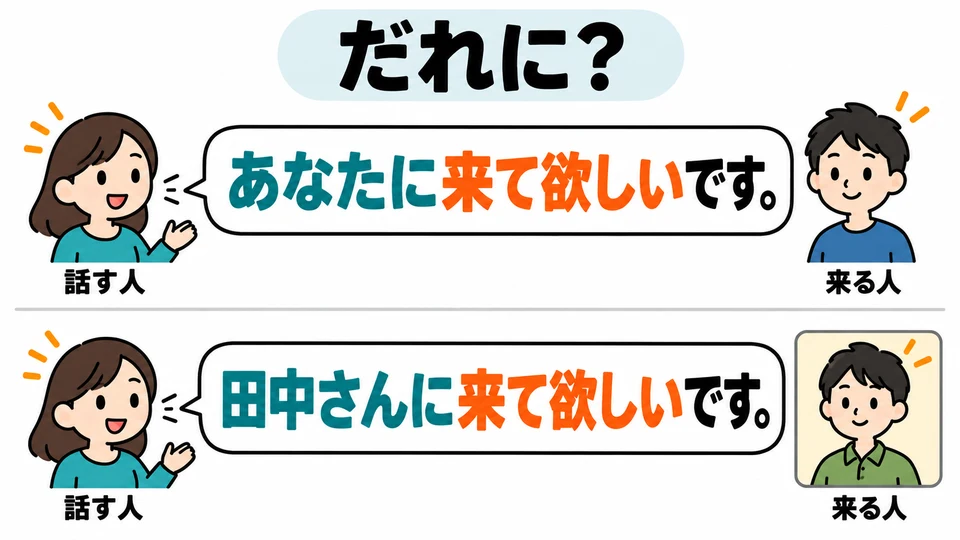
Use 「人に」 to show who you want to act. This can be the listener or a third person.
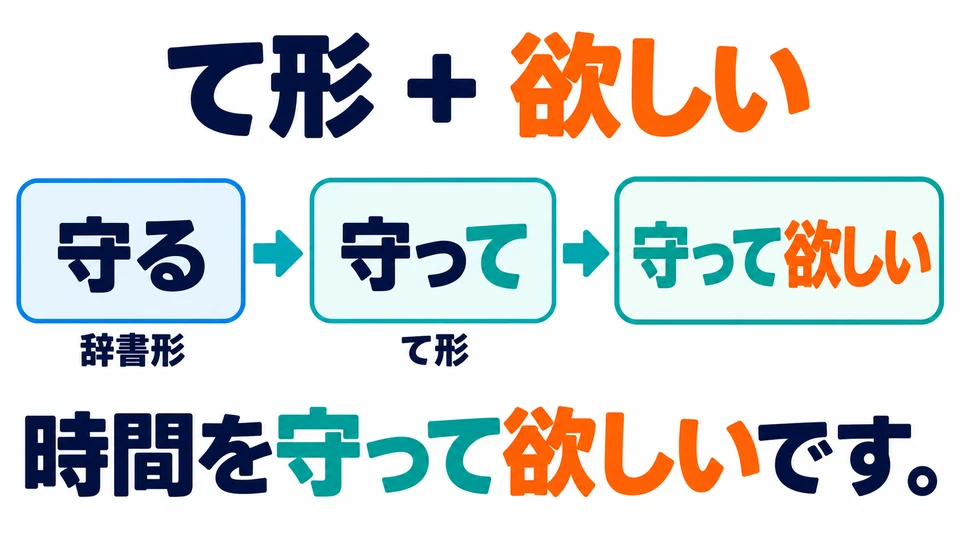
Put the verb in its て-form, then add 「欲しい」. For example, 「守る」 becomes 「守って欲しい」.
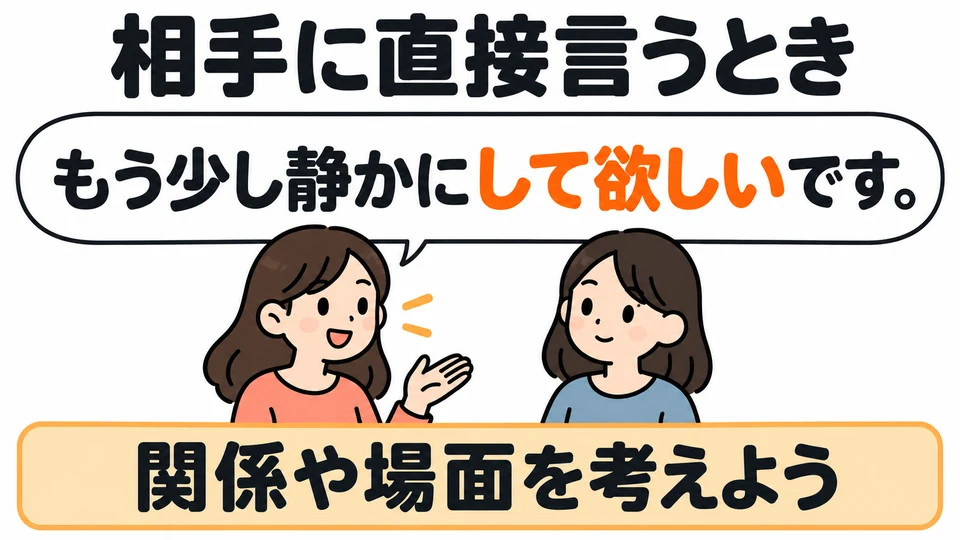
Said directly to someone, it can also express a request. It sounds fairly direct, so consider your relationship.
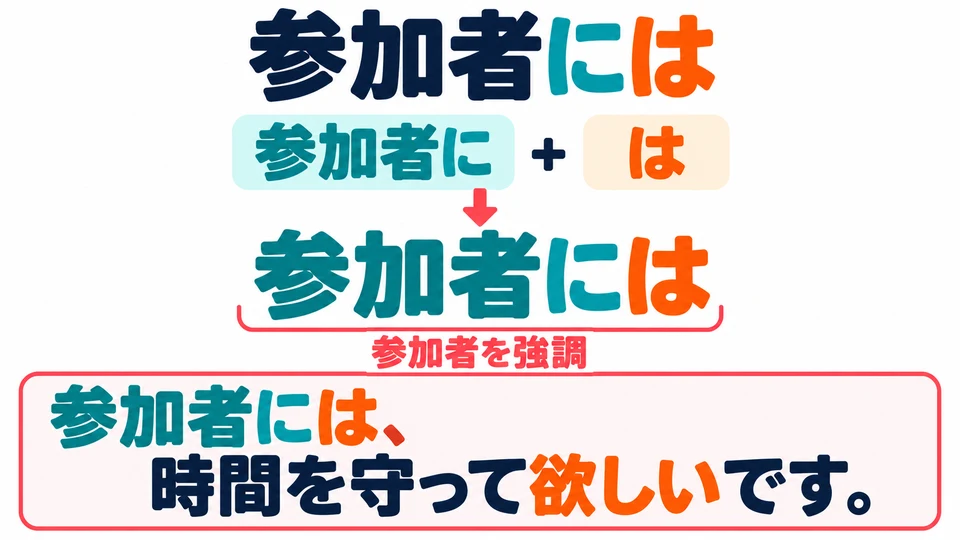
In the example, 「には」 adds 「は」 after 「に」, highlighting the participants whom the speaker wants to be punctual.
Example sentences
- 参加者sankashaにniは、wa、時間jikanをo守っmamotてte欲しいです。hoshiidesu。
I want the participants to be on time.
- 初めてhajimete
In a conversation

- A今回のイベントは先着順ですか。
A: Is this event on a first-come, first-served basis?
- Bいいえ、抽選ですよ。
B: No, it is by lottery.
Check yourself
Level 1 · Recognise
Which sentence is correct?
Level 1 · Recognise
Listen and choose the meaning
Level 2 · Build
Put the words in order
I want the participants to be punctual.
Level 3 · Use
What goes in the blank?
参加者には、時間を____です。
I want participants to be punctual.
More grammar in this theme
- 〜てほしいwant someone to do