JPEdLab iconJPEdLab
Save history

Create an account and play

Explore first, then save your progress whenever you are ready. No email address is required.

Start free
  1. Japanese grammar
  2. JLPT N4 grammar
  3. 〜はずがない

〜はずがない~ hazu ga nai

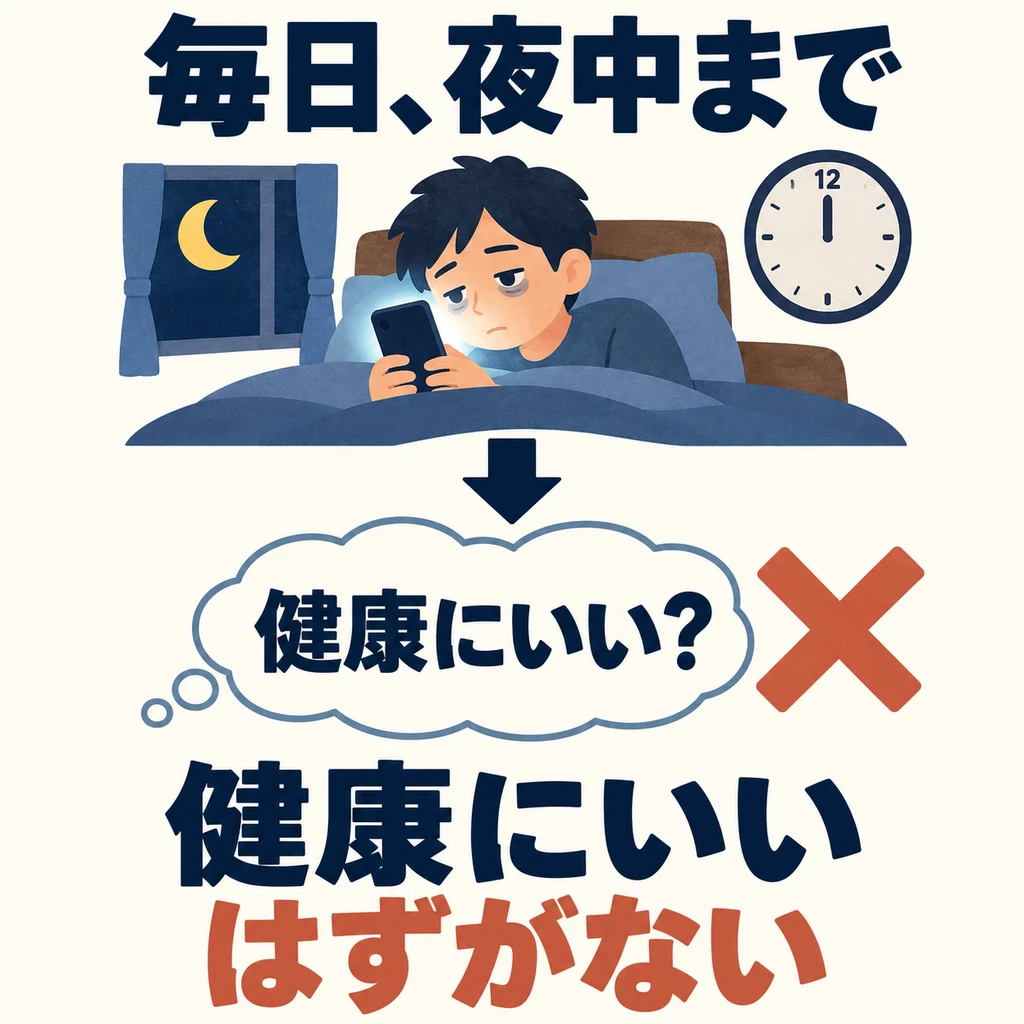
Hazu ga nai (〜はずがない) means “cannot possibly; no way”.

毎日まいにちmainichi夜中よなかyonakaまでmadeスマホすまほsumahoをo見みmiてteいiて、te、健康けんこうkenkouにいいniiiはずhazuがgaありません。arimasen。

Looking at your smartphone until midnight every day cannot possibly be good for your health.

Use 「〜はずがない」 to strongly reject a possibility based on what you know.

In the course›

How it works

  1. Looking at your phone late into the night every day. Look at the picture: could this be good for your health?
    Looking at your phone late into the night every day. Look at the picture: could this be good for your health?

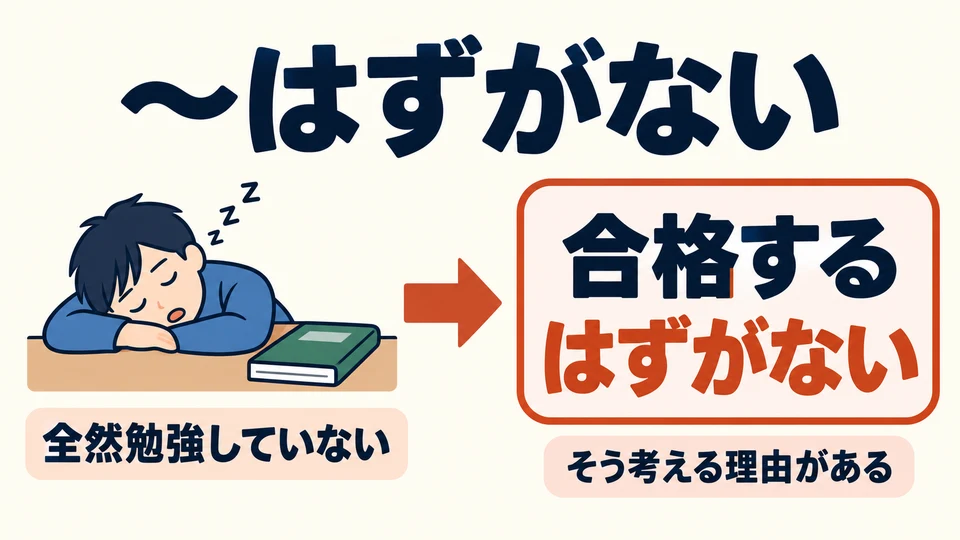
  2. Use 「はずがない」 to strongly reject a possibility based on what you know.
    Use 「はずがない」 to strongly reject a possibility based on what you know.

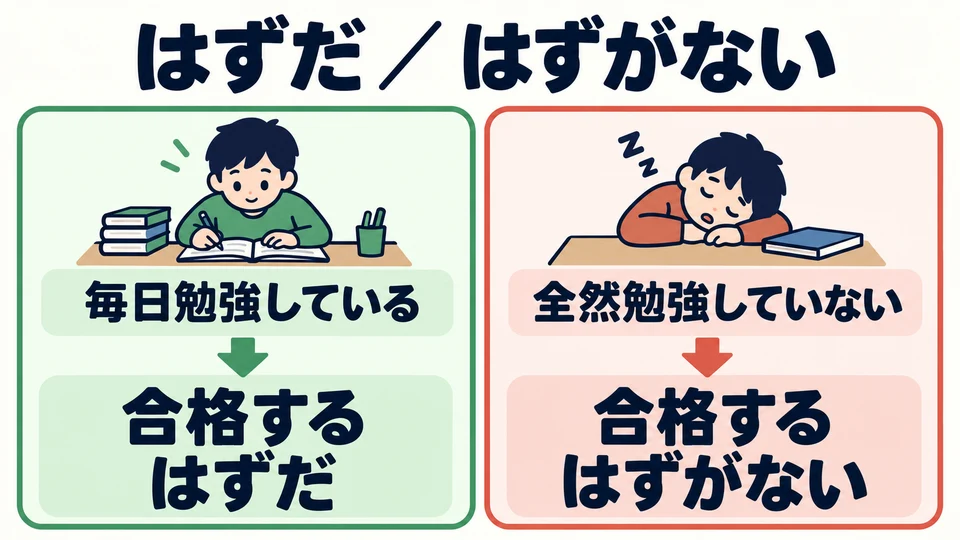
  3. 「はずだ」 means you expect something to be the case; 「はずがない」 means you judge that it cannot be the case.
    「はずだ」 means you expect something to be the case; 「はずがない」 means you judge that it cannot be the case.

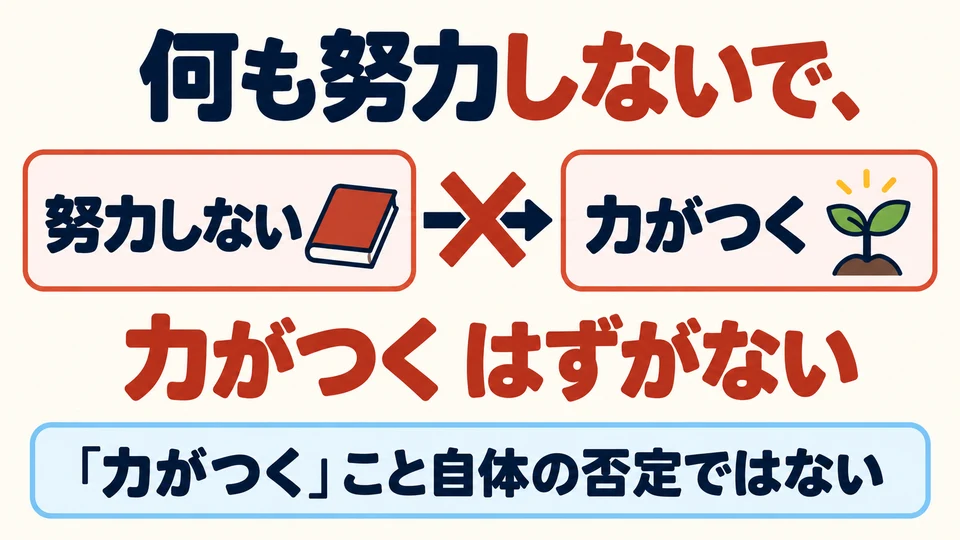
  4. The example about effort rejects “gaining ability without making any effort.” It does not say that ability cannot grow.
    The example about effort rejects “gaining ability without making any effort.” It does not say that ability cannot grow.

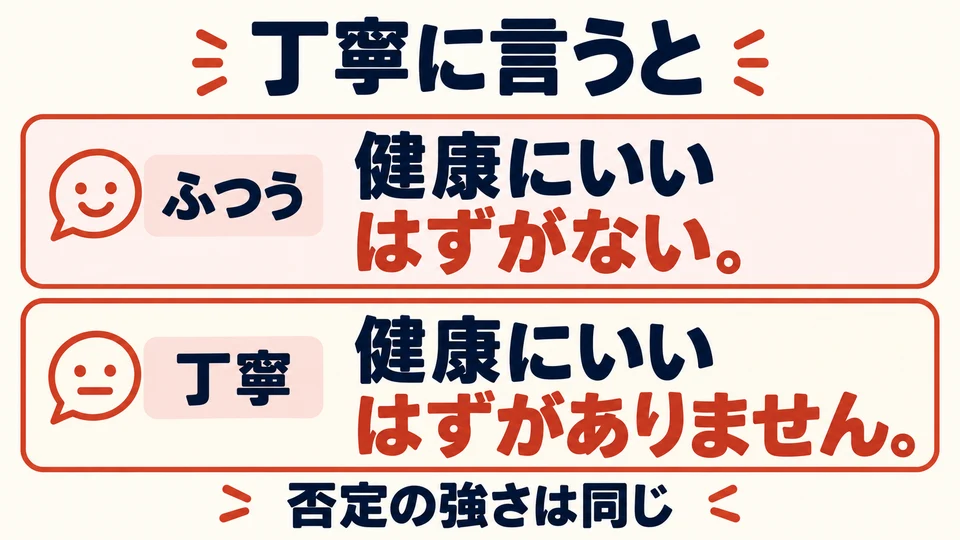
  5. 「はずがありません」 in the examples is the polite form. The negation is just as strong.

    「はずがありません」 in the examples is the polite form. The negation is just as strong.

Example sentences

  • 毎日まいにちmainichi夜中よなかyonakaまでmadeスマホすまほsumahoをo見みmiてteいiて、te、健康けんこうkenkouにいいniiiはずhazu

In a conversation

  • A
    最近、さいきん、仕事しごとのミスみすが多くおおくて困っこまっているんだ。

    A: I'm having trouble lately because I've been making a lot of mistakes at work.

  • B
    毎日まいにちやる

Check yourself

  1. Level 1 · Recognise

    Which sentence is correct?

  2. Level 1 · Recognise

    Listen and choose the meaning

  3. Level 2 · Build

    Put the words in order

    He studies every day by finding spare moments, so there is no way he would fail the test.

  4. Level 3 · Use

    What goes in the blank?

    毎日すき間時間を見つけて勉強している彼が、テストに落ちる____。

    There's no way he, who studies whenever he finds spare time, would fail the test.

More grammar in this theme

  • 〜はずがないcannot possibly; no way

More JLPT N4 grammar

Keep practising

Test your Japanese vocabulary12 adaptive questions, freeCheck your pronunciationRead aloud and get a scorePractise verb forms10-question conjugation quizSee the whole courseGrammar, vocabulary and quizzes by theme
がga
ありません。arimasen。

Looking at your smartphone until midnight every day cannot possibly be good for your health.

  • 何なにnaniもmo努力どりょくdoryokuしないshinaiで、de、将来しょうらいshouraiのno力ちからchikaraがgaつくtsukuはずhazuがgaありません。arimasen。

    There is no way you can develop your future potential without putting in any effort.

  • こと
    の
    優先ゆうせん
    順位じゅんい
    を
    決めないきめない
    で、
    仕事しごと
    の
    効率こうりつ
    が
    上がるあがる
    はず
    が
    ない
    よ。

    B: There is no way your work efficiency will improve if you don't prioritize your daily tasks.

  • A
    確かにそうたしかにそうだね。明日あすからはわ朝あさ一いち番ばんにやることのリストりすとを作っつくって見み直しなおしてみるよ。

    A: You're absolutely right. Starting tomorrow, I'll make a to-do list first thing in the morning and review it.

  • More quizzesOpen this lesson’s quizzes in the course
    Intermediate 1
    Time Use and Future Planning
    〜なんてsurprise; can you believe
    〜ば〜ほどthe more…, the more…
    こんな・そんな・あんな・どんなthis, that, what kind
    こんなふうにin this way
    〜ことでby doing; through
    〜なぁsoftly voiced wish
    〜ことがありますsometimes happens
    〜こともありますsometimes also happens
    〜にとってfrom someone’s perspective
    〜ことだしsince, given that
    〜てくれない?casual request for help
    〜てくれる?could you do it for me
    〜じゃない?・〜んじゃない?right?; gentle suggestion
    Next〜なんて
    See all 138
    〜とか〜とかexamples among other things
    〜でしょう・〜だろうlikely; probably
    〜とcondition and natural result
    〜でしょうかgentle question or request
    お・ご〜です/でしょうrespectful description or question
    〜場合in the case that
    〜たいことがあるんですがgentle topic opener
    〜みたいなんですが・〜ようなんですがtentative problem explanation