
〜なんて~ nante
Nante (〜なんて) means “surprise; can you believe”.
I was surprised to learn that how you use your morning time can change your whole day.
「〜なんて」 highlights something unexpected and adds the speaker’s surprised or impressed reaction.
In the course
How it works

So much data was organized in such a short time! The speaker had not expected this and feels surprised.

「なんて」 highlights something unexpected and conveys a feeling of “Wow, I never expected that!”

Put the surprising content before 「なんて」, then add your reaction or thoughts after it.

In the picture, 「すごいね」 follows to express admiration. Surprise can also be a feeling of being impressed.
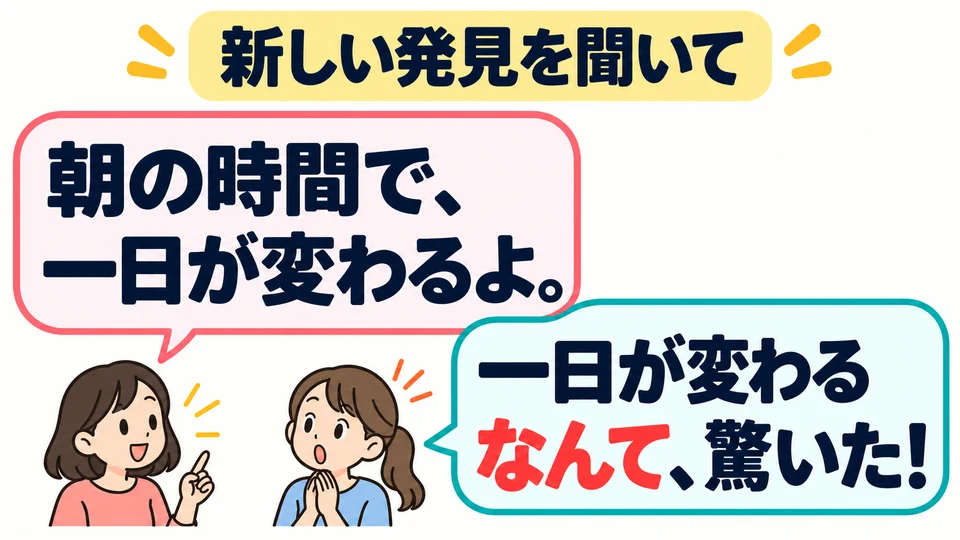
This is an emotional expression often used in conversation. You can also use it when you hear about a new discovery.
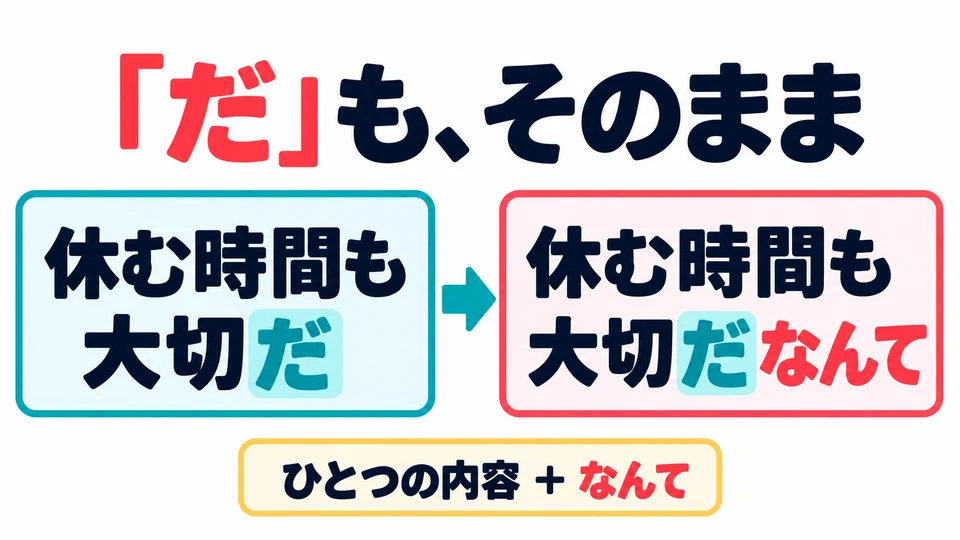
In 「大切だなんて」 in the example, keep 「だ」. The whole idea “rest is important too” comes before 「なんて」.
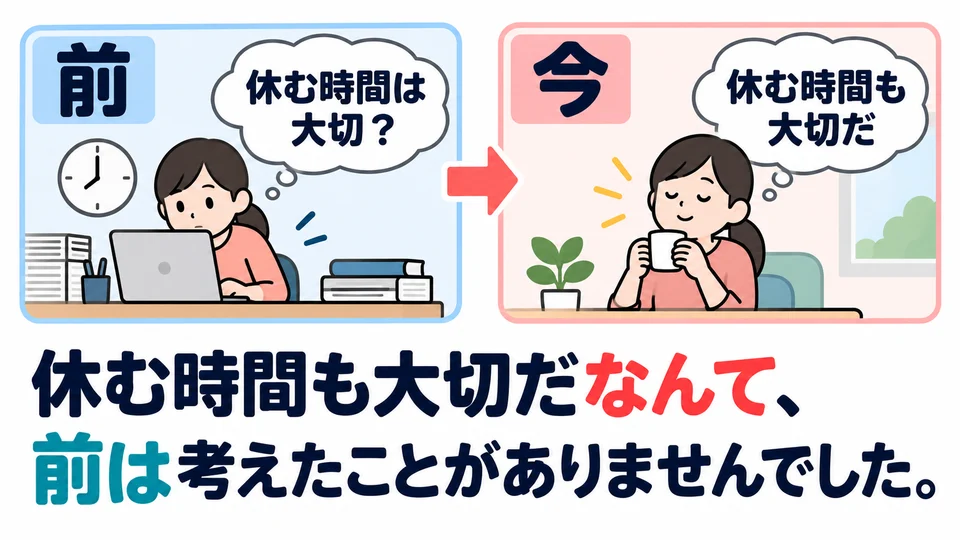
The second sentence does not say “surprised,” but 「前は考えたことがありませんでした」 still shows that the idea was unexpected.
Example sentences
- 朝asaのno時間jikanのno使い方tsukaikataでde一ichi日nichiがga変わるkawaruなんて、nante、驚きました。
In a conversation

- Aこの特集記事、読者の意見をたくさん集めて作ったらしいよ。
A: I heard that this special feature article was put together by gathering a lot of opinions from readers.
- B短い
Check yourself
Level 1 · Recognise
Which sentence is correct?
Level 1 · Recognise
Listen and choose the meaning
Level 2 · Build
Put the words in order
I was surprised that just reading a magazine column could improve my bad habits.
Level 3 · Use
What goes in the blank?
この小さな店がこんなに人気だ____、知りませんでした。
I had no idea this small shop was so popular.
More grammar in this theme
- 〜なんてsurprise; can you believe