
Japanese grammar · ≈ JLPT N3 · Intermediate 2
〜ていただきたいんですが~te itadakitai n desu ga
polite request for help
Use 〜ていただきたいんですが after a verb’s て-form to politely ask someone to do something for you.
How it works
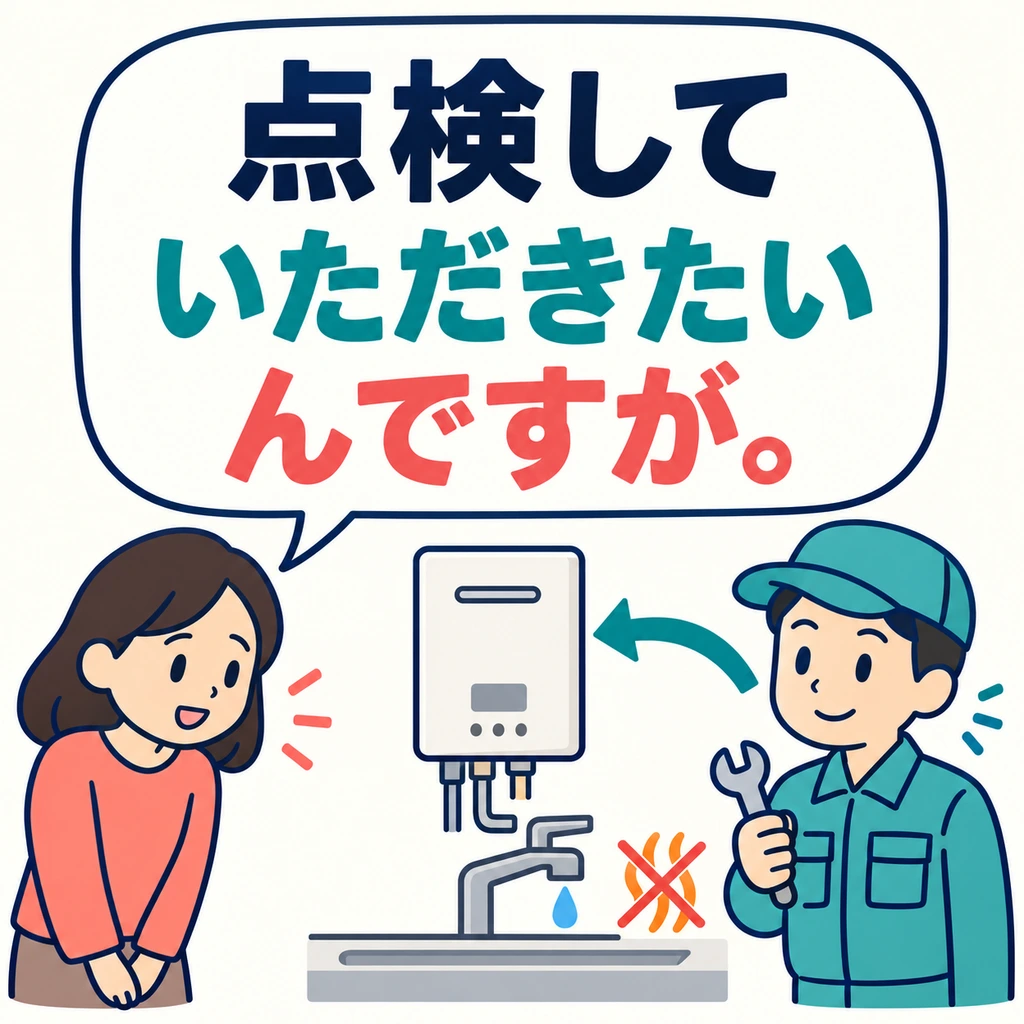
The water heater has no hot water, so the resident asks someone to check it. Use this phrase when you need help.
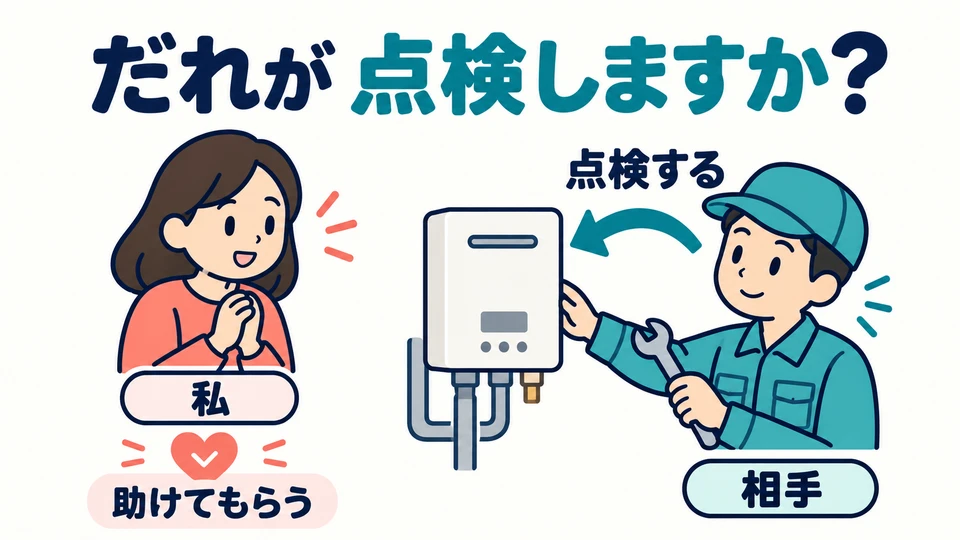
Who does the checking in the picture? The repair technician. The other person performs the action, and the speaker receives help.
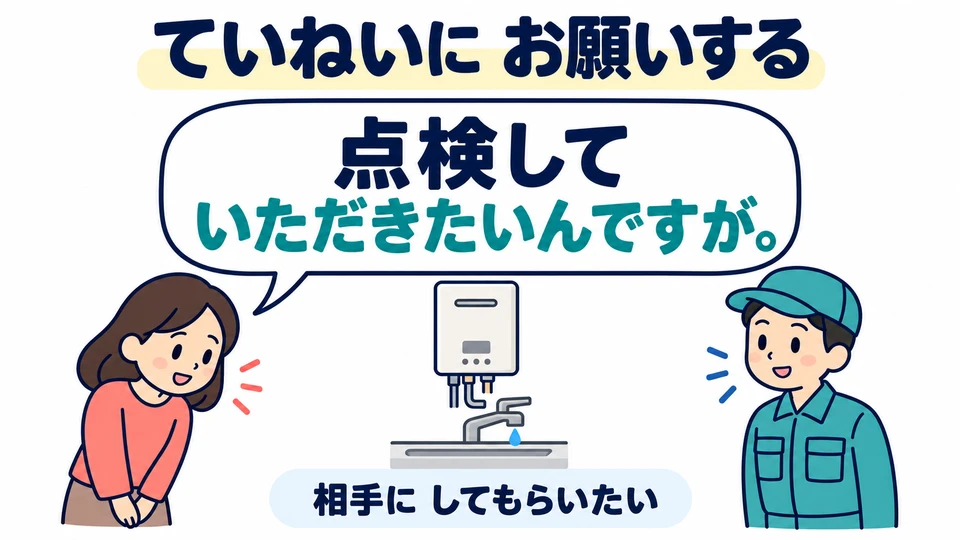
This pattern means “I would like you to do something for me.” It politely expresses a wish for the other person to consider.
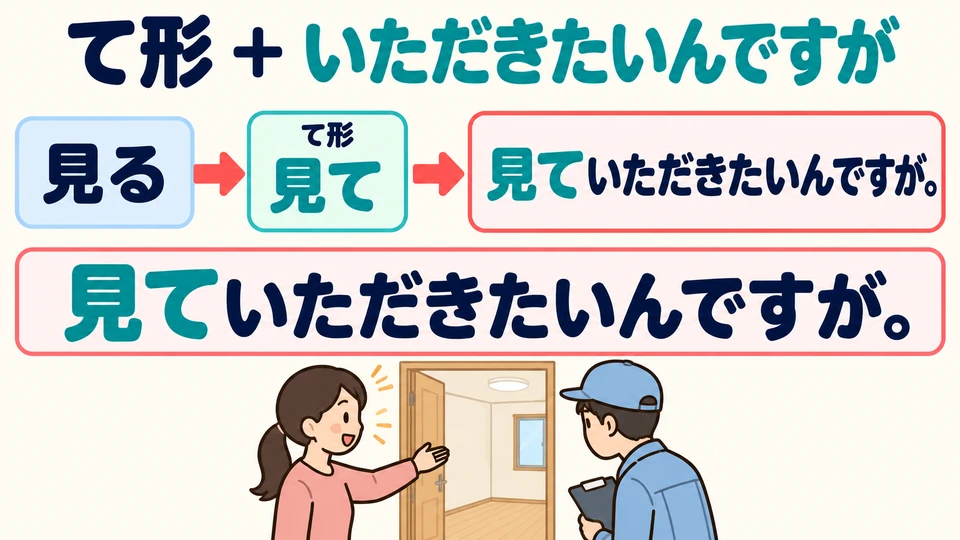
Use the verb’s て-form, then add 「いただきたいんですが」. For example, 「見る」 becomes 「見て」.
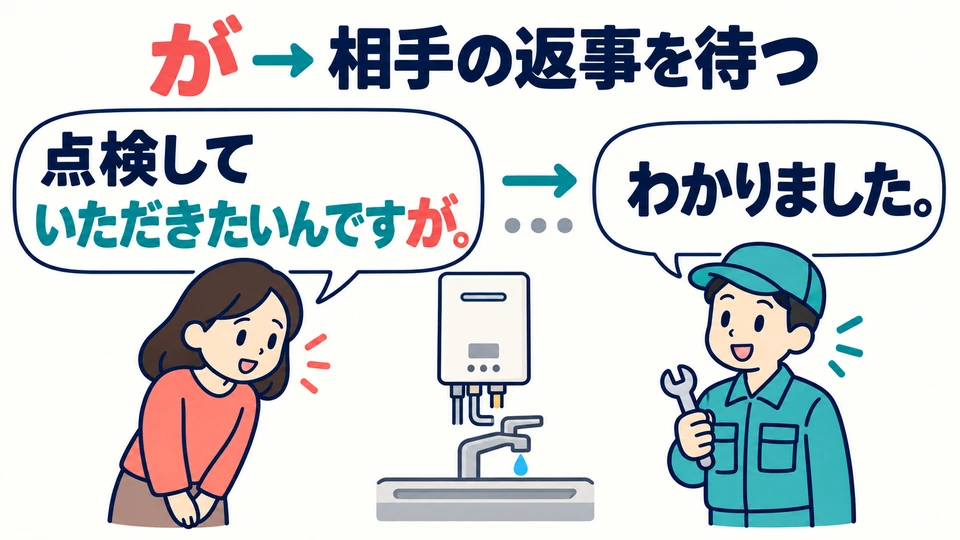
The final 「が」 softens the request and leaves room for a reply. You do not need to follow it with a contrasting statement here.
Example sentences
- 一度、ichido、部屋heyaをo見miてteいただきたいitadakitaiんnですdesuが。ga。
I would like you to take a look at the room.
In a conversation
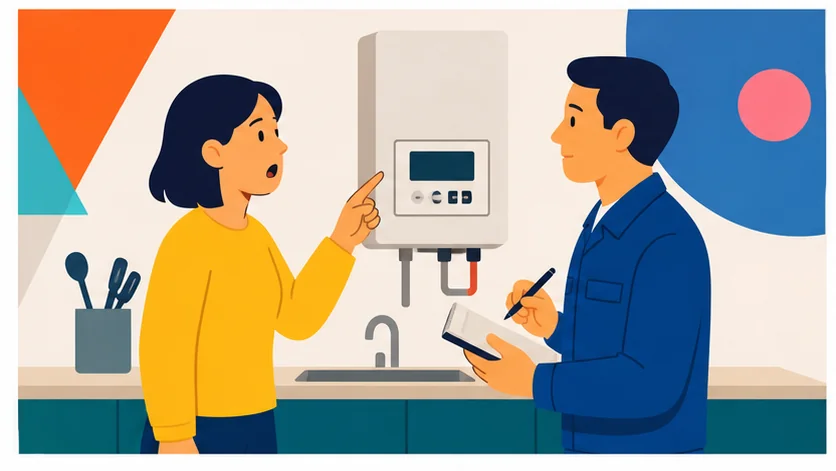
- Aすみません、台所の給湯器からお湯が出ないので、点検していただきたいんですが。
A: Excuse me, the hot water is not coming out of the kitchen water heater, so I would like you to check it.
Check yourself
Level 1 · Recognise
Which sentence is correct?
Level 1 · Recognise
Listen and choose the meaning
Level 2 · Build
Put the words in order
The air conditioner has broken down, so I'd like to ask you to arrange a repair request.
Level 3 · Use
What goes in the blank?
エアコンが故障したので、修理依頼をし____。
The air conditioner broke down, so I'd like to ask you to arrange a repair.
More grammar in this theme
- 〜ていただきたいんですがpolite request for help