
〜ないことには〜ない~nai koto ni wa ~nai
Nai koto ni wa nai (〜ないことには〜ない) means “unless, it cannot happen”.
We cannot issue a card unless we can verify your identity.
Use 〜ないことには〜ない to stress that a condition is essential for a result to be possible, without guaranteeing it.
In the course
How it works
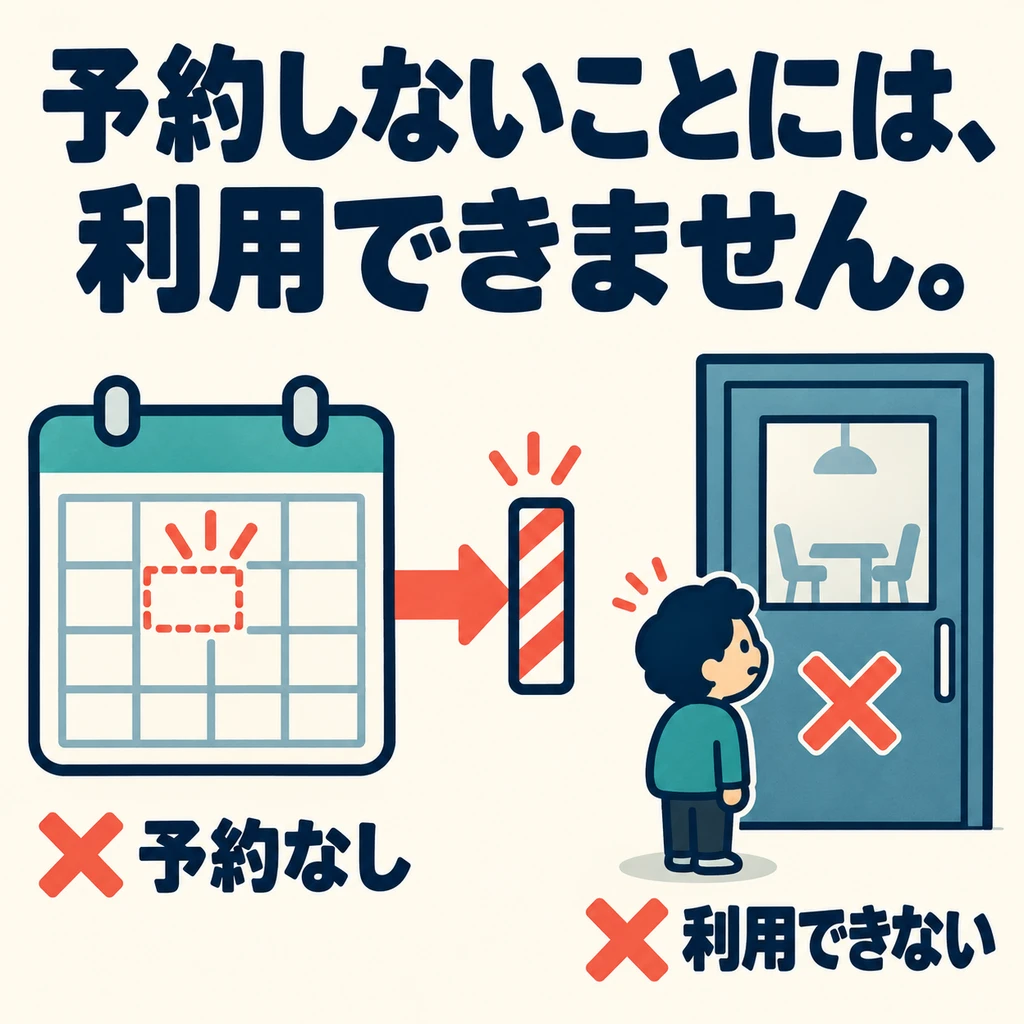
Why can’t you enter the meeting room? A reservation is required; without one, you can’t use it.
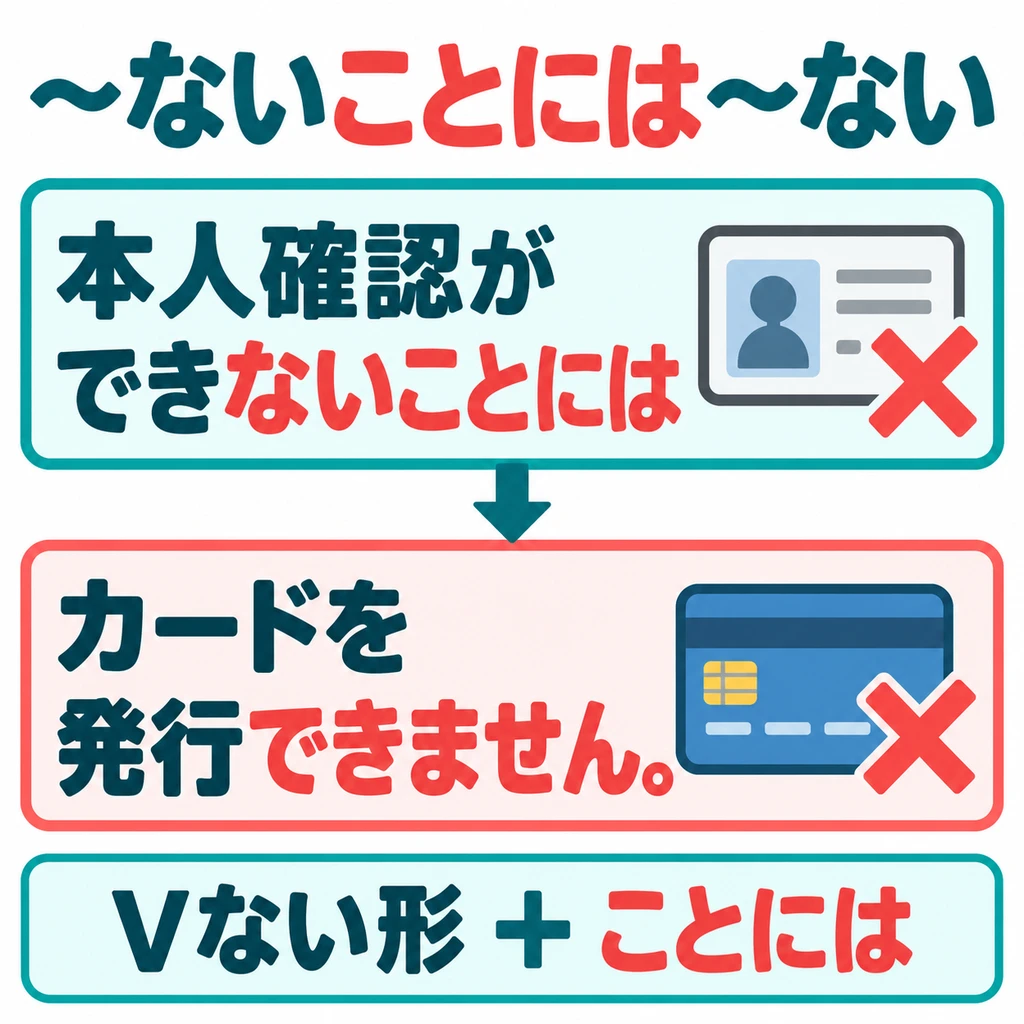
In the first clause, add ことには to a verb’s ない form. In the picture, できない means identity verification cannot be completed.
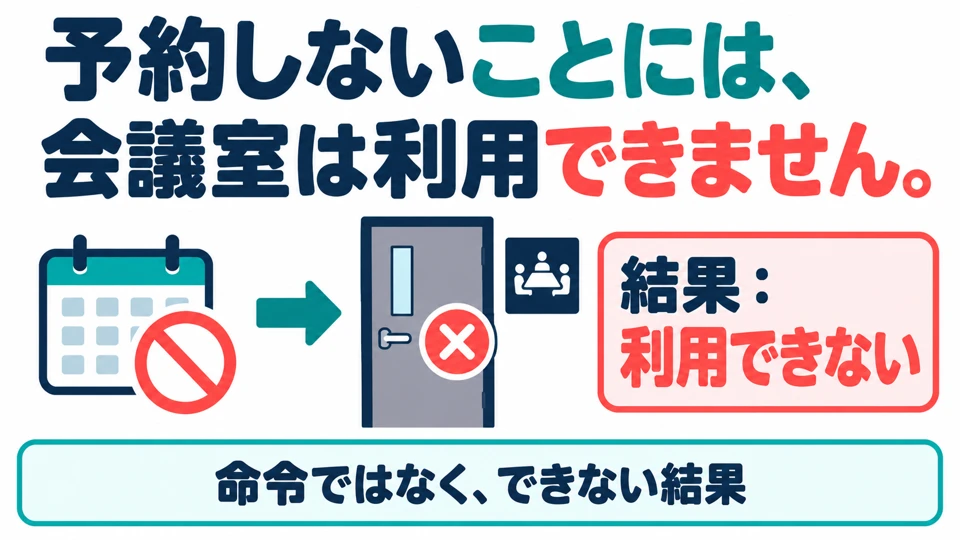
The second clause uses a negative expression, such as できません, to show that the result is impossible. It isn’t an order telling someone not to act.
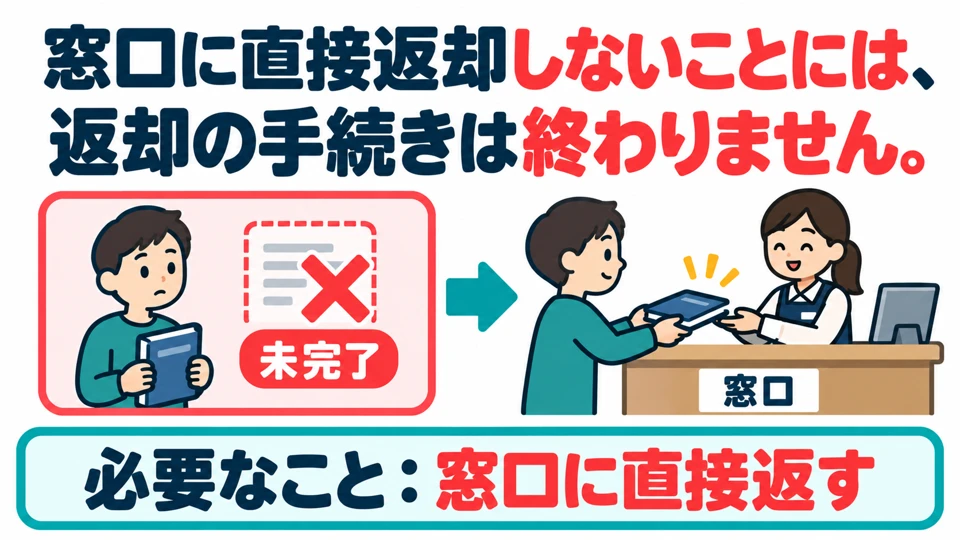
To return a book, you must hand it directly to the service counter. Unless you do this, the return process cannot be completed.
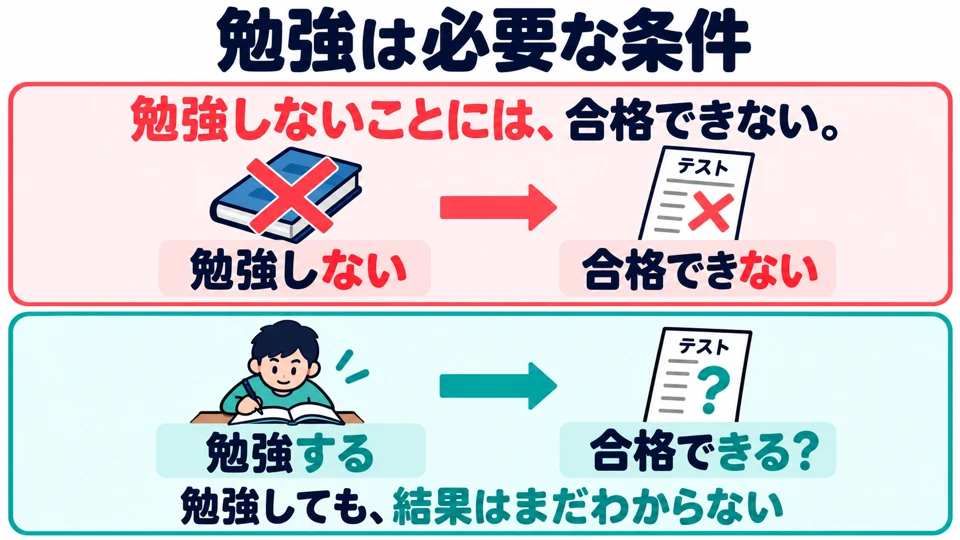
This emphasizes that the condition is essential. Meeting it does not guarantee that the result will happen.
Example sentences
- 本人honnin確認kakuninがgaできないことdekinaikotoにniは、wa、カードkaadoをo発行hakkouできません。dekimasen。
We cannot issue a card unless we can verify your identity.
In a conversation

- Aすみません、今日の終了時刻までにこの本を返却したいのですが。
A: Excuse me, I would like to return this book by today's closing time.
- B
Check yourself
Level 1 · Recognise
Which sentence is correct?
Level 1 · Recognise
Listen and choose the meaning
Level 2 · Build
Put the words in order
Unless you fill in the required information on the application form, you cannot register to use it.
Level 3 · Use
What goes in the blank?
申込用紙の必要事項を書か____、利用登録はできません。
Unless you fill in the required items on the application form, you cannot complete the registration.
More grammar in this theme
- 〜ないことには〜ないunless, it cannot happen