
Japanese grammar · ≈ JLPT N2 · Intermediate 2
〜に沿って・〜に沿う・〜に沿った~ni sotte / ~ni sou / ~ni sotta
along; in accordance with
Use 〜に沿って for following a route or plan, and 〜に沿う before a noun to describe a path that follows it.
How it works
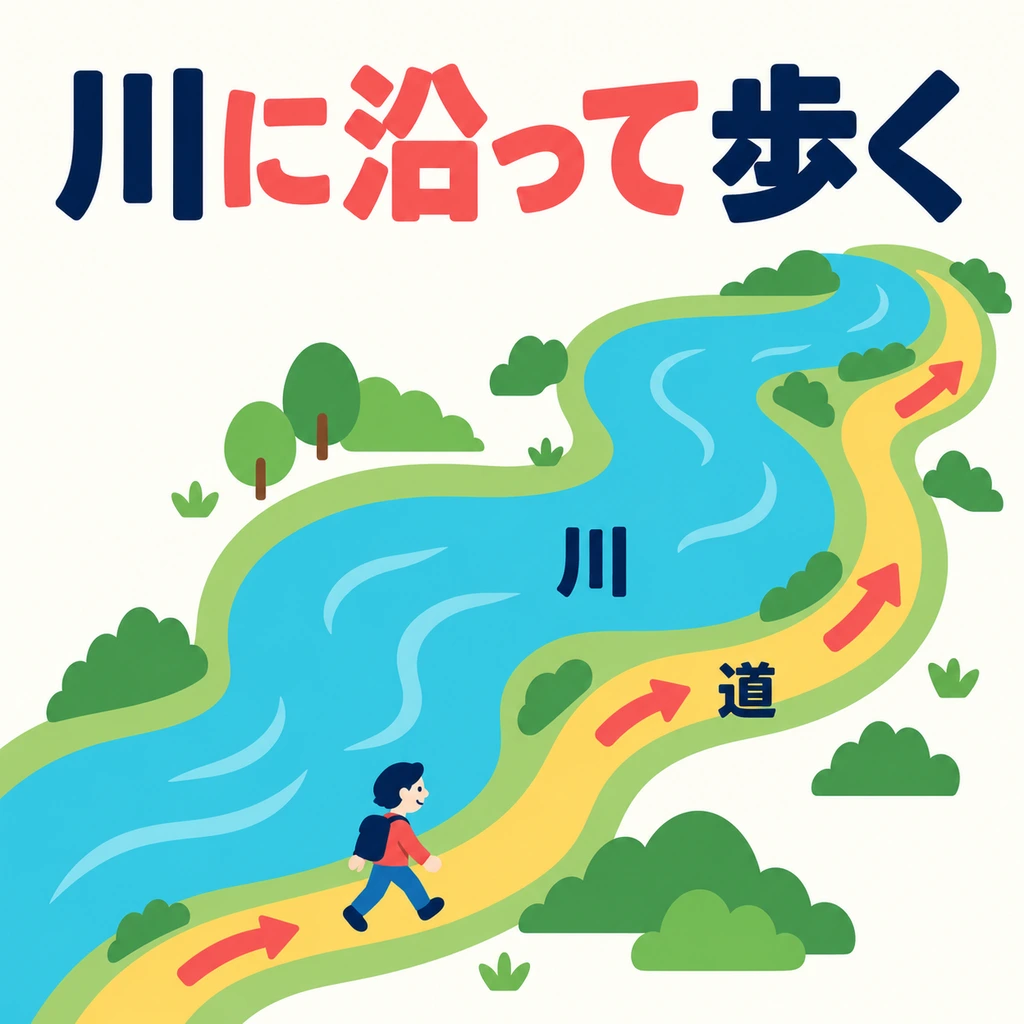
Look at the arrows beside the river: the walker follows its course. Use 「に沿って」 even when the river bends.
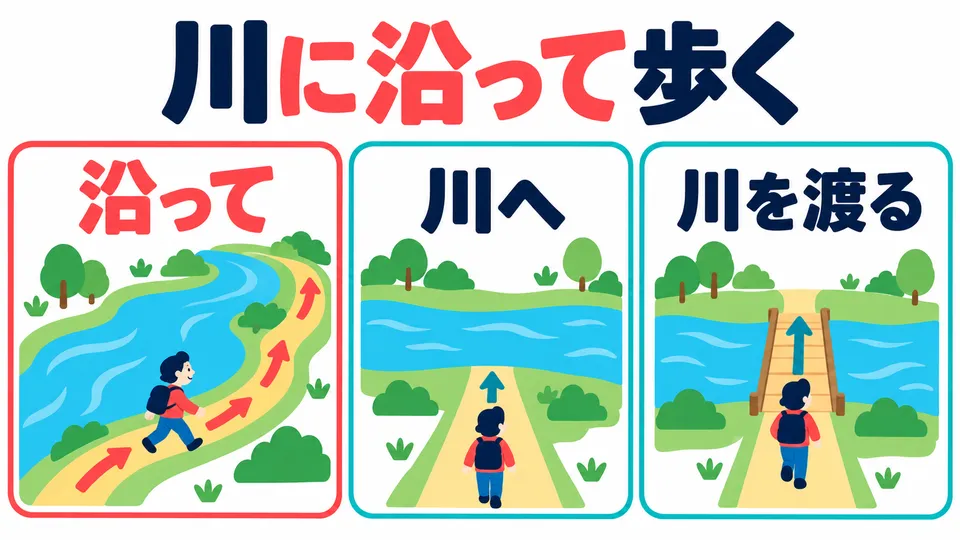
Here, “along” means following the river’s course, rather than walking toward it or crossing it.
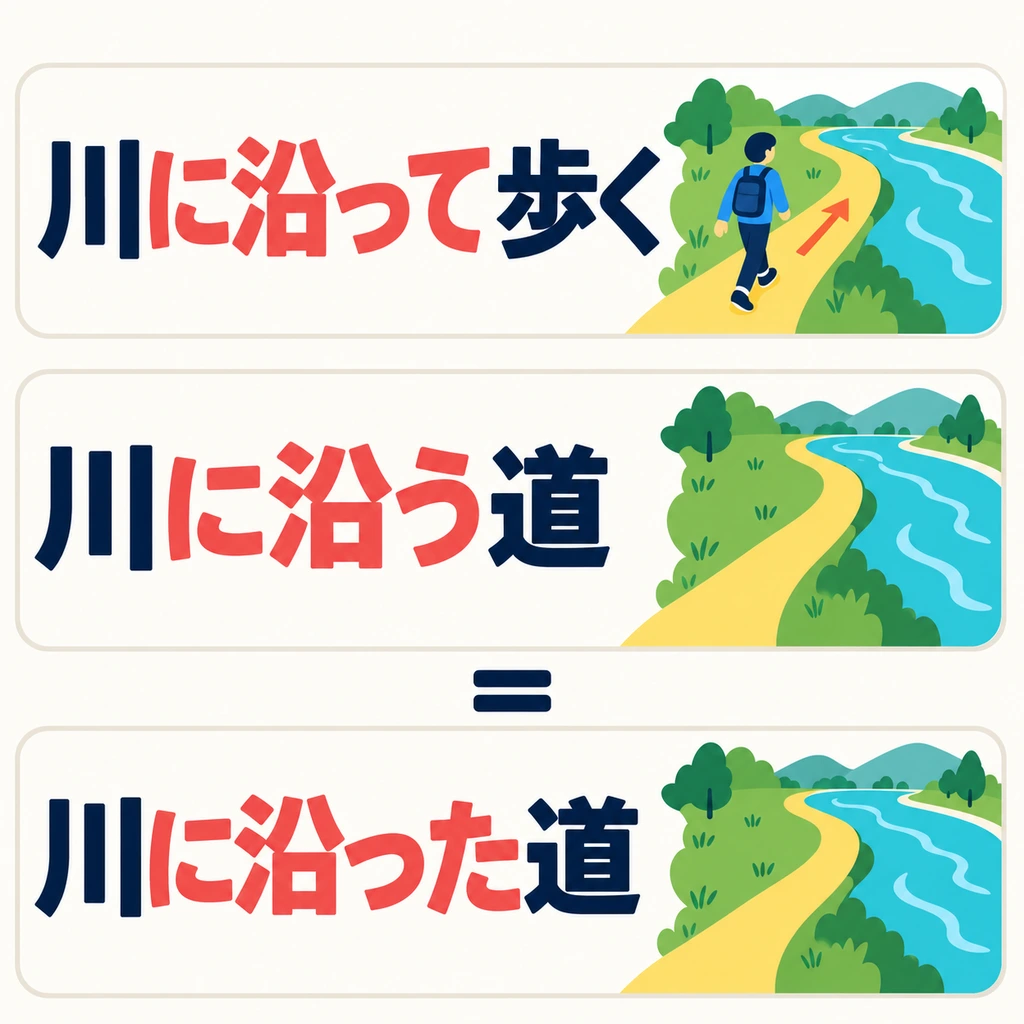
Put 「に沿って」 after a noun, then add an action. 「川に沿って歩く」 means “walk along the river.”
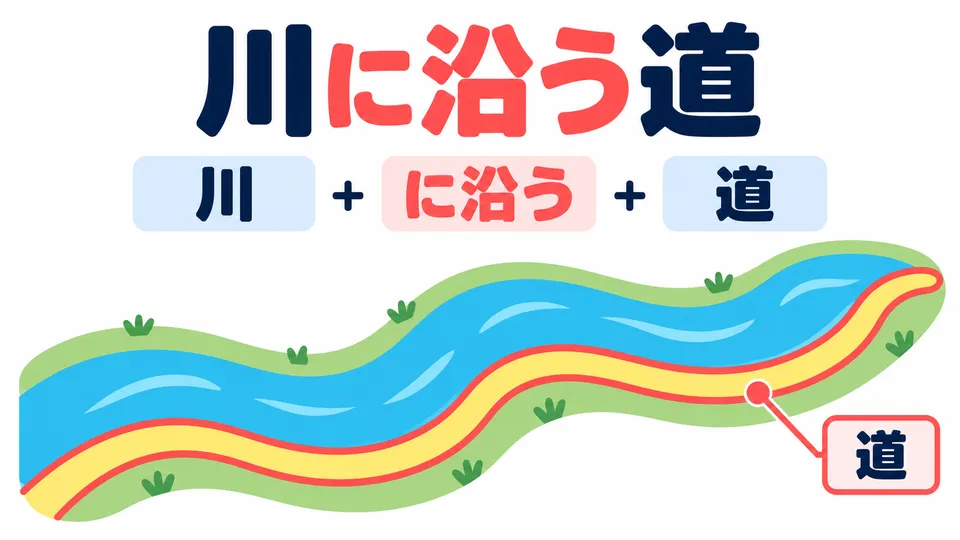
To describe which path you mean, use 「川に沿う道」: the path that follows the river’s course.
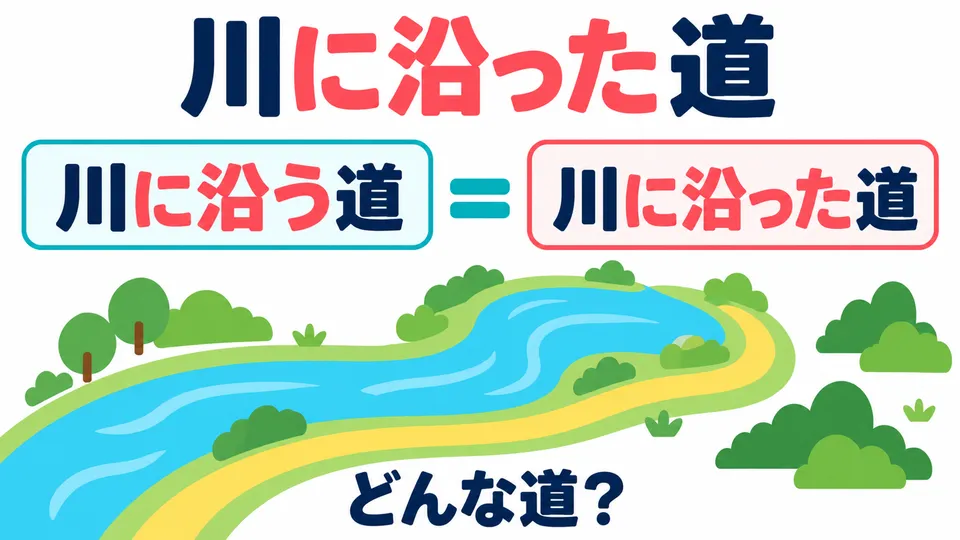
「川に沿った道」 also means a path along the river. Here, 「た」 does not mean someone has already walked it.
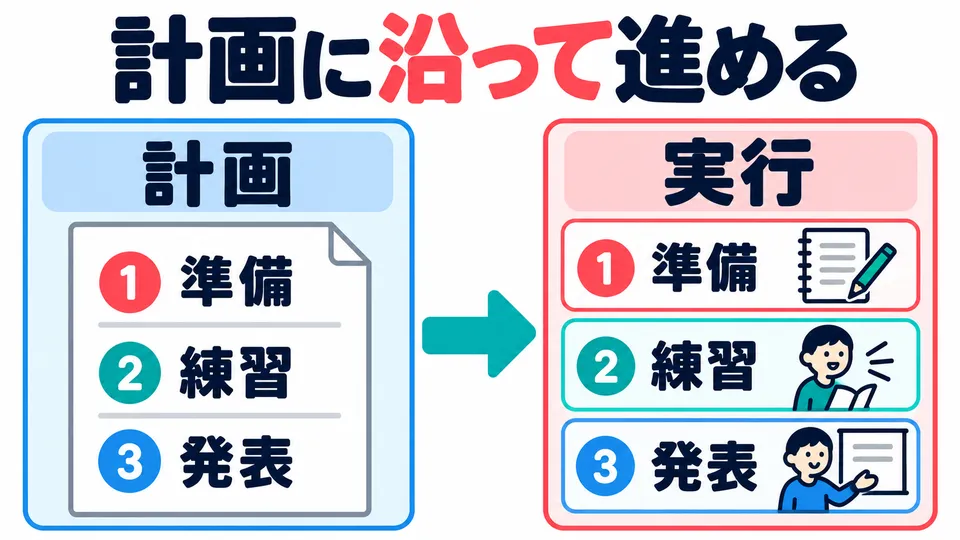
A route can also be a guide for what you do. 「計画に沿って」 means acting according to a plan.
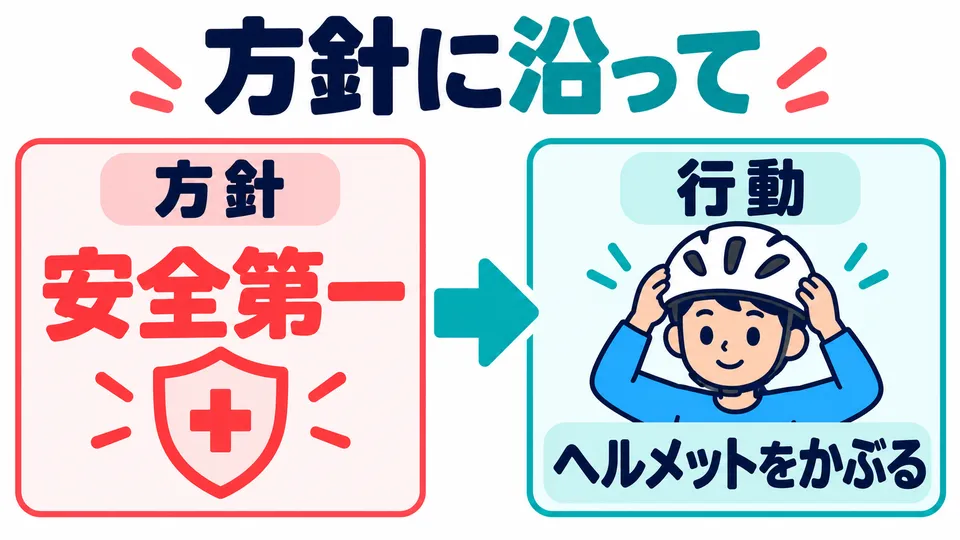
「方針に沿って」 means following a policy or guiding principle. The key is that your actions match the direction given.
Example sentences
- 川kawaにni沿っsoて、te、10ju分punほどhodo歩いaruiてteください。kudasai。
Please walk along the river for about 10 minutes.
In a conversation

Check yourself
Level 1 · Recognise
Which sentence is correct?
Level 1 · Recognise
Listen and choose the meaning
Level 2 · Build
Put the words in order
Please follow the road along the railway tracks for a while.
Level 3 · Use
What goes in the blank?
この川に____まっすぐ歩くと、左側に見えてきますよ。
If you walk straight along this river, you'll see it on your left.
More grammar in this theme
- 〜に沿って・〜に沿う・〜に沿ったalong; in accordance with