JPEDLAB iconJPEDLAB
Save history

Create an account and play

Explore first, then save your progress whenever you are ready. No email address is required.

Start free
Read as articleCards
See the whole course›Intermediate 2›Daily Information and Facility Use

Japanese grammar · ≈ JLPT N2 · Intermediate 2

〜に沿って・〜に沿う・〜に沿った~ni sotte / ~ni sou / ~ni sotta

along; in accordance with

Use 〜に沿って for following a route or plan, and 〜に沿う before a noun to describe a path that follows it.

Start the interactive lessonIllustrated cards, audio and speaking practice

How it works

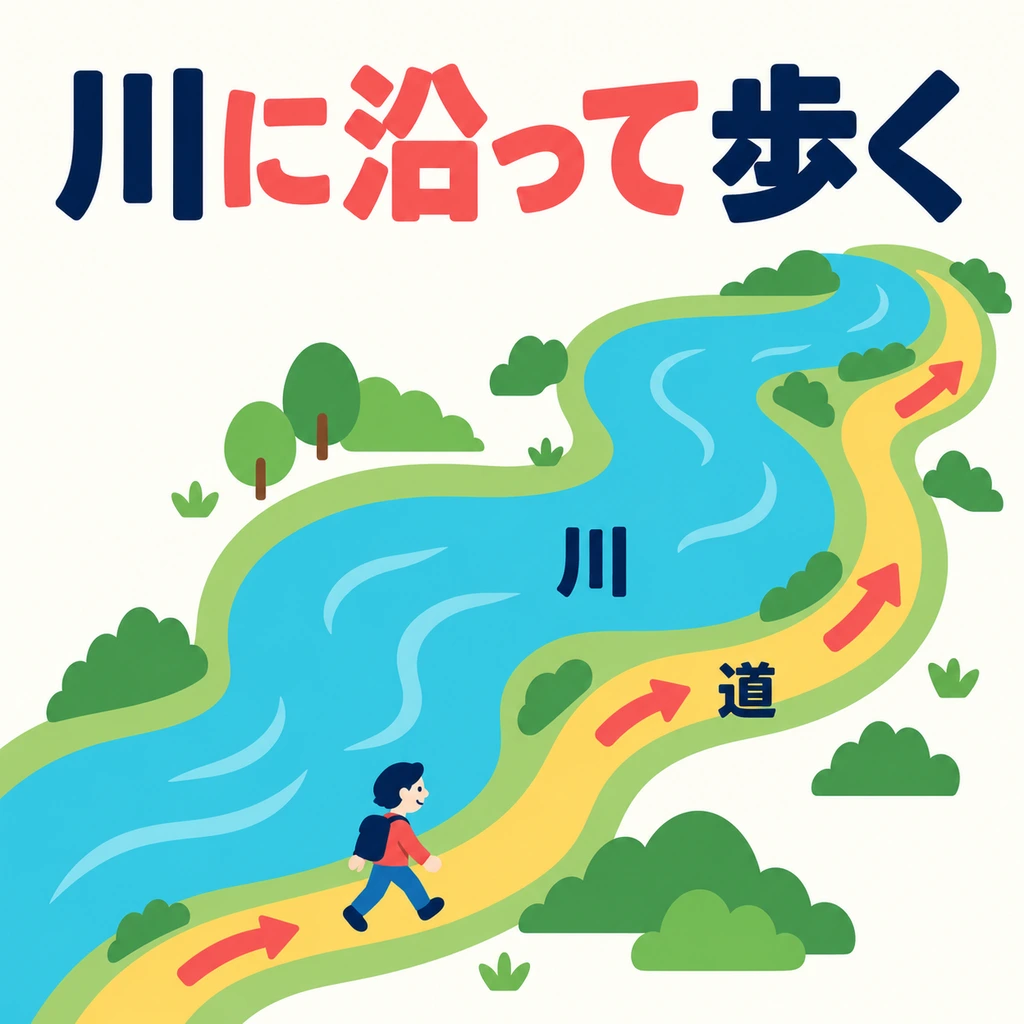
  1. Look at the arrows beside the river: the walker follows its course. Use 「に沿って」 even when the river bends.
    Look at the arrows beside the river: the walker follows its course. Use 「に沿って」 even when the river bends.

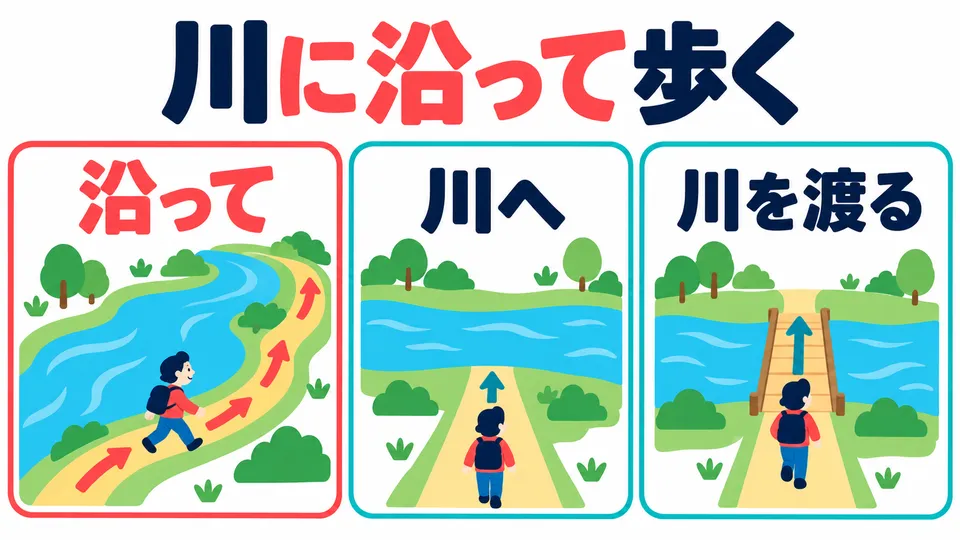
  2. Here, “along” means following the river’s course, rather than walking toward it or crossing it.
    Here, “along” means following the river’s course, rather than walking toward it or crossing it.

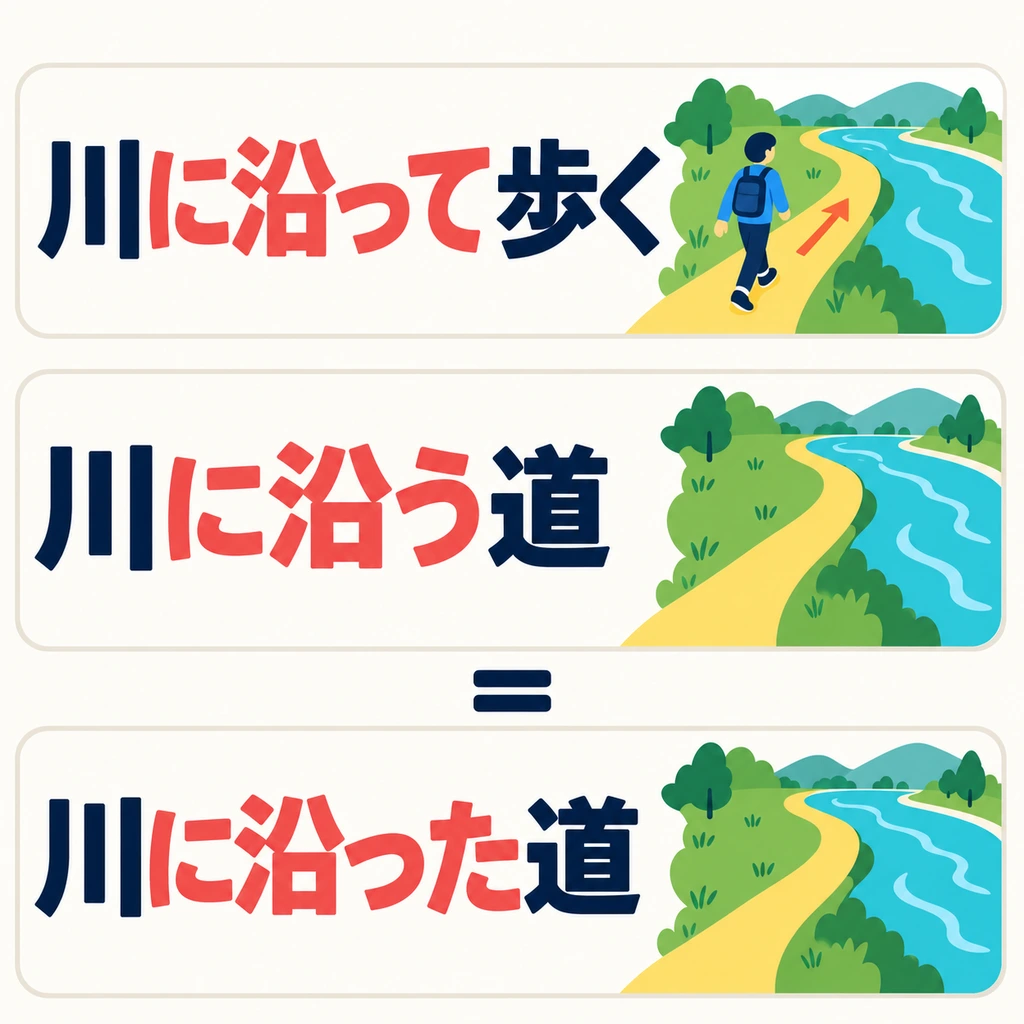
  3. Put 「に沿って」 after a noun, then add an action. 「川に沿って歩く」 means “walk along the river.”
    Put 「に沿って」 after a noun, then add an action. 「川に沿って歩く」 means “walk along the river.”

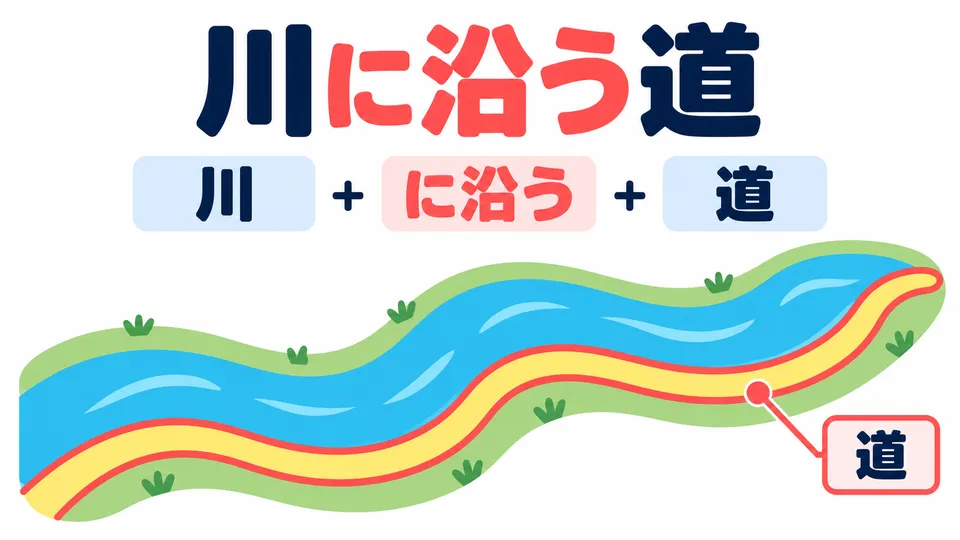
  4. To describe which path you mean, use 「川に沿う道」: the path that follows the river’s course.
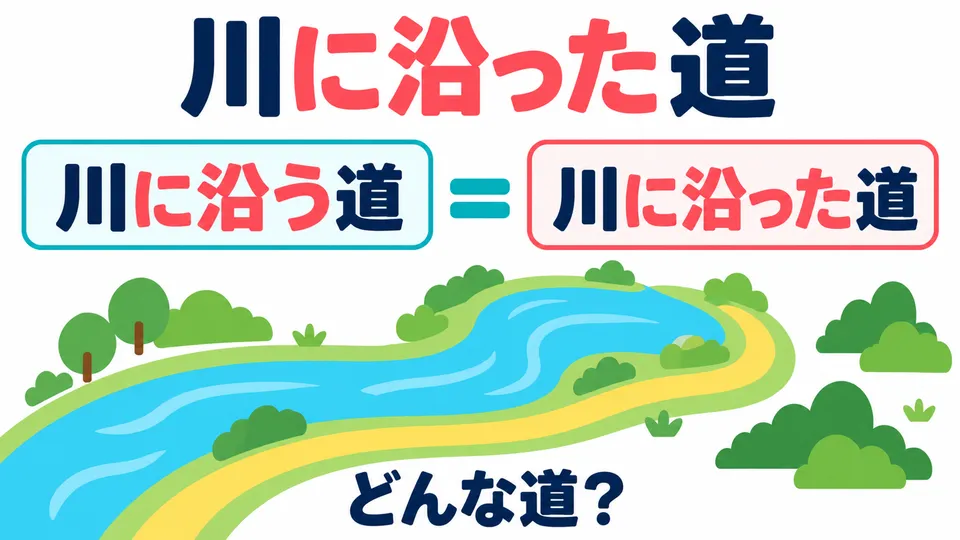
    To describe which path you mean, use 「川に沿う道」: the path that follows the river’s course.

  5. 「川に沿った道」 also means a path along the river. Here, 「た」 does not mean someone has already walked it.
    「川に沿った道」 also means a path along the river. Here, 「た」 does not mean someone has already walked it.

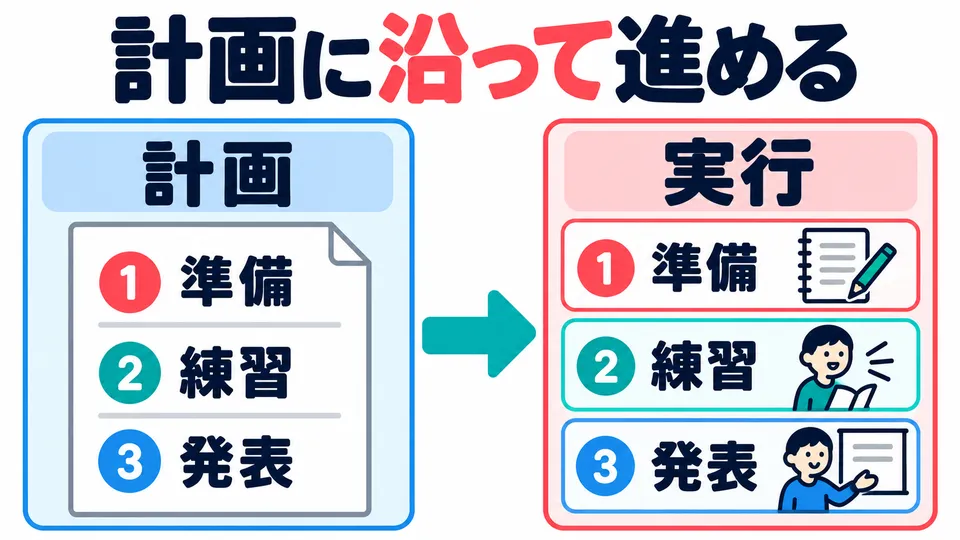
  6. A route can also be a guide for what you do. 「計画に沿って」 means acting according to a plan.
    A route can also be a guide for what you do. 「計画に沿って」 means acting according to a plan.

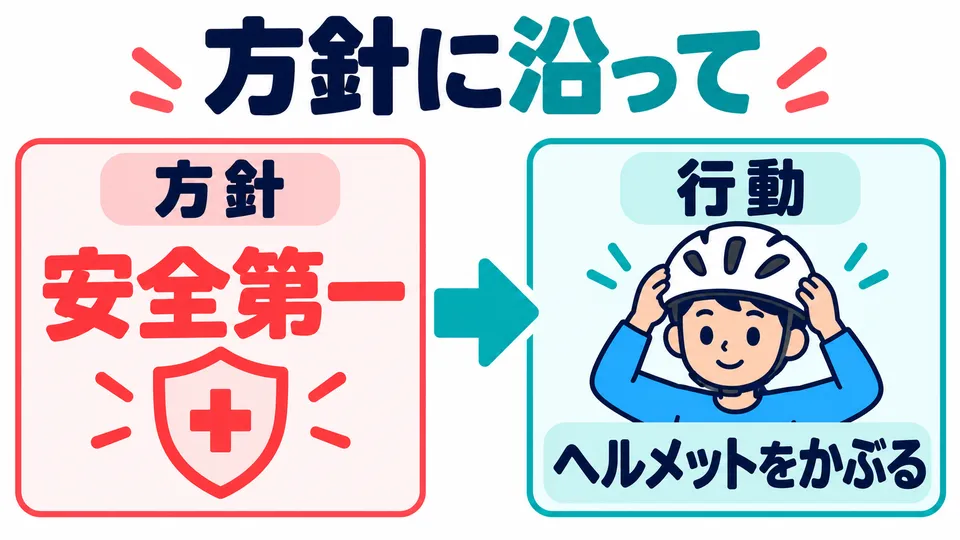
  7. 「方針に沿って」 means following a policy or guiding principle. The key is that your actions match the direction given.

    「方針に沿って」 means following a policy or guiding principle. The key is that your actions match the direction given.

Example sentences

  • 川かわkawaにni沿っそっsoて、te、10じゅっju分ぷんpunほどhodo歩いあるいaruiてteください。kudasai。

    Please walk along the river for about 10 minutes.

In a conversation

Check yourself

  1. Level 1 · Recognise

    Which sentence is correct?

  2. Level 1 · Recognise

    Listen and choose the meaning

  3. Level 2 · Build

    Put the words in order

    Please follow the road along the railway tracks for a while.

  4. Level 3 · Use

    What goes in the blank?

    この川に____まっすぐ歩くと、左側に見えてきますよ。

    If you walk straight along this river, you'll see it on your left.

More grammar in this theme

  • 〜に沿って・〜に沿う・〜に沿ったalong; in accordance with

Keep practising

Test your Japanese vocabulary12 adaptive questions, freeCheck your pronunciationRead aloud and get a scorePractise verb forms10-question conjugation quizSee the whole courseGrammar, vocabulary and quizzes by theme
  • A
    すみません、この近くちかくにある幼稚園ようちえんへえの行き方いきかたを教えおしえてください。

    A: Excuse me, please tell me how to get to the kindergarten near here.

  • B
    はい、この川かわに沿っそってまっすぐ歩くあるくと、左側ひだりがわに見えみえてきますよ。

    B: Yes, if you walk straight along this river, you will see it on your left.

  • 線路せんろsenroにni沿うそうsou道みちmichiをo進むすすむsusumuと、to、駅えきekiにni戻れます。もどれます。modoremasu。

    If you follow the road along the railway tracks, you can get back to the station.

  • A
    川かわに沿っそってまっすぐですね。詳しいくわしい説明せつめいをありがとうございます。

    A: Straight along the river, right? Thank you for the detailed directions.

  • お・ご〜です/でしょうrespectful description or question
    〜場合in the case that
    〜ないことには〜ないunless, it cannot happen
    〜たいことがあるんですがgentle topic opener
    意向形+とするtry or be about to
    〜みたいなんですが・〜ようなんですがtentative problem explanation
    〜ていただきたいんですがpolite request for help
    〜にはrequirements to reach a goal
    〜にかかわらずregardless of a condition
    〜次第/〜次第でdepending on; as soon as
    〜途中で・〜途中にduring a journey or activity
    〜を〜としてuse or treat as
    〜を背にしてwith something behind you
    Previous〜を背にして