JPEdLab iconJPEdLab
Save history

Create an account and play

Explore first, then save your progress whenever you are ready. No email address is required.

Start free
  1. Japanese grammar
  2. JLPT N4 grammar
  3. お・ご〜です/でしょう

お・ご〜です/でしょうo/go ~ desu / deshou

O/go desu / deshou (お・ご〜です/でしょう) means “respectful description or question”.

こちらkochiraのno施設しせつshisetsuはわwa初めてはじめてhajimeteご利用ごりようgoriyouでしょうdeshouか。ka。

Is this your first time using this facility?

Use お・ご〜です/でしょう for established respectful forms when describing or asking about another person’s actions or state.

In the course›

How it works

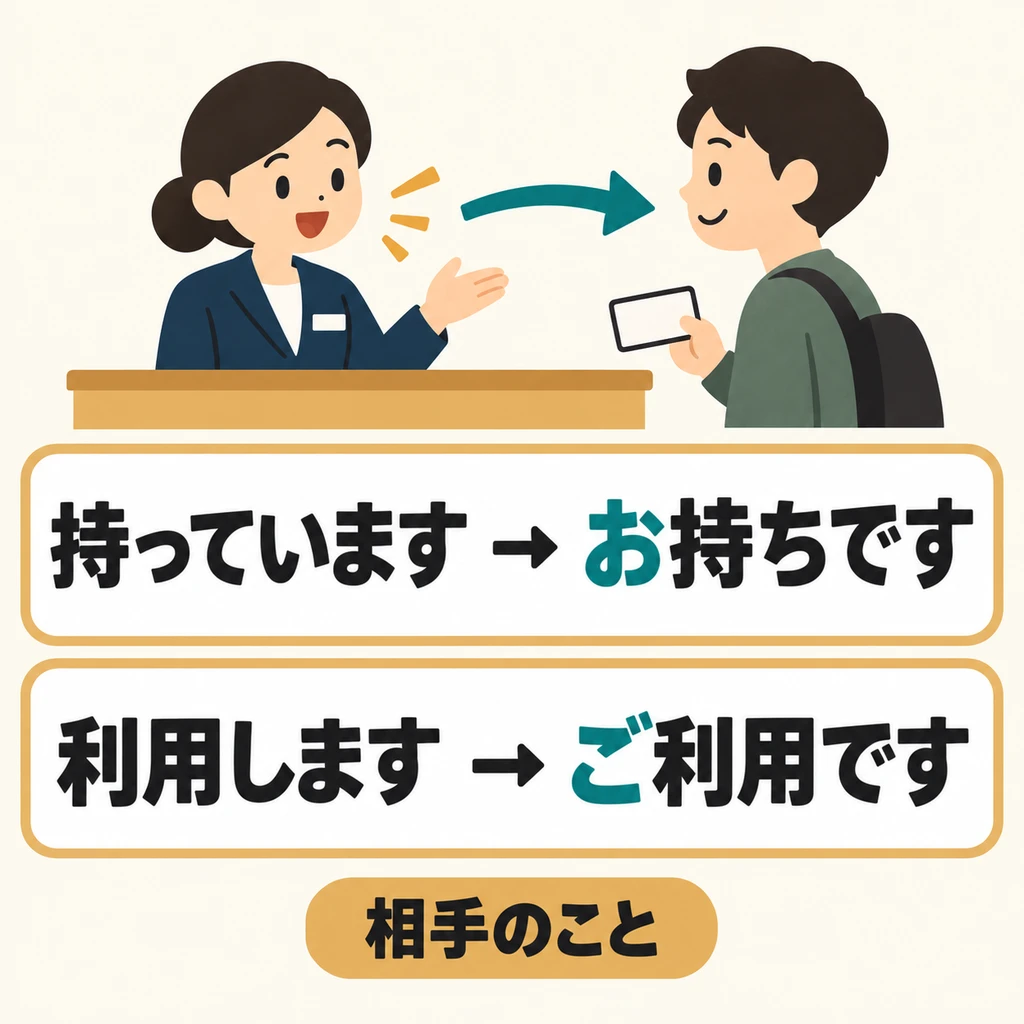
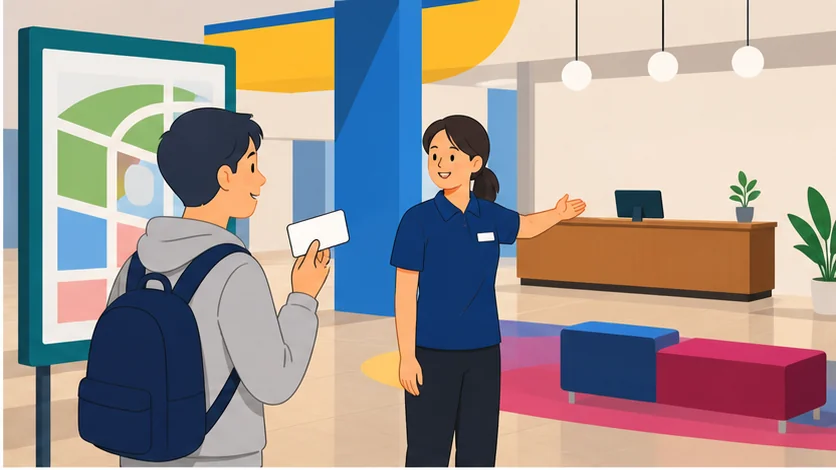
  1. The receptionist uses 「お・ご~です」 to show respect when talking about the guest’s actions or state.
    The receptionist uses 「お・ご~です」 to show respect when talking about the guest’s actions or state.

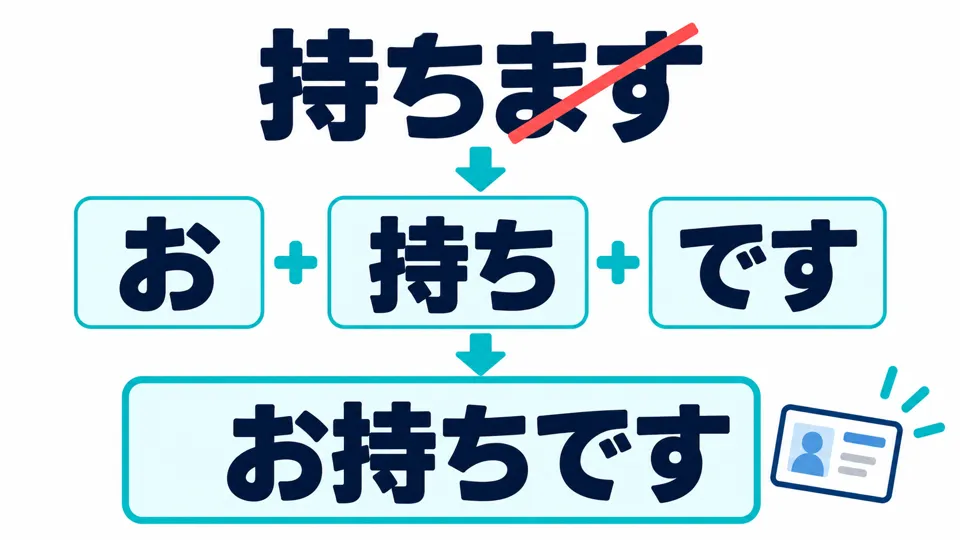
  2. Remove 「ます」 from 「持ちます」, then add 「お」 and 「です」 to make 「お持ちです」.
    Remove 「ます」 from 「持ちます」, then add 「お」 and 「です」 to make 「お持ちです」.

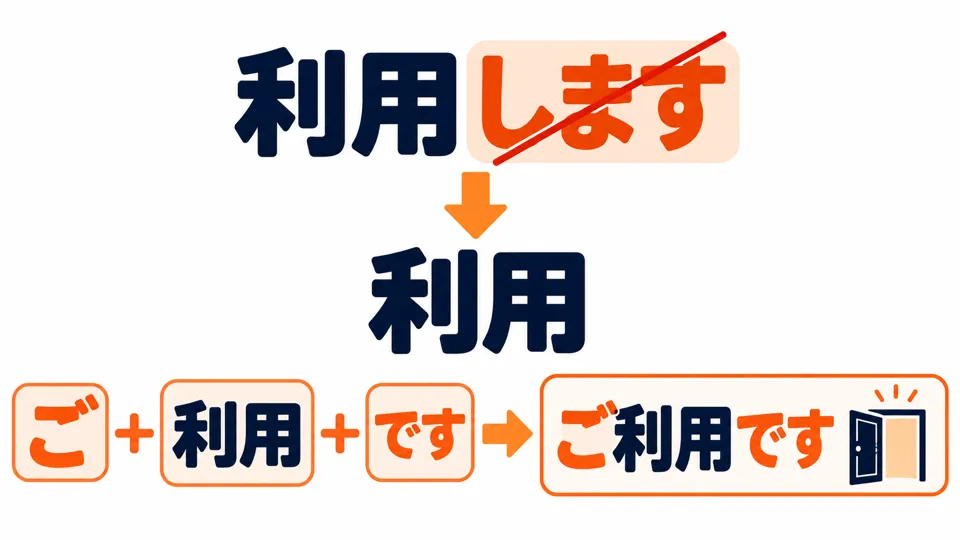
  3. Words of Chinese origin often take 「ご」: change 「利用します」 to 「ご利用です」.
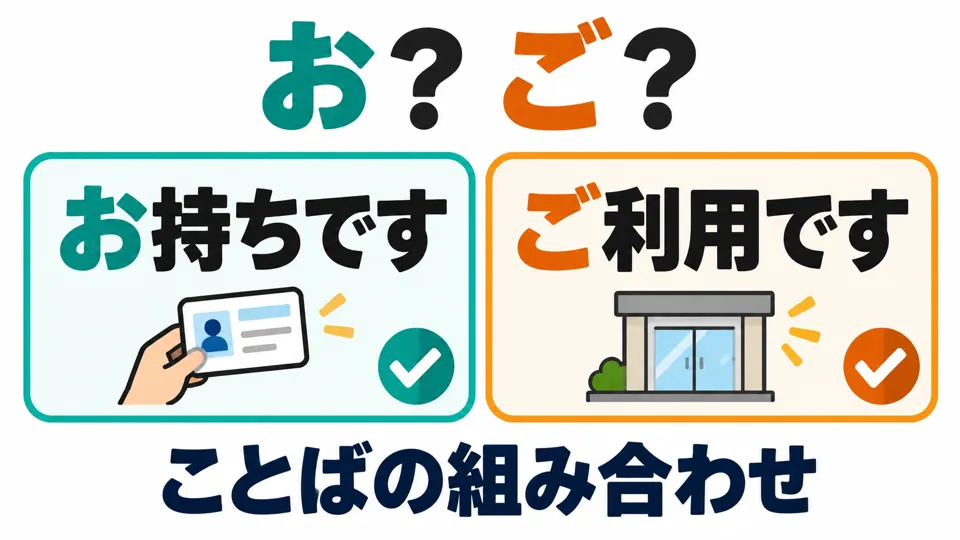
    Words of Chinese origin often take 「ご」: change 「利用します」 to 「ご利用です」.

  4. 「お」 and 「ご」 have established combinations. This pattern cannot be applied directly to every verb.
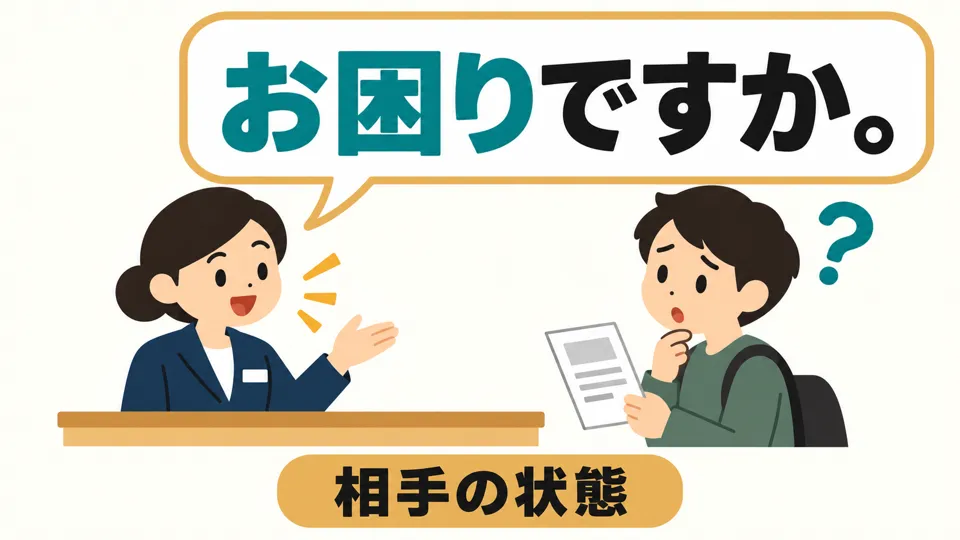
    「お」 and 「ご」 have established combinations. This pattern cannot be applied directly to every verb.

  5. 「お困りです」 shows concern for someone who is having trouble. This pattern also describes states, not just ongoing actions.
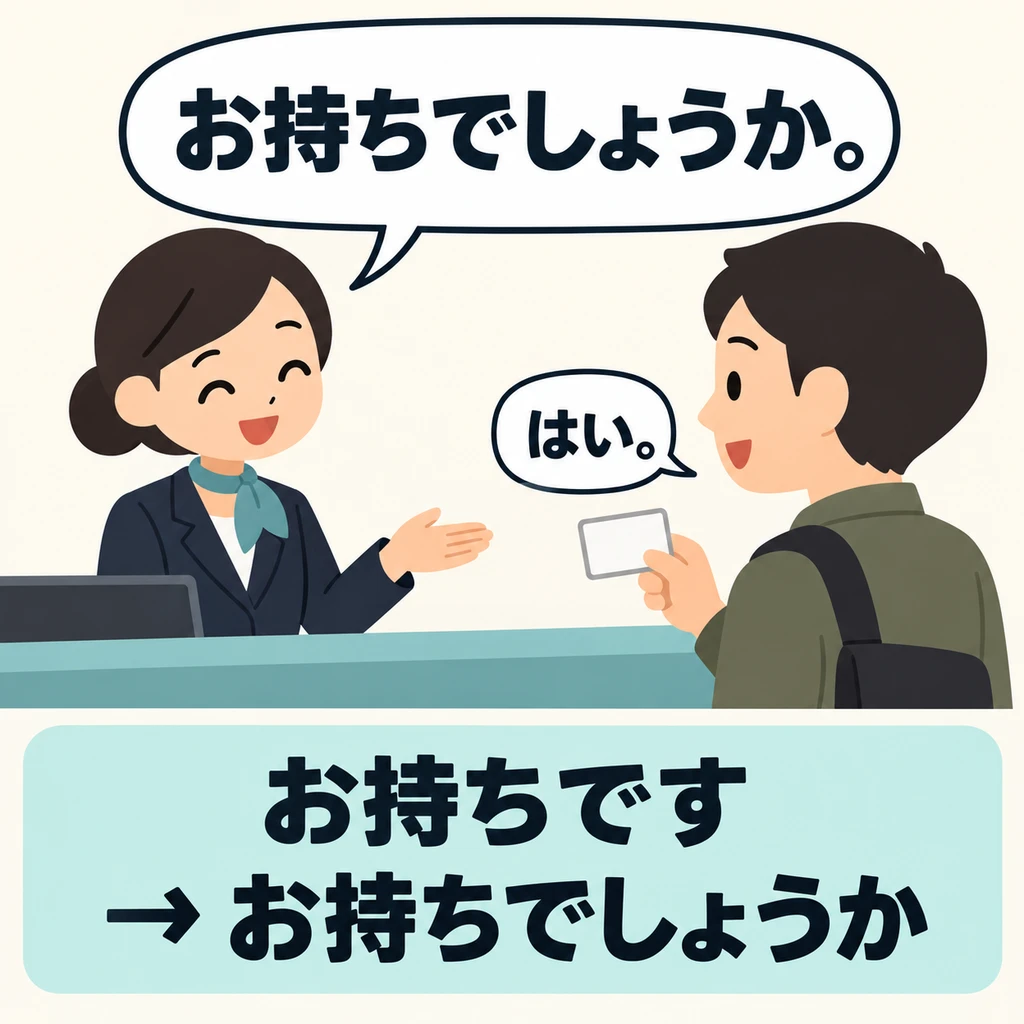
    「お困りです」 shows concern for someone who is having trouble. This pattern also describes states, not just ongoing actions.

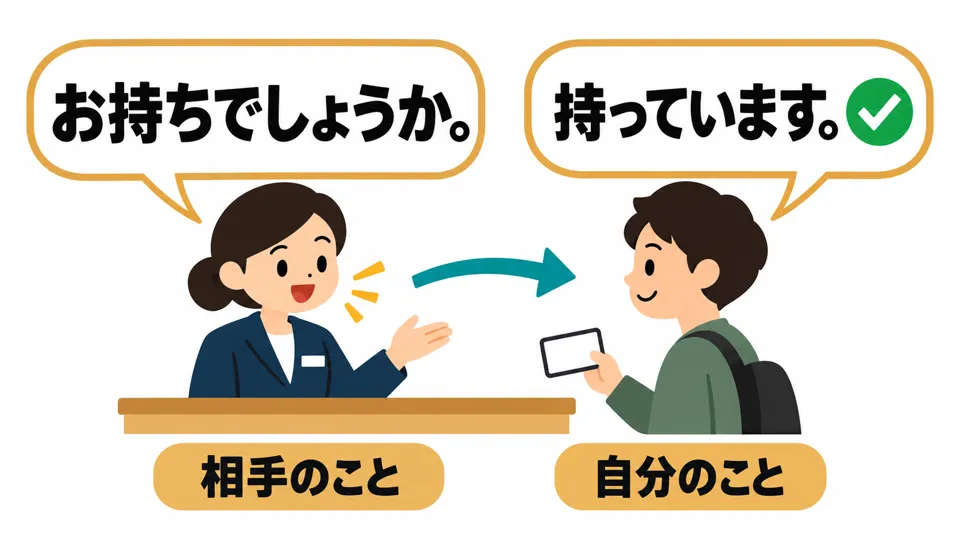
  6. At the counter, 「お持ちでしょうか」 gently asks whether the guest has their ID with them.
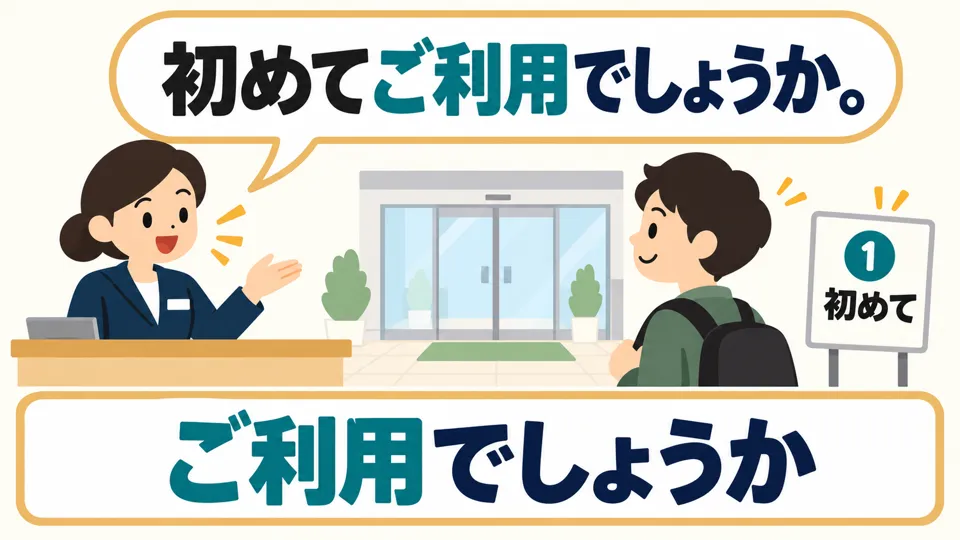
    At the counter, 「お持ちでしょうか」 gently asks whether the guest has their ID with them.

  7. To check whether this is someone’s first time using the facility, ask 「初めてご利用でしょうか」.
    To check whether this is someone’s first time using the facility, ask 「初めてご利用でしょうか」.

  8. The respect is directed toward the other person. Do not honor yourself; the guest can simply reply 「持っています」.

    The respect is directed toward the other person. Do not honor yourself; the guest can simply reply 「持っています」.

Example sentences

  • こちらkochiraのno施設しせつshisetsuはわwa初めてはじめてhajimeteご利用ごりようgoriyouでしょうdeshouか。ka。

    Is this your first time using this facility?

  • 利用りようriyou

In a conversation

  • A
    すみません、来館者らいかんしゃの利用りよう登録とうろくをしたいのですが、どちらの窓口まどぐちでしょうか。

    A: Excuse me, I'd like to register as a visitor. Which counter should I go to?

  • B

Check yourself

  1. Level 1 · Recognise

    Which sentence is correct?

  2. Level 1 · Recognise

    Listen and choose the meaning

  3. Level 2 · Build

    Put the words in order

    Will you be hearing the explanation at that counter over there?

  4. Level 3 · Use

    What goes in the blank?

    こちらの施設は初めて____でしょうか。

    Is this your first time using this facility?

More grammar in this theme

  • お・ご〜です/でしょうrespectful description or question

More JLPT N4 grammar

Keep practising

Test your Japanese vocabulary12 adaptive questions, freeCheck your pronunciationRead aloud and get a scorePractise verb forms10-question conjugation quizSee the whole courseGrammar, vocabulary and quizzes by theme
方法ほうほう
houhou
にni
ついtsui
て、te、
何なんnan
かka
お困りでしょうおこまりでしょうokomarideshou
か。ka。

Are you having any trouble regarding how to use it?

あちら
の
受付うけつけ
窓口まどぐち
です。
本人ほんにん
確認かくにん
書類しょるい
はわ
お持ちでしょうおもちでしょう
か。

B: It's the reception counter over there. Do you have an ID with you?

  • A
    はい、運転うんてん免許証めんきょしょうを持っもっています。あちらですね、ありがとうございます。

    A: Yes, I have my driver's license. That one over there, right? Thank you.

  • Intermediate 2
    Daily Information and Facility Use
    More quizzesOpen this lesson’s quizzes in the course
    〜場合in the case that
    〜ないことには〜ないunless, it cannot happen
    〜たいことがあるんですがgentle topic opener
    意向形+とするtry or be about to
    〜みたいなんですが・〜ようなんですがtentative problem explanation
    〜ていただきたいんですがpolite request for help
    〜にはrequirements to reach a goal
    〜にかかわらずregardless of a condition
    〜次第/〜次第でdepending on; as soon as
    〜途中で・〜途中にduring a journey or activity
    〜を〜としてuse or treat as
    〜を背にしてwith something behind you
    〜に沿って・〜に沿う・〜に沿ったalong; in accordance with
    Next〜場合
    See all 138
    こんな・そんな・あんな・どんなthis, that, what kind
    〜ことがありますsometimes happens
    〜てくれない?casual request for help
    〜てくれる?could you do it for me
    〜てしまったようなんですinferred accident with regret
    〜たままleaving a state unchanged
    〜に囲まれている・〜に囲まれたbe surrounded by
    〜のような・〜のようにexamples such as