
〜に囲まれている・〜に囲まれた~ni kakomarete iru / ~ni kakomareta
Ni kakomarete iru / ni kakomareta (〜に囲まれている・〜に囲まれた) means “be surrounded by”.
The area is surrounded by forest, and the air is very clean.
Use 〜に囲まれている to state what surrounds a place, or 〜に囲まれた before a noun to describe its setting.
In the course
How it works
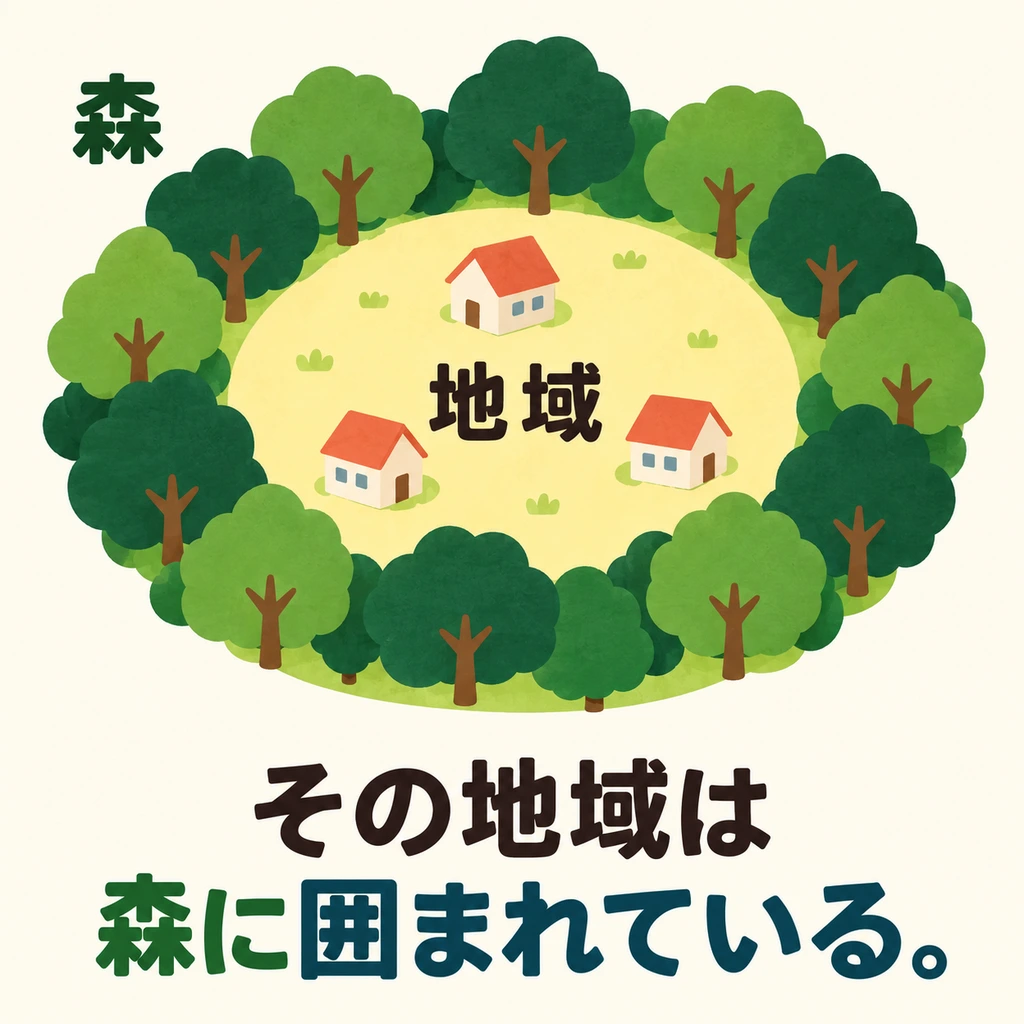
Look at what surrounds the region. The forest is on all sides, showing a state of being surrounded.
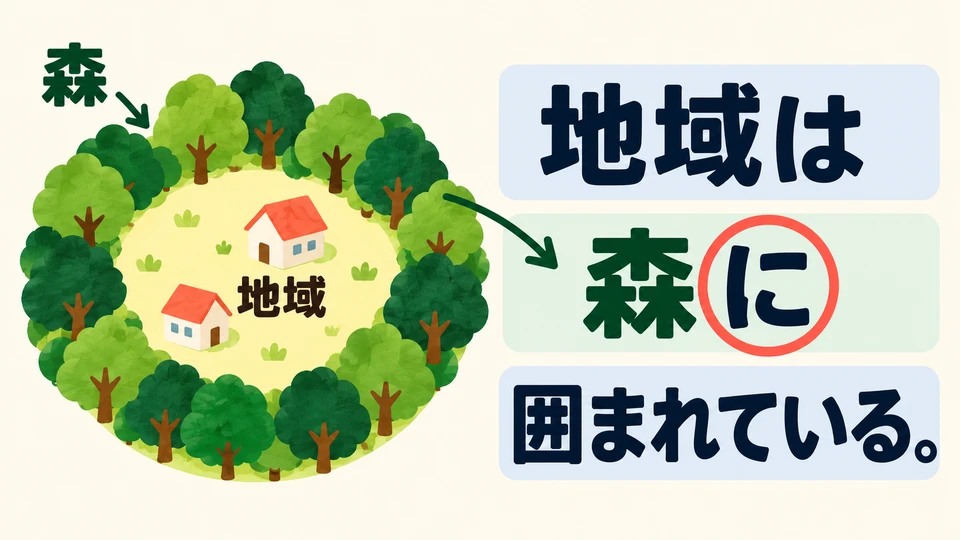
Use 「に」 to mark what surrounds something. In the example, the forest surrounds the region.
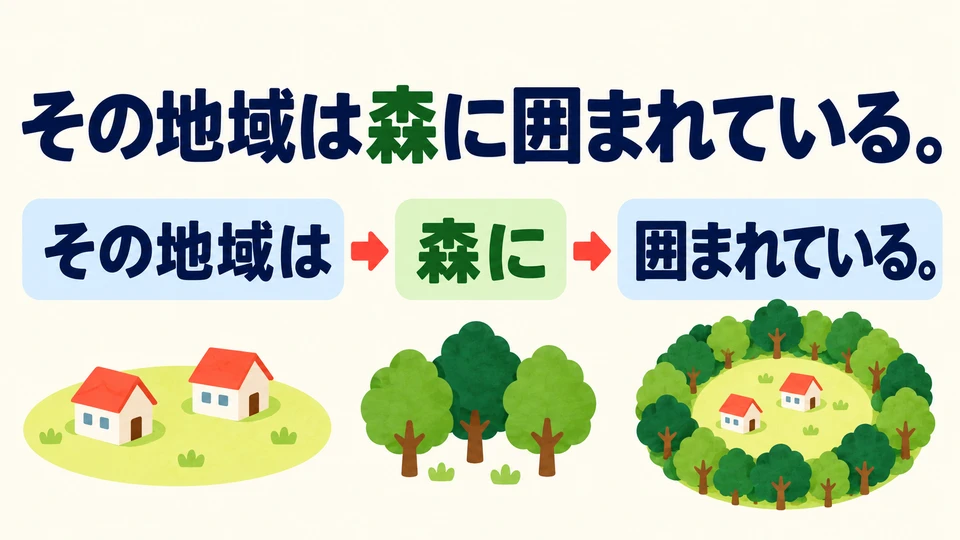
To describe a place’s surroundings in a complete sentence, use 「~は~に囲まれている」.
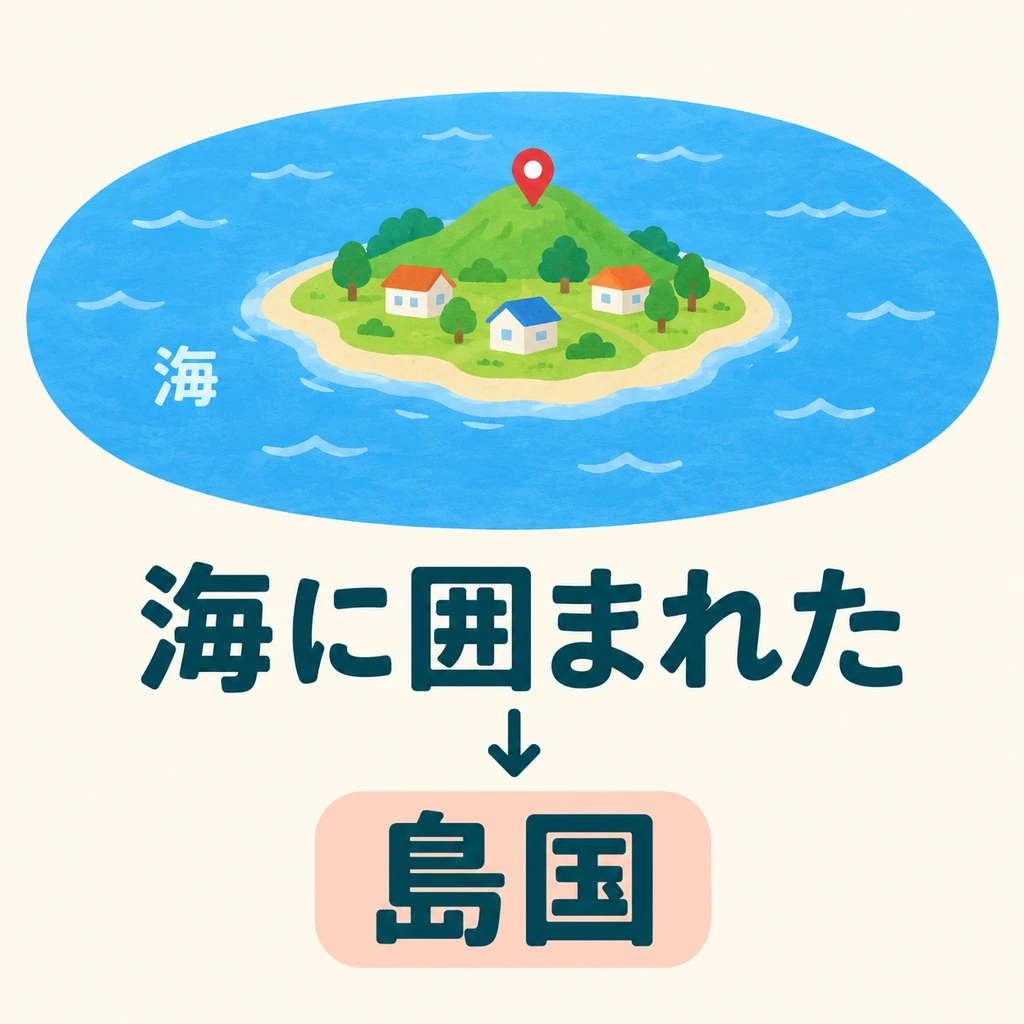
To describe what kind of island country it is, put 「海に囲まれた」 before 「島国」.
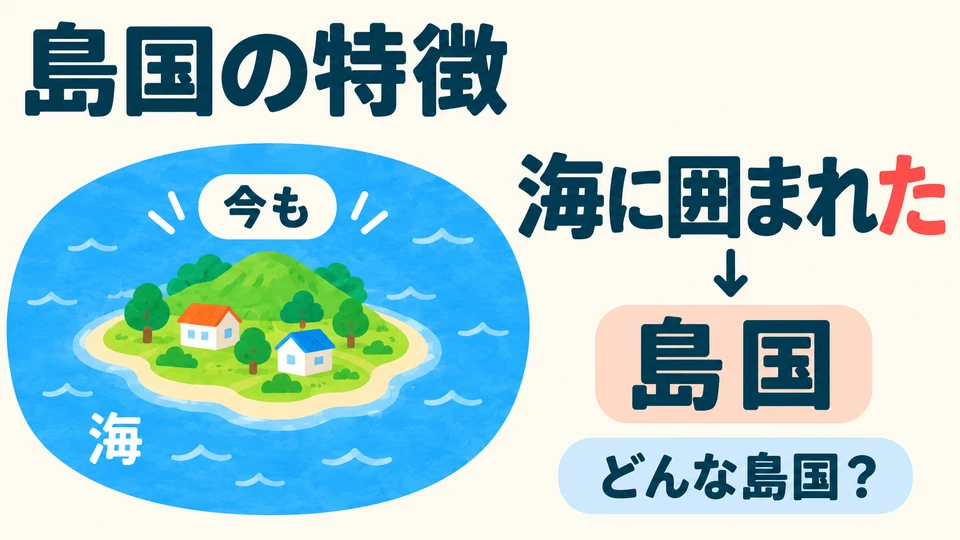
Here, 「た」 does not indicate the past. 「海に囲まれた島国」 describes a feature of the island country.
Example sentences
- そのsono地域chiikiはwa森moriにni囲まれkakomareてteいiて、te、空気kuukiがgaとてもtotemo
In a conversation

- A日本は四方を海に囲まれた島国ですから、漁業が盛んなのですね。
A: Since Japan is an island country surrounded by the sea on all sides, the fishing industry is very active, isn't it?
Check yourself
Level 1 · Recognise
Which sentence is correct?
Level 1 · Recognise
Listen and choose the meaning
Level 2 · Build
Put the words in order
That basin is surrounded by high mountains, so not much wind gets in.
Level 3 · Use
What goes in the blank?
その地域は森____、空気がとてもきれいです。
This area is surrounded by forests, and the air is very clean.
More grammar in this theme
- 〜に囲まれている・〜に囲まれたbe surrounded by