
Japanese grammar · ≈ JLPT N3 · Intermediate 2
〜を通して・〜を通じて~o tooshite / ~o tsuujite
through a means
「〜を通して・〜を通じて」 follows a noun for a means that leads to learning or understanding.
How it works
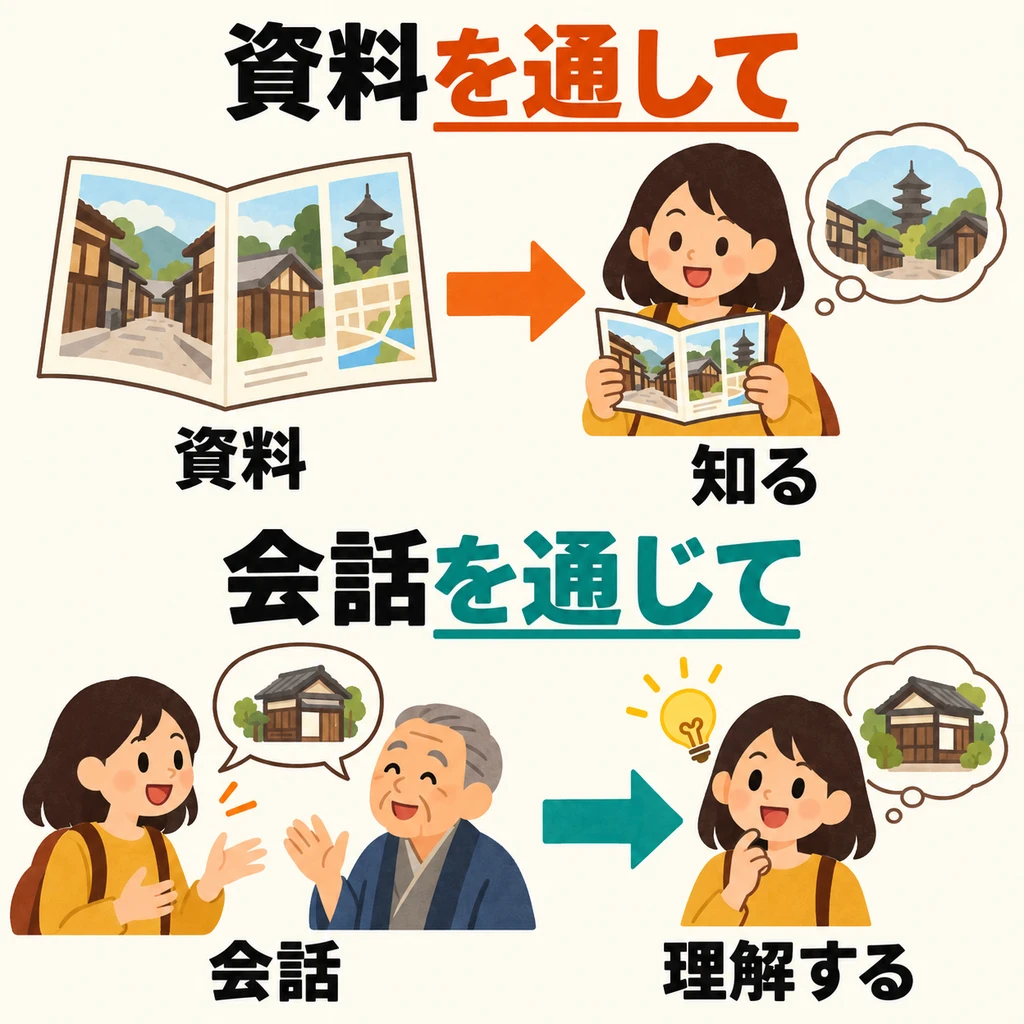
Look at the arrows: when learning about the town, what roles do the materials and conversation play? Both are bridges to information.
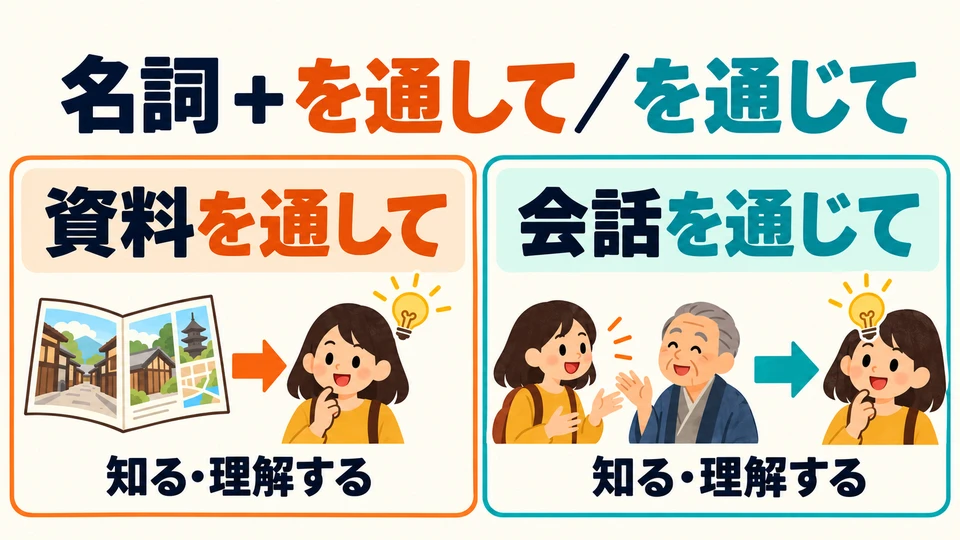
Add 「を通して/を通じて」 after a noun to express doing or achieving something through a person, thing, or means.
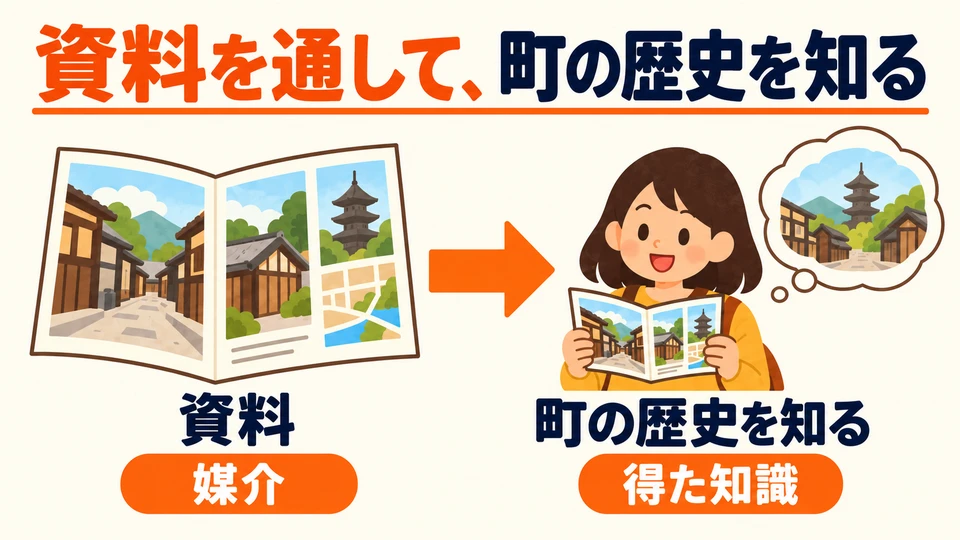
The materials provide historical information. Here, they are the medium for gaining knowledge, and the town’s history is what is learned.
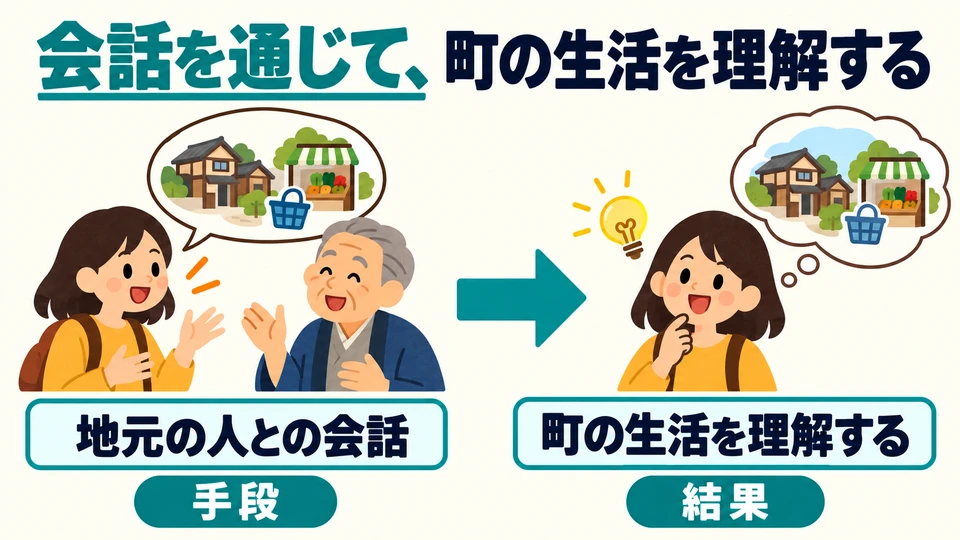
After talking with a local resident, the learner understands life in the town. Conversation is the means, and understanding that life is the result.
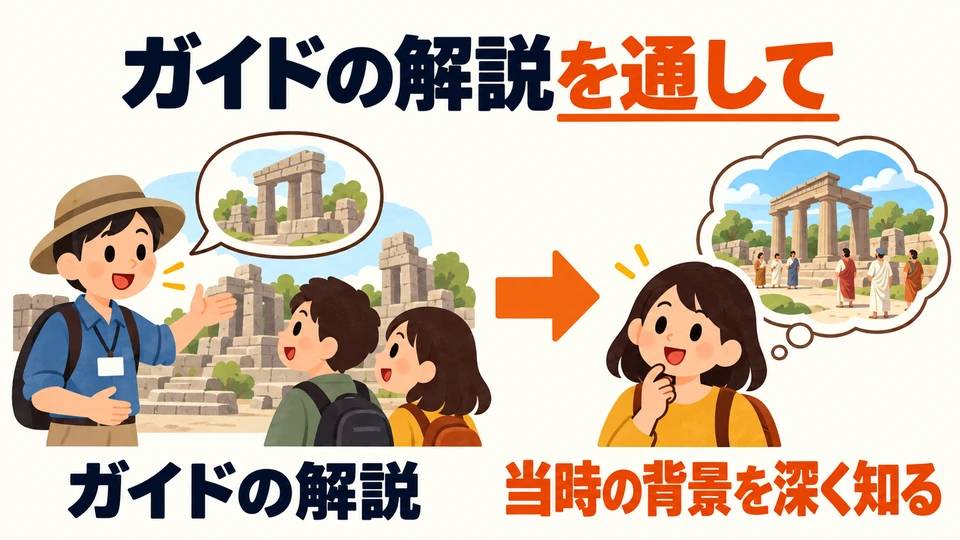
To learn more about the background of a historical site, you can use a guide’s explanation. The explanation is the medium that leads to understanding.
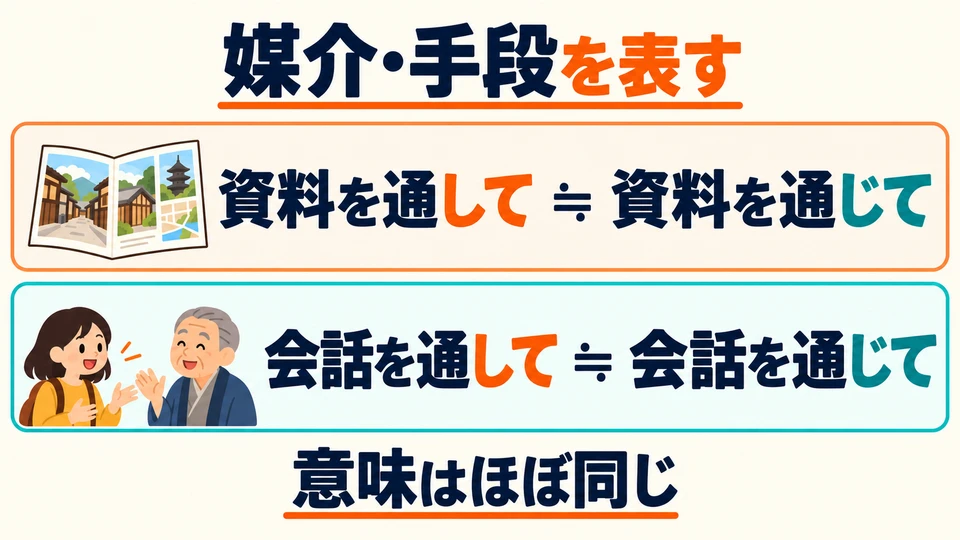
When expressing a medium or means, the two forms have essentially the same meaning. Both can follow 「資料」 and 「会話」 in the picture.
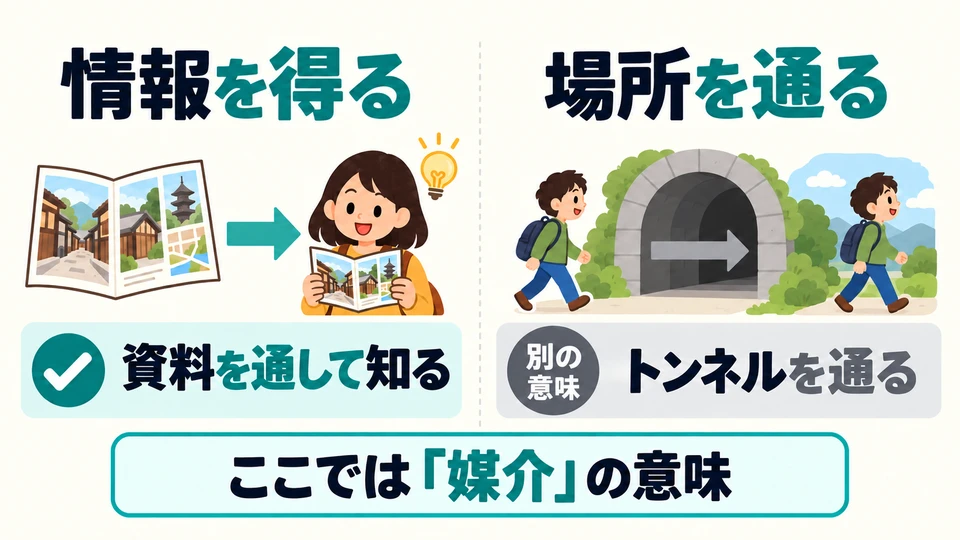
Here, “through” means obtaining information by means of a medium, rather than physically passing through a place or object.
Example sentences
- 観光kankou案内所annaishoのno資料shiryouをo通しtooshiて、te、町machiのno歴史rekishiをo
In a conversation
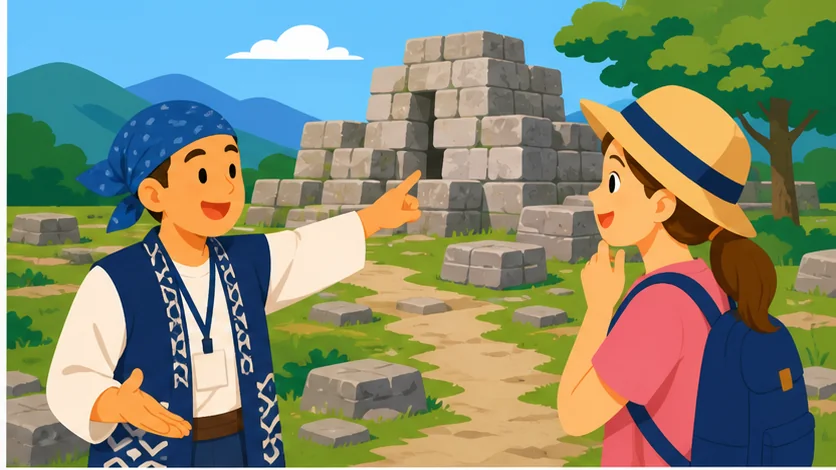
Check yourself
Level 1 · Recognise
Which sentence is correct?
Level 1 · Recognise
Listen and choose the meaning
Level 2 · Build
Put the words in order
Through the materials at the tourist information center, I was able to learn about the town's history.
Level 3 · Use
What goes in the blank?
観光案内所の資料____、町の歴史を知ることができました。
Through the tourist information center's materials, I was able to learn about the town's history.
More grammar in this theme
- 〜を通して・〜を通じてthrough a means