JPEdLab iconJPEdLab
Save history

Create an account and play

Explore first, then save your progress whenever you are ready. No email address is required.

Start free
  1. Japanese grammar
  2. JLPT N2 grammar
  3. 〜が〜を占める・〜が占める

〜が〜を占める・〜が占める~ga ~o shimeru

Ga o shimeru (〜が〜を占める・〜が占める) means “account for a share”.

このkono町まちmachiでdeは、わ、wa、高齢者こうれいしゃkoureishaがga人口じんこうjinkouのno30さんじゅうsanjuu%ぱーせんとpaasentoをo占めしめshimeてteいます。imasu。

In this town, elderly people account for 30% of the population.

Use 〜が〜を占める to present the proportion that a part accounts for within a whole, often in statistics.

In the course›

How it works

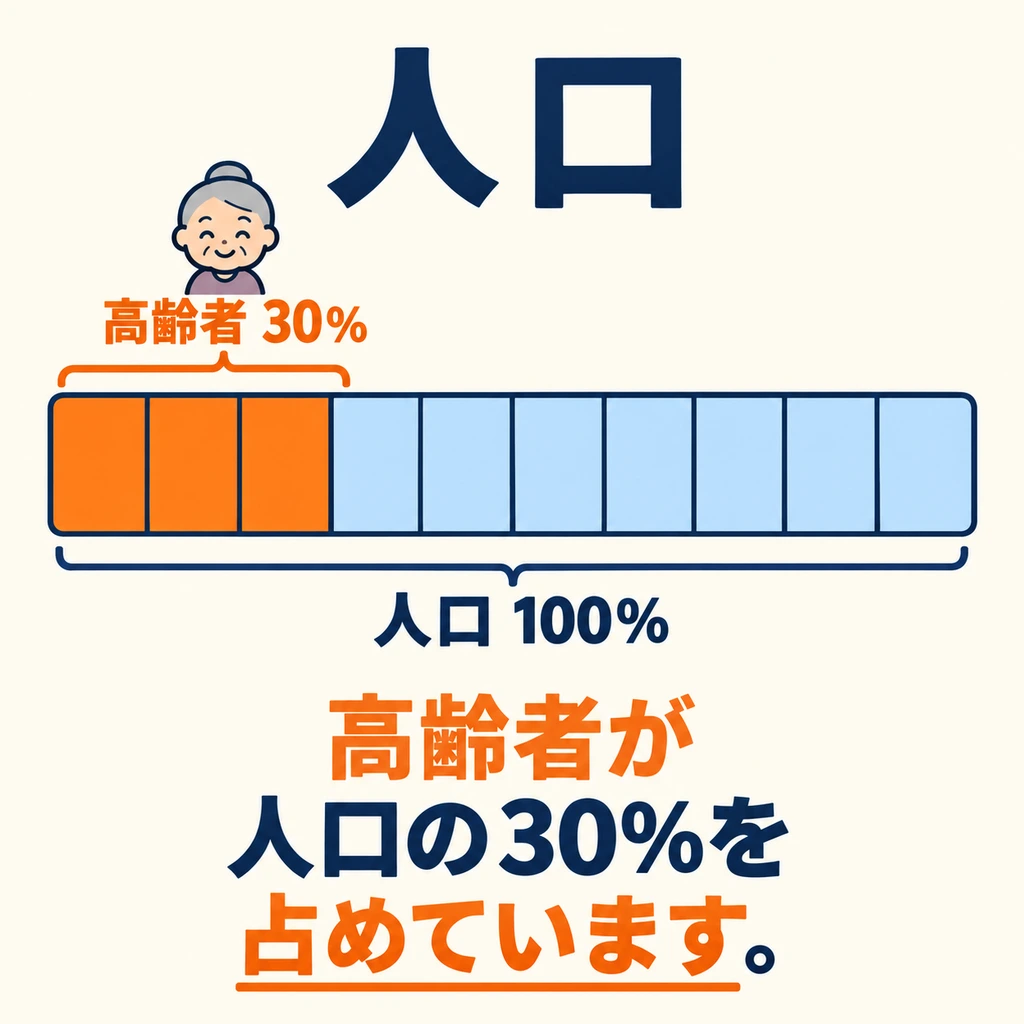
  1. The ten boxes represent the whole population. How many do older people account for? First identify the whole and the part.
    The ten boxes represent the whole population. How many do older people account for? First identify the whole and the part.

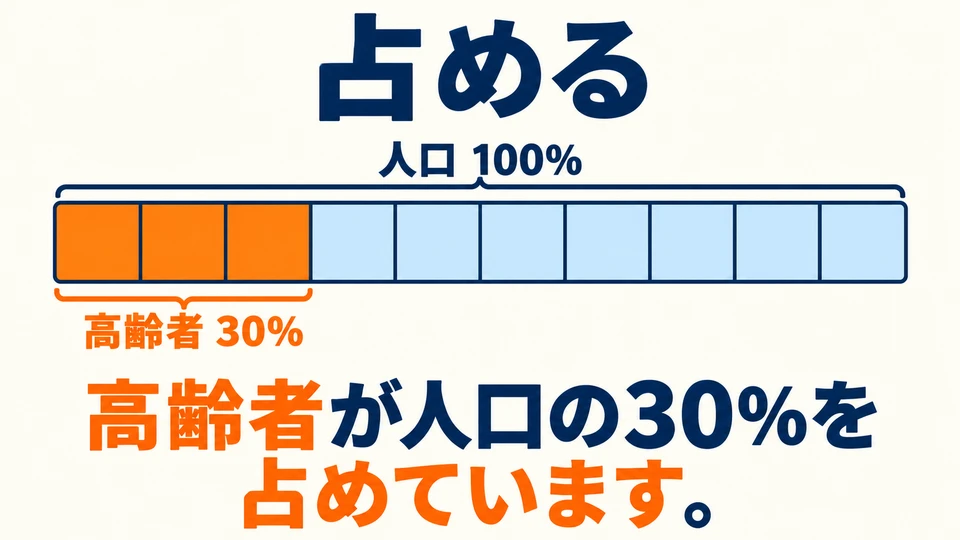
  2. 「占める」 expresses the proportion or share a part accounts for in a whole. In the picture, it is 30%.
    「占める」 expresses the proportion or share a part accounts for in a whole. In the picture, it is 30%.

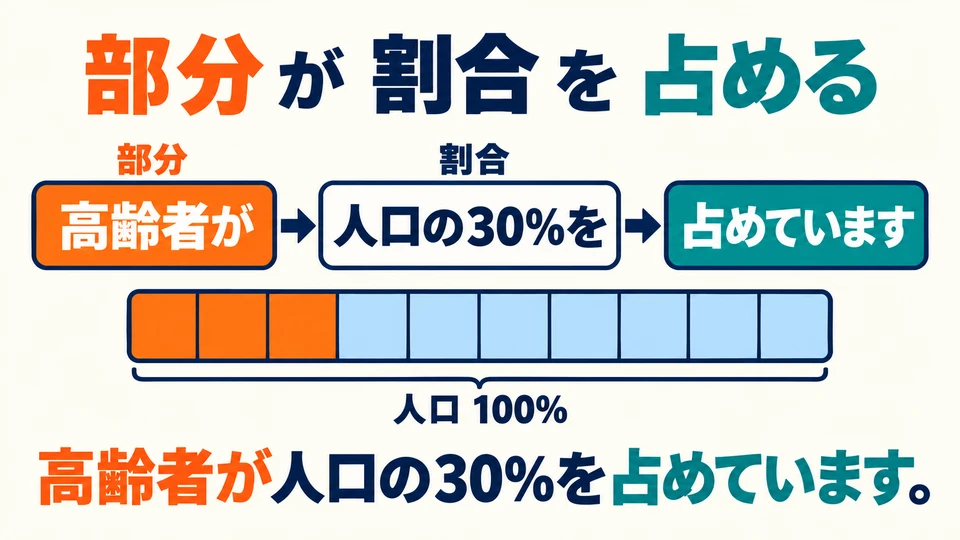
  3. The part comes before 「が」, and its proportion of the whole comes before 「を」. Keep them in this order.
    The part comes before 「が」, and its proportion of the whole comes before 「を」. Keep them in this order.

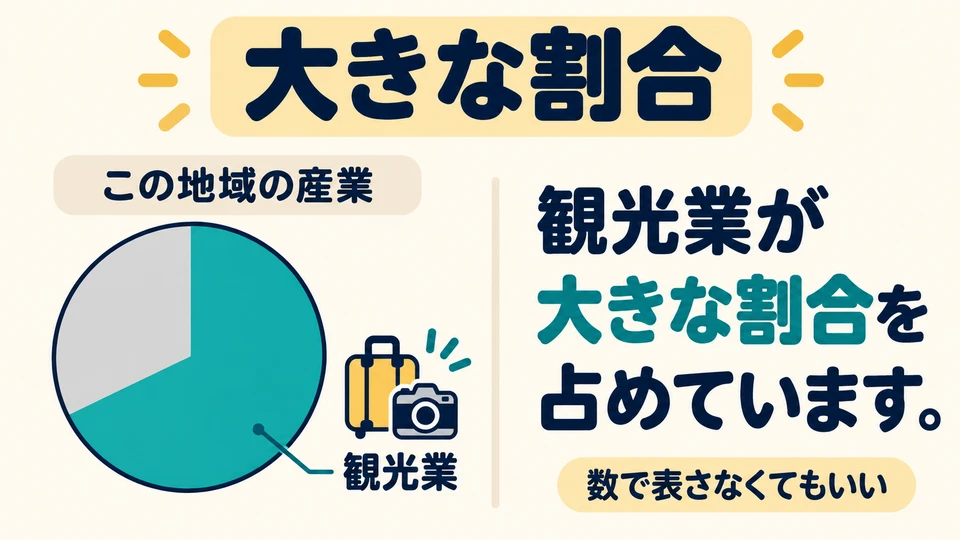
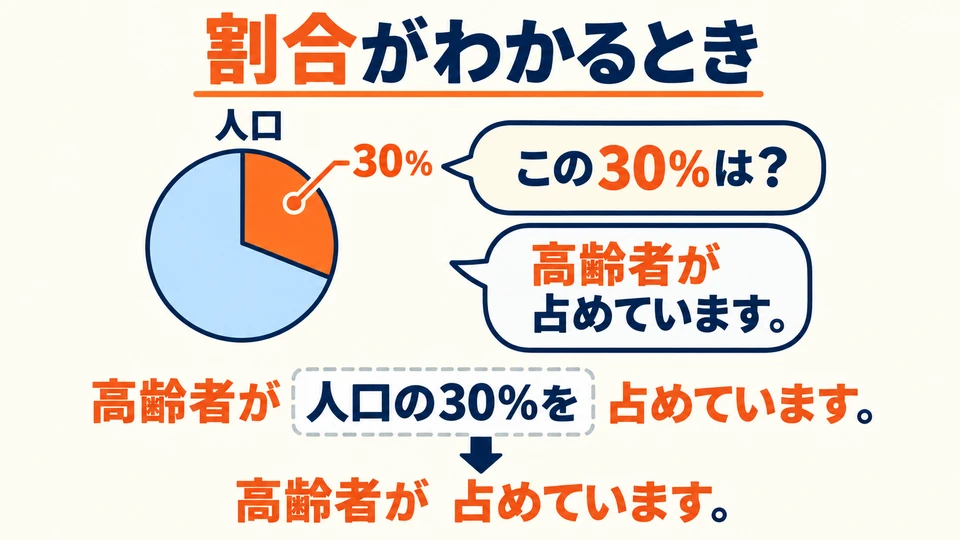
  4. You do not always need a number. If tourism accounts for a large share, you can also use 「大きな割合」.
    You do not always need a number. If tourism accounts for a large share, you can also use 「大きな割合」.

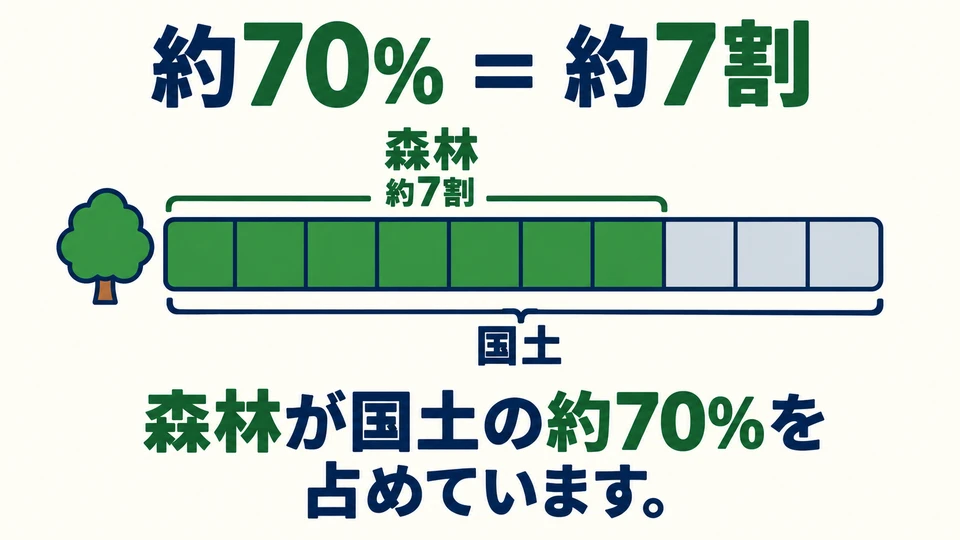
  5. Forests account for about 70% of the land, or roughly seven tenths. Both expressions give the same proportion.
    Forests account for about 70% of the land, or roughly seven tenths. Both expressions give the same proportion.

  6. When the proportion is already clear from the context, you can leave out the 「~を」 phrase and use 「~が占める」.
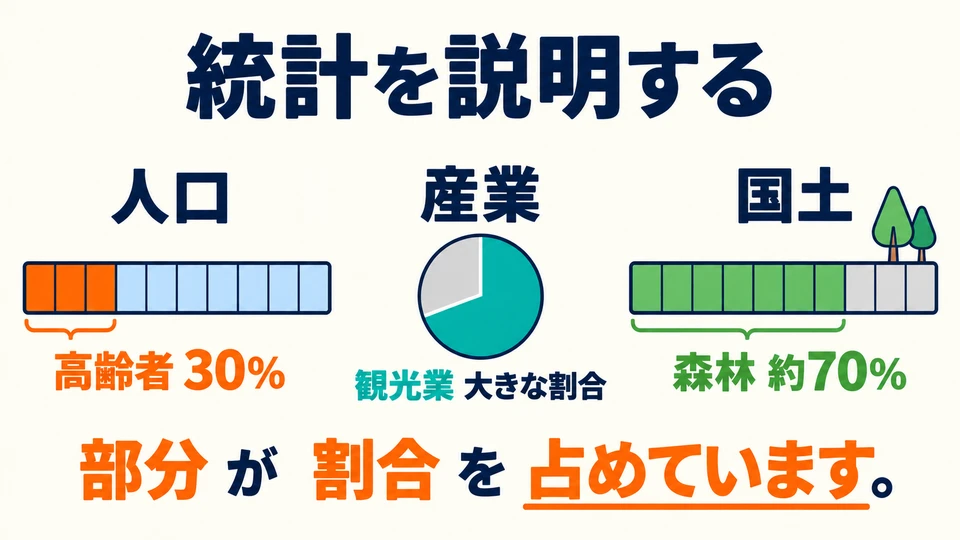
    When the proportion is already clear from the context, you can leave out the 「~を」 phrase and use 「~が占める」.

  7. Use this pattern when presenting statistics on population, industries, or land to explain the share a part accounts for.

    Use this pattern when presenting statistics on population, industries, or land to explain the share a part accounts for.

Example sentences

  • このkono町まちmachiでdeは、わ、wa、高齢者こうれいしゃkoureishaがga人口じんこうjinkouのno30さんじゅうsanjuu%ぱーせんとpaasentoをo占め

In a conversation

  • A
    日本にっぽんはわ山やまが多くおおくて平らな土地たいらなとちが少ないすくないと聞きました。ききました。

    A: I heard that Japan has many mountains and little flat land.

  • B
    ええ、実じつ

Check yourself

  1. Level 1 · Recognise

    Which sentence is correct?

  2. Level 1 · Recognise

    Listen and choose the meaning

  3. Level 2 · Build

    Put the words in order

    In this town, elderly people make up 30% of the population.

  4. Level 3 · Use

    What goes in the blank?

    この町では、高齢者が人口の30%を____ています。

    In this town, elderly people account for 30% of the population.

More grammar in this theme

  • 〜が〜を占める・〜が占めるaccount for a share

More JLPT N2 grammar

Keep practising

Test your Japanese vocabulary12 adaptive questions, freeCheck your pronunciationRead aloud and get a scorePractise verb forms10-question conjugation quizSee the whole courseGrammar, vocabulary and quizzes by theme
しめ
shime
てte
います。imasu。

In this town, elderly people account for 30% of the population.

  • 観光業かんこうぎょうkankougyouがgaこのkono地域ちいきchiikiのno産業さんぎょうsangyouのno大きなおおきなookina割合わりあいwariaiをo占めしめshimeてteいます。imasu。

    Tourism accounts for a large percentage of the industry in this region.

  • はわ
    森林しんりん
    が
    国土こくど
    の
    約70やくななじゅう
    %ぱーせんと
    を
    占めしめ
    て
    いる
    ん
    です
    よ。

    B: Yes, in fact, forests account for about 70% of the national land.

  • A
    国土こくどの約7やくなな割わりが森林しんりんなんですね。だから自然しぜんが多いおおいのですね。

    A: About 70% of the land is forest. No wonder there is so much nature.

  • Intermediate 2
    Geography, Climate, and Local Life
    More quizzesOpen this lesson’s quizzes in the course
    〜に囲まれている・〜に囲まれたbe surrounded by
    〜がちoften tends to
    〜に比べてcompared with
    〜に備えてin preparation for
    〜に代わって・〜に代わりin place of
    〜のような・〜のようにexamples such as
    〜としてin the role of
    〜に限るnothing beats
    〜を中心にcentered around
    〜をはじめとしてincluding ... as a leading example
    〜を通して・〜を通じてthrough a means
    〜ことからbased on the fact
    〜といえばspeaking of
    〜というとspeaking of; brings to mind
    Previous〜に囲まれている・〜に囲まれた
    Next〜がち
    See all 55
    〜恐れがあるrisk of an unwanted event
    〜とかでpossible cause, or something
    〜ところへ・に・をan event at that moment
    〜ものだ・〜ものではないwhat one should or should not do
    〜どころではないin no position to; far from
    〜に限り/〜限りはlimited to; as long as
    〜ながらもalthough; despite feeling
    〜からしてinference from a clue