JPEDLAB iconJPEDLAB
Save history

Create an account and play

Explore first, then save your progress whenever you are ready. No email address is required.

Start free
Read as articleCards
See the whole course›Intermediate 2›Geography, Climate, and Local Life

Japanese grammar · ≈ JLPT N2 · Intermediate 2

〜に備えて~ni sonaete

in preparation for

Use 「〜に備えて」 after a noun for preparations made before a possible future situation.

Start the interactive lessonIllustrated cards, audio and speaking practice

How it works

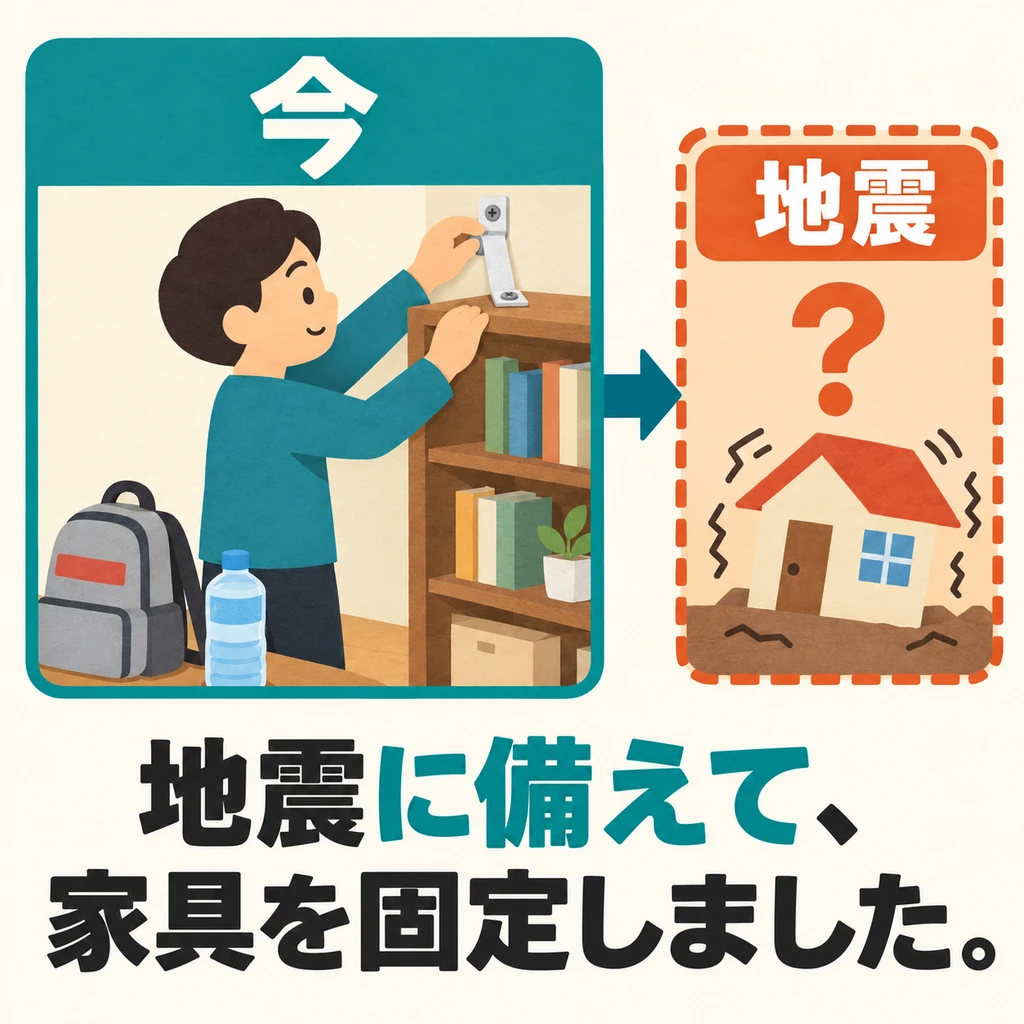
  1. The earthquake has not happened yet. Why secure the furniture now? Look at the picture: which comes first, the preparation or the earthquake?
    The earthquake has not happened yet. Why secure the furniture now? Look at the picture: which comes first, the preparation or the earthquake?

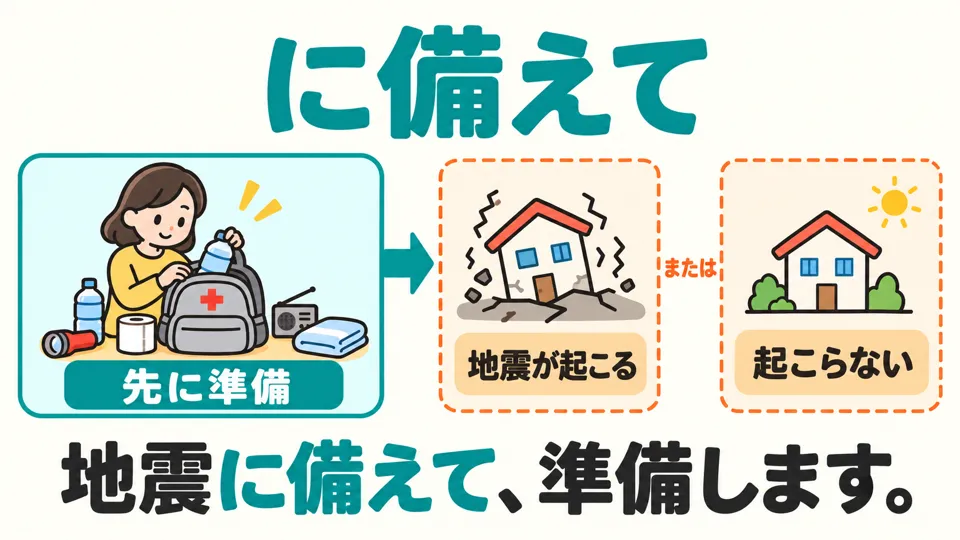
  2. 「に備えて」 means preparing in advance for a future situation. That situation may not actually occur.
    「に備えて」 means preparing in advance for a future situation. That situation may not actually occur.

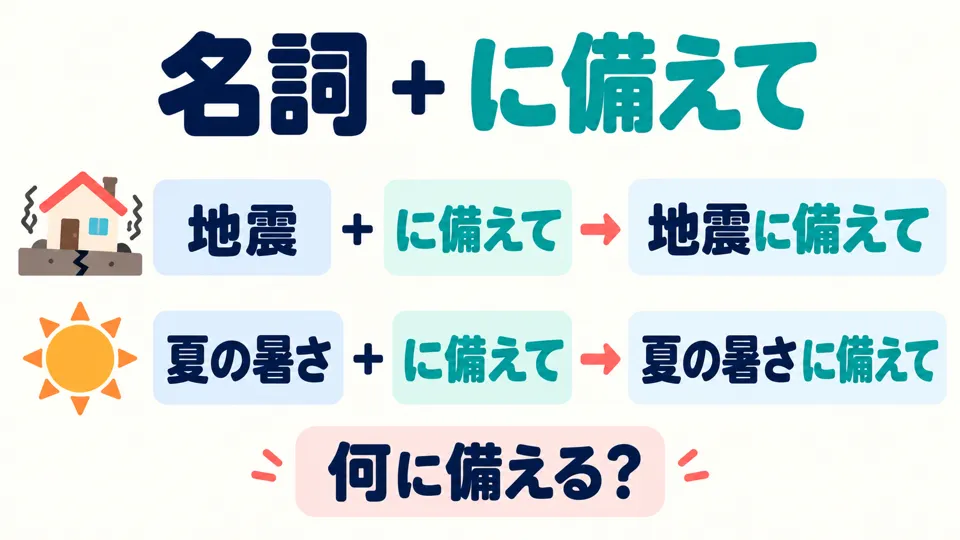
  3. It follows a noun, as in 「地震に備えて」. The noun names the situation you are preparing for.
    It follows a noun, as in 「地震に備えて」. The noun names the situation you are preparing for.

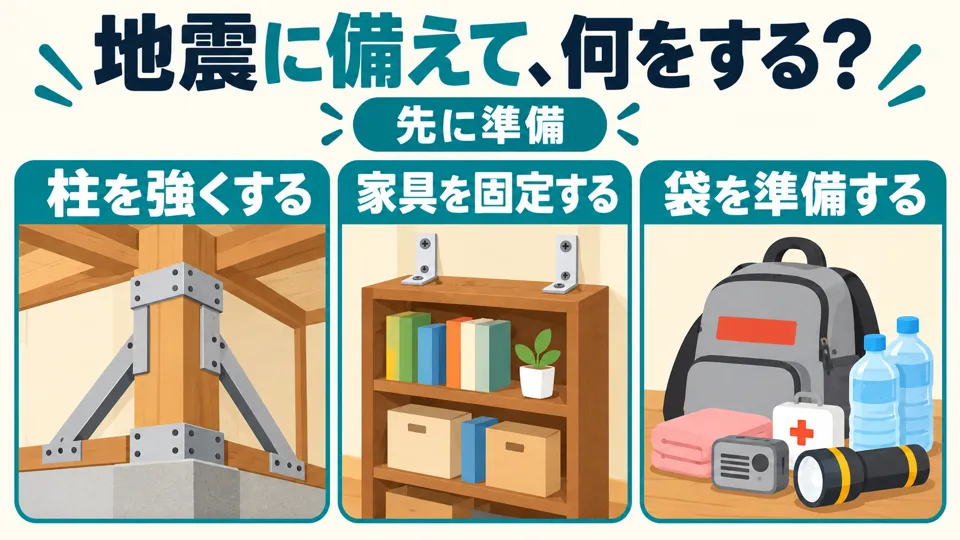
  4. The second half states the preparations: reinforcing pillars, securing furniture, or packing an emergency bag—all to prepare for an earthquake.
    The second half states the preparations: reinforcing pillars, securing furniture, or packing an emergency bag—all to prepare for an earthquake.

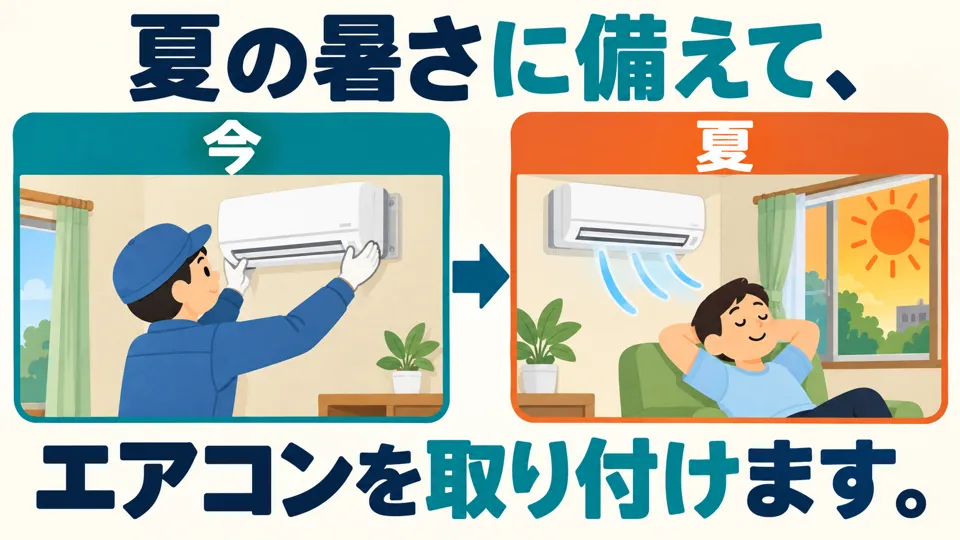
  5. It is not limited to disasters. You can also use 「に備えて」 for installing an air conditioner ahead of the summer heat.
    It is not limited to disasters. You can also use 「に備えて」 for installing an air conditioner ahead of the summer heat.

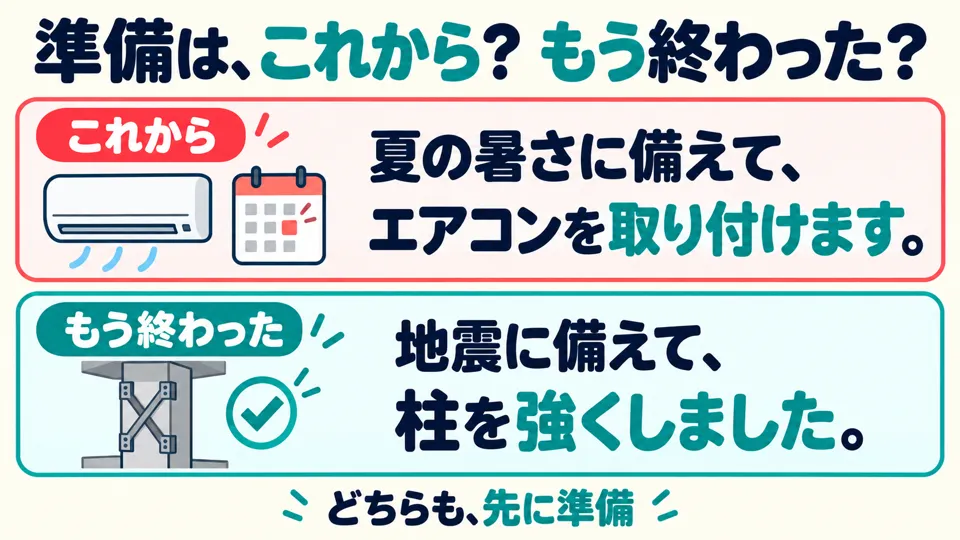
  6. Look at the sentence endings: installing the air conditioner may still be planned, while reinforcing the pillars may already be done. In both cases, the preparation comes before th

    Look at the sentence endings: installing the air conditioner may still be planned, while reinforcing the pillars may already be done. In both cases, the preparation comes before the situation.

Example sentences

  • 夏なつnatsuのno暑さあつさatsusaにni備えそなえsonaeて、te、エアコンえあこんeakonをo取りとりtori付けます。つけます。tsukemasu。

    In preparation for the summer heat, I will install an air conditioner.

In a conversation

Check yourself

  1. Level 1 · Recognise

    Which sentence is correct?

  2. Level 1 · Recognise

    Listen and choose the meaning

  3. Level 2 · Build

    Put the words in order

    To prepare for the winter cold, we will install floor heating in the room.

  4. Level 3 · Use

    What goes in the blank?

    夏の暑さに____、エアコンを取り付けます。

    To prepare for the summer heat, I will install an air conditioner.

More grammar in this theme

  • 〜に備えてin preparation for

Keep practising

Test your Japanese vocabulary12 adaptive questions, freeCheck your pronunciationRead aloud and get a scorePractise verb forms10-question conjugation quizSee the whole courseGrammar, vocabulary and quizzes by theme
  • 「最近、さいきん、大きなおおきな地震じしんが多いですおおいですね。何なんか対策たいさくをしていますか。」か。

    Recently, there have been a lot of large earthquakes. Are you taking any measures?

  • 「はい、はい、将来しょうらいの地震じしんに備えそなえて、家具かぐを固定こていし、非常ひじょう持ち出しもちだし袋ふくろを準備じゅんびしてあります。」あります。

    Yes, in preparation for future earthquakes, I have secured the furniture and prepared an emergency bag.

  • 地震じしんjishinにni備えそなえsonaeて、te、建物たてものtatemonoのno柱はしらhashiraをo強くつよくtsuyokuしました。shimashita。

    The pillars of the building were reinforced in preparation for earthquakes.

  • 「それそれはわ素晴らしいですすばらしいですね。私わたしもすぐに準備じゅんびしようと思います。」おもいます。

    That's wonderful. I think I'll get prepared right away, too.

  • 〜に囲まれている・〜に囲まれたbe surrounded by
    〜が〜を占める・〜が占めるaccount for a share
    〜がちoften tends to
    〜に比べてcompared with
    〜に代わって・〜に代わりin place of
    〜のような・〜のようにexamples such as
    〜としてin the role of
    〜に限るnothing beats
    〜を中心にcentered around
    〜をはじめとしてincluding ... as a leading example
    〜を通して・〜を通じてthrough a means
    〜ことからbased on the fact
    〜といえばspeaking of
    〜というとspeaking of; brings to mind
    Previous〜に比べて
    Next〜に代わって・〜に代わり