
〜に比べて~ni kurabete
Ni kurabete (〜に比べて) means “compared with”.
Compared to Tokyo, my hometown has more nature.
Use 「〜に比べて」 after a noun as the reference, then describe a difference in the same aspect.
In the course
How it works
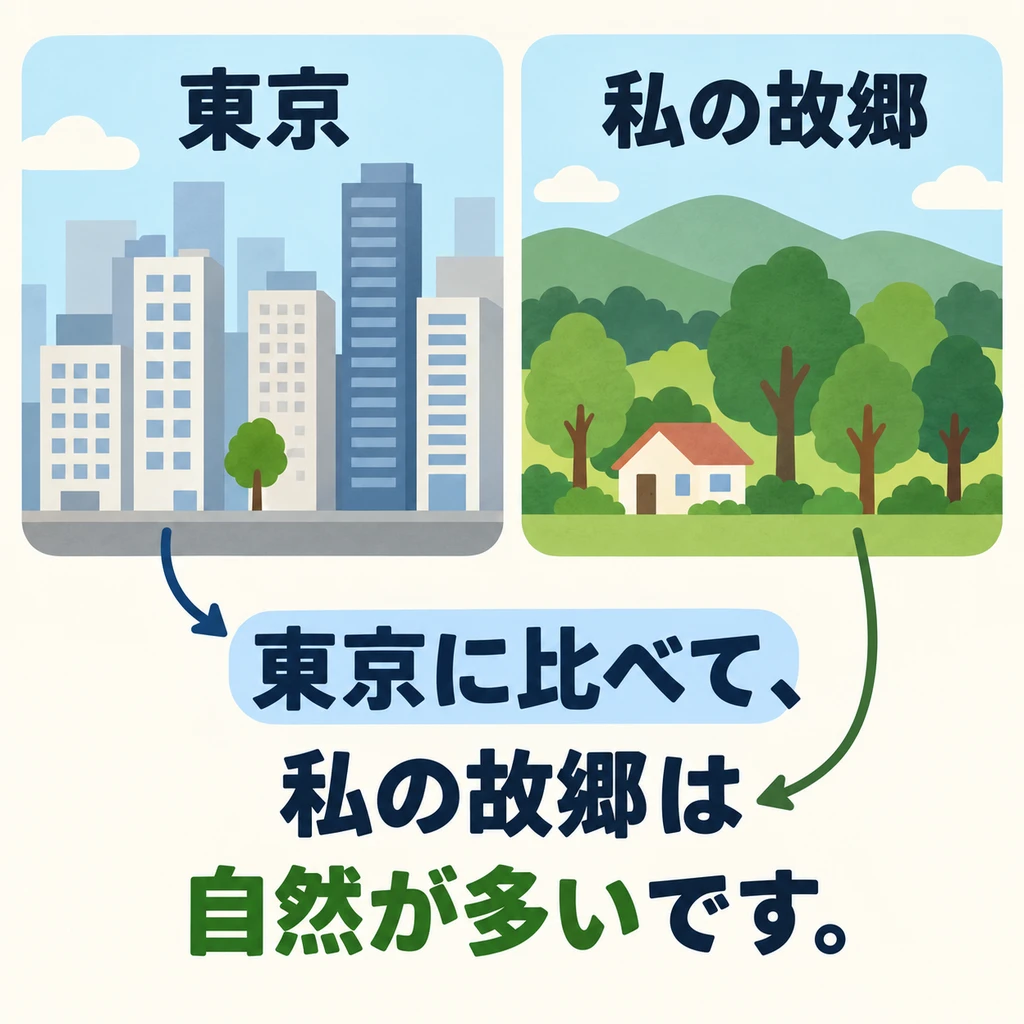
Look at how much nature each place has. Use “に比べて” to compare them when describing a difference.
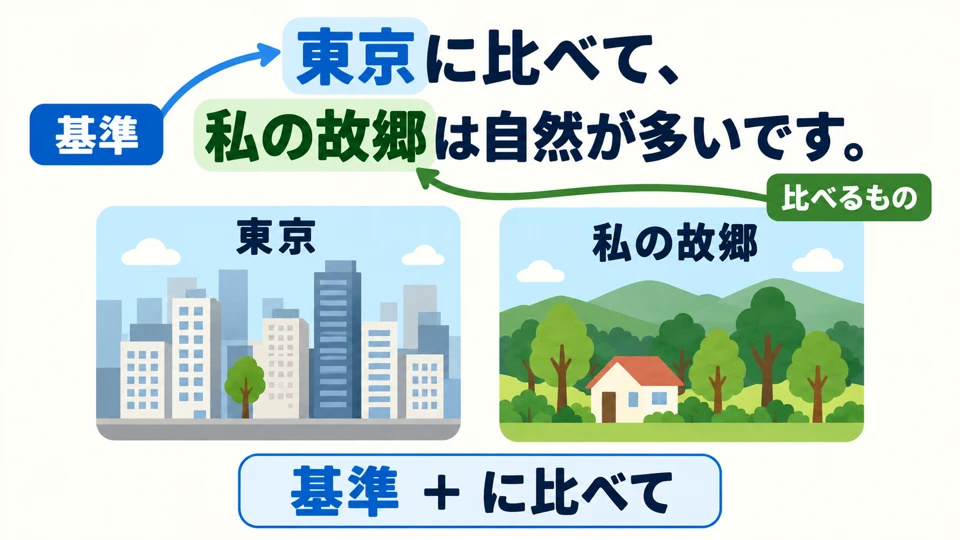
In the picture, Tokyo is the reference: the hometown has more nature. Put the reference before “に比べて”.
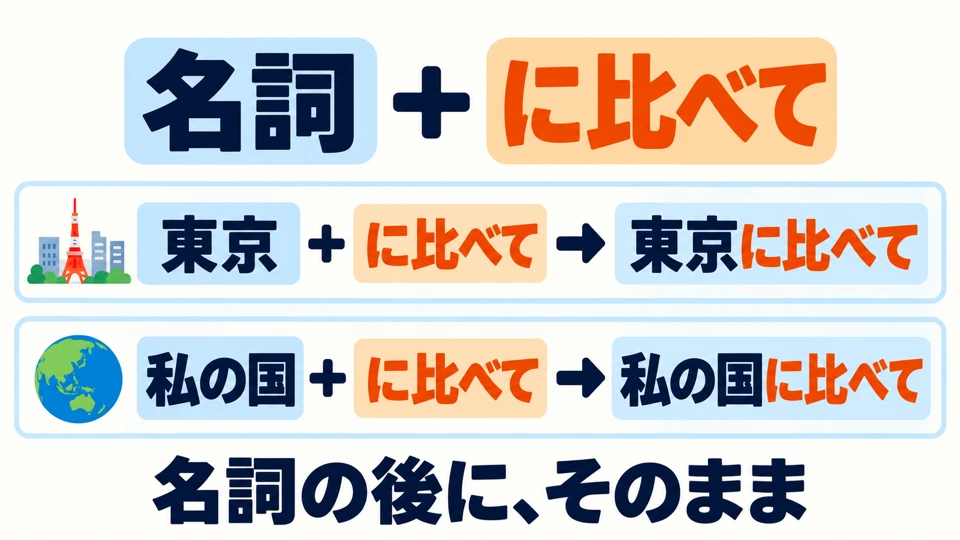
The pattern is “noun + に比べて”. Attach it directly to the noun, as in “東京に比べて”.
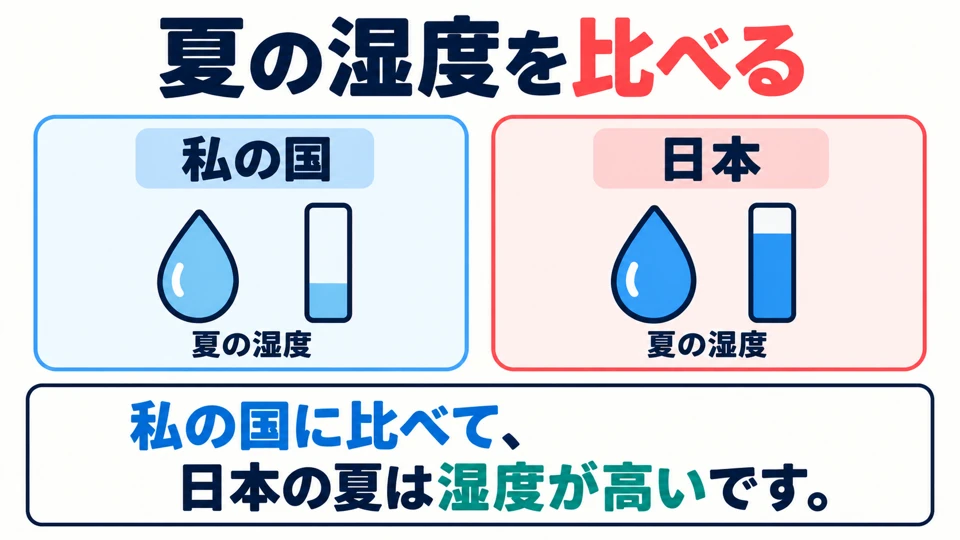
Compare the same aspect of both things. For summer humidity, compare how humid the two places are.
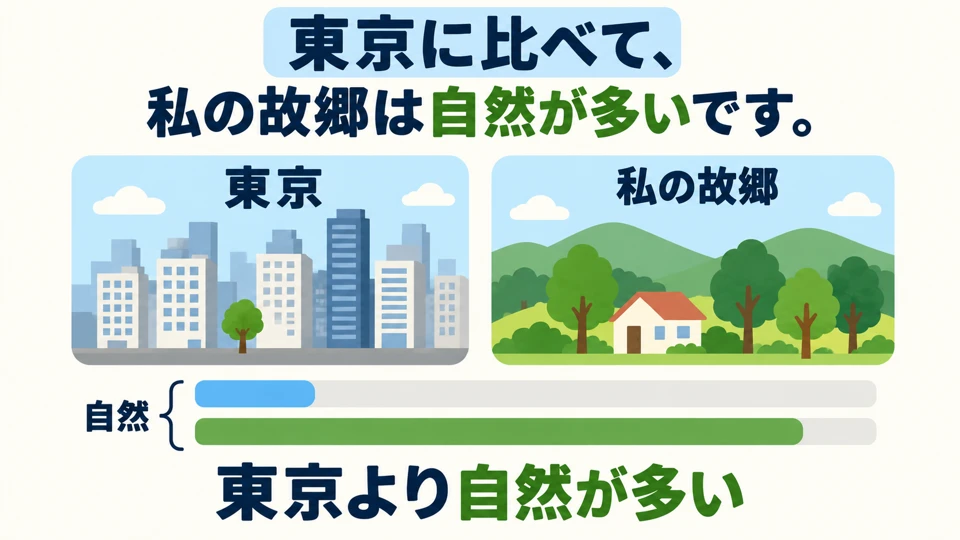
Here, “自然が多い” means there is more nature than in Tokyo. It does not simply say the hometown has lots of nature on its own.
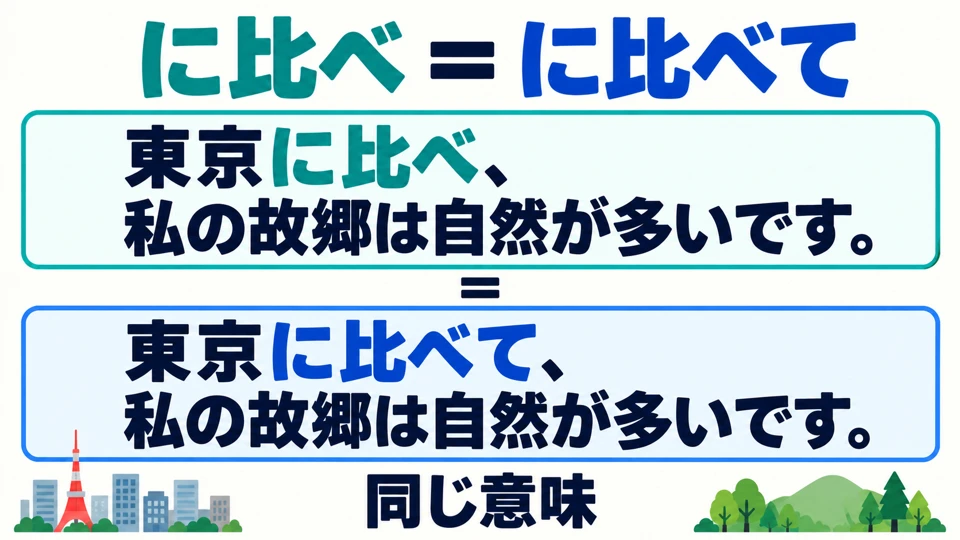
“に比べ” and “に比べて” have the same meaning. Both compare something using another thing as the reference.
Example sentences
- 東京toukyouにni比べkurabeて、te、私watashiのno故郷kokyouはwa自然shizenがga多いです。ooidesu。
In a conversation

- A私の国に比べて、日本の夏は湿度が高いですね。
A: Compared to my country, the summer in Japan is very humid, isn't it?
- B
Check yourself
Level 1 · Recognise
Which sentence is correct?
Level 1 · Recognise
Listen and choose the meaning
Level 2 · Build
Put the words in order
Compared with the plains, mountainous areas have much shorter hours of sunlight.
Level 3 · Use
What goes in the blank?
東京____(「に比べて」の形)、私の故郷は自然が多いです。
Compared to Tokyo, my hometown has more nature.
More grammar in this theme
- 〜に比べてcompared with