JPEDLAB iconJPEDLAB
Save history

Create an account and play

Explore first, then save your progress whenever you are ready. No email address is required.

Start free
Read as articleCards
See the whole course›Intermediate 2›Intergenerational Exchange and Broader Perspectives

Japanese grammar · ≈ JLPT N3 · Intermediate 2

〜につき~ni tsuki

per; for each

After a quantity unit, 〜につき shows an allocation or limit for each person, table, or other unit.

Start the interactive lessonIllustrated cards, audio and speaking practice

How it works

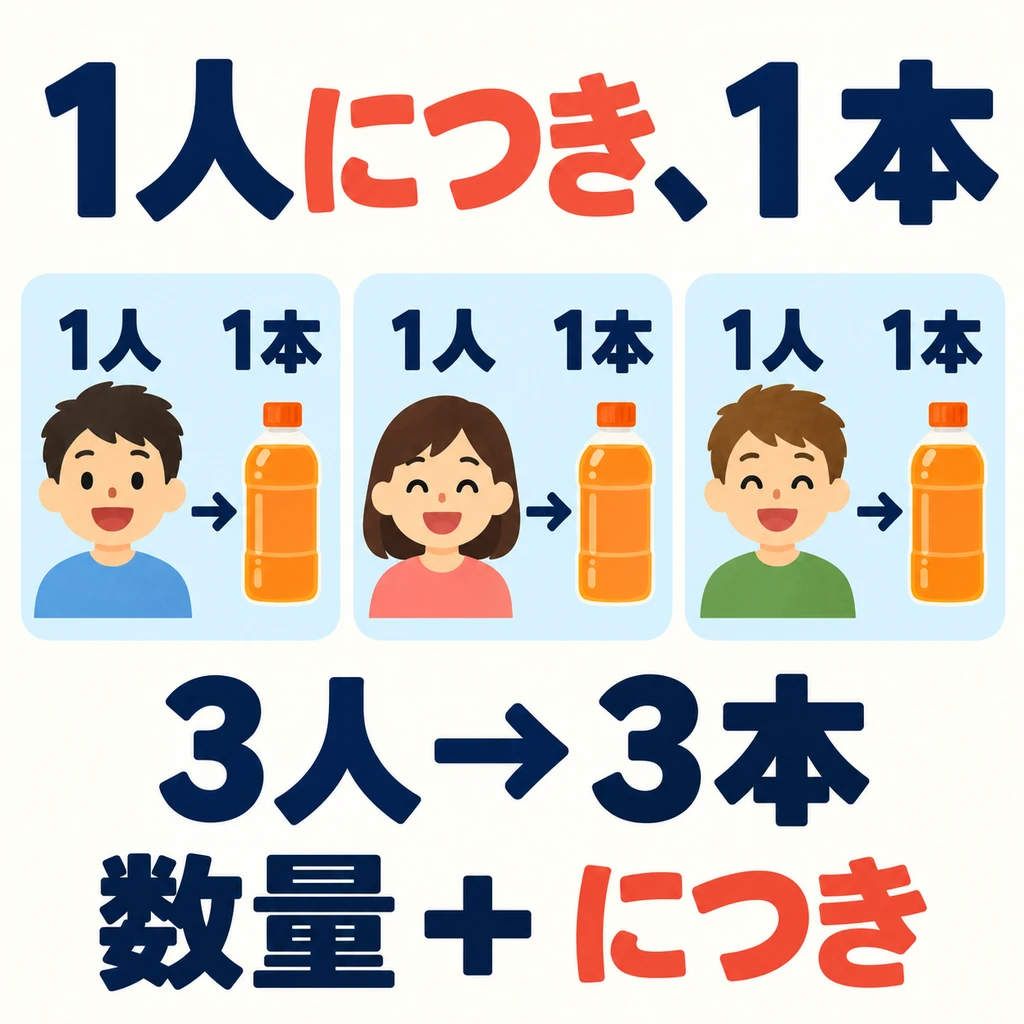
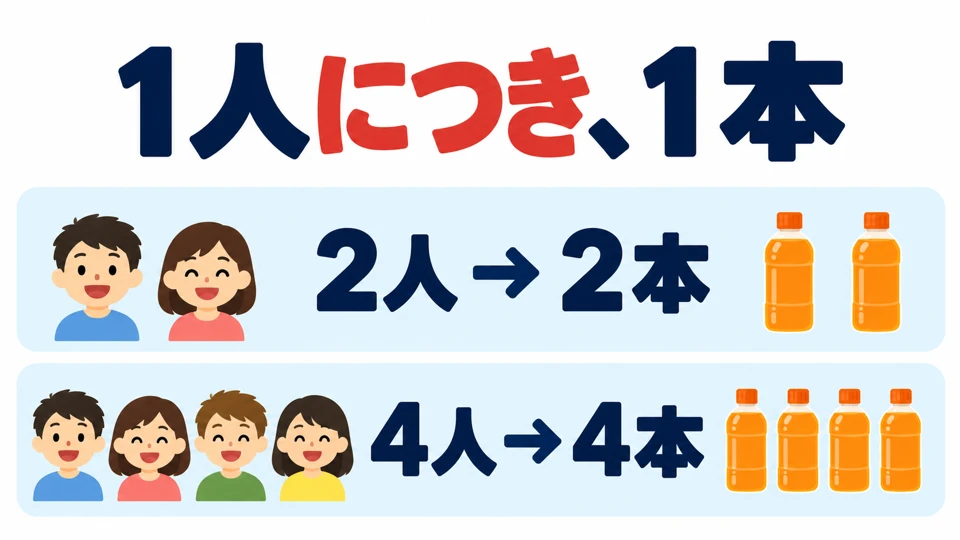
  1. Look at how many bottles each person has. 「につき」 assigns the same quantity to each unit of the same kind.
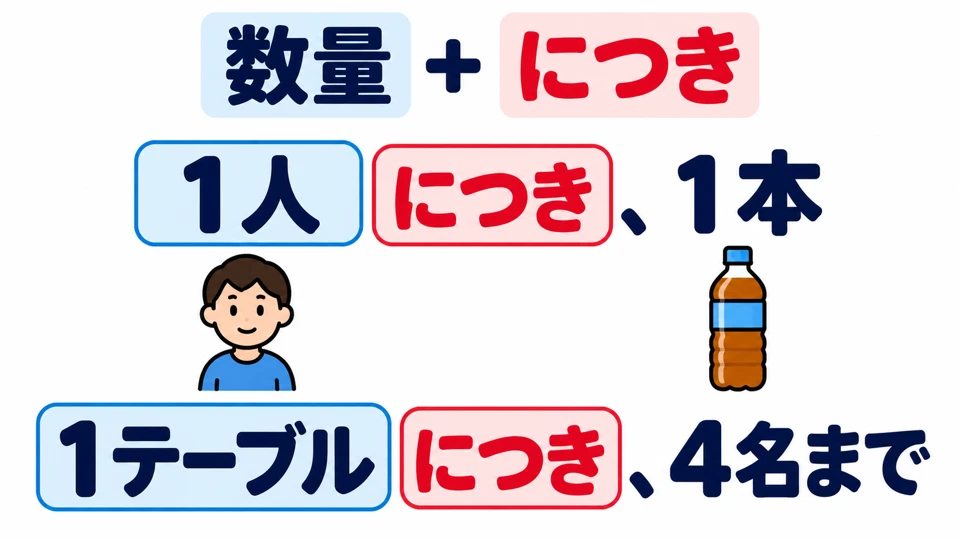
    Look at how many bottles each person has. 「につき」 assigns the same quantity to each unit of the same kind.

  2. It follows a noun expressing a quantity, as in 「1人につき」. The quantity before it is the unit used for calculation.
    It follows a noun expressing a quantity, as in 「1人につき」. The quantity before it is the unit used for calculation.

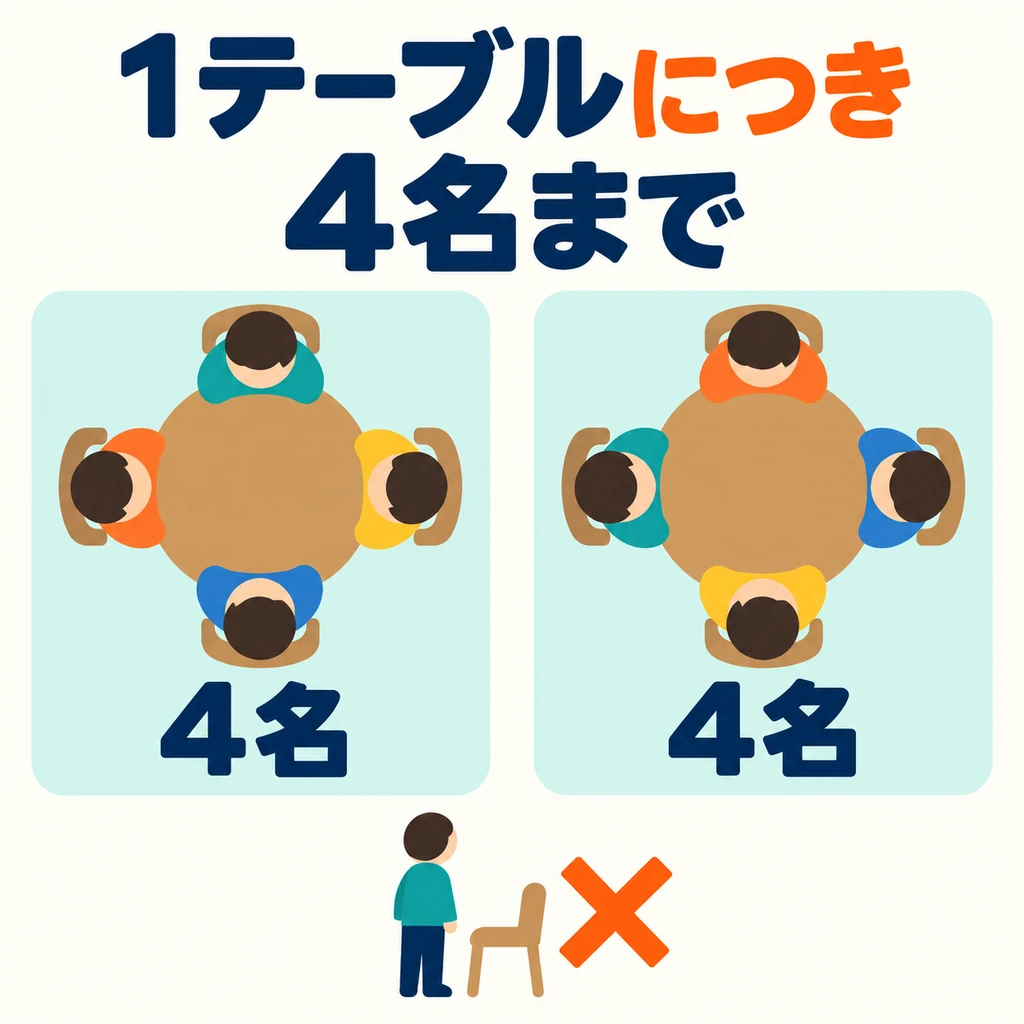
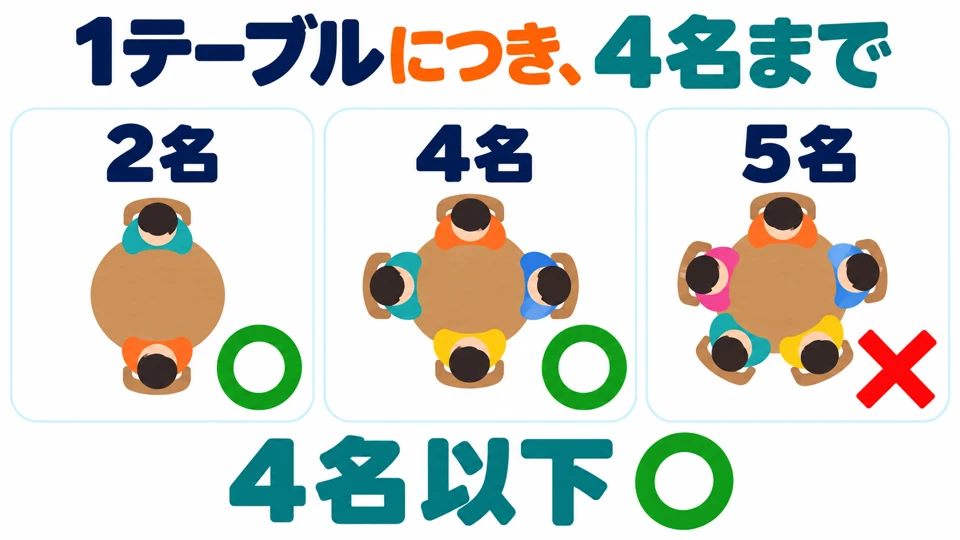
  3. How many people can sit at each table at most? 「1テーブルにつき」 makes each table the unit for the limit on people.
    How many people can sit at each table at most? 「1テーブルにつき」 makes each table the unit for the limit on people.

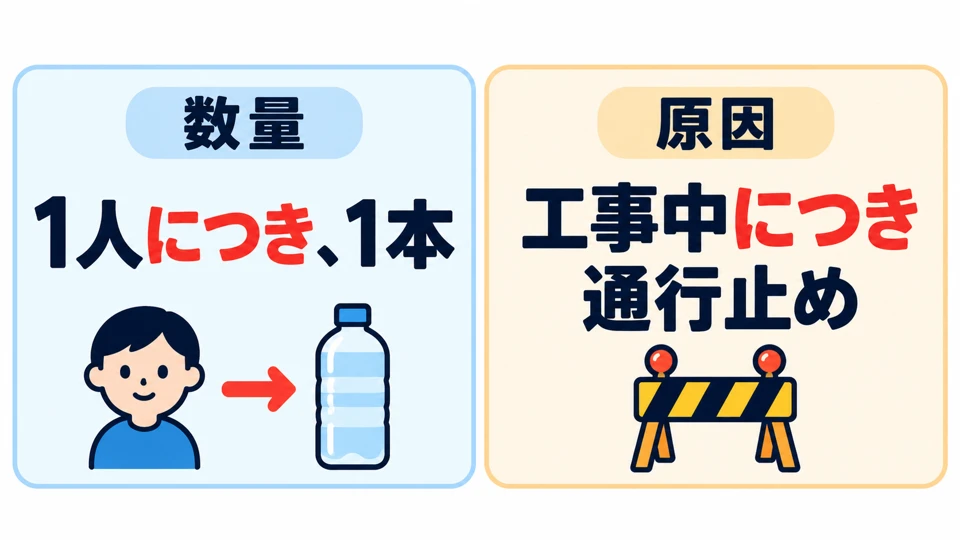
  4. The 「につき」 you learned earlier can also express a reason. Here it follows a quantity and shows an allocation or limit per unit.
    The 「につき」 you learned earlier can also express a reason. Here it follows a quantity and shows an allocation or limit per unit.

  5. In the drink example, each person gets one bottle; the group does not share just one. As the number of people rises, the total bottles rise proportionally.
    In the drink example, each person gets one bottle; the group does not share just one. As the number of people rises, the total bottles rise proportionally.

  6. In the table example, 「まで」 marks the upper limit: fewer than four people is fine, but each table cannot have more than four.

    In the table example, 「まで」 marks the upper limit: fewer than four people is fine, but each table cannot have more than four.

Example sentences

  • 参加者さんかしゃsankasha1いちichi名めいmeiにniつき、tsuki、飲み物のみものnomimonoをo1本いっぽんippon用意よういyouiしshiてte

In a conversation

Check yourself

  1. Level 1 · Recognise

    Which sentence is correct?

  2. Level 1 · Recognise

    Listen and choose the meaning

  3. Level 2 · Build

    Put the words in order

    One drink is prepared for each participant.

  4. Level 3 · Use

    What goes in the blank?

    参加者1名____、飲み物を1本用意しています。

    One drink is prepared for each participant.

More grammar in this theme

  • 〜につきper; for each

Keep practising

Test your Japanese vocabulary12 adaptive questions, freeCheck your pronunciationRead aloud and get a scorePractise verb forms10-question conjugation quizSee the whole courseGrammar, vocabulary and quizzes by theme
います。imasu。

We have prepared one drink per participant.

  • A
    今度こんどの茶話ちゃわ会かいですが、参加者さんかしゃ1人ひとりにつきお菓子おかしを1つひとつ持っもってきてもらえますか。

    A: Regarding the upcoming tea party, could each participant bring one snack?

  • 1いちichiテーブルてーぶるteeburuにniつき、tsuki、4よんyon名めいmeiまでmade座れます。すわれます。suwaremasu。

    Up to four people can sit at each table.

  • B
    わかりました。持参物じさんぶつについてお知らせおしらせに明記めいきしておきますね。

    B: I understand. I'll make sure to state clearly in the notice what to bring.

  • A
    はい、不明ふめい点てんがあればいつでも担当者たんとうしゃに問いとい合わせるあわせるように書いようにかいておいてください。

    A: Yes, please write that if they have any questions, they can contact the person in charge at any time.

  • 〜どころではないin no position to; far from
    〜たところdid…and found that
    〜ことになったit has been decided
    〜に限り/〜限りはlimited to; as long as
    〜かなと思ってthinking maybe; so I
    〜にしてはfor; contrary to expectation
    〜たものだused to; fond recollection
    〜ながらもalthough; despite feeling
    〜につけ(て)whenever; at every opportunity
    〜さえ/さえ〜ばeven; as long as
    〜に反してcontrary to expectations
    〜ているうちにchange during an activity
    〜からしてinference from a clue
    Previous〜にしては
    Next〜たものだ