JPEDLAB iconJPEDLAB
Save history

Create an account and play

Explore first, then save your progress whenever you are ready. No email address is required.

Start free
Read as articleCards
See the whole course›Intermediate 2›Intergenerational Exchange and Broader Perspectives

Japanese grammar · ≈ JLPT N3 · Intermediate 2

〜に反して~ni hanshite

contrary to expectations

Use 「〜に反して」 when a result or action goes against an expectation or rule.

Start the interactive lessonIllustrated cards, audio and speaking practice

How it works

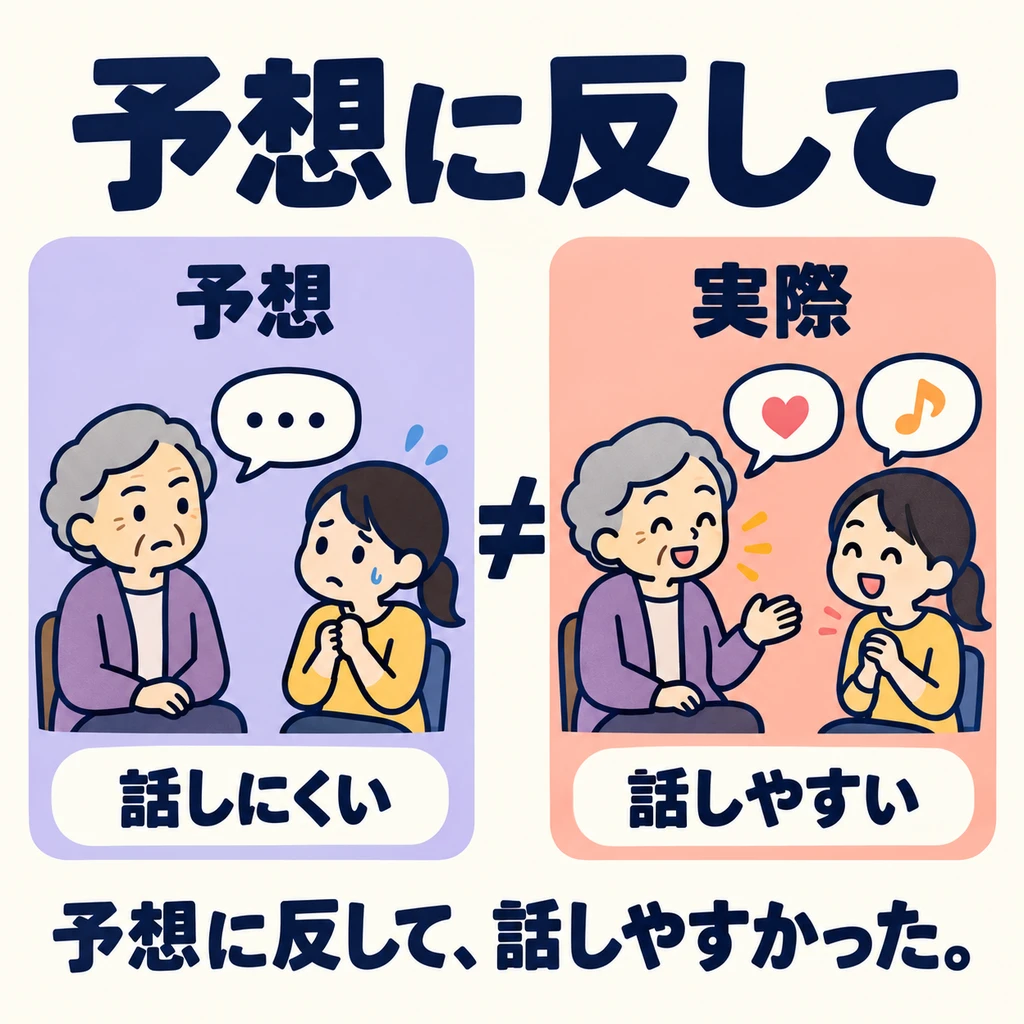
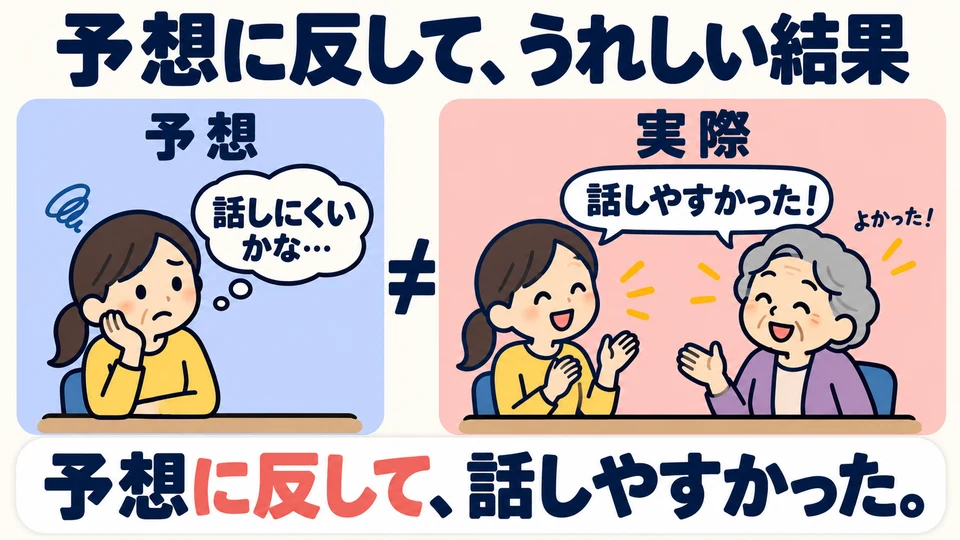
  1. You expected the person to be hard to talk to, but they were actually easy to talk to. Use 「に反して」 when the result is the opposite of what you expected.
    You expected the person to be hard to talk to, but they were actually easy to talk to. Use 「に反して」 when the result is the opposite of what you expected.

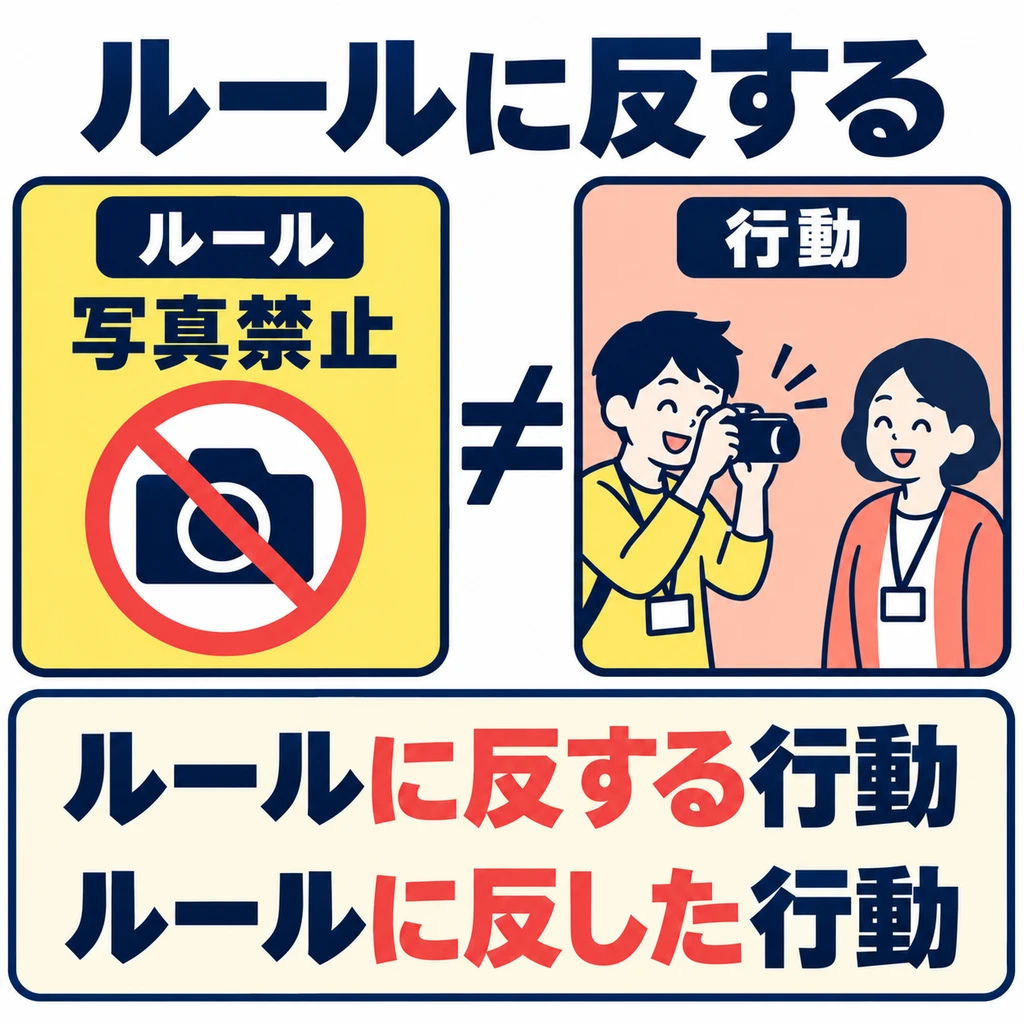
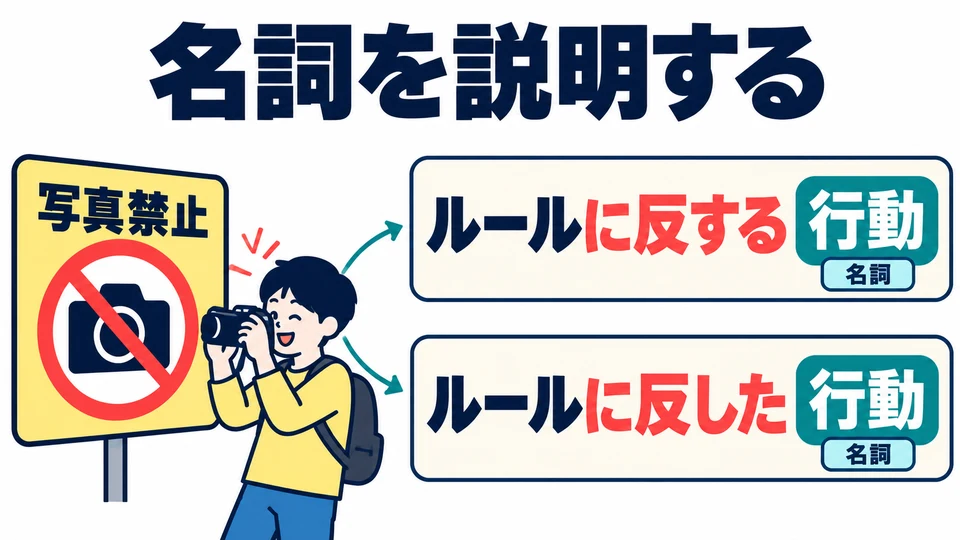
  2. The rule says no photos, but someone takes a photo anyway. You can also use this expression when an action goes against a rule.
    The rule says no photos, but someone takes a photo anyway. You can also use this expression when an action goes against a rule.

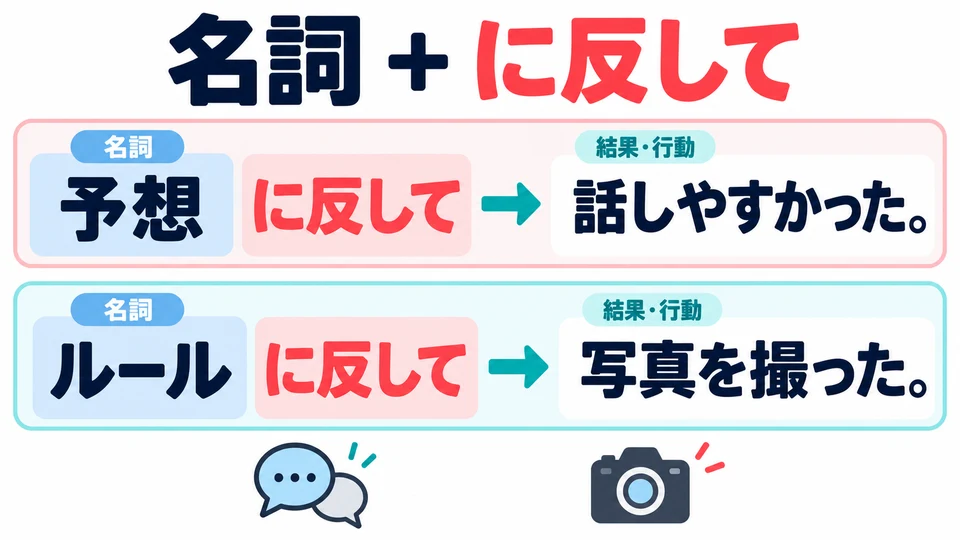
  3. A noun such as 「予想」 or 「ルール」 comes before the expression. First state the expectation or rule, then the contrary result or action.
    A noun such as 「予想」 or 「ルール」 comes before the expression. First state the expectation or rule, then the contrary result or action.

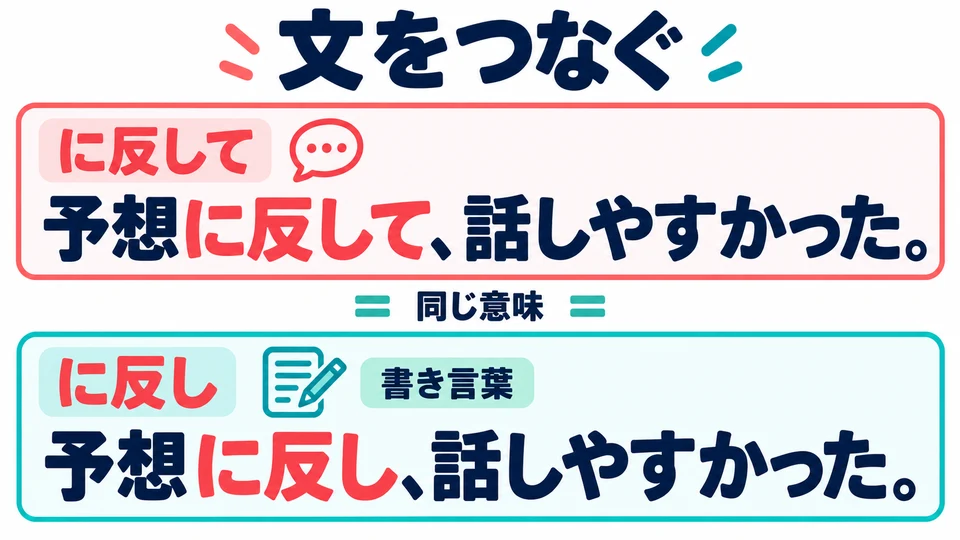
  4. Use 「に反して」 to connect to the following clause. 「に反し」 has the same meaning and is more common in written language.
    Use 「に反して」 to connect to the following clause. 「に反し」 has the same meaning and is more common in written language.

  5. Use 「に反する/に反した」 before a noun. With 「行動」 in the picture, they describe an action that breaks the rule.
    Use 「に反する/に反した」 before a noun. With 「行動」 in the picture, they describe an action that breaks the rule.

  6. The elderly person was easy to talk to—a good result. 「予想に反して」 simply means things turned out differently from expected; it need not be something bad.

    The elderly person was easy to talk to—a good result. 「予想に反して」 simply means things turned out differently from expected; it need not be something bad.

Example sentences

  • 私わたしwatashiのno予想よそうyosouにni反しはんしhanshiて、te、高齢者こうれいしゃkoureishaのno方ほうhouはわwaとてもtotemo

In a conversation

Check yourself

  1. Level 1 · Recognise

    Which sentence is correct?

  2. Level 1 · Recognise

    Listen and choose the meaning

  3. Level 2 · Build

    Put the words in order

    Contrary to my expectations, the elderly person was very easy to talk to.

  4. Level 3 · Use

    What goes in the blank?

    私の____、高齢者の方はとても話しやすかったです。

    Contrary to my expectations, older people were very easy to talk to

More grammar in this theme

  • 〜に反してcontrary to expectations

Keep practising

Test your Japanese vocabulary12 adaptive questions, freeCheck your pronunciationRead aloud and get a scorePractise verb forms10-question conjugation quizSee the whole courseGrammar, vocabulary and quizzes by theme
話しやすかっはなしやすかっ
hanashiyasukat
たです。tadesu。

Contrary to my expectations, the elderly person was very easy to talk to.

  • ボランティアぼらんてぃあ活動かつどうの事前じぜん説明せつめい会かいはわどうでしたか。

    How was the briefing session before the volunteer activity?

  • 参加さんか条件じょうけんが厳しくきびしくて身構えみがまえていましたが、その不安ふあんに反しはんして、とても温かいあたたかい雰囲気ふんいきで安心あんしんしました。

    I was bracing myself because the participation conditions were strict, but contrary to that anxiety, the atmosphere was very warm, and I felt relieved.

  • ルールるーるruuruにni反するはんするhansuru行動こうどうkoudouは、わ、wa、交流こうりゅうkouryuu活動かつどうkatsudouでdeはわwaしshiてteはわwaいけません。ikemasen。

    You must not engage in behavior that violates the rules during exchange activities.

  • それはわ良かったです。よかったです。事前じぜんにしっかりと確認かくにんできて、打ちうち解けやすくとけやすくなりましたね。

    That is great. Being able to confirm things thoroughly in advance makes it easier to break the ice, doesn't it?

  • 〜どころではないin no position to; far from
    〜たところdid…and found that
    〜ことになったit has been decided
    〜に限り/〜限りはlimited to; as long as
    〜かなと思ってthinking maybe; so I
    〜にしてはfor; contrary to expectation
    〜につきper; for each
    〜たものだused to; fond recollection
    〜ながらもalthough; despite feeling
    〜につけ(て)whenever; at every opportunity
    〜さえ/さえ〜ばeven; as long as
    〜ているうちにchange during an activity
    〜からしてinference from a clue
    Previous〜さえ/さえ〜ば
    Next〜ているうちに