
Japanese grammar · ≈ JLPT N3 · Intermediate 2
〜に反して~ni hanshite
contrary to expectations
Use 「〜に反して」 when a result or action goes against an expectation or rule.
How it works
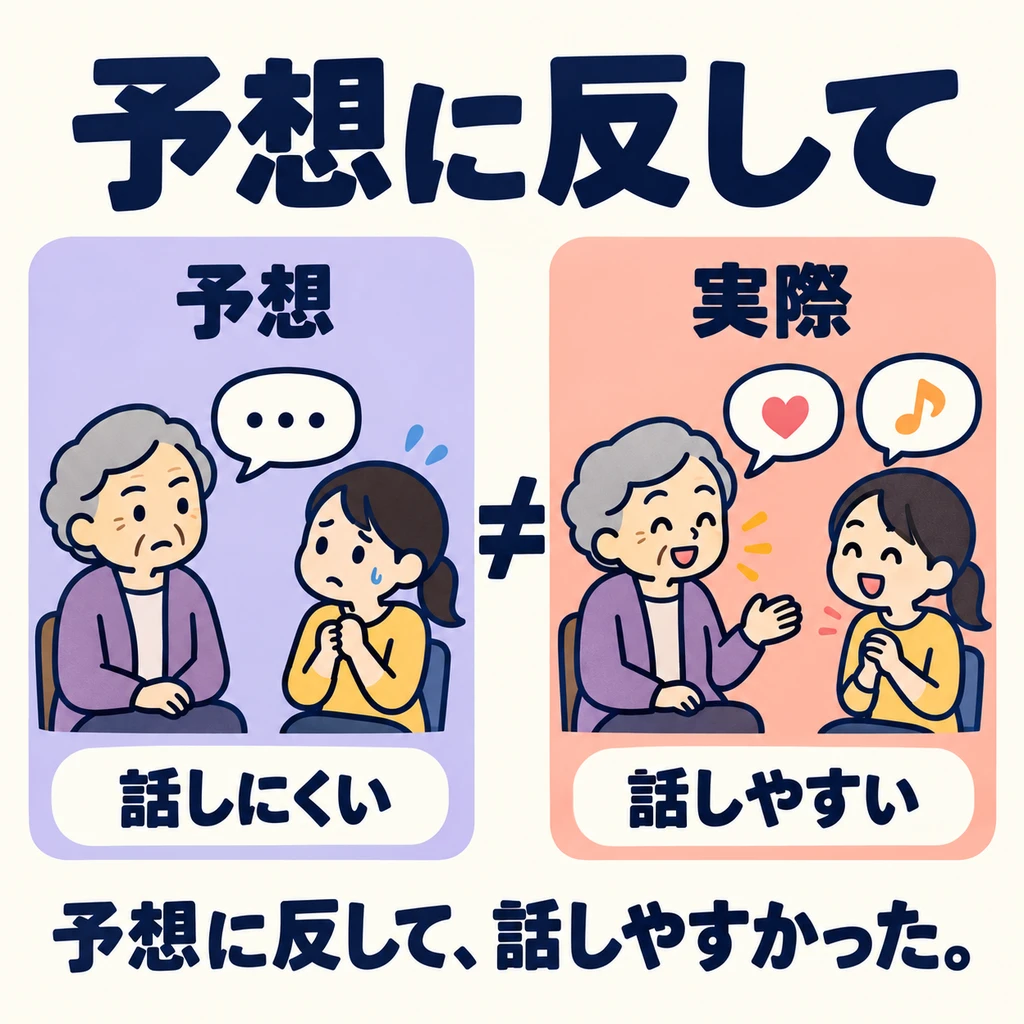
You expected the person to be hard to talk to, but they were actually easy to talk to. Use 「に反して」 when the result is the opposite of what you expected.
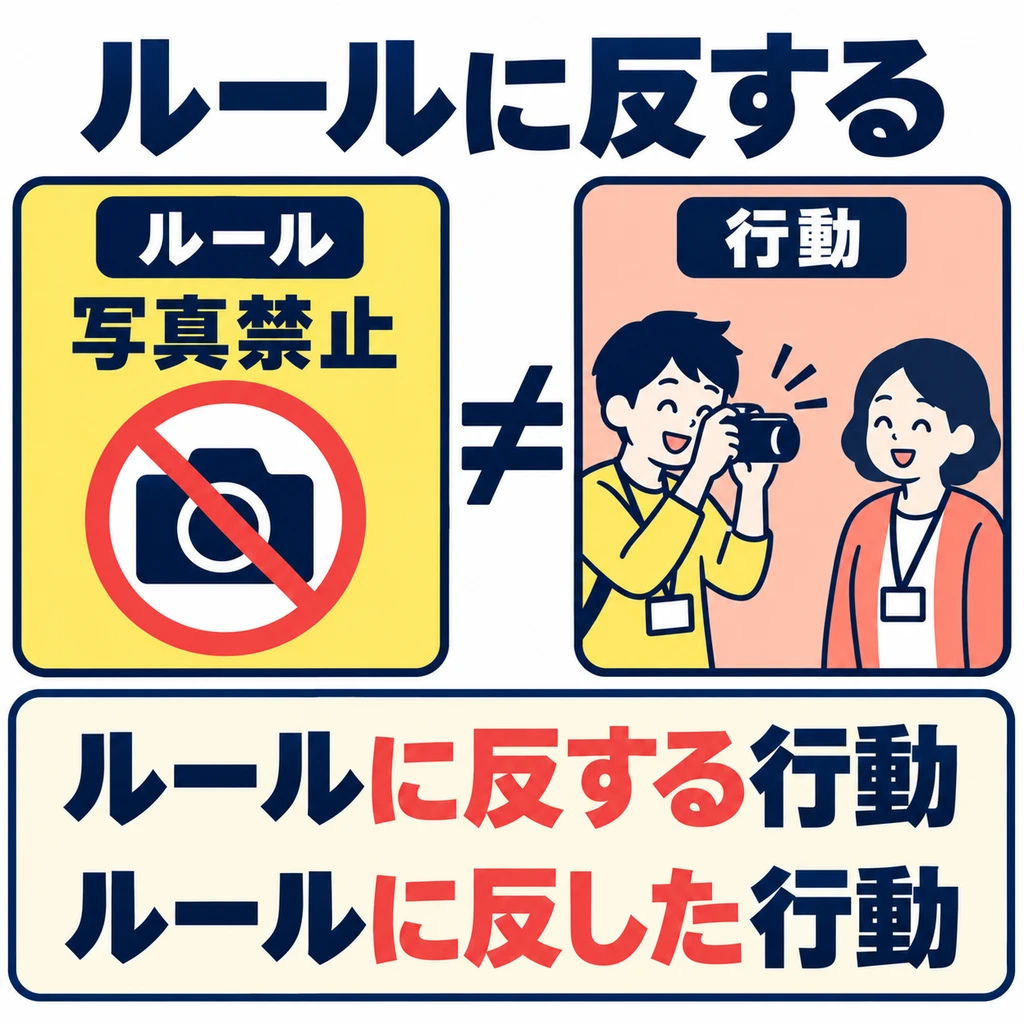
The rule says no photos, but someone takes a photo anyway. You can also use this expression when an action goes against a rule.
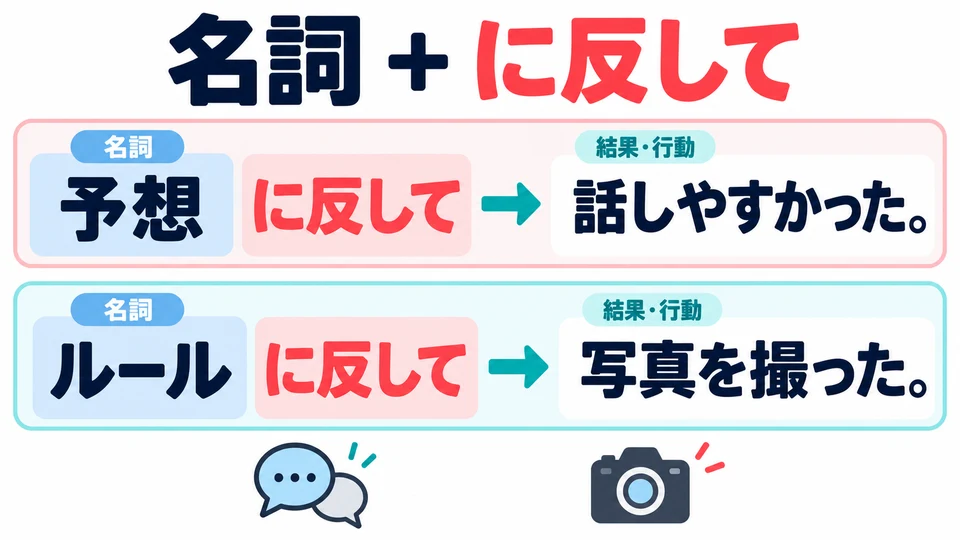
A noun such as 「予想」 or 「ルール」 comes before the expression. First state the expectation or rule, then the contrary result or action.
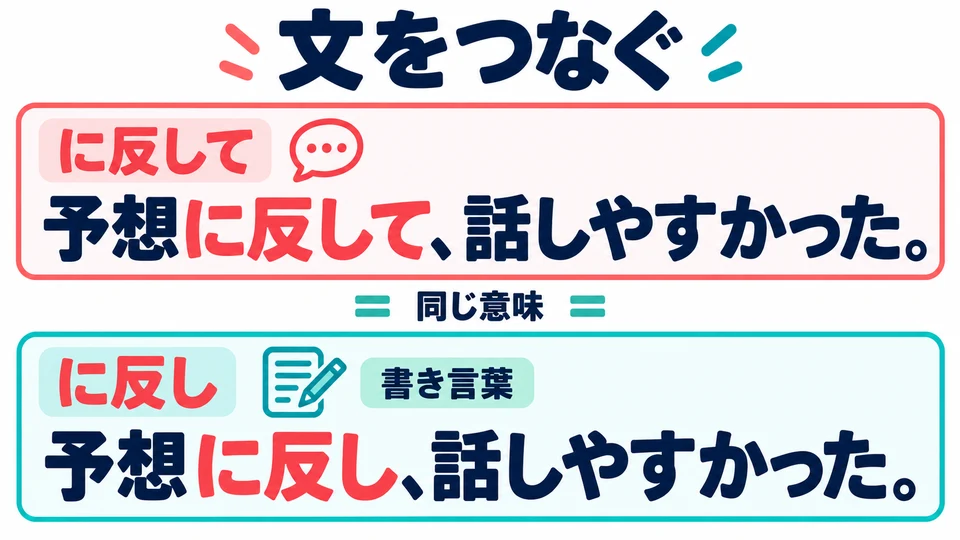
Use 「に反して」 to connect to the following clause. 「に反し」 has the same meaning and is more common in written language.
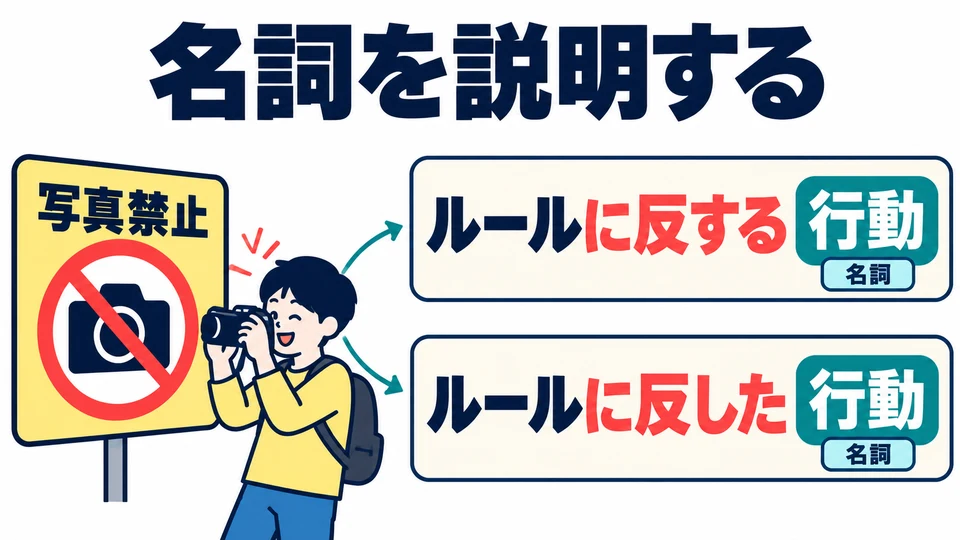
Use 「に反する/に反した」 before a noun. With 「行動」 in the picture, they describe an action that breaks the rule.
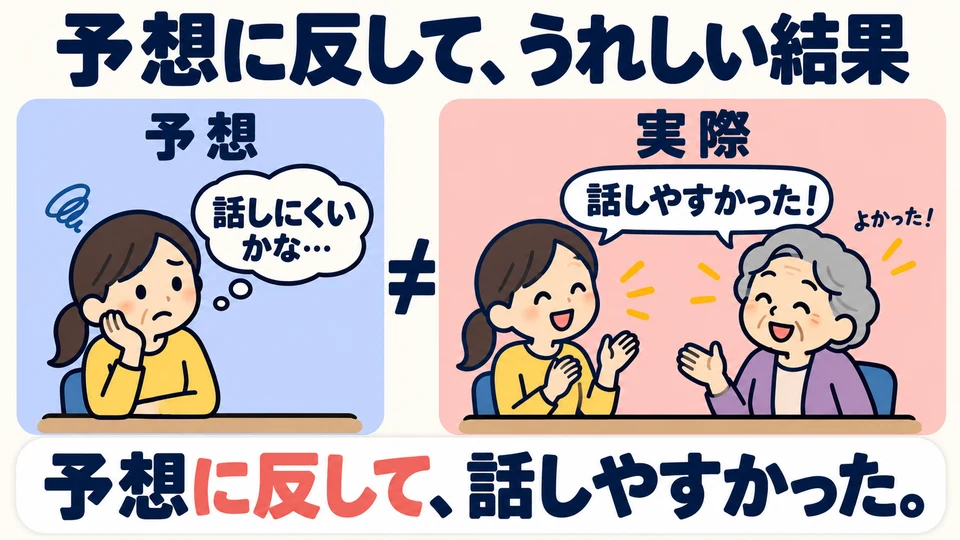
The elderly person was easy to talk to—a good result. 「予想に反して」 simply means things turned out differently from expected; it need not be something bad.
Example sentences
- 私watashiのno予想yosouにni反しhanshiて、te、高齢者koureishaのno方houはwaとてもtotemo
In a conversation

Check yourself
Level 1 · Recognise
Which sentence is correct?
Level 1 · Recognise
Listen and choose the meaning
Level 2 · Build
Put the words in order
Contrary to my expectations, the elderly person was very easy to talk to.
Level 3 · Use
What goes in the blank?
私の____、高齢者の方はとても話しやすかったです。
Contrary to my expectations, older people were very easy to talk to
More grammar in this theme
- 〜に反してcontrary to expectations