JPEdLab iconJPEdLab
Save history

Create an account and play

Explore first, then save your progress whenever you are ready. No email address is required.

Start free
  1. Japanese grammar
  2. JLPT N2 grammar
  3. 〜どころではない

〜どころではない~dokoro dewa nai

Dokoro dewa nai (〜どころではない) means “in no position to; far from”.

最初さいしょsaishoはわwa会話かいわkaiwaをo楽しむたのしむtanoshimuどころdokoroじゃなくjanakuて、te、何なにnaniをo話せはなせhanaseばbaいいiiかka分かりませんでした。わかりませんでした。wakarimasendeshita。

At first, far from enjoying the conversation, I didn't even know what to say.

Use 〜どころではない when circumstances leave you no room to consider or do something, not simply because you lack desire.

In the course›

How it works

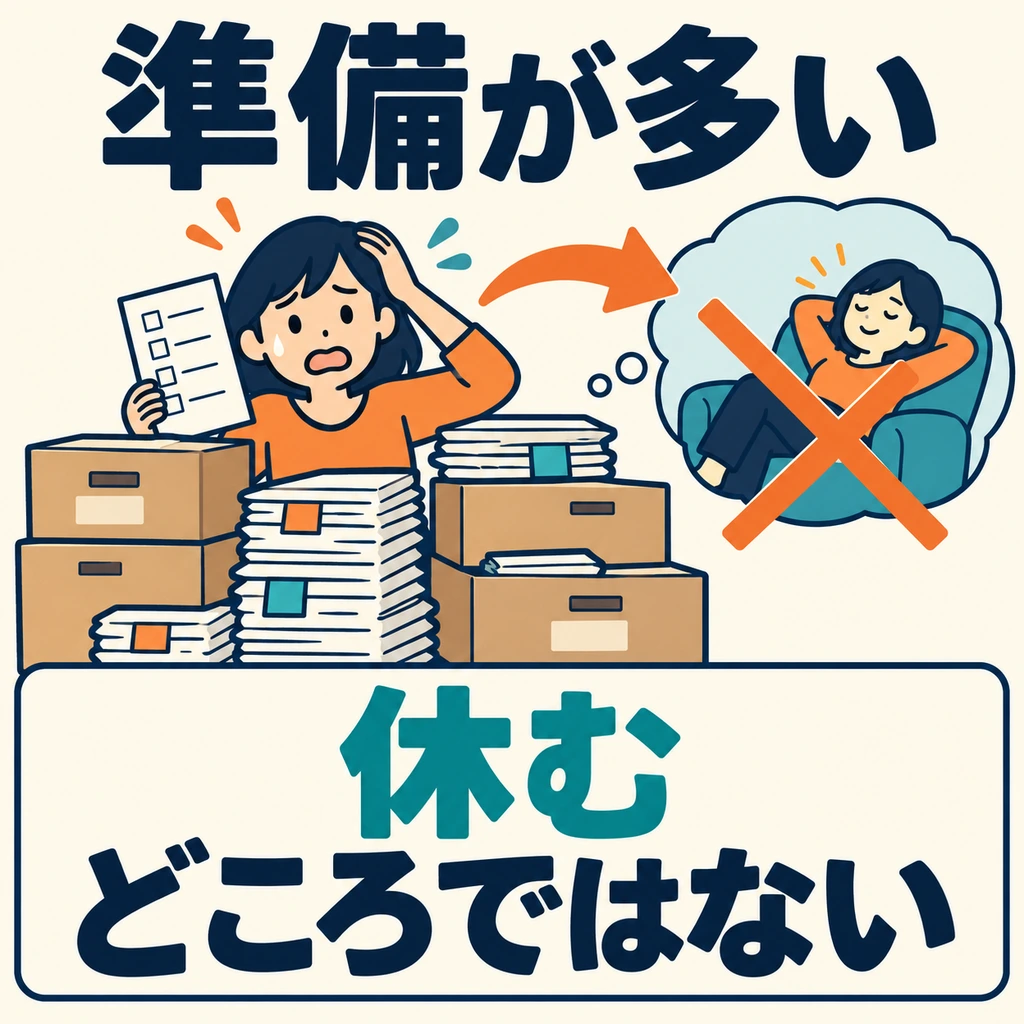
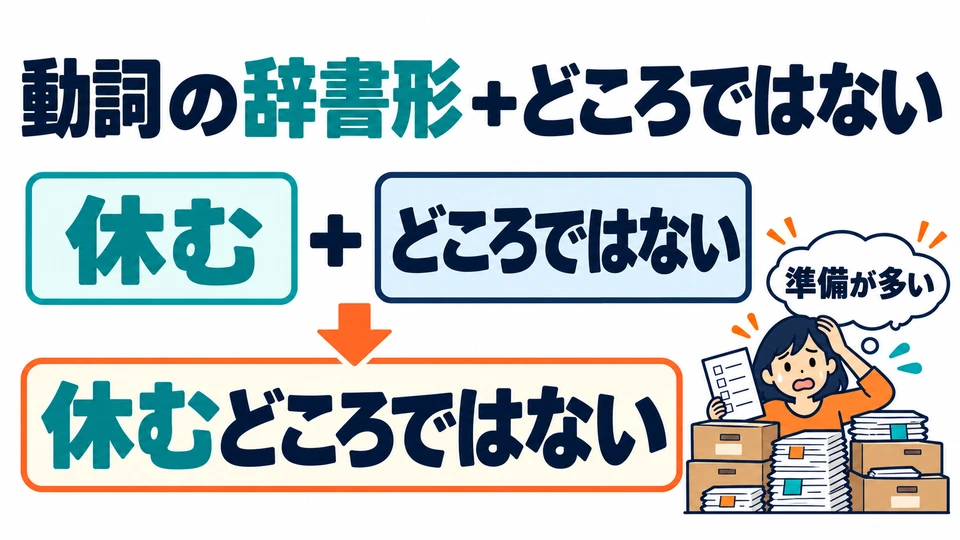
  1. With preparations piled high, can you really relax? The cross in the picture shows there is no room for rest at all.
    With preparations piled high, can you really relax? The cross in the picture shows there is no room for rest at all.

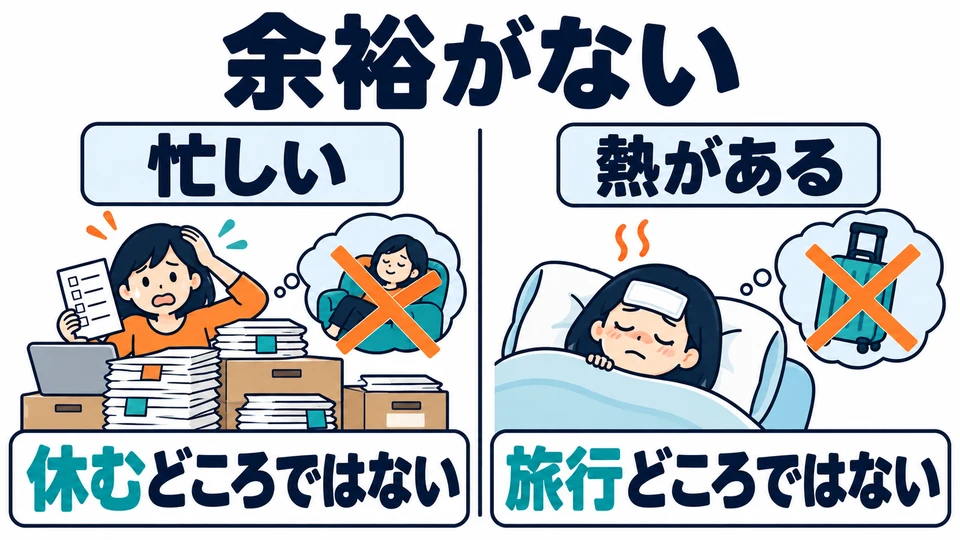
  2. Use this pattern when you are so busy or the situation is so bad that you cannot even consider doing something.
    Use this pattern when you are so busy or the situation is so bad that you cannot even consider doing something.

  3. The point is that circumstances do not allow it, rather than a lack of desire. It stresses your situation more than simply saying you will not do it.
    The point is that circumstances do not allow it, rather than a lack of desire. It stresses your situation more than simply saying you will not do it.

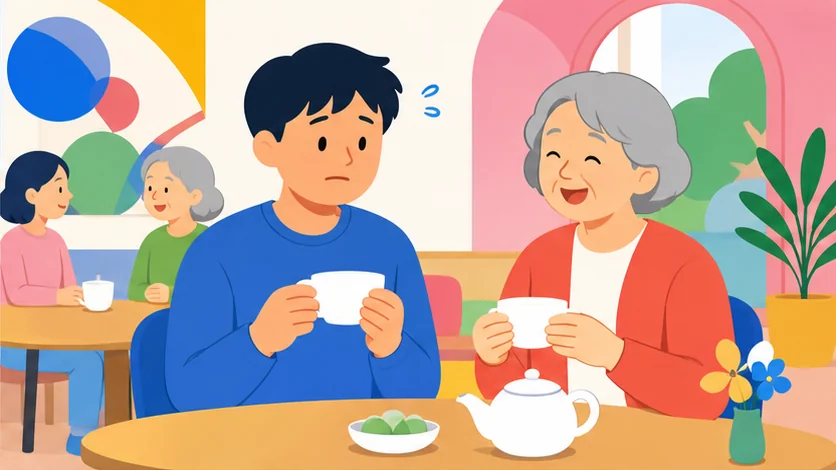
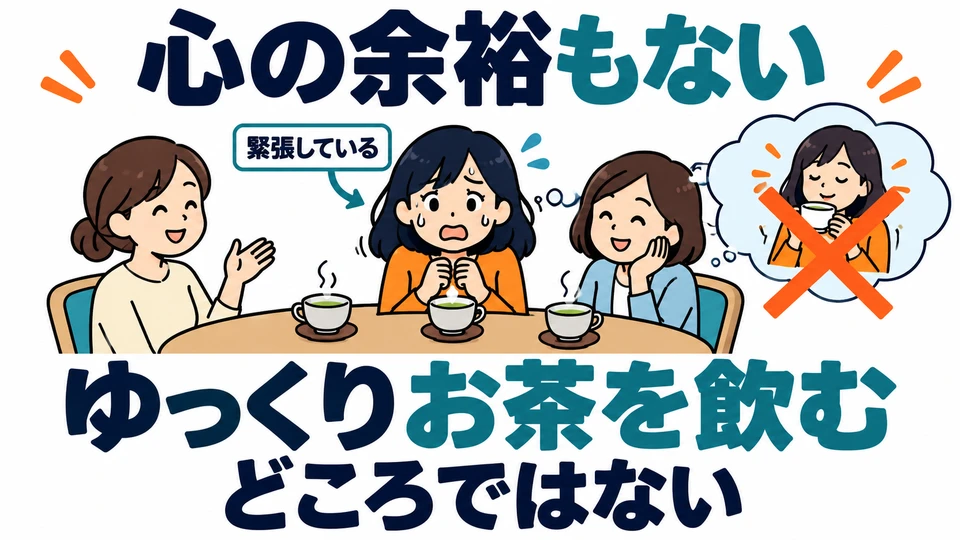
  4. Nervousness can also keep you from enjoying a relaxed cup of tea. Even with tea available, you may have no mental room to relax.
    Nervousness can also keep you from enjoying a relaxed cup of tea. Even with tea available, you may have no mental room to relax.

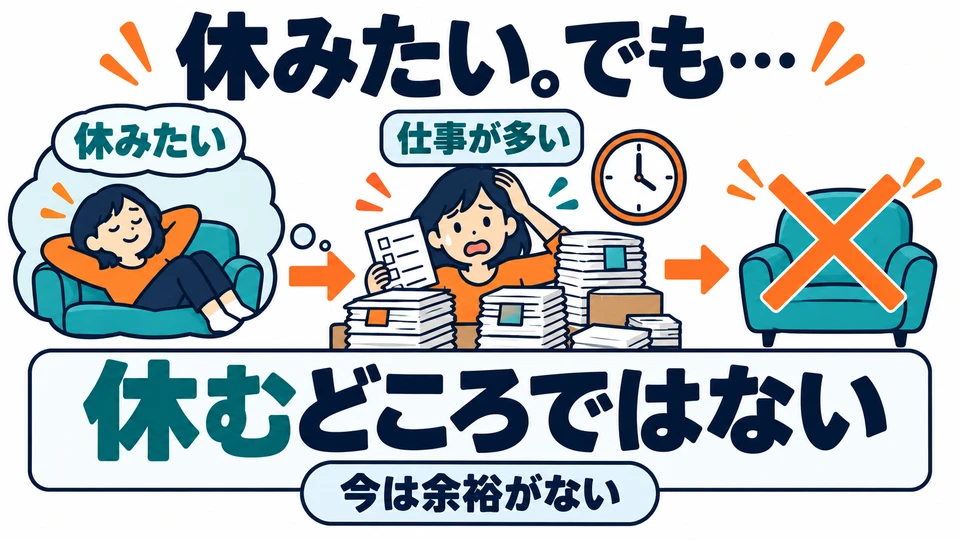
  5. Attach 「どころではない」 to a verb in its dictionary form, as in the picture’s 「休むどころではない」.
    Attach 「どころではない」 to a verb in its dictionary form, as in the picture’s 「休むどころではない」.

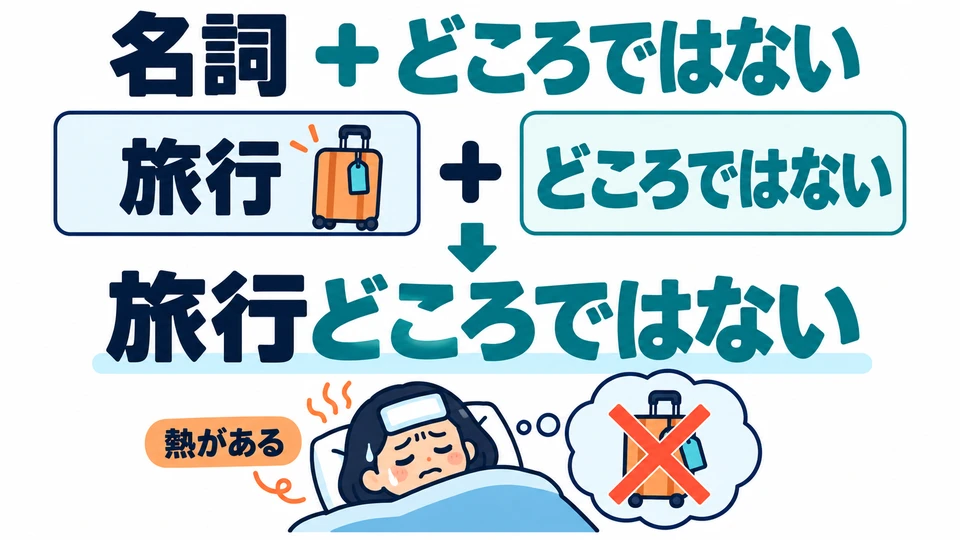
  6. You can also attach 「どころではない」 directly to a noun: right now, you are in no position to deal with that thing.
    You can also attach 「どころではない」 directly to a noun: right now, you are in no position to deal with that thing.

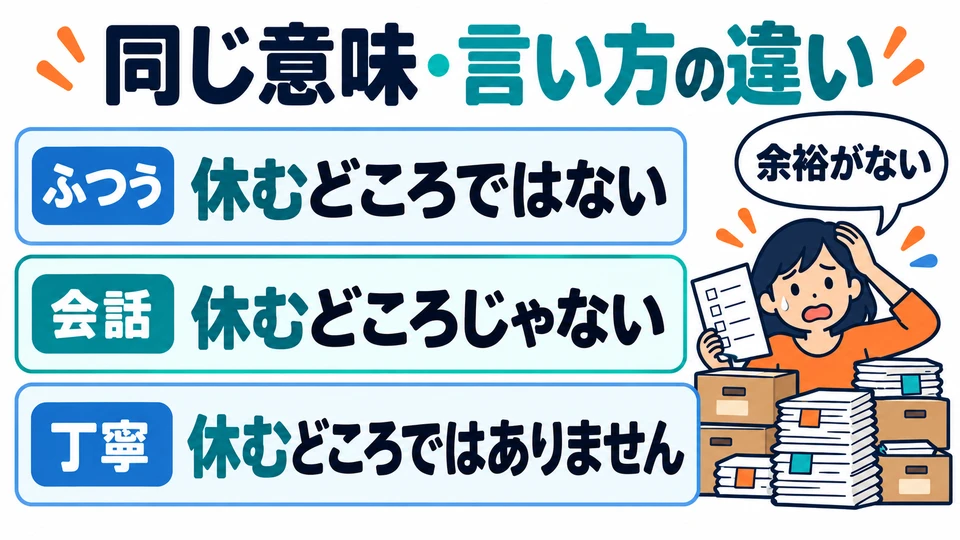
  7. 「どころじゃない」 has the same meaning and is more conversational; using 「ではありません」 makes it more polite.
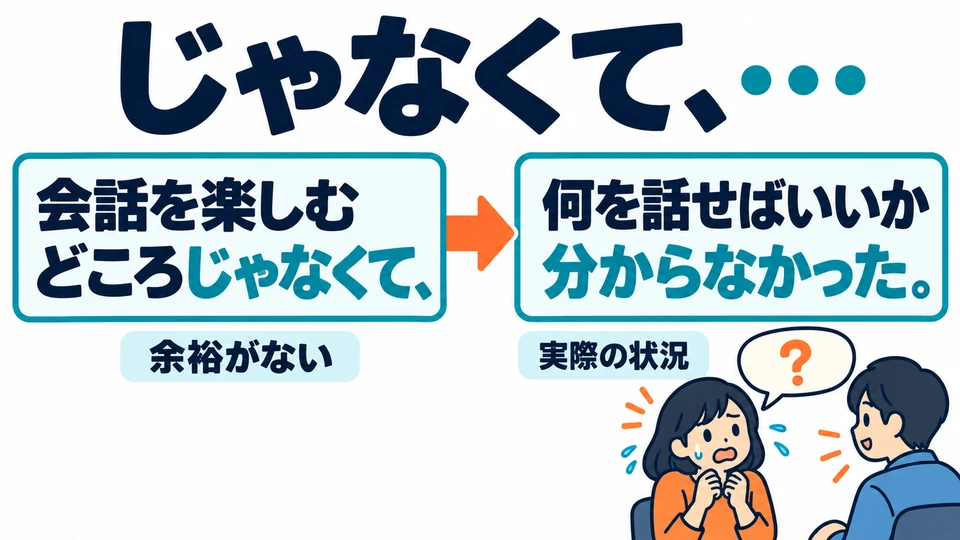
    「どころじゃない」 has the same meaning and is more conversational; using 「ではありません」 makes it more polite.

  8. In the example, 「じゃなくて」 connects to what follows: the speaker explains that they did not even know what to say.

    In the example, 「じゃなくて」 connects to what follows: the speaker explains that they did not even know what to say.

Example sentences

  • 最初さいしょsaishoはわwa会話かいわkaiwaをo楽しむたのしむtanoshimuどころdokoroじゃなくjanakuて、te、何なにnaniをo話せはなせhanase

In a conversation

  • 世代せだい交流こうりゅうの茶話さわ会かいはわどうでしたか。打ちうち解けるとけることができましたか。

    How was the intergenerational tea party? Were you able to blend in?

Check yourself

  1. Level 1 · Recognise

    Which sentence is correct?

  2. Level 1 · Recognise

    Listen and choose the meaning

  3. Level 2 · Build

    Put the words in order

    At first, I was in no position to enjoy the conversation and didn't even know what to say.

  4. Level 3 · Use

    What goes in the blank?

    最初は会話を楽しむ____(「じゃ」の形)、何を話せばいいか分かりませんでした。

    At first, I couldn't even enjoy the conversation, and I didn't know what to talk about.

More grammar in this theme

  • 〜どころではないin no position to; far from

More JLPT N2 grammar

Keep practising

Test your Japanese vocabulary12 adaptive questions, freeCheck your pronunciationRead aloud and get a scorePractise verb forms10-question conjugation quizSee the whole courseGrammar, vocabulary and quizzes by theme
ば
ba
いいii
かka
分かりませんでした。わかりませんでした。wakarimasendeshita。

At first, far from enjoying the conversation, I didn't even know what to say.

  • 活動かつどうkatsudouのno準備じゅんびjunbiがga多くおおくookuて、te、ゆっくりyukkuri休むやすむyasumuどころdokoroでdeはわwaありませんでした。arimasendeshita。

    There was so much preparation for the activity that I was far from having a relaxing rest.

  • いえ、最初さいしょはわ緊張きんちょうして、ゆっくりお茶おちゃを飲むのむどころではわありませんでしたよ。

    No, I was so nervous at first that I was far from enjoying a relaxing cup of tea.

  • そうでしたか。でも、すぐに慣れますなれますよ。

    I see. But you will get used to it soon.

  • Intermediate 2
    Intergenerational Exchange and Broader Perspectives
    More quizzesOpen this lesson’s quizzes in the course
    〜たところdid…and found that
    〜ことになったit has been decided
    〜に限り/〜限りはlimited to; as long as
    〜かなと思ってthinking maybe; so I
    〜にしてはfor; contrary to expectation
    〜につきper; for each
    〜たものだused to; fond recollection
    〜ながらもalthough; despite feeling
    〜につけ(て)whenever; at every opportunity
    〜さえ/さえ〜ばeven; as long as
    〜に反してcontrary to expectations
    〜ているうちにchange during an activity
    〜からしてinference from a clue
    Next〜たところ
    See all 55
    〜ものだ・〜ものではないwhat one should or should not do
    〜が〜を占める・〜が占めるaccount for a share
    〜に備えてin preparation for
    〜に限るnothing beats
    〜ものですからgently explain a reason
    〜のことになると・〜のこととなるとwhen it comes to
    人にしてみたら・人にしてみればfrom someone’s perspective
    〜がたいsubjectively hard to do