JPEdLab iconJPEdLab
Save history

Create an account and play

Explore first, then save your progress whenever you are ready. No email address is required.

Start free
  1. Japanese grammar
  2. JLPT N2 grammar
  3. 〜ものですから

〜ものですから~mono desu kara

Mono desu kara (〜ものですから) means “gently explain a reason”.

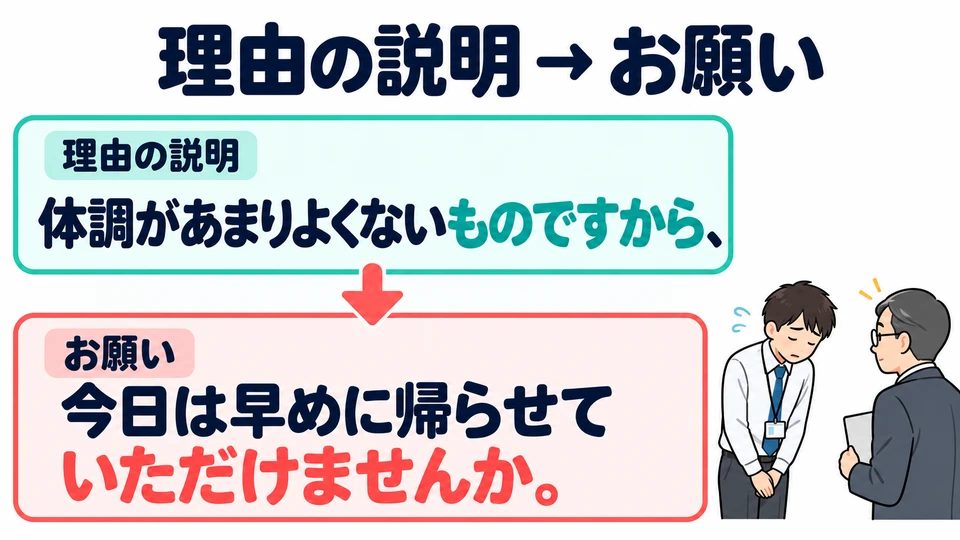
体調たいちょうtaichouがgaあまりamariよくyokuないnaiものmonoですdesuから、kara、今日きょうkyouはわwa早めはやめhayameに帰らせにかえらせnikaeraseてteいただけませんitadakemasenか。ka。

Since I am not feeling very well, could you please let me go home early today?

Use 「〜ものですから」 to gently explain your circumstances as a reason; 「〜ものだから」 is more casual.

In the course›

How it works

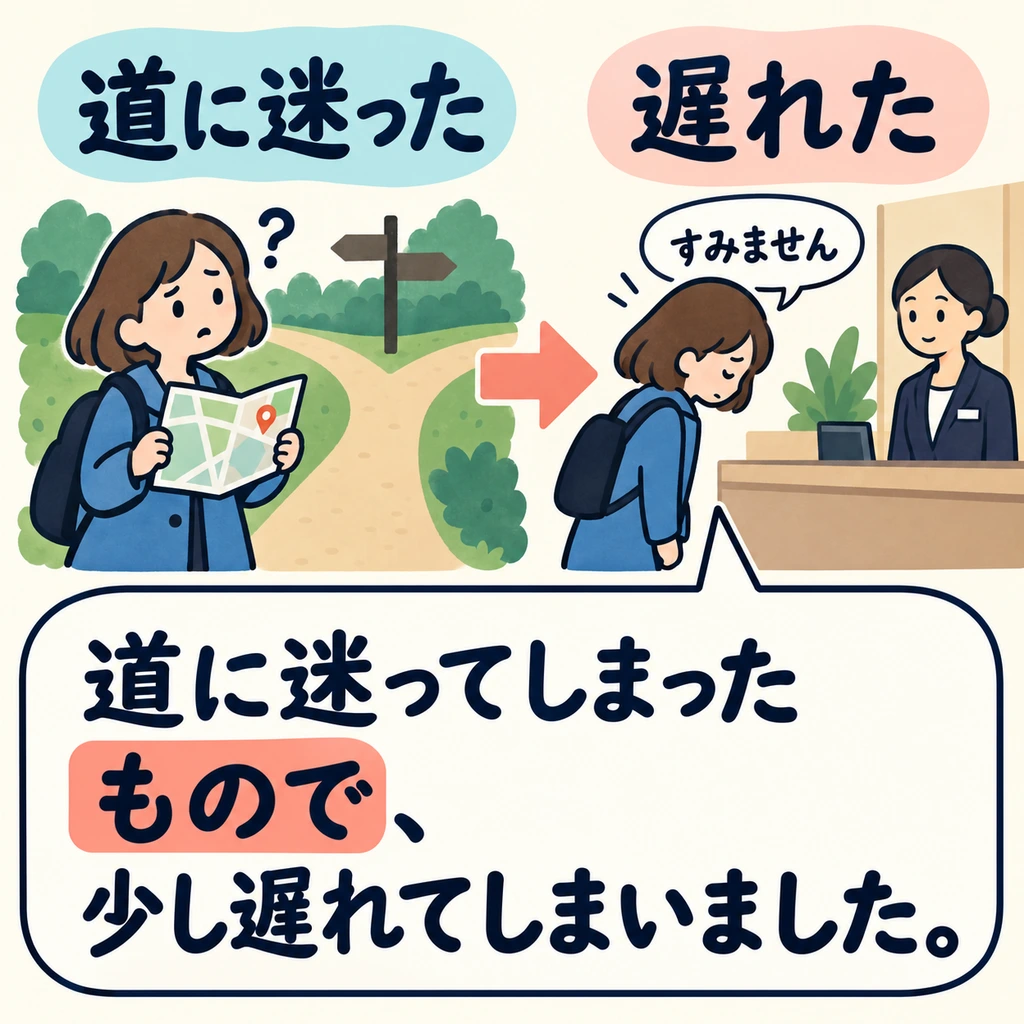
  1. When you are late, explain your circumstances gently, hoping the other person will understand.
    When you are late, explain your circumstances gently, hoping the other person will understand.

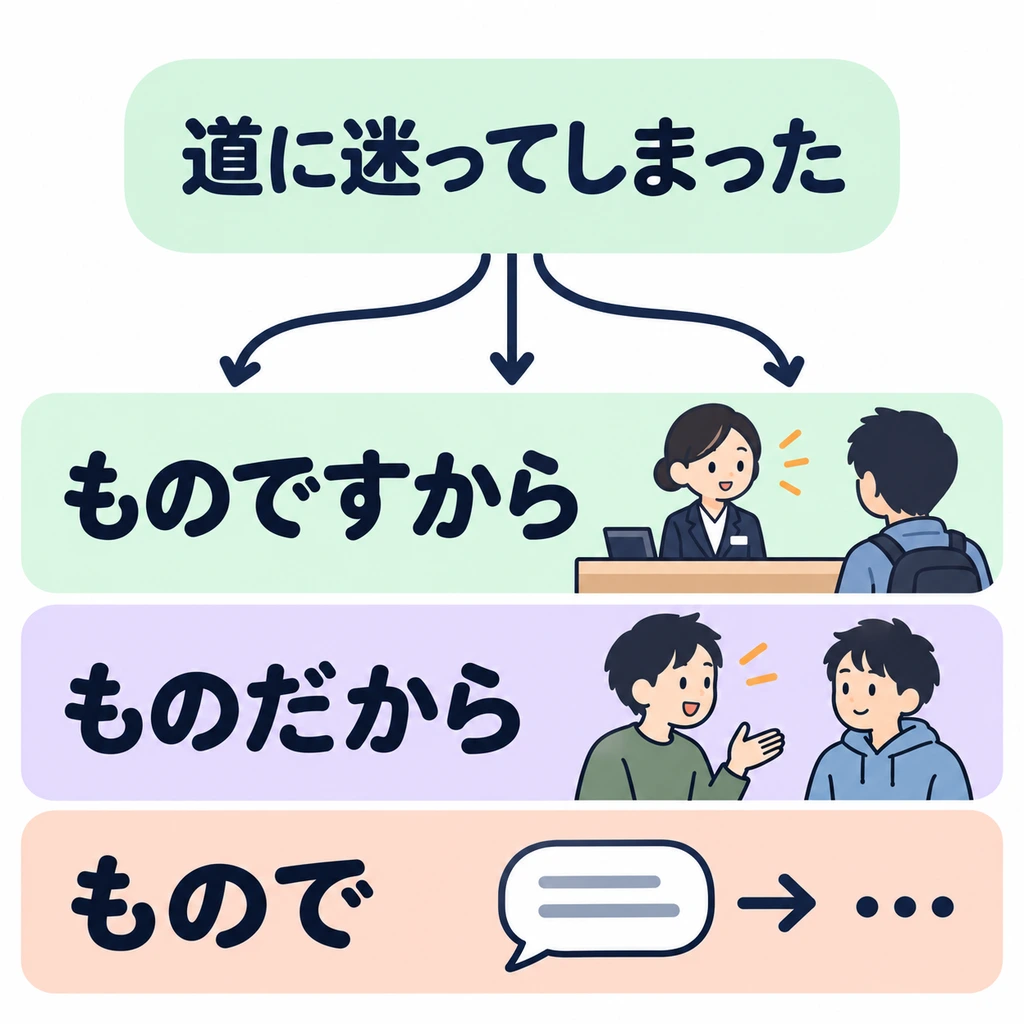
  2. All three expressions explain a reason. 「ものですから」 is polite; 「ものだから」 is more casual.
    All three expressions explain a reason. 「ものですから」 is polite; 「ものだから」 is more casual.

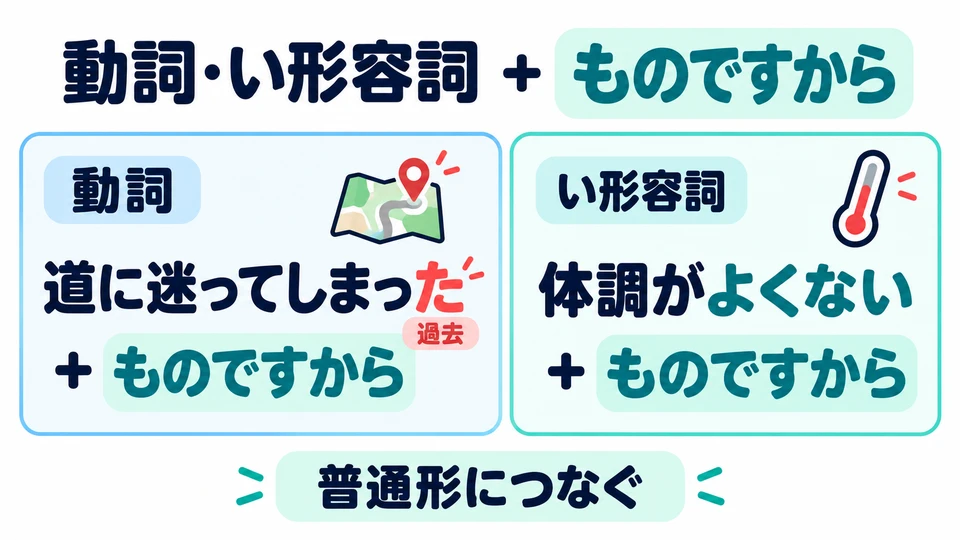
  3. Use the plain form of verbs and い-adjectives. In the example, 「迷ってしまった」 is a past form.
    Use the plain form of verbs and い-adjectives. In the example, 「迷ってしまった」 is a past form.

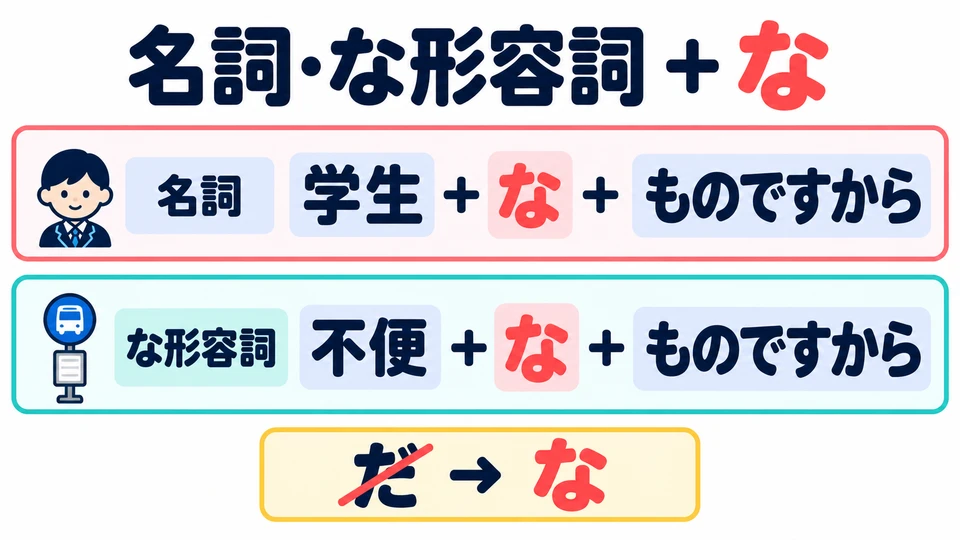
  4. Nouns and な-adjectives connect with 「な」. Be careful: the plain-form 「だ」 is not used here.
    Nouns and な-adjectives connect with 「な」. Be careful: the plain-form 「だ」 is not used here.

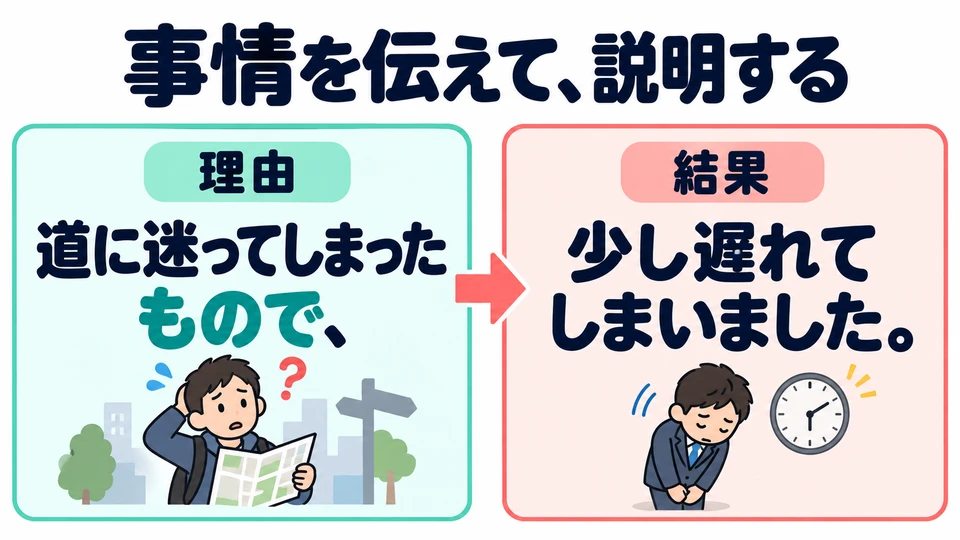
  5. 「もので」 gently introduces your circumstances, followed by an explanation of what happened, such as being late.
    「もので」 gently introduces your circumstances, followed by an explanation of what happened, such as being late.

  6. The first example explains the speaker’s health, then politely asks to leave early. The reason pattern itself does not express a request.

    The first example explains the speaker’s health, then politely asks to leave early. The reason pattern itself does not express a request.

Example sentences

  • 体調たいちょうtaichouがgaあまりamariよくyokuないnaiものmonoですdesuから、kara、今日きょうkyouはわwa早めはやめhayameに帰らせにかえらせnikaerase

In a conversation

  • A
    すみません、予定よていが重なっかさなってしまったものですから、来週らいしゅうに日程にっていを調整ちょうせいしていただけませんか。

    A: Excuse me, because my schedules have overlapped, could you please adjust the date to next week?

Check yourself

  1. Level 1 · Recognise

    Which sentence is correct?

  2. Level 1 · Recognise

    Listen and choose the meaning

  3. Level 2 · Build

    Put the words in order

    I'm not feeling very well, so could I please leave early today?

  4. Level 3 · Use

    What goes in the blank?

    体調があまりよくない____(もの+です+から)、今日は早めに帰らせていただけませんか。

    Because I'm not feeling very well, could I leave early today?

More grammar in this theme

  • 〜ものですからgently explain a reason

More JLPT N2 grammar

Keep practising

Test your Japanese vocabulary12 adaptive questions, freeCheck your pronunciationRead aloud and get a scorePractise verb forms10-question conjugation quizSee the whole courseGrammar, vocabulary and quizzes by theme
てte
いただけませんitadakemasen
か。ka。

Since I am not feeling very well, could you please let me go home early today?

  • 道みちmichiにni迷っまよっmayottてteしまったものshimattamonoで、de、少しすこしsukoshi遅れおくれokureてteしまいました。shimaimashita。

    Because I got lost, I ended up being a little late.

  • B
    分かりました、わかりました、ではわ木曜もくよう日びの午後ごごはわいかがでしょうか。

    B: Understood. Then, how about Thursday afternoon?

  • A
    はい、その日ひなら都合ならつごうがつきますので、よろしくお願いおねがいします。

    A: Yes, I can make it on that day, so I appreciate your help.

  • Intermediate 2
    Thoughtful Communication and Feelings
    More quizzesOpen this lesson’s quizzes in the course
    〜のことなんですがgently introduce a topic
    〜させていただけませんかpolitely ask permission
    〜の代わりに・〜に代わってinstead of; in place of
    〜おかげでthanks to; good result
    〜おかげだcredit a good result
    〜くせにreproachful contradiction
    〜せいでblame for a bad result
    〜に決まっているstrong certainty; bound to
    人を〜にさせるtrigger someone’s feelings
    〜ことはないno need to
    〜のことになると・〜のこととなるとwhen it comes to
    人にしたら・人にすればfrom someone’s perspective
    人にしてみたら・人にしてみればfrom someone’s perspective
    〜たびにevery time
    〜ば・〜ならばif; on the condition that
    〜たら・〜ためにif; in order to
    Previous〜させていただけませんか
    Next〜の代わりに・〜に代わって
    See all 55
    〜どころではないin no position to; far from
    〜に限り/〜限りはlimited to; as long as
    〜ながらもalthough; despite feeling
    〜からしてinference from a clue
    〜がたいsubjectively hard to do
    〜とともにalong with; as … changes
    〜をもとに(して)・〜をもとにしたbased on; using as a basis
    〜というわけだthat explains why