
Japanese grammar · ≈ JLPT N3 · Intermediate 2
〜に決まっている~ni kimatte iru
strong certainty; bound to
Use 「〜に決まっている」 to state a strong conviction, without implying that the facts were checked.
How it works
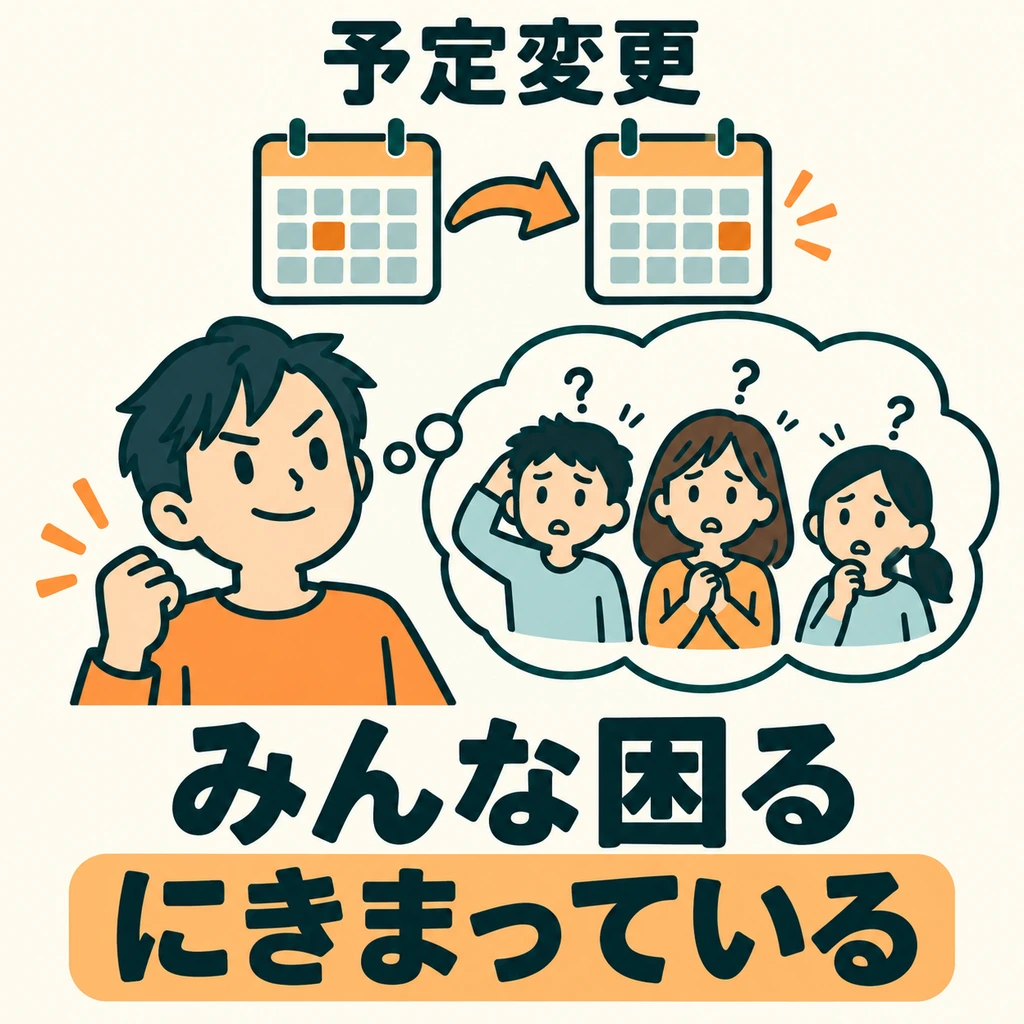
What happens if the plans change suddenly? The speaker is very sure: everyone is bound to be troubled.
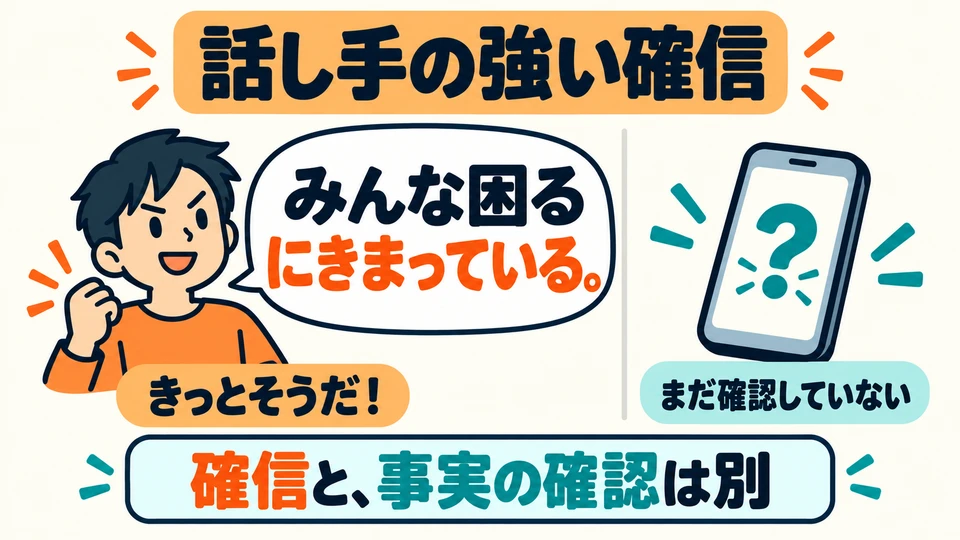
It expresses the speaker’s strong conviction; it does not mean the facts have already been checked.
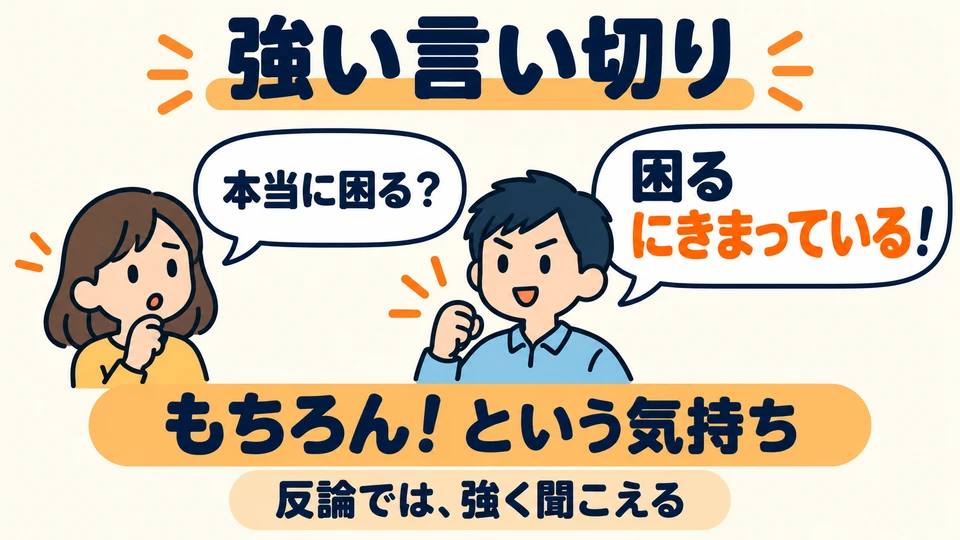
The tone is like “That goes without saying, of course.” When contradicting someone, it can sound forceful.
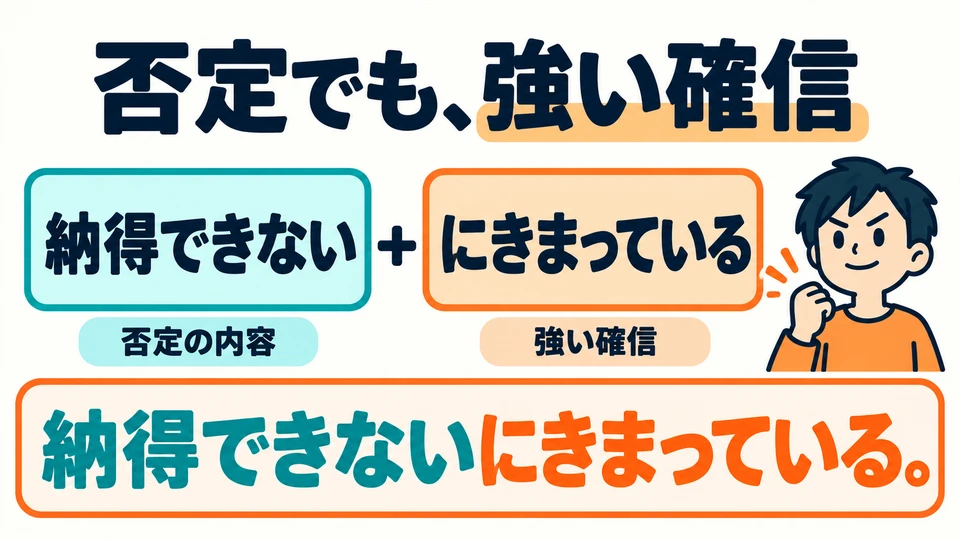
In the example, the speaker is sure that people “will not be convinced.” The negative form before the pattern does not make that conviction uncertain.
Example sentences
- いきなりikinari予定yoteiをo変えたら、kaetara、みんなminna困るkomaruにni決まっkimatてteいます。imasu。
If you suddenly change the schedule, everyone is bound to be troubled.
In a conversation

- Aメールで補足説明をせずに省略したら、相手は不安に思うに決まって
Check yourself
Level 1 · Recognise
Which sentence is correct?
Level 1 · Recognise
Listen and choose the meaning
Level 2 · Build
Put the words in order
If you keep making one-sided demands without giving any reasons, you are bound to make the other person angry.
Level 3 · Use
What goes in the blank?
いきなり予定を変えたら、みんな困る____。
If you suddenly change the plan, everyone is bound to be troubled.
More grammar in this theme
- 〜に決まっているstrong certainty; bound to