
Japanese grammar · ≈ JLPT N3 · Intermediate 2
人にしたら・人にすればhito ni shitara / hito ni sureba
from someone’s perspective
Use 「人にしたら」 or 「人にすれば」 to imagine how someone else might feel from their perspective.
How it works
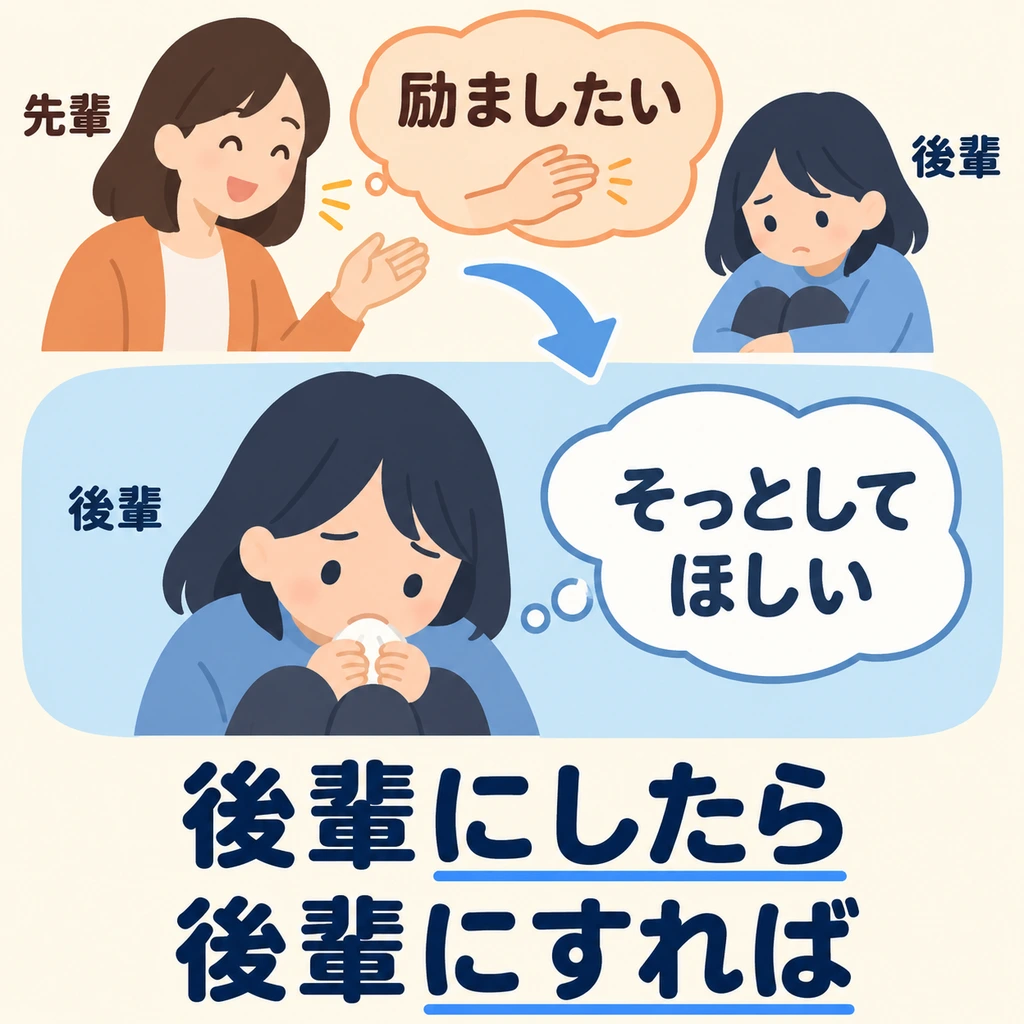
The senior wants to offer encouragement, but the junior wants some quiet. From the junior’s perspective, what might they be thinking?
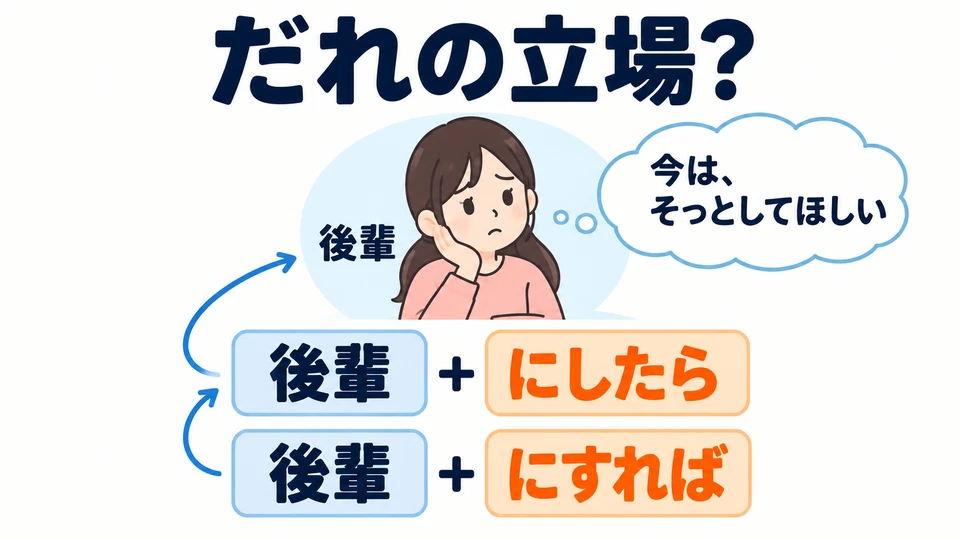
Usually follows a noun referring to a person, showing whose perspective we are considering.
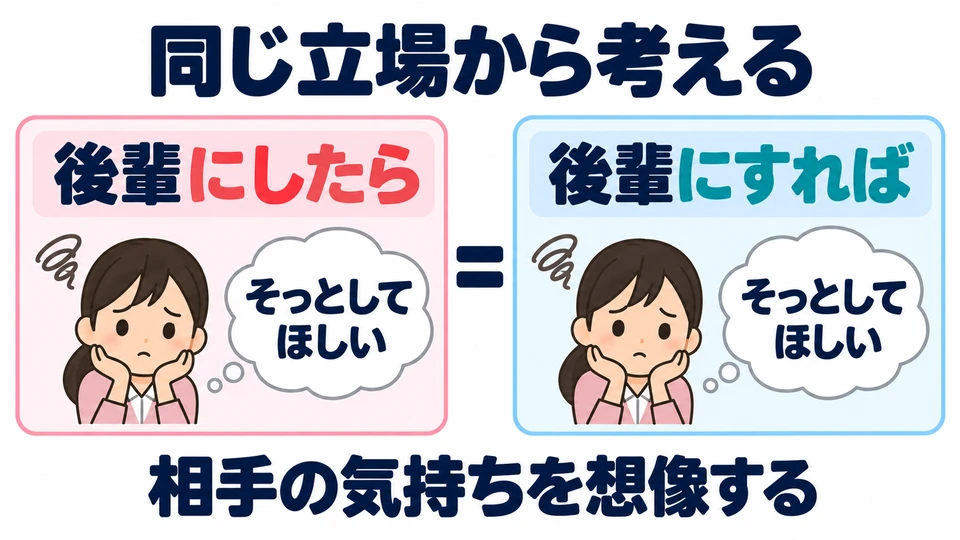
「にしたら」 and 「にすれば」 mean much the same thing. Both let us imagine how the other person feels.
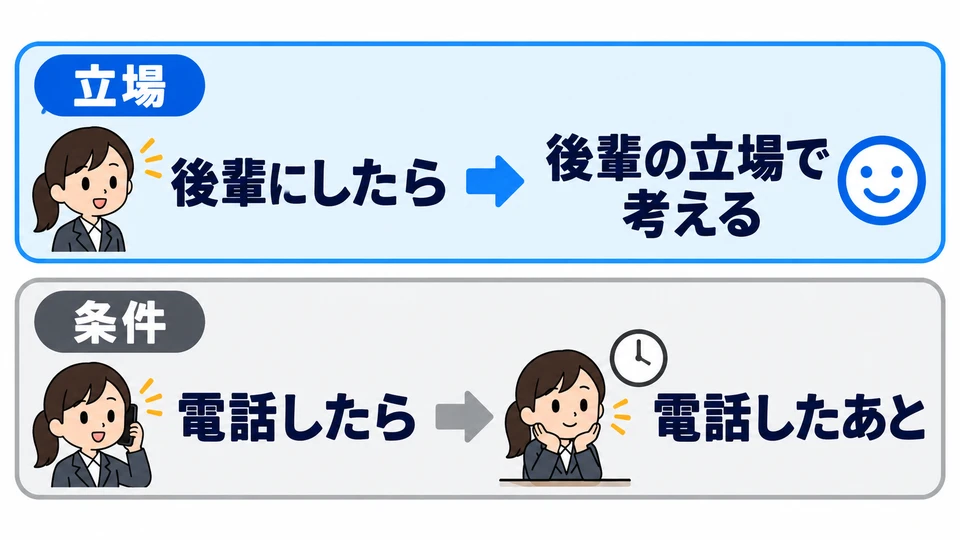
Here, it does not mean “if someone does something.” It means taking the other person’s perspective and imagining how they would feel.
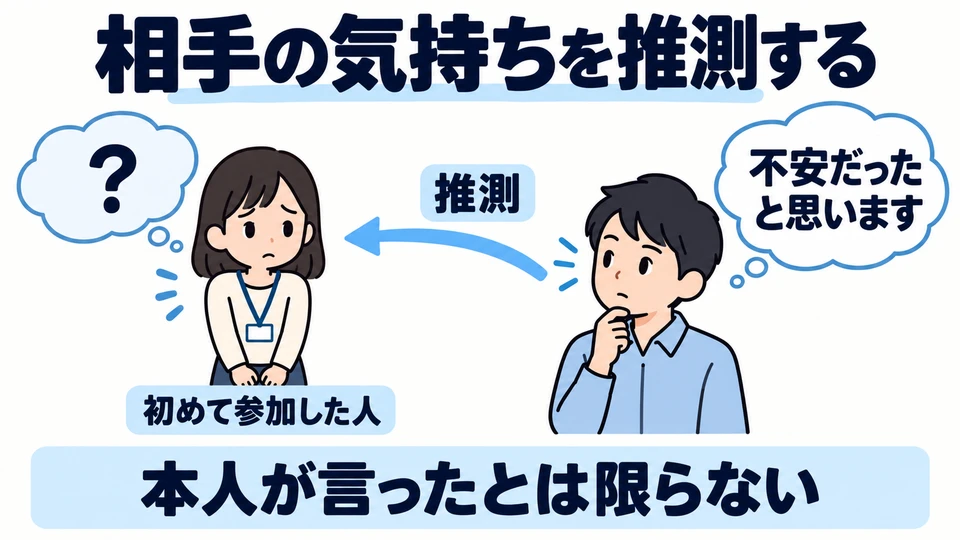
The anxiety and distress in the examples are inferred. This does not mean the people themselves have said they feel that way.
Example sentences
- 初めてhajimete参加sankaした人shitahitoにniしたら、shitara、分からないことwakaranaikotoがga多くookuてte不安fuanだったdatta
In a conversation

Check yourself
Level 1 · Recognise
Which sentence is correct?
Level 1 · Recognise
Listen and choose the meaning
Level 2 · Build
Put the words in order
For someone participating for the first time, I think it was probably unsettling because there were many things they didn't understand.
Level 3 · Use
What goes in the blank?
初めて参加した人____、分からないことが多くて不安だったと思います。
For someone joining for the first time, there were probably many unknowns, so they likely felt anxious.
More grammar in this theme
- 人にしたら・人にすればfrom someone’s perspective