
Japanese grammar · ≈ JLPT N3 · Intermediate 2
〜せいで~sei de
blame for a bad result
Use 「〜せいで」 to blame a cause for a bad result; 「〜せいか」 leaves the cause uncertain.
How it works
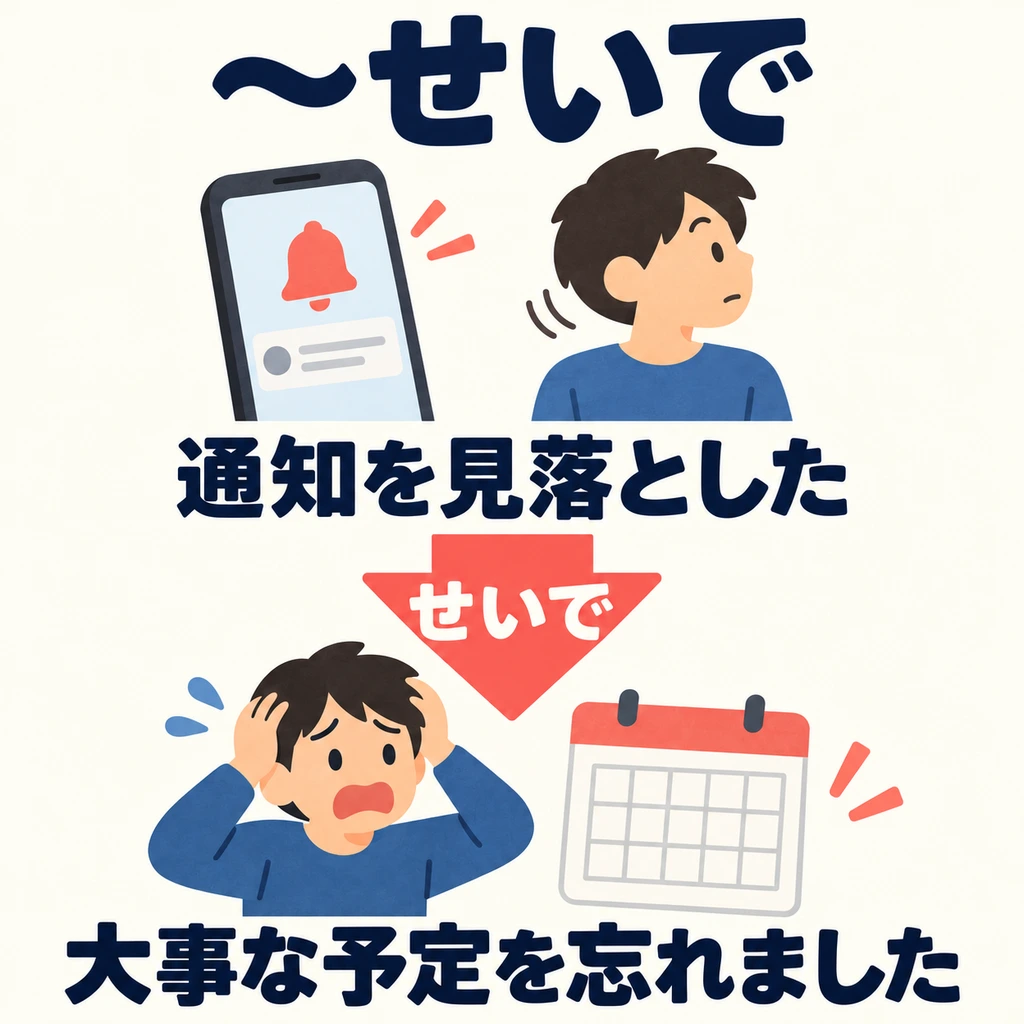
He missed a notification and forgot an important appointment. 「せいで」 links a cause to a result the speaker sees as bad.
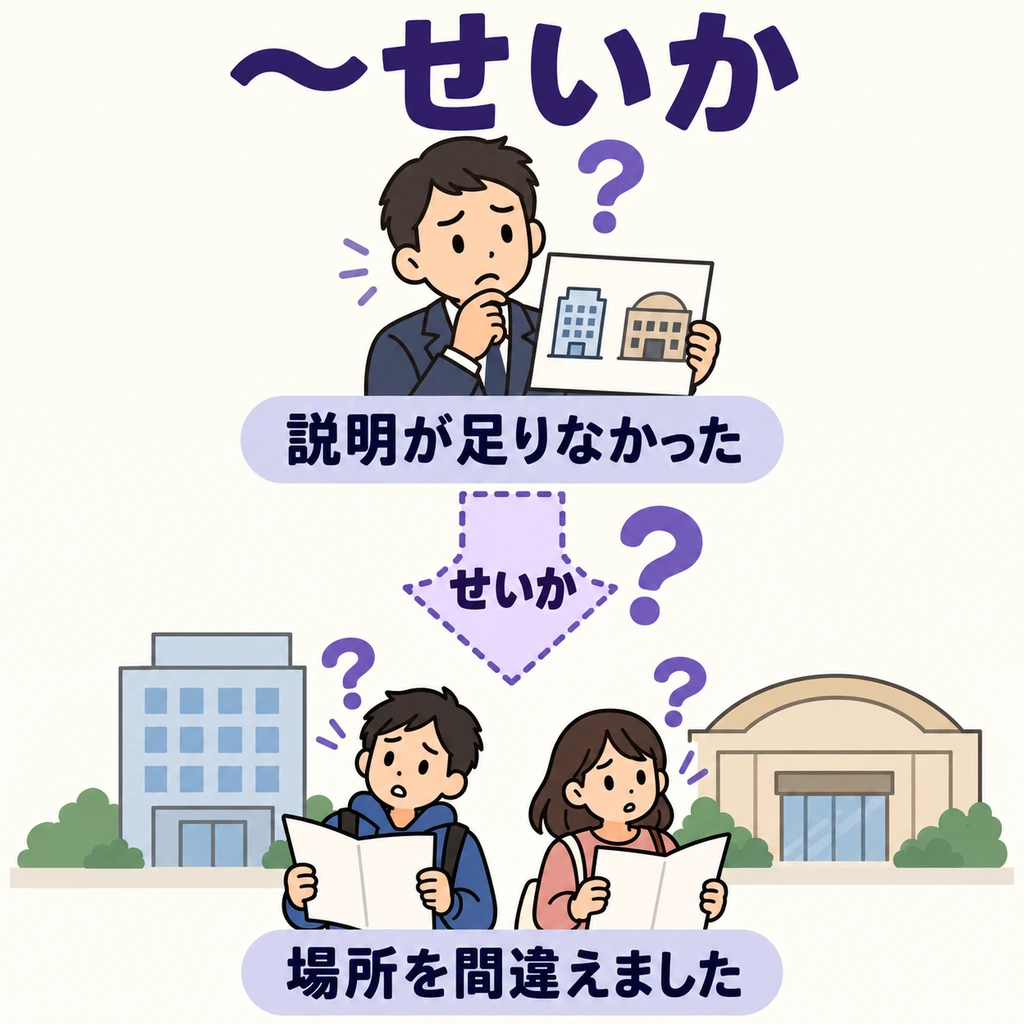
Was the explanation insufficient? 「せいか」 suggests this may be the cause, but it is still uncertain.
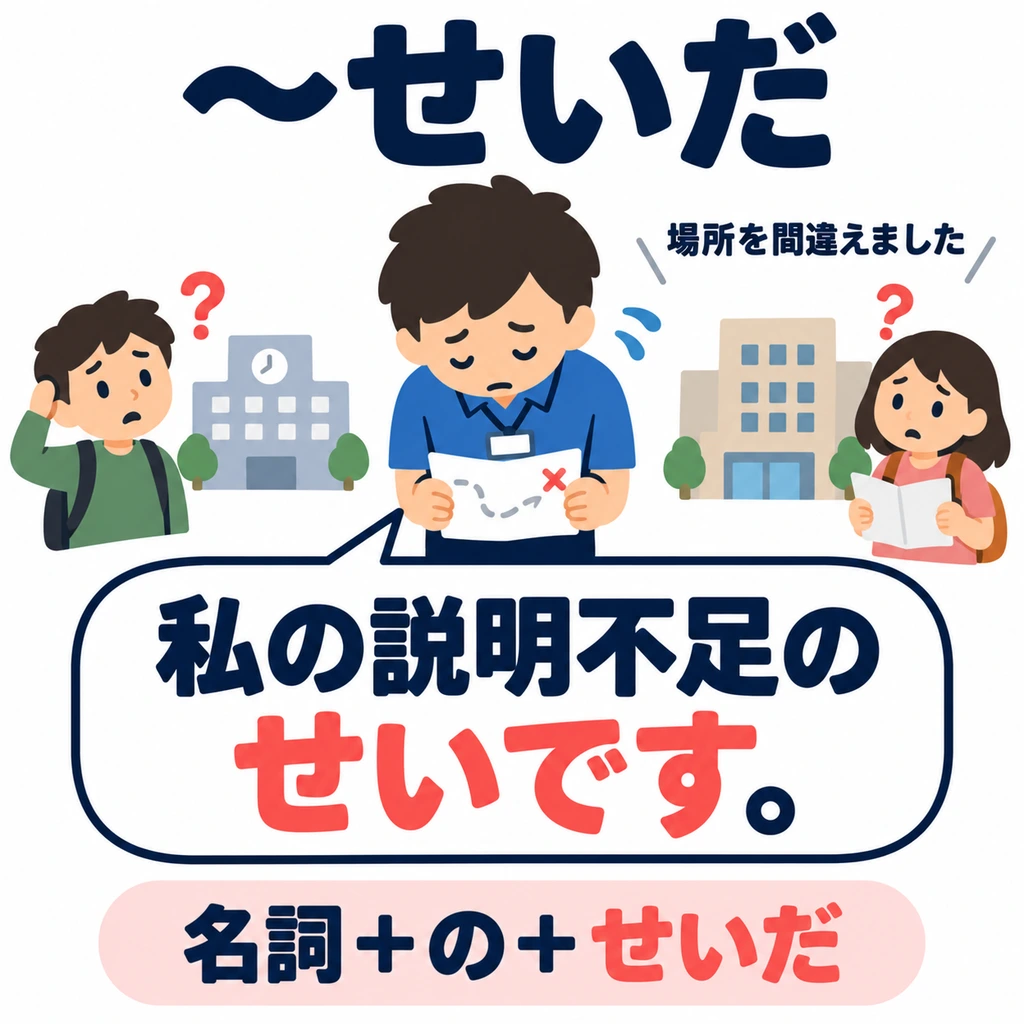
He identifies his own explanation as the cause. 「せいだ」 states the cause at the end of a sentence; its polite form is 「せいです」.
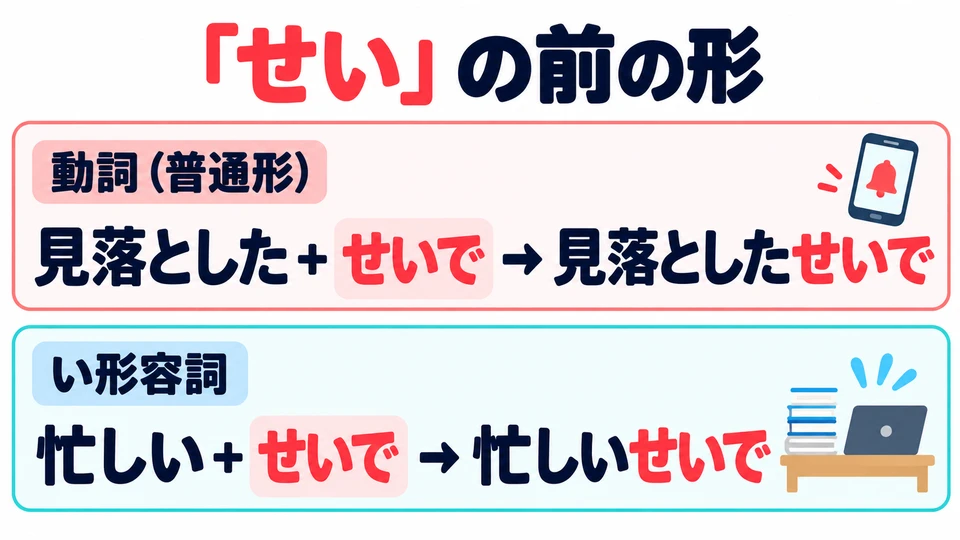
Verbs in the plain form and い-adjectives attach directly to 「せい」, as in 「見落としたせいで」 in the picture.
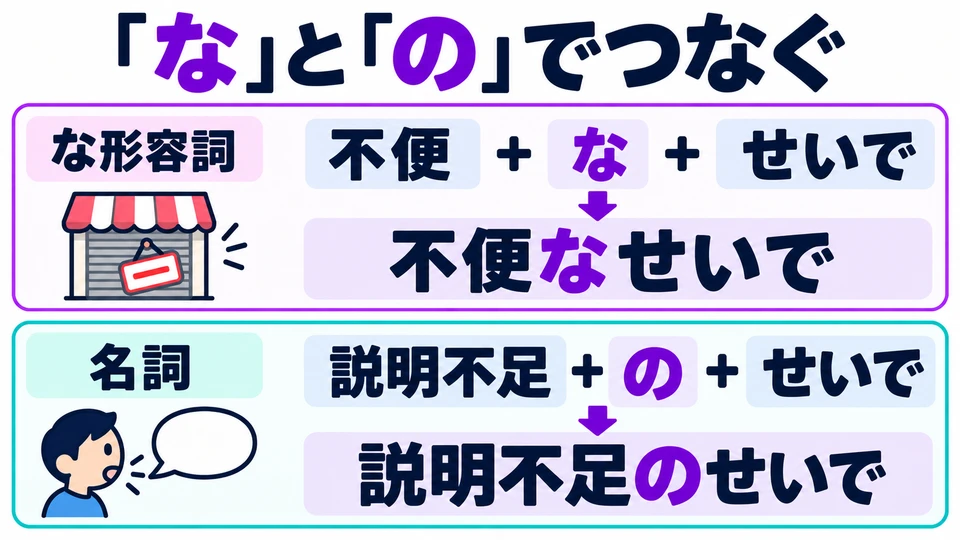
な-adjectives connect with 「な」 and nouns with 「の」. 「説明不足」 in the picture is a noun.
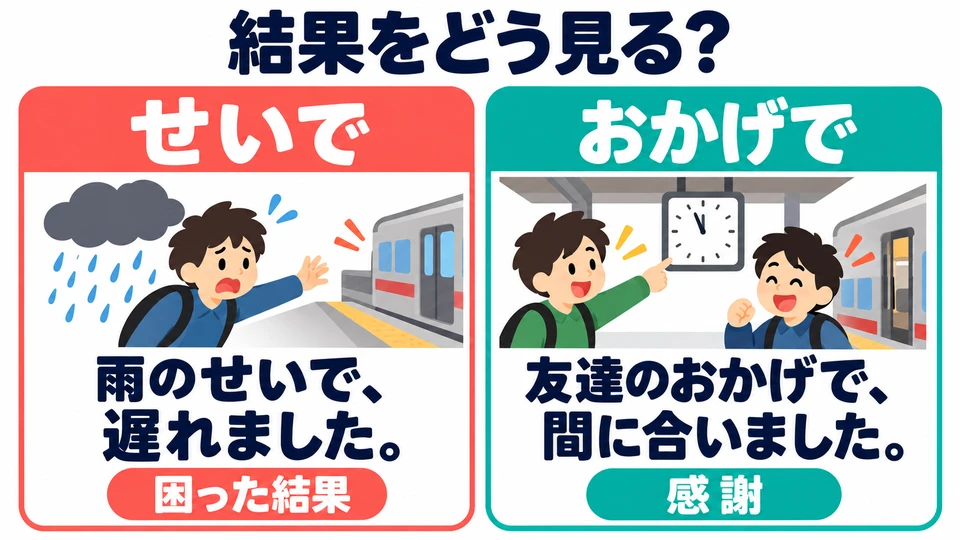
Use 「せい」 when the speaker sees the result as bad. Use 「おかげ」 to express gratitude for a cause that brought a good result.
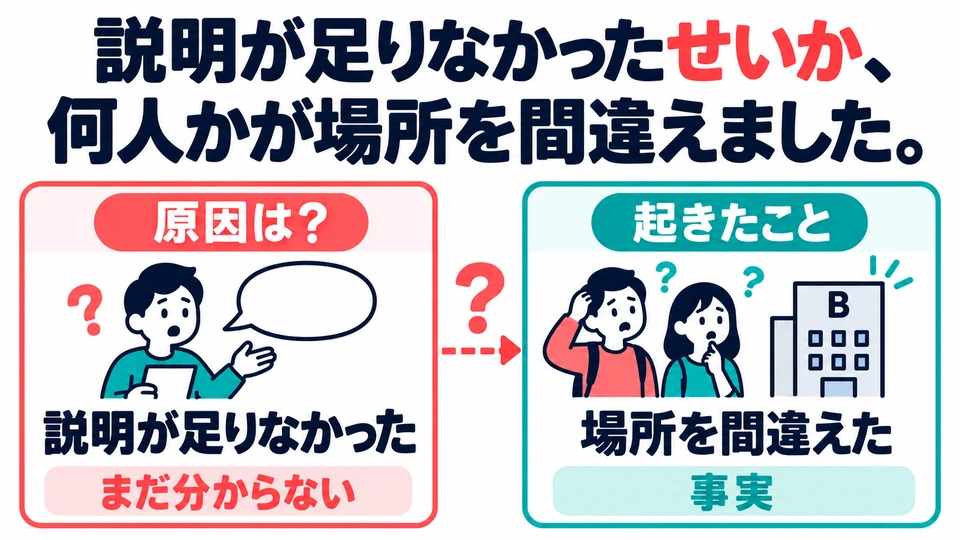
In the example, getting the location wrong is an established fact. 「せいか」 leaves uncertain whether the insufficient explanation was the cause.
Example sentences
- 通知tsuuchiをo見mi落としたせいotoshitaseiで、de、大事な予定daijinayoteiをo忘れました。wasuremashita。
Because I overlooked the notification, I forgot an important schedule.
In a conversation

- A私の説明不足のせいで、イベントの集合場所がみんなにうまく伝わりませんでした。
Check yourself
Level 1 · Recognise
Which sentence is correct?
Level 1 · Recognise
Listen and choose the meaning
Level 2 · Build
Put the words in order
Because I overlooked the notice, I forgot an important appointment.
Level 3 · Use
What goes in the blank?
通知を見落とした____、大事な予定を忘れました。
Because I missed the notice, I forgot an important plan.
More grammar in this theme
- 〜せいでblame for a bad result