
Japanese grammar · ≈ JLPT N3 · Intermediate 2
〜おかげだ~okage da
credit a good result
Use sentence-final 「〜おかげだ」 to explain and credit the cause of a good result.
How it works
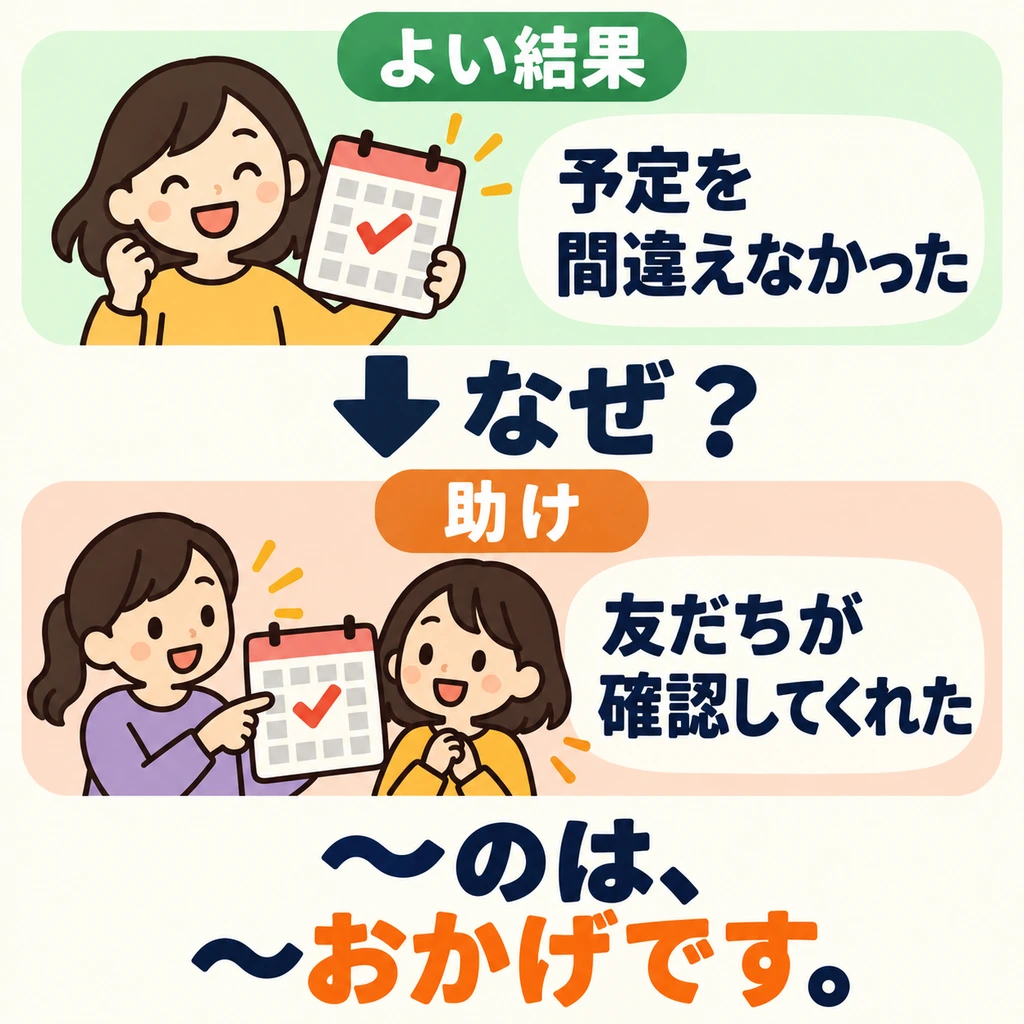
Why was there no mix-up with the schedule? Sentence-final 「おかげです」 credits the friend for this good result.
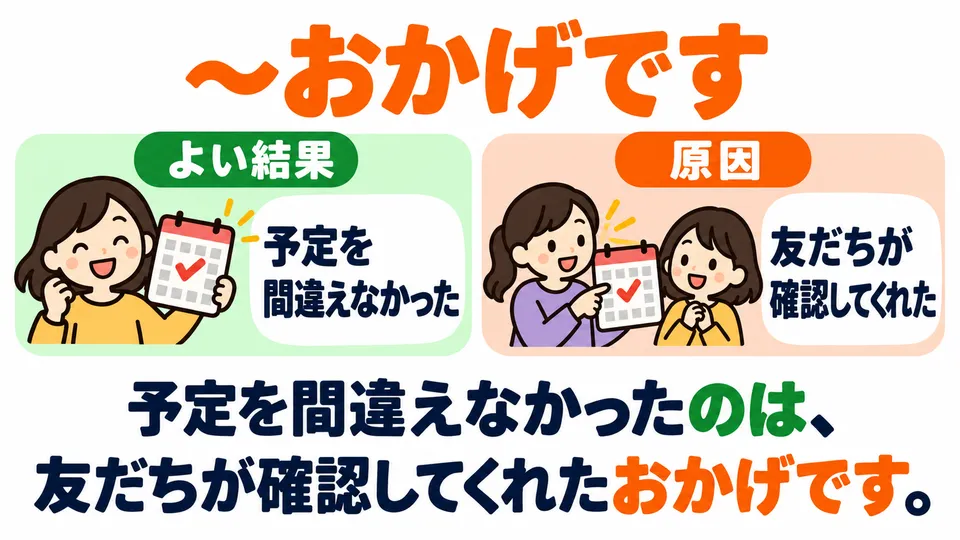
Use “good result + のは、cause + おかげだ/おかげです” to explain what led to a good result.
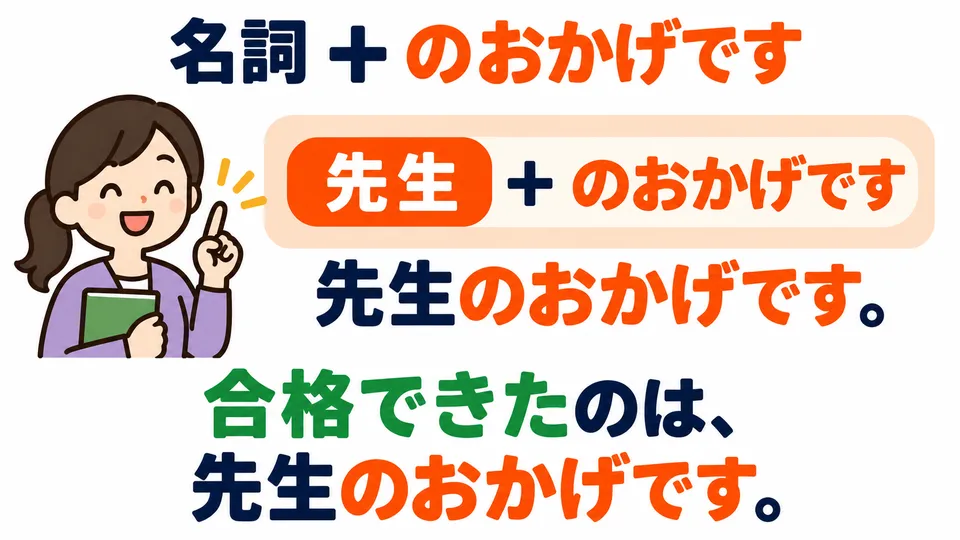
When the cause is a person or thing, use “noun + のおかげだ” to give them the credit.
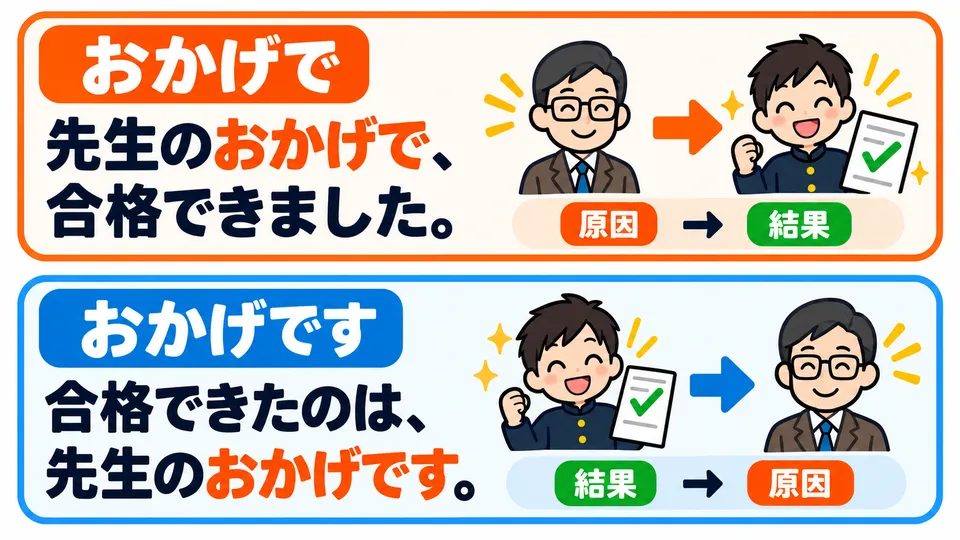
「おかげで」 is followed by the result. 「おかげだ」 comes at the end of the sentence and explains the reason for a good result.
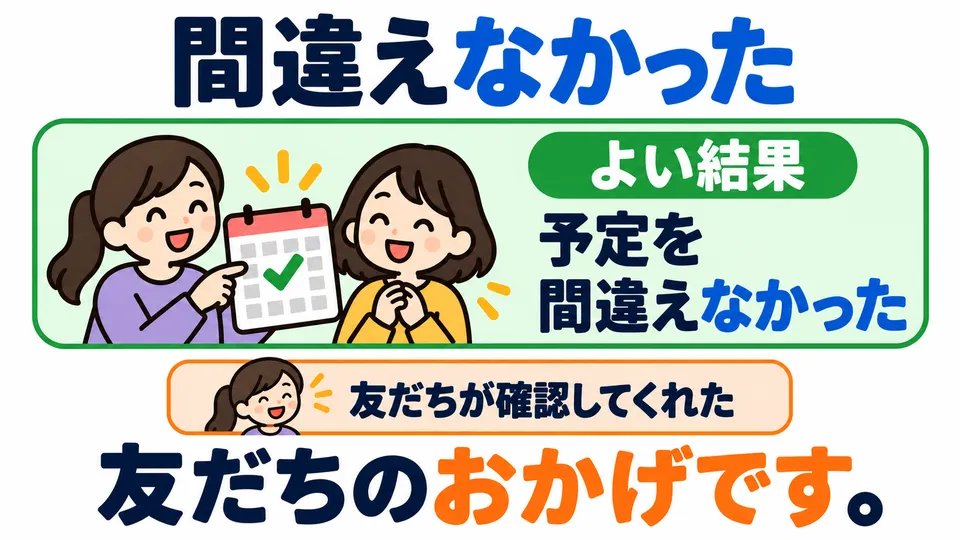
「間違えなかった」 is a negative form, but it describes a good result: the friend helped prevent a mistake.
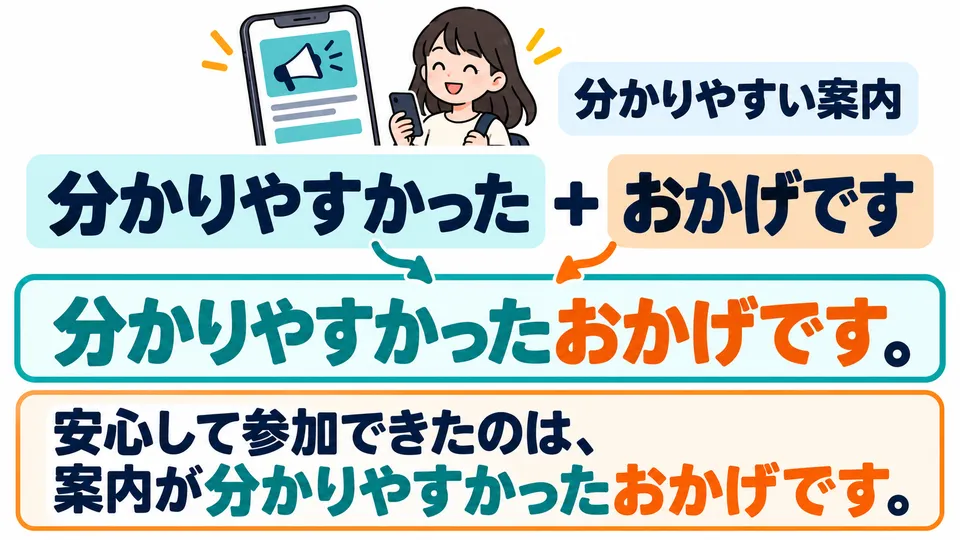
In the second sentence, the reason is that the information message was easy to understand. 「分かりやすかった」 connects directly to 「おかげです」.
Example sentences
- 予定yoteiをo間違えなかったmachigaenakattaのnoは、wa、友だちtomodachiがga確認kakuninしshiてteくれたおかげkuretaokage
In a conversation
Check yourself
Level 1 · Recognise
Which sentence is correct?
Level 1 · Recognise
Listen and choose the meaning
Level 2 · Build
Put the words in order
There were no communication mistakes thanks to organizing the key points clearly.
Level 3 · Use
What goes in the blank?
予定を間違えなかったのは、友だちが確認してくれた____。
I didn't get the schedule wrong thanks to my friend checking it
More grammar in this theme
- 〜おかげだcredit a good result