Lesson notes · ≈ JLPT N3 · Intermediate 2
〜おかげだ~okage da
credit a good result
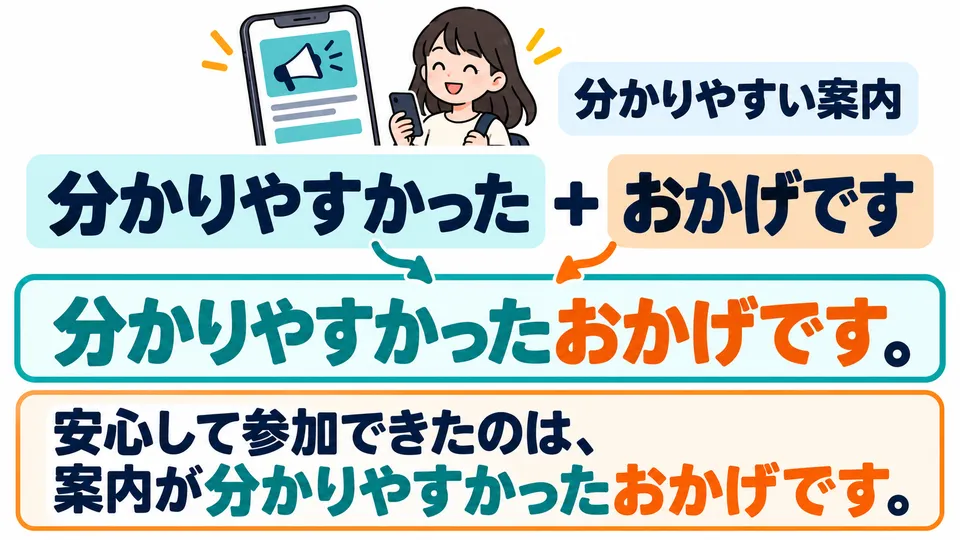
Use sentence-final 「〜おかげだ」 to explain and credit the cause of a good result.
How it works
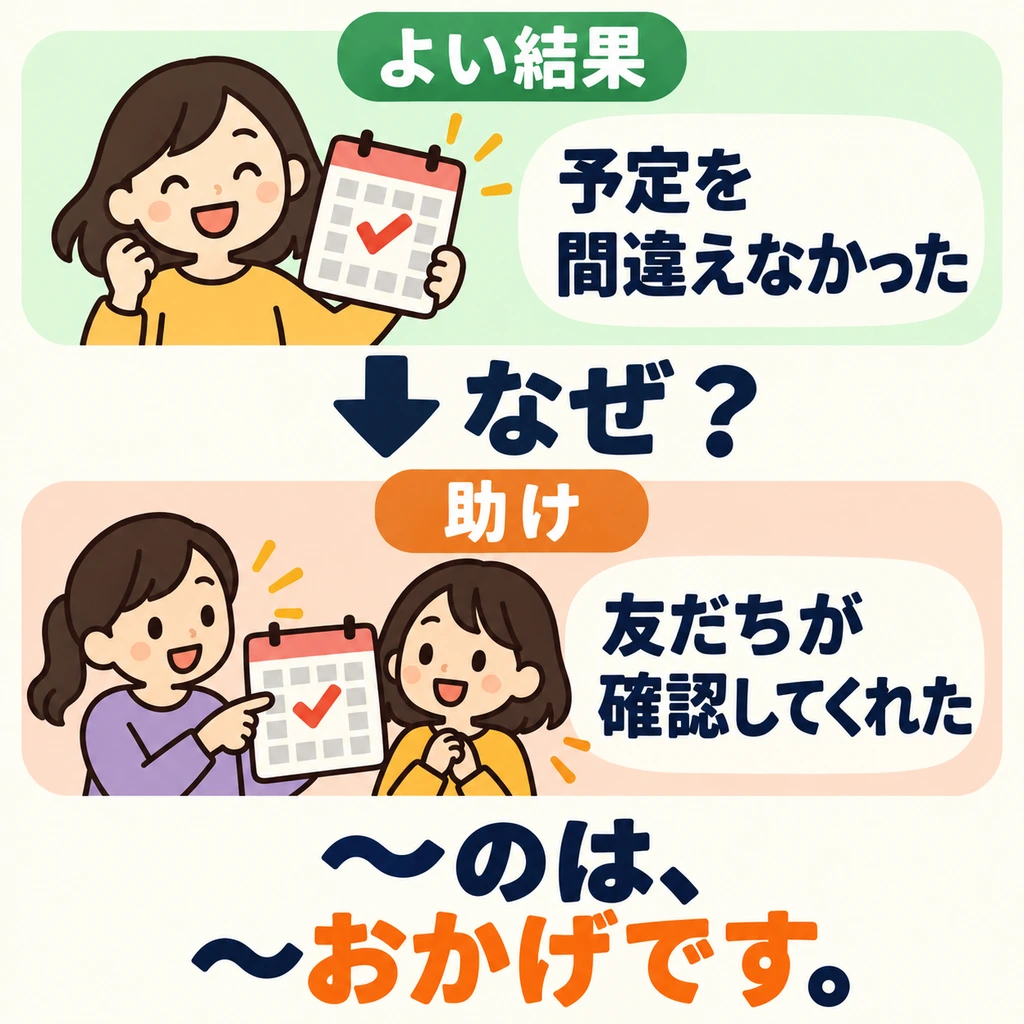
Why was there no mix-up with the schedule? Sentence-final 「おかげです」 credits the friend for this good result.
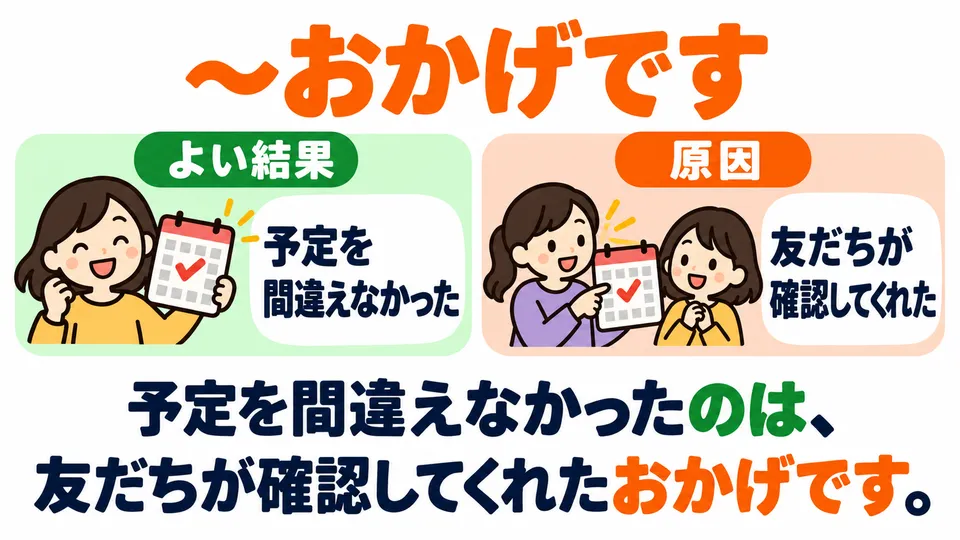
Use “good result + のは、cause + おかげだ/おかげです” to explain what led to a good result.
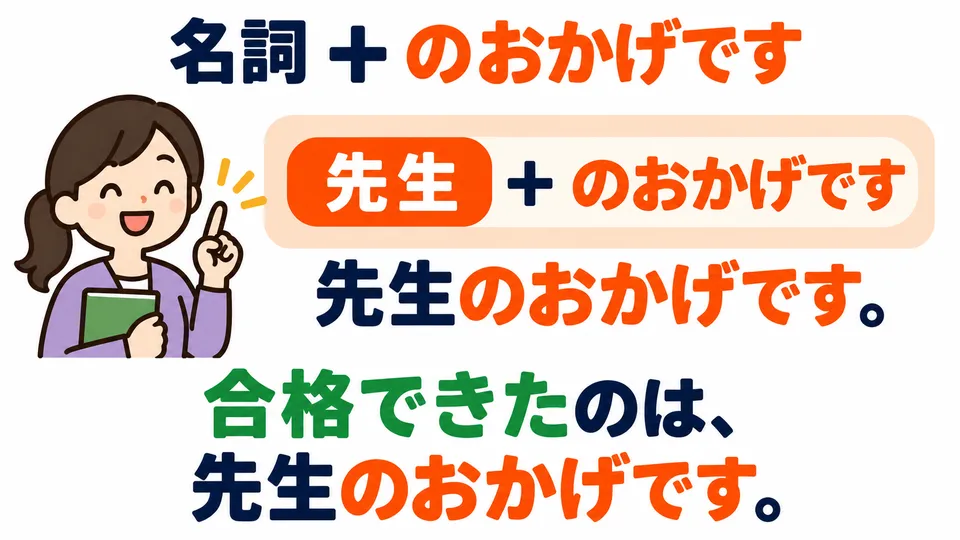
When the cause is a person or thing, use “noun + のおかげだ” to give them the credit.
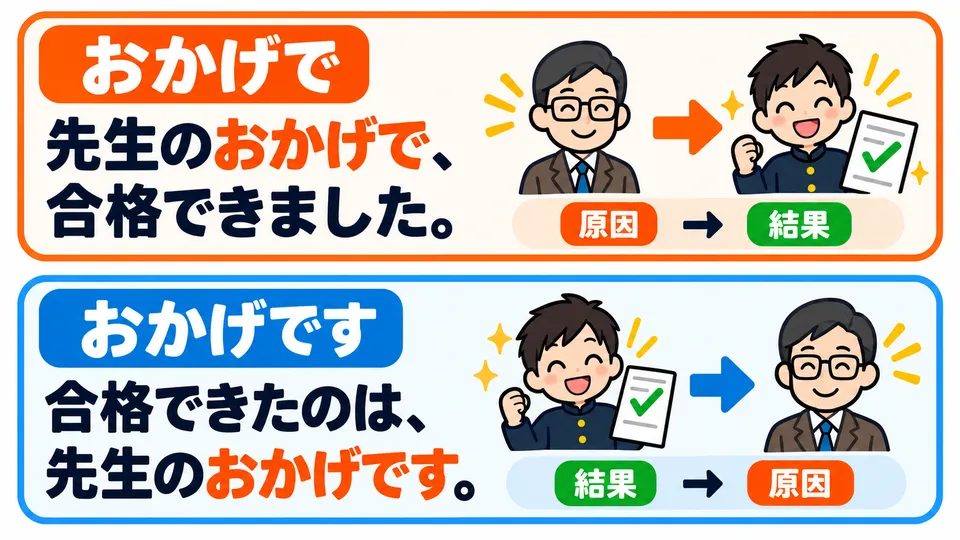
「おかげで」 is followed by the result. 「おかげだ」 comes at the end of the sentence and explains the reason for a good result.
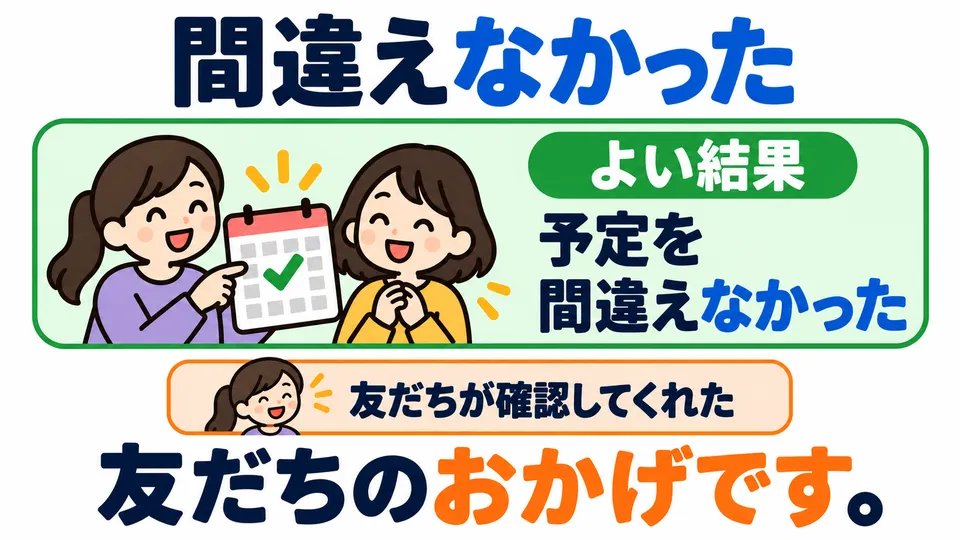
「間違えなかった」 is a negative form, but it describes a good result: the friend helped prevent a mistake.