
Japanese grammar · ≈ JLPT N4 · Intermediate 2
人を〜にさせるhito o ~ ni saseru
trigger someone’s feelings
Use 「人を〜にさせる」 to describe an event triggering someone’s emotion or mental state, even unintentionally.
How it works
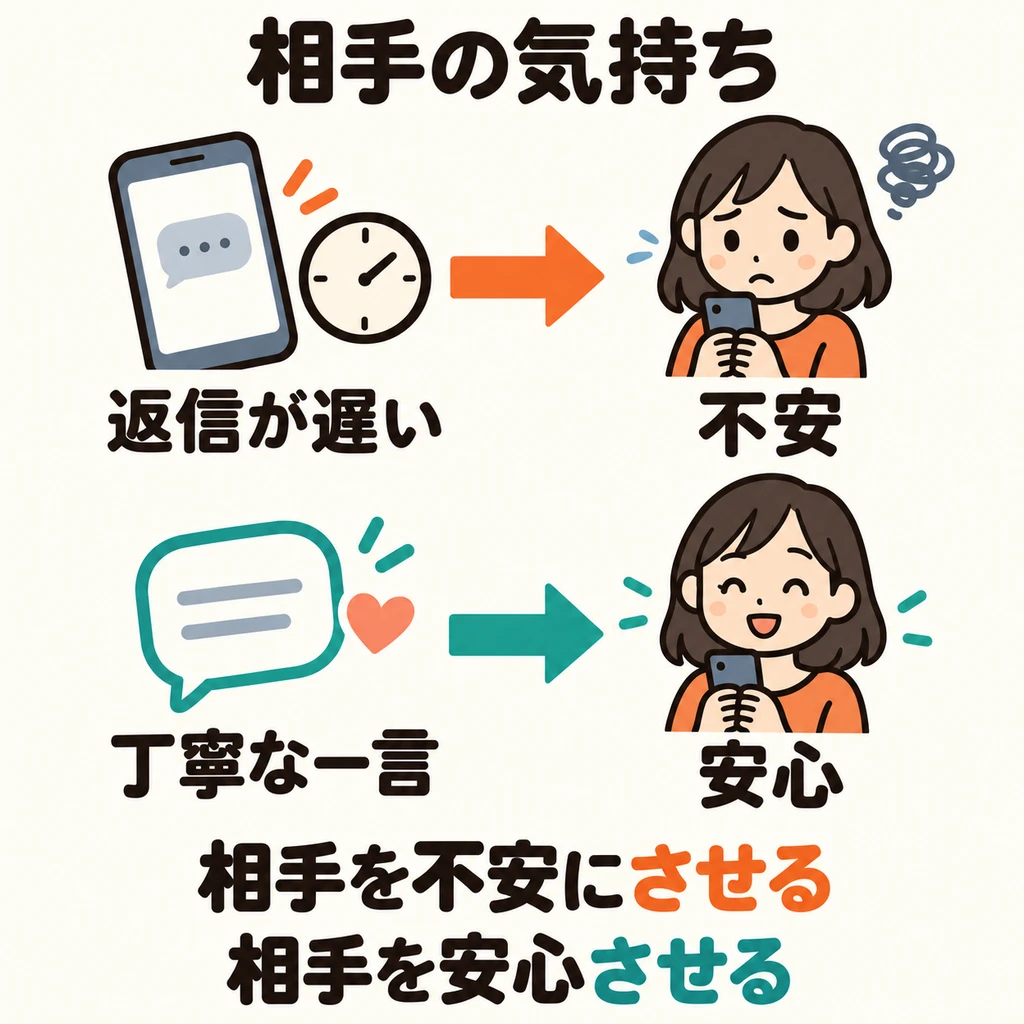
A slow reply causes anxiety; a polite remark brings reassurance. Follow the arrows: an event can trigger another person’s feelings.
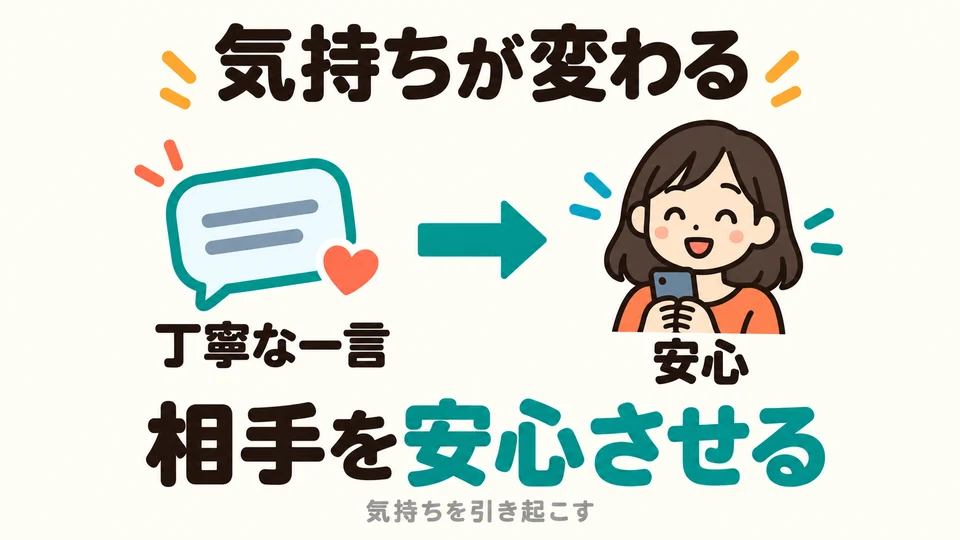
Here, the causative expresses triggering an emotion or mental state, rather than ordering someone to perform an action.
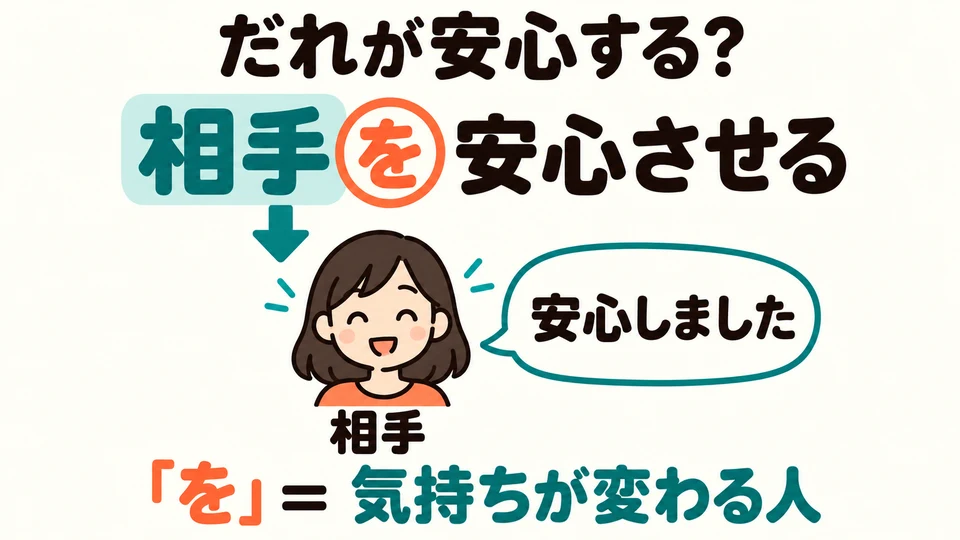
Who experiences the feeling? In 「相手を安心させる」, 「を」 marks the person affected.
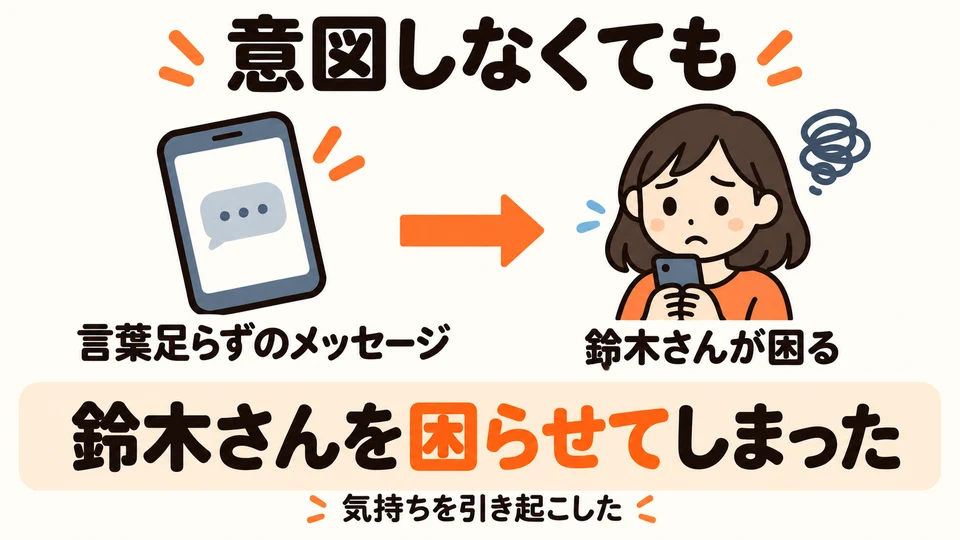
The message in the conversation troubles Suzuki. The causative can describe the feeling caused even when it was unintentional.
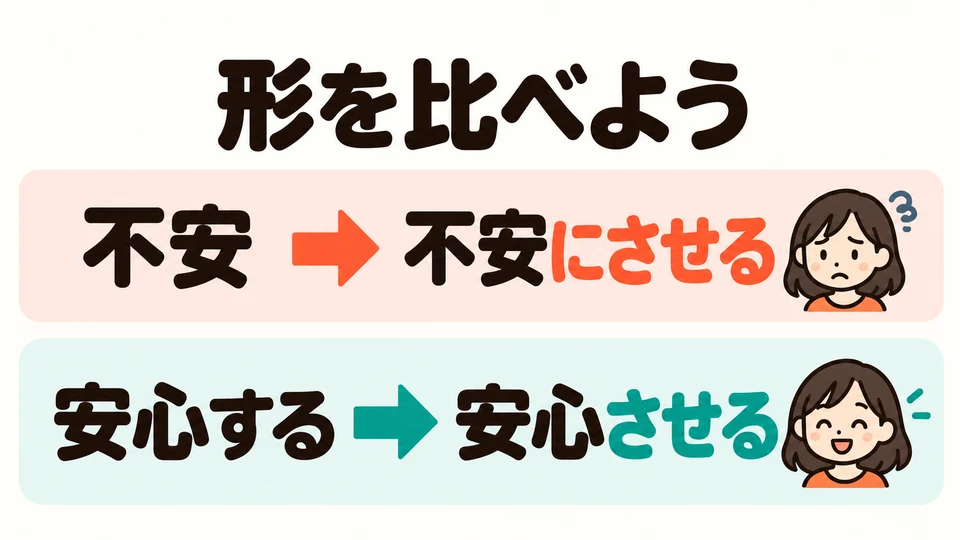
Notice the forms in the two examples: 「不安」 takes 「にさせる」; 「安心する」 becomes 「安心させる」.
Example sentences
- 返信henshinがga遅いosoiと、to、相手aiteをo不安fuanにさせます。nisasemasu。
A slow reply will make the other person feel anxious.
In a conversation

- A私の言葉足らずのメッセージが、鈴木さんを困らせてしまったようです。
A: It seems my poorly phrased message has troubled Mr. Suzuki. (E2604)
- B
Check yourself
Level 1 · Recognise
Which sentence is correct?
Level 1 · Recognise
Listen and choose the meaning
Level 2 · Build
Put the words in order
An email with insufficient explanation confuses the person in charge at the client company.
Level 3 · Use
What goes in the blank?
返信が遅いと、相手を不安に____。
A late reply makes the other person anxious
More grammar in this theme
- 人を〜にさせるtrigger someone’s feelings