
JPEDLAB iconJPEDLAB
Save history

Create an account and play

Explore first, then save your progress whenever you are ready. No email address is required.

Start free
Read as articleCards
1/8

A slow reply causes anxiety; a polite remark brings reassurance. Follow the arrows: an event can trigger another person’s feelings.

››

Lesson notes · ≈ JLPT N4 · Intermediate 2

人を〜にさせるhito o ~ ni saseru

trigger someone’s feelings

Use 「人を〜にさせる」 to describe an event triggering someone’s emotion or mental state, even unintentionally.

How it works
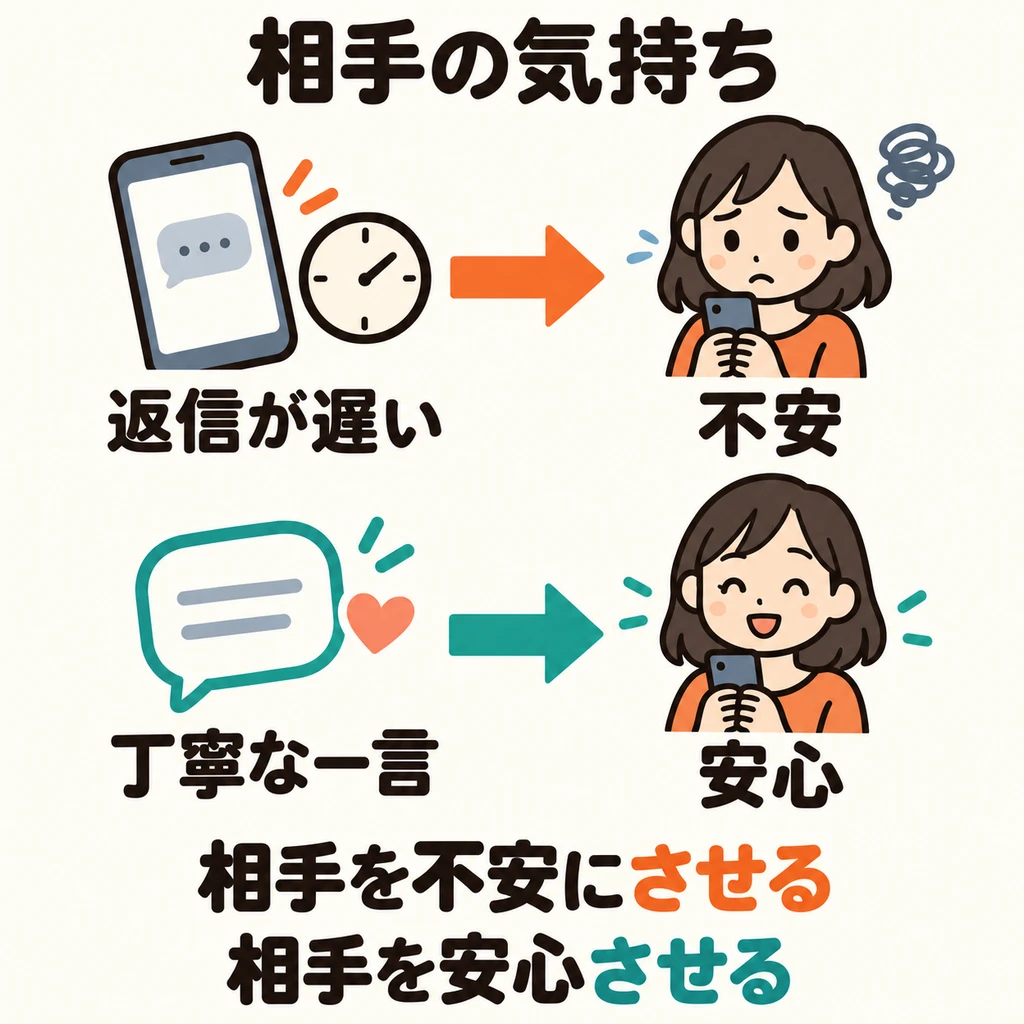
  1. A slow reply causes anxiety; a polite remark brings reassurance. Follow the arrows: an event can trigger another person’s feelings.
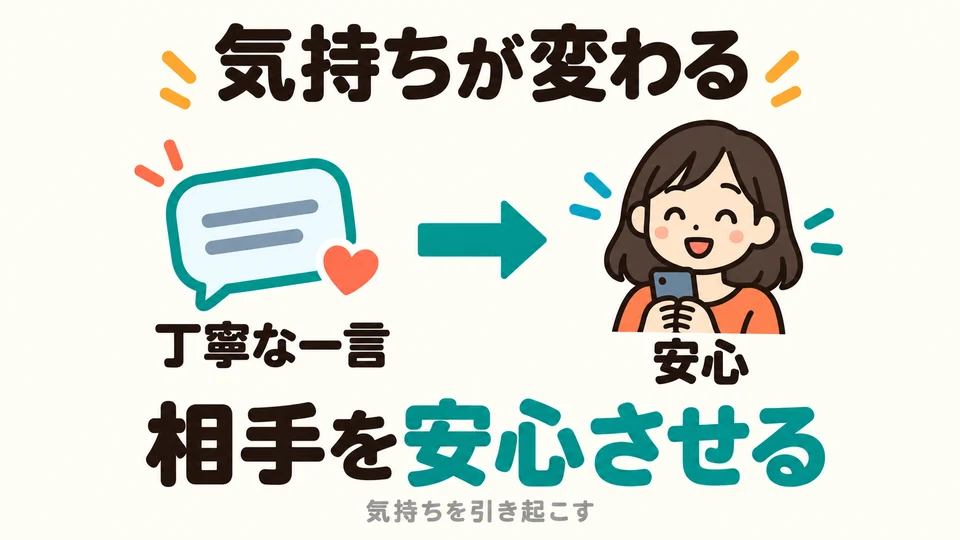
    A slow reply causes anxiety; a polite remark brings reassurance. Follow the arrows: an event can trigger another person’s feelings.

  2. Here, the causative expresses triggering an emotion or mental state, rather than ordering someone to perform an action.
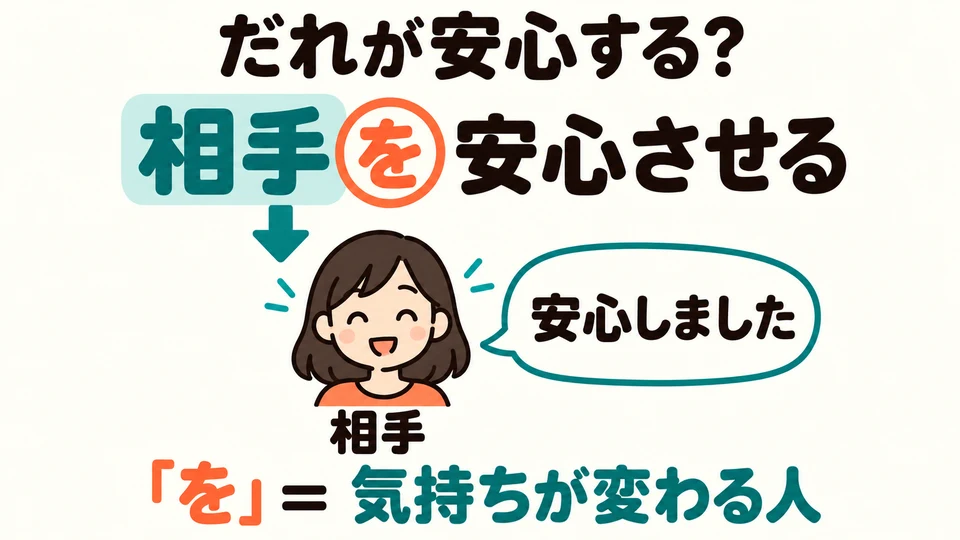
    Here, the causative expresses triggering an emotion or mental state, rather than ordering someone to perform an action.

  3. Who experiences the feeling? In 「相手を安心させる」, 「を」 marks the person affected.
    Who experiences the feeling? In 「相手を安心させる」, 「を」 marks the person affected.

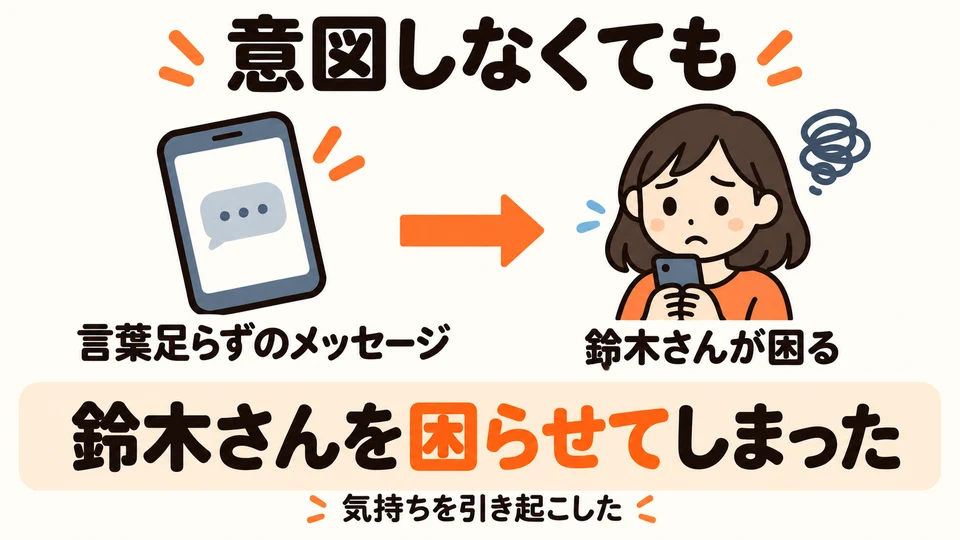
  4. The message in the conversation troubles Suzuki. The causative can describe the feeling caused even when it was unintentional.
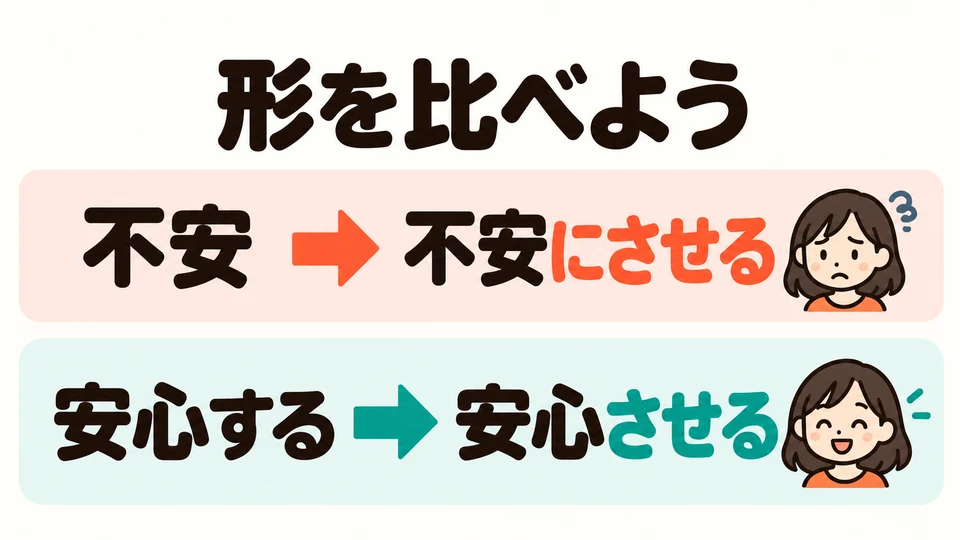
    The message in the conversation troubles Suzuki. The causative can describe the feeling caused even when it was unintentional.

  5. Notice the forms in the two examples: 「不安」 takes 「にさせる」; 「安心する」 becomes 「安心させる」.

    Notice the forms in the two examples: 「不安」 takes 「にさせる」; 「安心する」 becomes 「安心させる」.

Example sentences

  • 返信へんしんhenshinがga遅いおそいosoiと、to、相手あいてaiteをo不安ふあんfuanにさせます。nisasemasu。

    A slow reply will make the other person feel anxious.

  • 丁寧な一言ていねいなひとことteineinahitokotoは、わ、wa、相手あいてaiteをo安心あんしんanshinさせます。sasemasu。

    A polite word will make the other person feel reassured.

In a conversation

  • A
    私わたしの言葉ことば足らずたらずのメッセージめっせーじが、鈴木さんすずきさんを困らせこまらせてしまったようです。

    A: It seems my poorly phrased message has troubled Mr. Suzuki. (E2604)

  • B
    大丈夫ですだいじょうぶですよ。今いまからでも具体的ぐたいてきな理由なりゆうを添えそえて補足ほそく説明せつめいをすれば、相手あいてを安心あんしんさせられますよ。

    B: It's okay. If you follow up with a supplementary explanation along with specific reasons even now, you can reassure them.

  • A
    そうですね、すぐに誤解ごかいを解くとくために連絡れんらくし直します。なおします。

    A: You are right. I will contact them again right away to clear up the misunderstanding.

Check yourself

  1. Level 1 · Recognise

    Which sentence is correct?

  2. Level 1 · Recognise

    Listen and choose the meaning

  3. Level 2 · Build

    Put the words in order

    An email with insufficient explanation confuses the person in charge at the client company.

  4. Level 3 · Use

    What goes in the blank?

    返信が遅いと、相手を不安に____。

    A late reply makes the other person anxious

More grammar in this theme

  • 〜のことなんですがgently introduce a topic
  • 〜させていただけませんかpolitely ask permission
  • 〜ものですからgently explain a reason
  • 〜の代わりに・〜に代わってinstead of; in place of
  • 〜おかげでthanks to; good result
  • 〜おかげだcredit a good result
  • 〜くせにreproachful contradiction
  • 〜せいでblame for a bad result
  • 〜に決まっているstrong certainty; bound to
  • 人を〜にさせるtrigger someone’s feelings
  • 〜ことはないno need to
  • 〜のことになると・〜のこととなるとwhen it comes to
  • 人にしたら・人にすればfrom someone’s perspective
  • 人にしてみたら・人にしてみればfrom someone’s perspective
  • 〜たびにevery time
  • 〜ば・〜ならばif; on the condition that
  • 〜たら・〜ためにif; in order to
Previous〜に決まっているNext〜ことはない

Keep practising

Test your Japanese vocabulary12 adaptive questions, freeCheck your pronunciationRead aloud and get a scorePractise verb forms10-question conjugation quizSee the whole courseGrammar, vocabulary and quizzes by theme
See the whole course
Intermediate 2
Thoughtful Communication and Feelings