JPEdLab iconJPEdLab
Save history

Create an account and play

Explore first, then save your progress whenever you are ready. No email address is required.

Start free
  1. Japanese grammar
  2. JLPT N3 grammar
  3. 〜の代わりに・〜に代わって

〜の代わりに・〜に代わって~no kawari ni

No kawari ni (〜の代わりに・〜に代わって) means “instead of; in place of”.

明日あすasuのno活動かつどうkatsudouにni参加さんかsankaできないdekinaiのnoで、de、私わたしwatashiのno代わりかわりkawariにni友だちともだちtomodachiがga参加さんかsankaします。shimasu。

Since I cannot participate in tomorrow's activity, my friend will participate instead of me.

Use 「〜の代わりに」 for a substitute person or method; 「〜に代わって」 can emphasize taking over a role.

In the course›

How it works

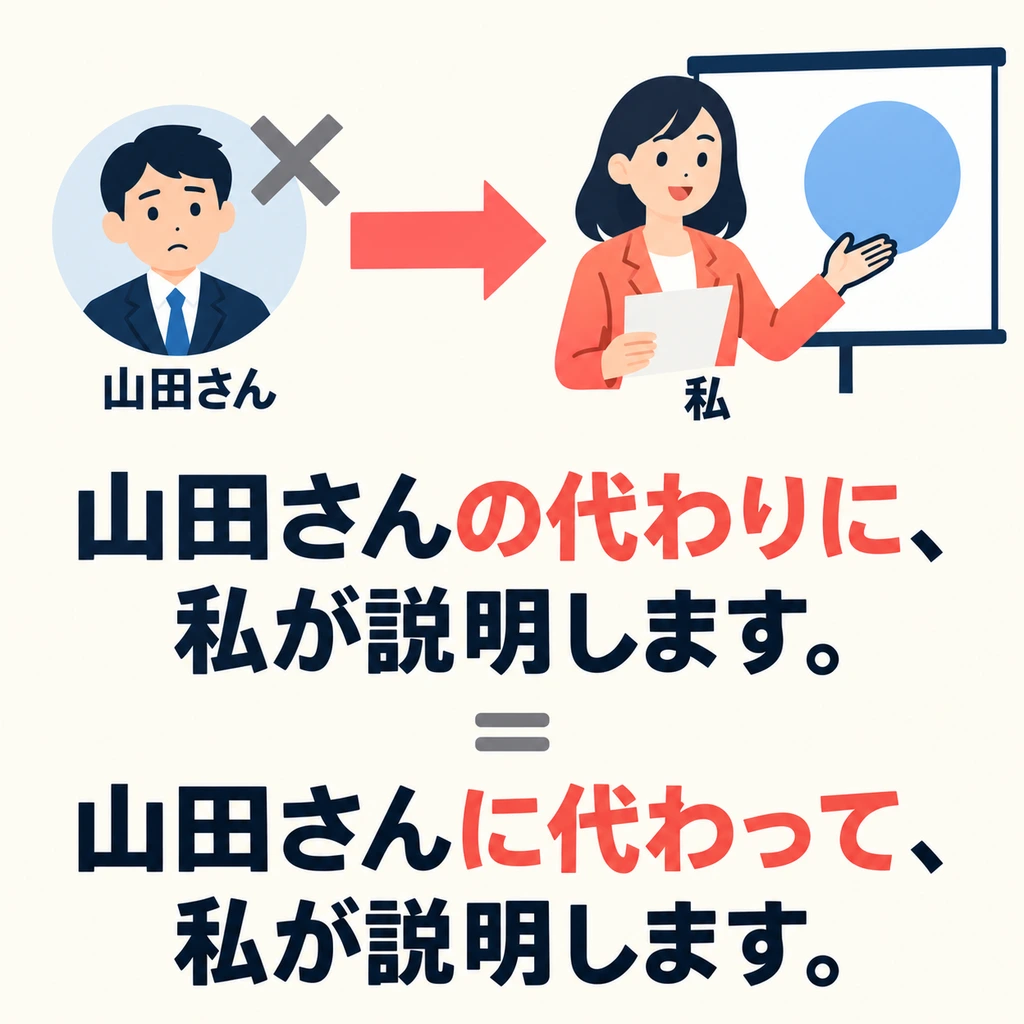
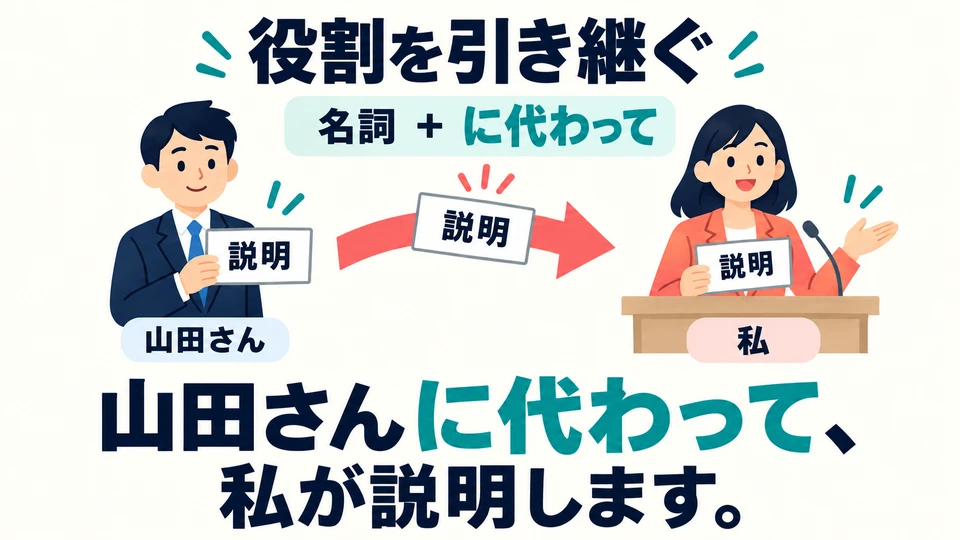
  1. Look at the picture: Yamada was meant to explain, but now “I” take his place and do the same task.
    Look at the picture: Yamada was meant to explain, but now “I” take his place and do the same task.

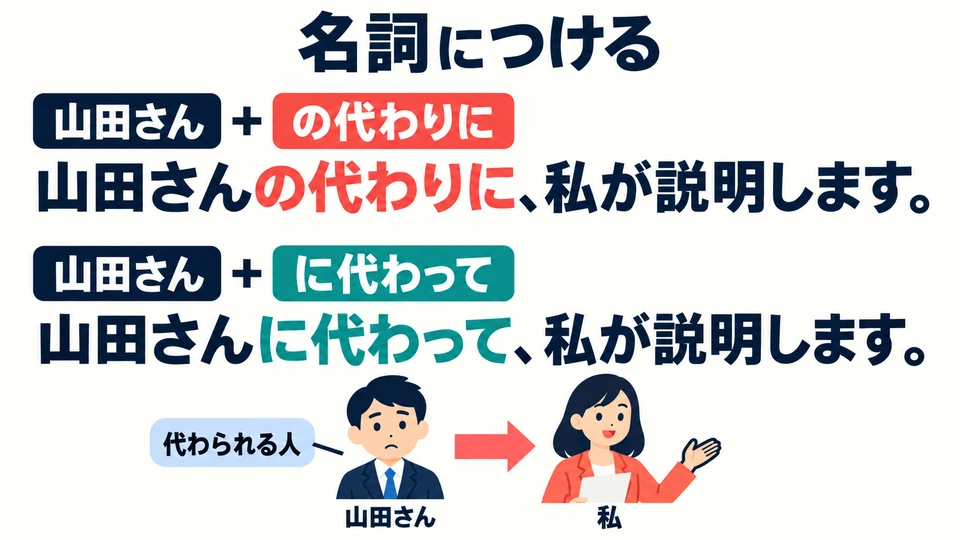
  2. Attach 「の代わりに」 or 「に代わって」 to a noun. That noun names whoever or whatever is being replaced.
    Attach 「の代わりに」 or 「に代わって」 to a noun. That noun names whoever or whatever is being replaced.

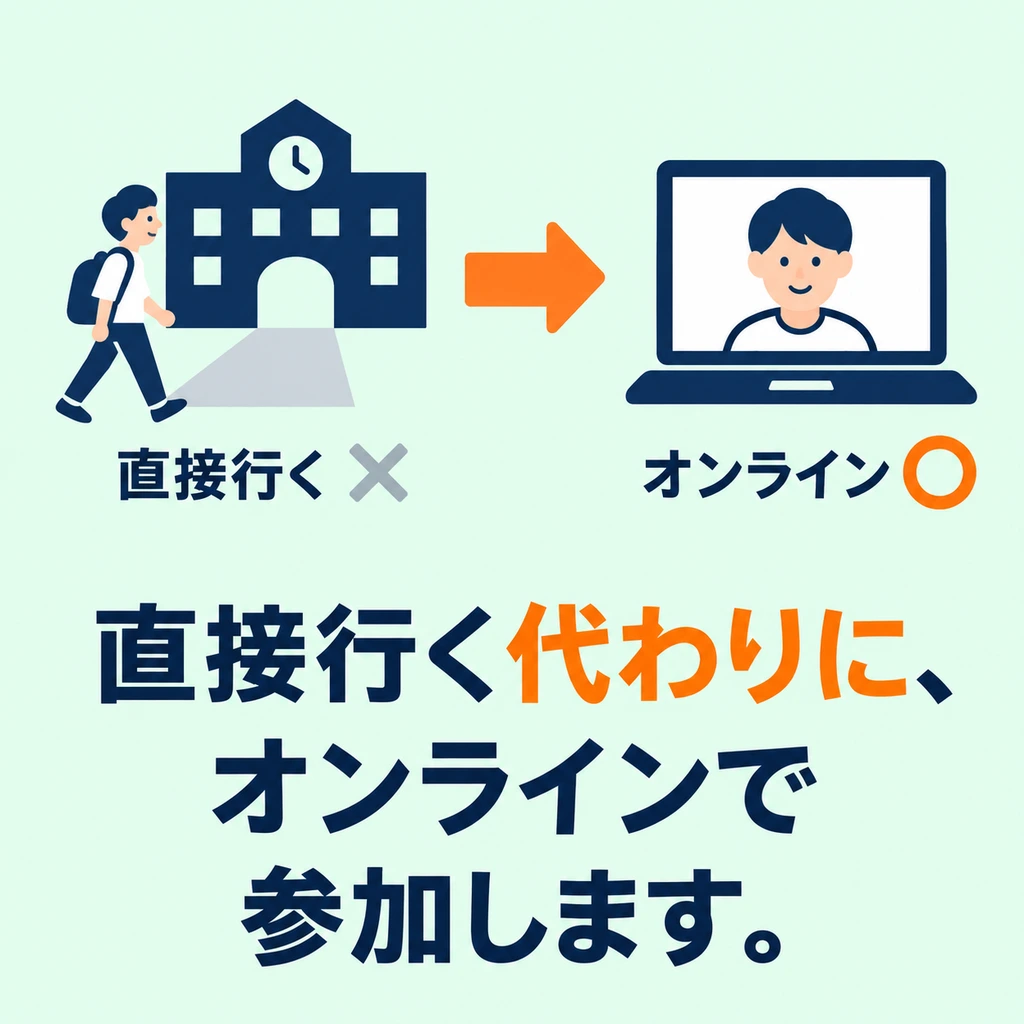
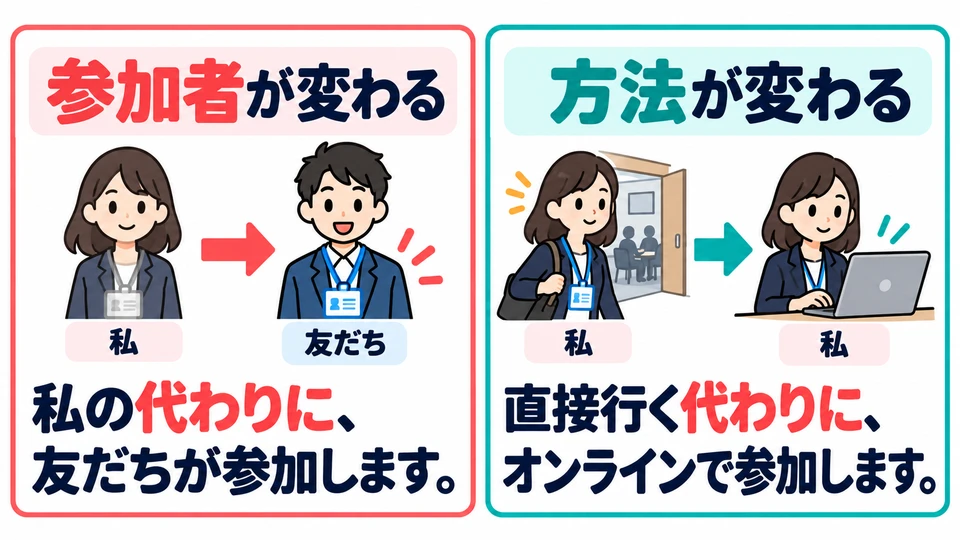
  3. You can also change how you do something: join online instead of going in person. The purpose of joining stays the same.
    You can also change how you do something: join online instead of going in person. The purpose of joining stays the same.

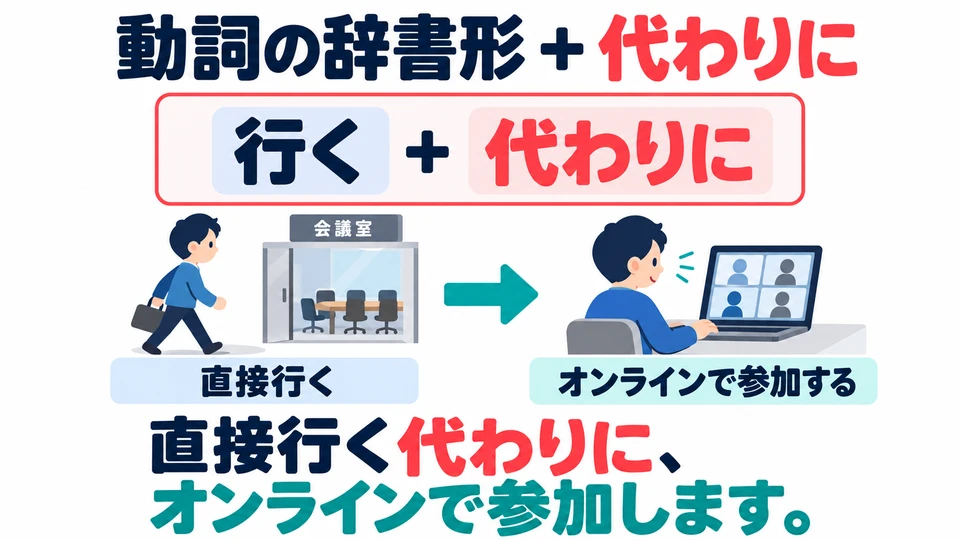
  4. To replace an action, add 「代わりに」 to a verb’s dictionary form, as in 「直接行く代わりに」.
    To replace an action, add 「代わりに」 to a verb’s dictionary form, as in 「直接行く代わりに」.

  5. 「に代わって」 follows a noun and emphasizes taking over someone’s role or duties. It is common when speaking or explaining on their behalf.
    「に代わって」 follows a noun and emphasizes taking over someone’s role or duties. It is common when speaking or explaining on their behalf.

  6. In the examples, a friend joining means the participant changes. Joining online changes the method; “I” am still the participant.

    In the examples, a friend joining means the participant changes. Joining online changes the method; “I” am still the participant.

Example sentences

  • 明日あすasuのno活動かつどうkatsudouにni参加さんかsankaできないdekinaiのnoで、de、私わたしwatashiのno代わりかわりkawariにni

In a conversation

  • A
    今回こんかいの発表はっぴょうは、わ、山田さんやまださんの代わりかわりに私わたしが説明せつめいを担当たんとうすることになりました。

    A: For this presentation, I will be in charge of the explanation instead of Mr. Yamada.

Check yourself

  1. Level 1 · Recognise

    Which sentence is correct?

  2. Level 1 · Recognise

    Listen and choose the meaning

  3. Level 2 · Build

    Put the words in order

    I will attend the meeting on behalf of the department manager.

  4. Level 3 · Use

    What goes in the blank?

    明日の活動に参加できないので、私の____友だちが参加します。

    I cannot join tomorrow's activity, so my friend will attend in my place.

More grammar in this theme

  • 〜の代わりに・〜に代わってinstead of; in place of

More JLPT N3 grammar

Keep practising

Test your Japanese vocabulary12 adaptive questions, freeCheck your pronunciationRead aloud and get a scorePractise verb forms10-question conjugation quizSee the whole courseGrammar, vocabulary and quizzes by theme
友だちともだちtomodachi
がga
参加さんかsanka
します。shimasu。

Since I cannot participate in tomorrow's activity, my friend will participate instead of me.

  • 直接ちょくせつchokusetsu行くいくiku代わりかわりkawariに、ni、オンラインおんらいんonrainでde参加さんかsankaさせsaseてteいただけませんitadakemasenか。ka。

    Could you let me participate online instead of going there in person?

  • B
    そうですか、よろしくお願いおねがいします。準備じゅんびで手伝うてつだうことがあれば言っいってくださいね。

    B: I see, I appreciate your help. Please let me know if there is anything I can help with for the preparation.

  • A
    ありがとうございます、お言葉おことばに甘えあまえてお願いおねがいするかもしれません。

    A: Thank you, I might take you up on that offer and ask for your help.

  • Intermediate 2
    Thoughtful Communication and Feelings
    More quizzesOpen this lesson’s quizzes in the course
    〜のことなんですがgently introduce a topic
    〜させていただけませんかpolitely ask permission
    〜ものですからgently explain a reason
    〜おかげでthanks to; good result
    〜おかげだcredit a good result
    〜くせにreproachful contradiction
    〜せいでblame for a bad result
    〜に決まっているstrong certainty; bound to
    人を〜にさせるtrigger someone’s feelings
    〜ことはないno need to
    〜のことになると・〜のこととなるとwhen it comes to
    人にしたら・人にすればfrom someone’s perspective
    人にしてみたら・人にしてみればfrom someone’s perspective
    〜たびにevery time
    〜ば・〜ならばif; on the condition that
    〜たら・〜ためにif; in order to
    Previous〜ものですから
    Next〜おかげで
    See all 114
    〜たものだused to; fond recollection
    〜さえ/さえ〜ばeven; as long as
    〜に反してcontrary to expectations
    〜ているうちにchange during an activity
    〜でしょう?seeking agreement
    〜っけrecalling and checking
    〜もん・〜んだもんemotional reason or plea
    〜ほど・〜くらい・〜ぐらいdegree shown by an example