
Japanese grammar · ≈ JLPT N3 · Intermediate 3
〜でしょう?~deshou?
seeking agreement
Use 「〜でしょう?」 when you have an idea and expect the listener to agree or confirm it.
How it works
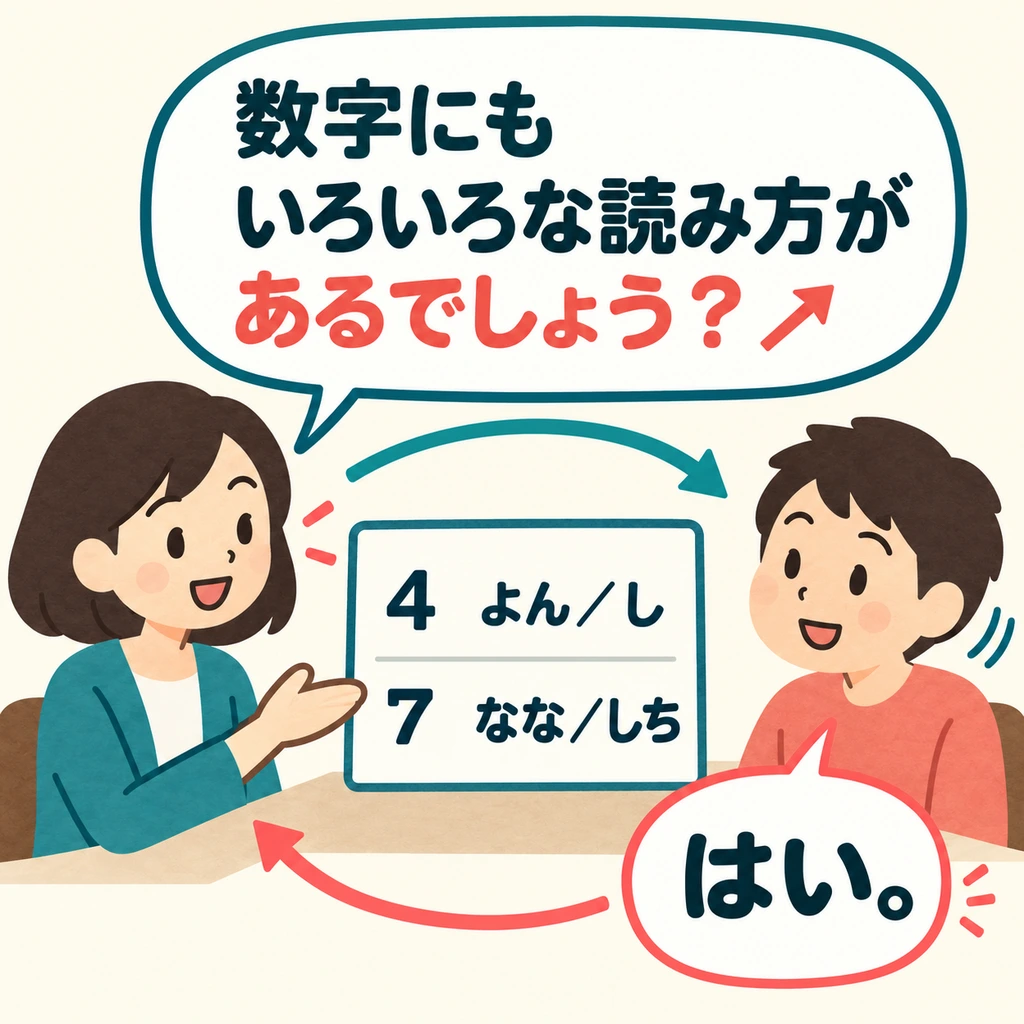
Numbers have several readings, and both people know this. The speaker uses 「でしょう?」 to confirm it with the listener.
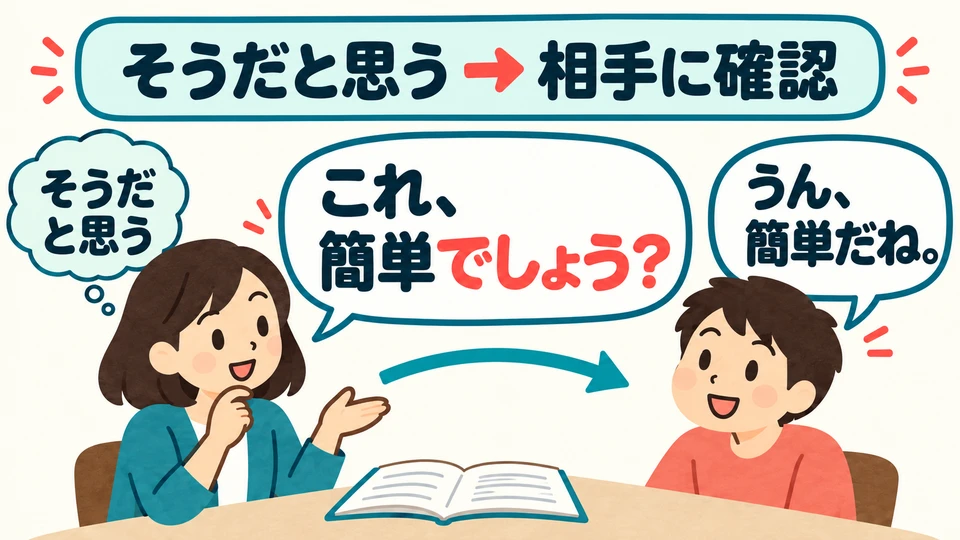
You already have an idea and ask “That’s right, isn’t it?” You expect agreement, rather than asking for entirely new information.
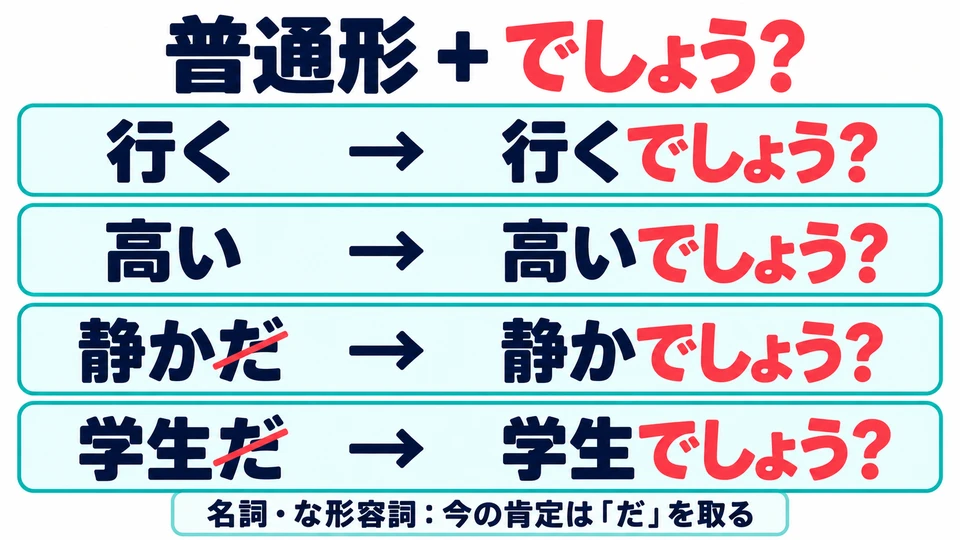
Attach it to the plain form. For nouns and な-adjectives in the present affirmative, drop 「だ」, as in 「語呂合わせでしょう?」.
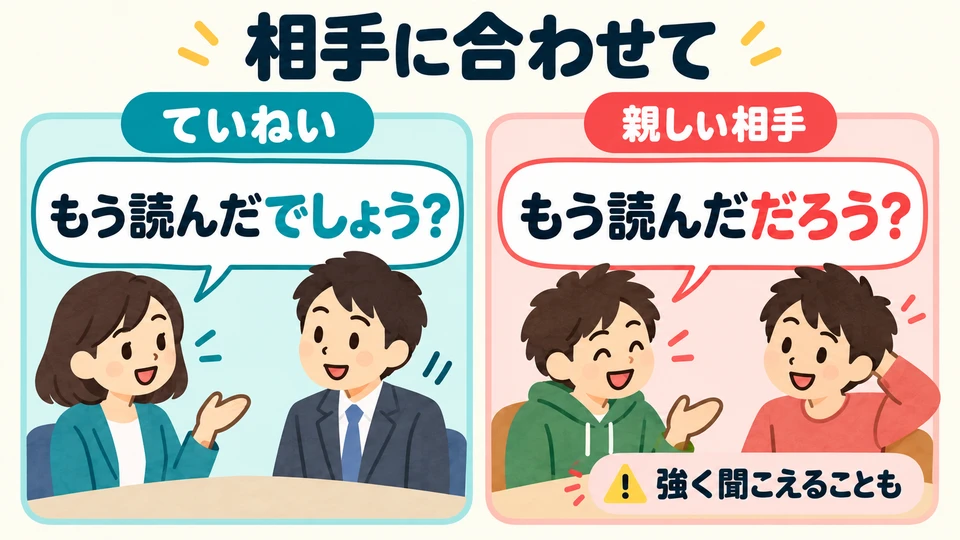
「でしょう」 is more polite. 「だろう」 is more casual and can sound forceful, so it is mainly used with people you know well.
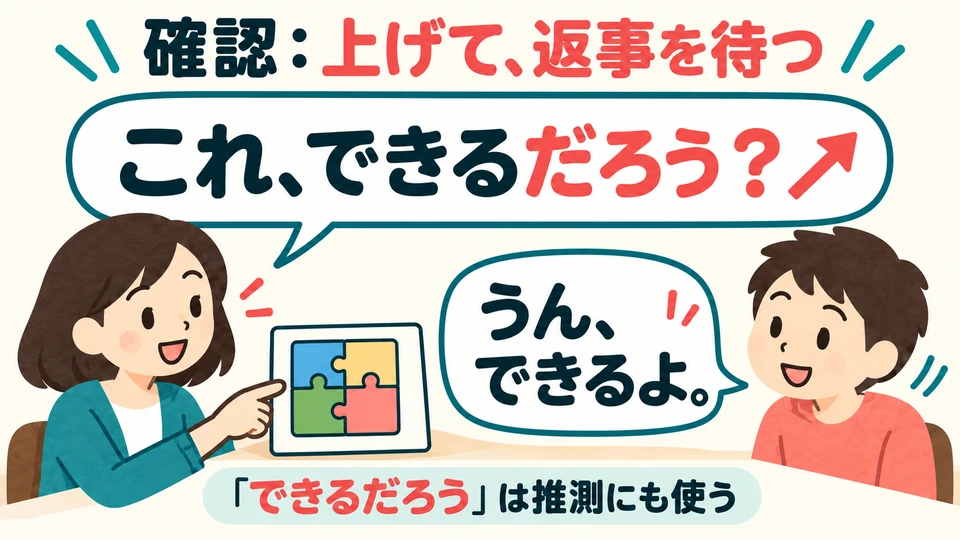
「できるだろう」 can also express a guess. Rising intonation at the end and an expected response are clues that it is seeking confirmation.
Example sentences
- 日本nihon語goでdeは、wa、数字suujiにniもmoいろいろな読み方iroironayomikataがgaあるでしょう。arudeshou。
In Japanese, there are various ways to read numbers, right?
In a conversation
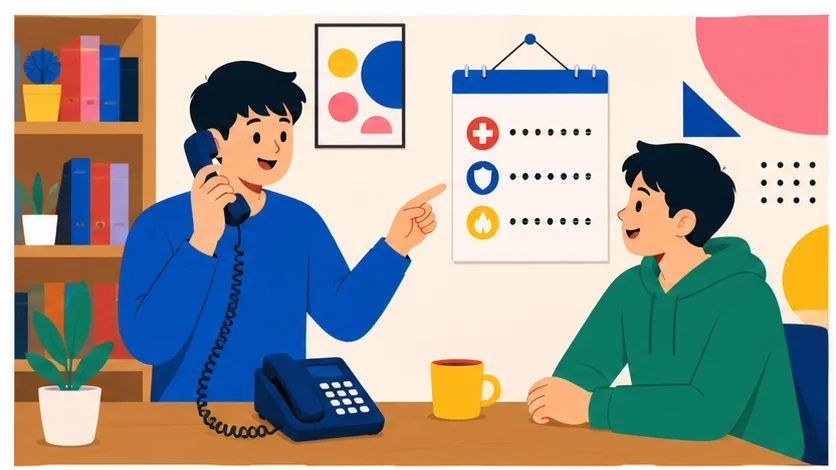
- A「119」は何かの語呂合わせでしょう?
A: "119" is probably some kind of wordplay, isn't it?
- Bそうでしょう。「いいく」…いや、
Check yourself
Level 1 · Recognise
Which sentence is correct?
Level 1 · Recognise
Listen and choose the meaning
Level 2 · Build
Put the words in order
In Japanese, numbers probably also have a variety of readings.
Level 3 · Use
What goes in the blank?
日本語では、数字にもいろいろな読み方がある____。
In Japanese, numbers probably have various ways of being read.
More grammar in this theme
- 〜でしょう?seeking agreement