JPEdLab iconJPEdLab
Save history

Create an account and play

Explore first, then save your progress whenever you are ready. No email address is required.

Start free
  1. Japanese grammar
  2. JLPT N2 grammar
  3. 〜をもとに(して)・〜をもとにした

〜をもとに(して)・〜をもとにした~ o moto ni (shite) / ~ o moto ni shita

O moto ni (shite) / o moto ni shita (〜をもとに(して)・〜をもとにした) means “based on; using as a basis”.

このkono詩しshiは、わ、wa、戦争せんそうsensouのno記憶きおくkiokuをoもとmotoにniした作品したさくひんshitasakuhinです。desu。

This poem is a work based on memories of the war.

Use 「〜をもとに」 after a noun to show the source material or basis for an action or work.

In the course›

How it works

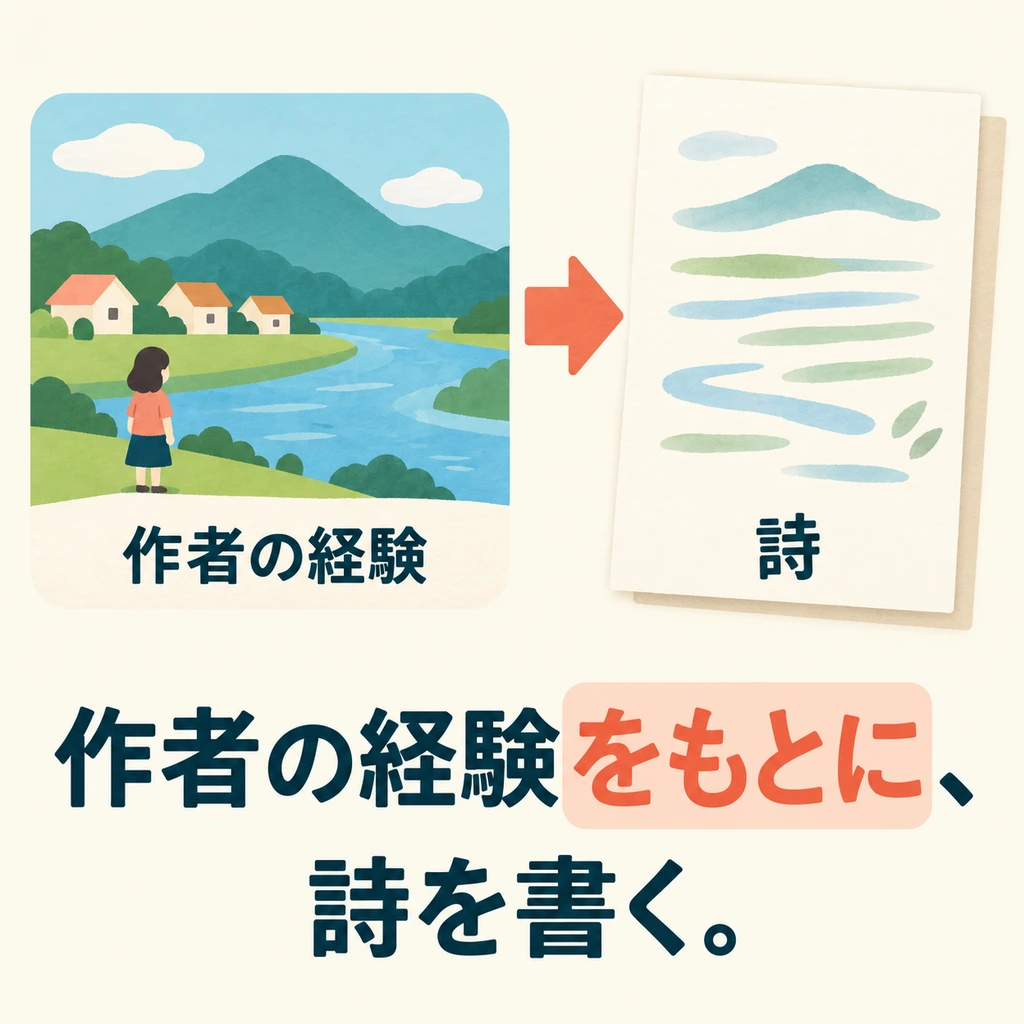
  1. The author uses experiences in their hometown as the basis for a poem. The arrow links the source material to the new work.
    The author uses experiences in their hometown as the basis for a poem. The arrow links the source material to the new work.

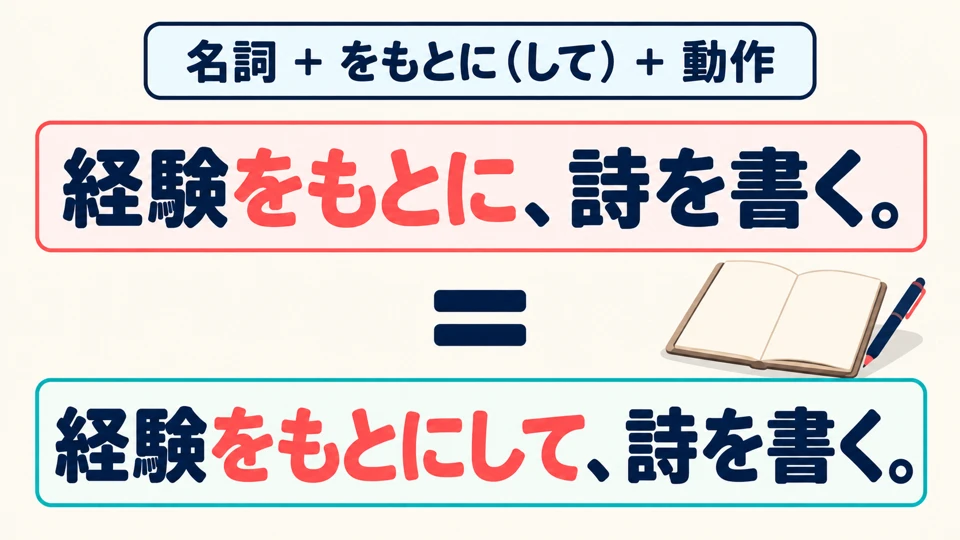
  2. Put 「をもとに」 after a noun, then add an action. Adding 「して」 does not change the meaning.
    Put 「をもとに」 after a noun, then add an action. Adding 「して」 does not change the meaning.

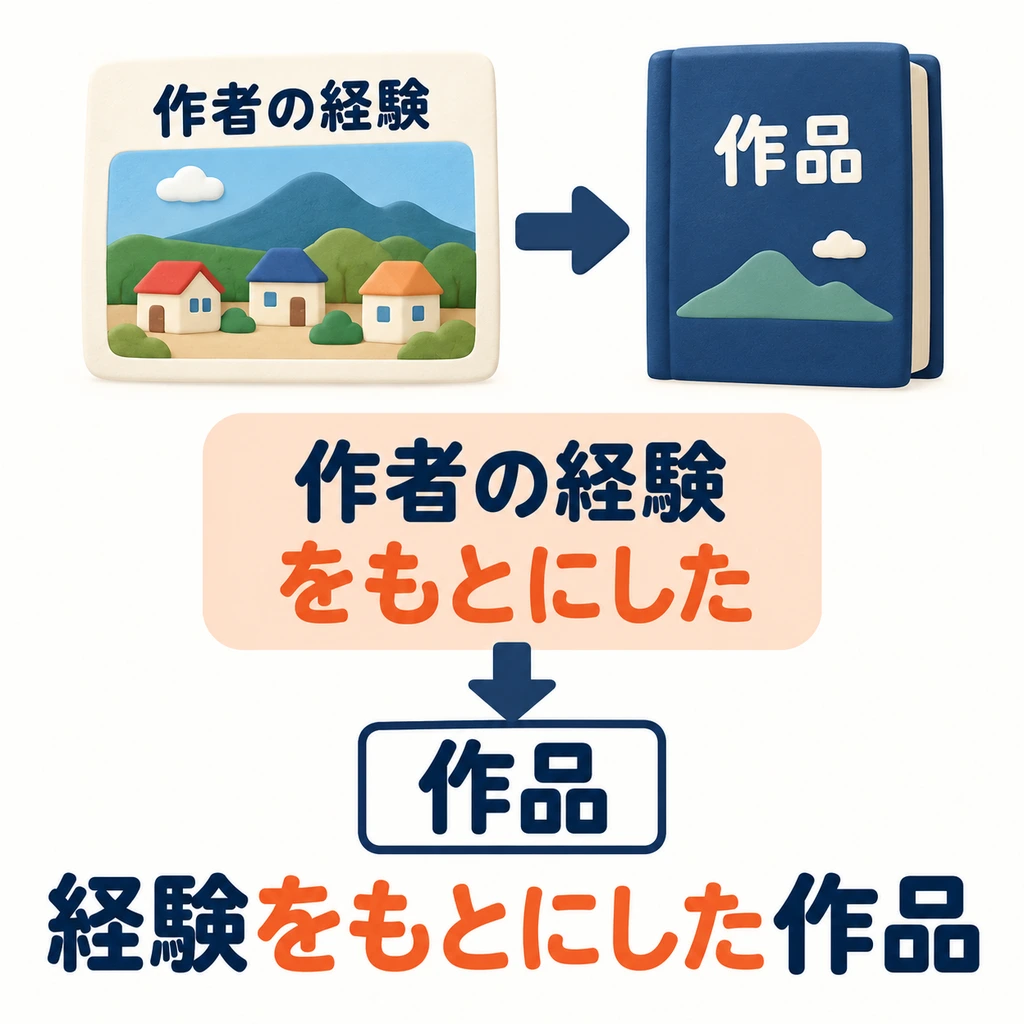
  3. To describe what kind of work it is, use 「をもとにした+noun」 to show what it is based on.
    To describe what kind of work it is, use 「をもとにした+noun」 to show what it is based on.

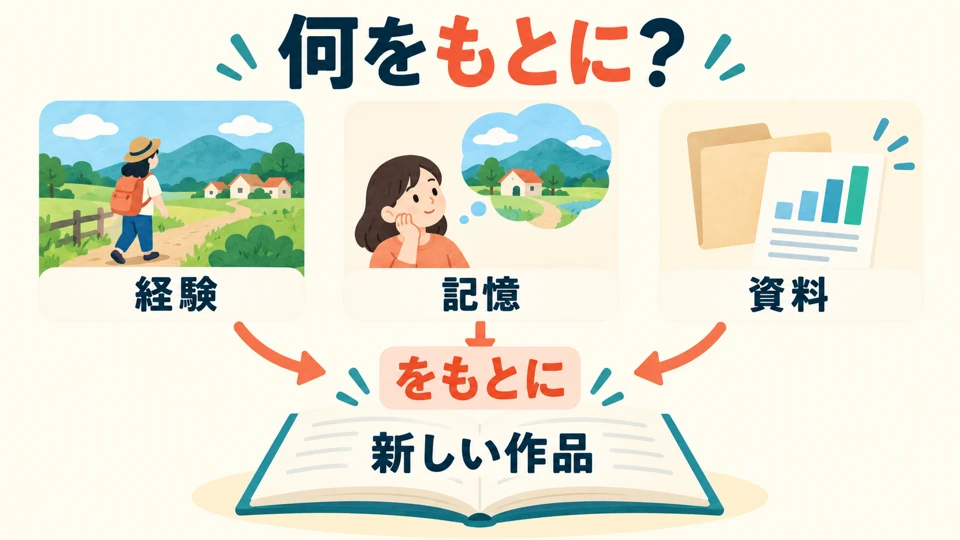
  4. The basis can be experiences, memories, or information. It is not limited to things you can see.
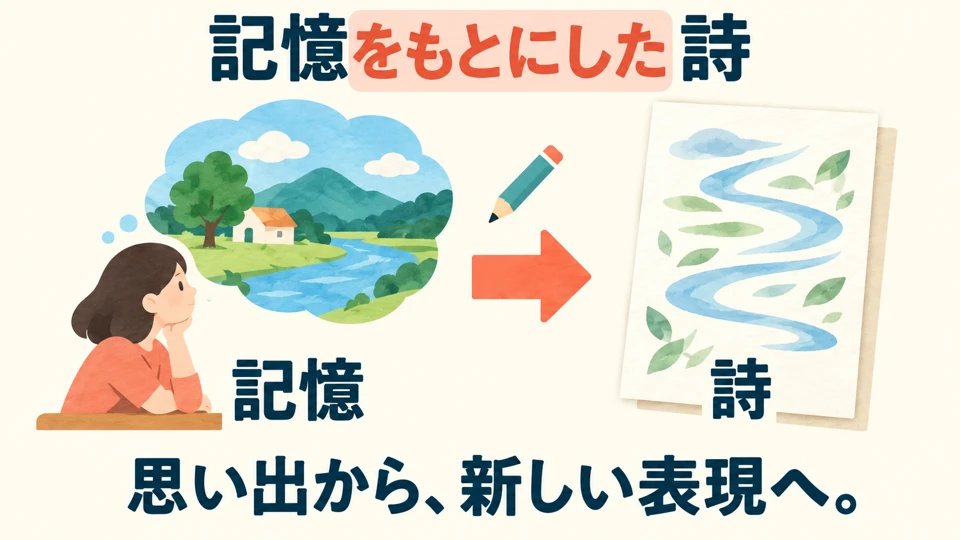
    The basis can be experiences, memories, or information. It is not limited to things you can see.

  5. In the example, memories provide the material for the poem. Basing it on them does not necessarily mean recording the facts exactly as they happened.

    In the example, memories provide the material for the poem. Basing it on them does not necessarily mean recording the facts exactly as they happened.

Example sentences

  • このkono詩しshiは、わ、wa、戦争せんそうsensouのno記憶きおくkiokuをoもとmotoにniした作品したさくひんshitasakuhinです。desu。

    This poem is a work based on memories of the war.

In a conversation

  • A
    この詩、し、何なんかをもとにして書かれたかかれたのかな?な

    A: Was this poem written based on something?

  • B
    解説かいせつに

Check yourself

  1. Level 1 · Recognise

    Which sentence is correct?

  2. Level 1 · Recognise

    Listen and choose the meaning

  3. Level 2 · Build

    Put the words in order

    This poem is a work based on memories of war.

  4. Level 3 · Use

    What goes in the blank?

    この詩は、戦争の記憶____作品です。

    This poem is a work based on memories of war.

More grammar in this theme

  • 〜をもとに(して)・〜をもとにしたbased on; using as a basis

More JLPT N2 grammar

Keep practising

Test your Japanese vocabulary12 adaptive questions, freeCheck your pronunciationRead aloud and get a scorePractise verb forms10-question conjugation quizSee the whole courseGrammar, vocabulary and quizzes by theme
  • 作者さくしゃsakushaのno経験けいけんkeikenをoもとmotoにniしshiて、te、このkono詩しshiはわwa作られたそうつくられたそうtsukuraretasouです。desu。

    It is said that this poem was written based on the author's experience.

  • よる
    と、
    作者さくしゃ
    の
    故郷こきょう
    で
    の
    体験たいけん
    を
    もと
    に
    した作品したさくひん
    らしい
    よ。
    だ
    から
    風景ふうけい
    の
    描き方えがきかた
    が
    リアルりある
    な
    ん
    だ
    と
    思う。おもう。

    B: According to the commentary, it seems to be a work based on the author's experiences in their hometown. That's why I think the depiction of the scenery is so realistic.

  • A
    なるほど。背景はいけいを知るしると、詩しに込められた意味こめられたいみの解釈かいしゃくも変わっかわってくるね。

    A: I see. Knowing the background changes the interpretation of the meaning embedded in the poem.

  • Intermediate 3
    Richness and Beauty of Japanese Expression
    More quizzesOpen this lesson’s quizzes in the course
    〜がたいsubjectively hard to do
    〜のようにlike; in the manner of
    〜とともにalong with; as … changes
    〜でしょう?seeking agreement
    〜っけrecalling and checking
    〜というわけだthat explains why
    〜っこないabsolutely impossible
    〜もん・〜んだもんemotional reason or plea
    〜ほど・〜くらい・〜ぐらいdegree shown by an example
    〜ところだったsomething almost happened
    〜てたまらないoverwhelmingly intense feeling
    〜というわけではないthat does not mean
    〜くらい・〜ぐらいdegree shown by a situation
    Previous〜とともに
    Next〜でしょう?
    See all 55
    〜からしてinference from a clue
    〜ものですからgently explain a reason
    〜のことになると・〜のこととなるとwhen it comes to
    人にしてみたら・人にしてみればfrom someone’s perspective
    〜といったらtypical association with a topic
    〜かねますcannot accommodate a request
    〜ことに(は)to one’s surprise; interestingly
    〜だけあって・〜だけのことはあるas expected; worth it