
〜がたい~ gatai
Gatai (〜がたい) means “subjectively hard to do”.
This poem has a beauty that is hard to express in words.
Use 「〜がたい」 for something you seriously or subjectively find hard to do, such as expressing a feeling.
In the course
How it works

The poem’s beauty goes beyond what words can express. 「がたい」 describes something you subjectively find hard to do.

「がたい」 has a somewhat formal, earnest tone. It suits serious feelings or judgments, such as finding a poem’s beauty hard to express.
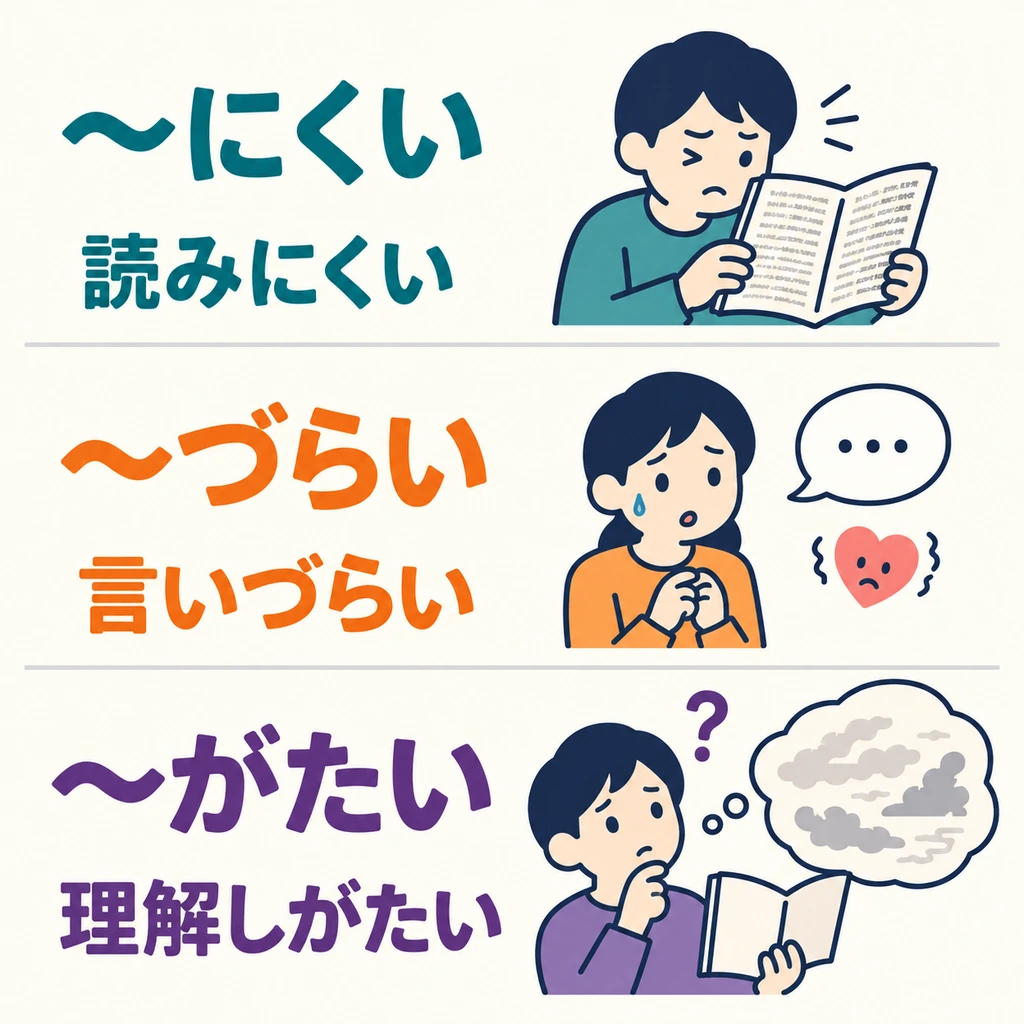
Look at the three pictures: tiny print, reluctance to speak, and difficulty understanding the author. Do these difficulties have the same cause?
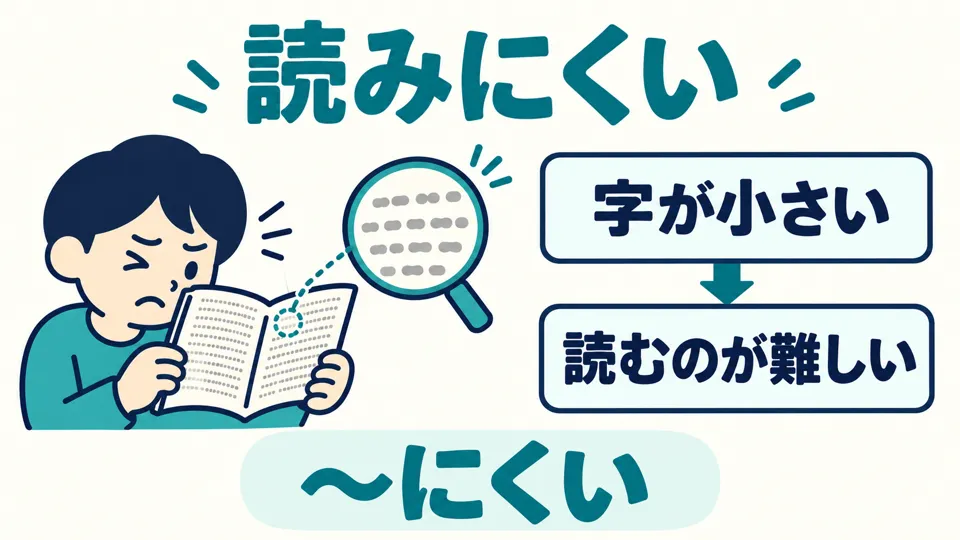
「にくい」 broadly means that something is hard to do. In the picture, the print is so small that it takes effort to make out the words.

「づらい」 emphasizes discomfort or strain when doing something. In the picture, nervousness makes it hard to speak.
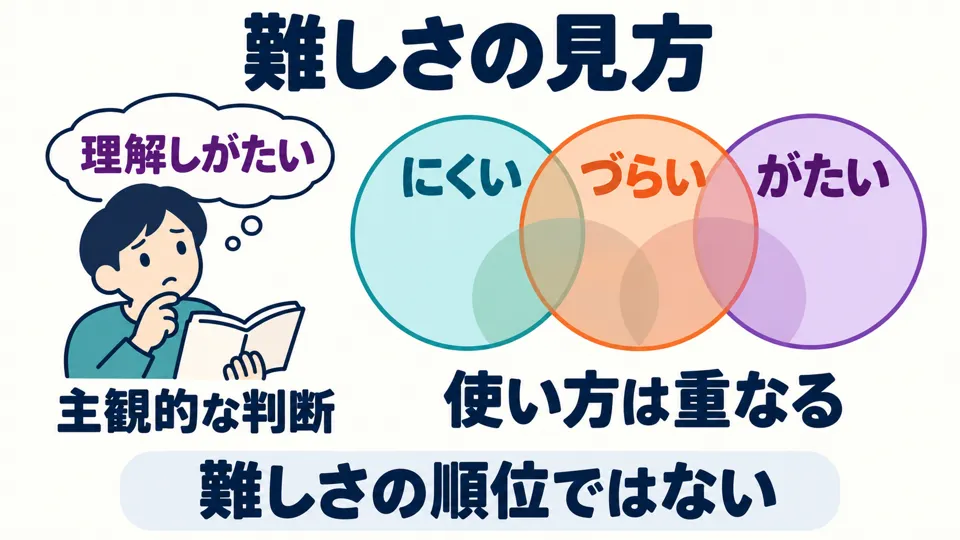
「がたい」 often describes something subjectively hard to do. The three forms overlap in use; they are not levels of difficulty.
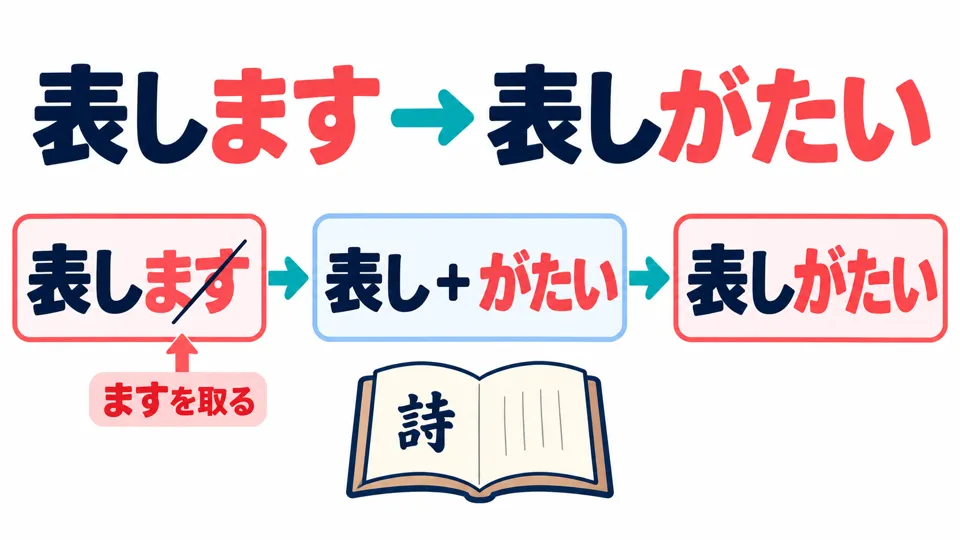
Remove ます from the verb’s ます form, then add がたい: 表します→表しがたい.
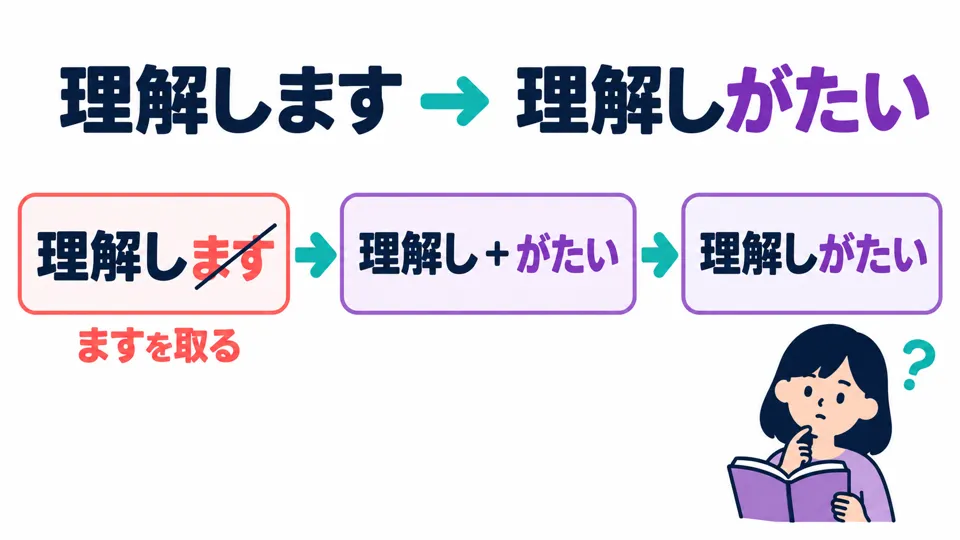
Do the same with 「理解します」: remove ます. 理解し+がたい→理解しがたい.
Example sentences
- このkono詩shiにniは、wa、言葉kotobaでdeはwa表しがたいarawashigatai美しさutsukushisaがgaあります。arimasu。
In a conversation

- Aこの詩の最後の一行、どういう意味か分かる?
A: Do you know what the last line of this poem means?
- Bうーん、作者の言いたいこと
Check yourself
Level 1 · Recognise
Which sentence is correct?
Level 1 · Recognise
Listen and choose the meaning
Level 2 · Build
Put the words in order
This poem has a beauty that is hard to put into words.
Level 3 · Use
What goes in the blank?
この詩には、言葉では____美しさがあります。
This poem has a beauty that is hard to put into words.
More grammar in this theme
- 〜がたいsubjectively hard to do