
Japanese grammar · ≈ JLPT N3 · Intermediate 3
〜ところだった~tokoro datta
something almost happened
Use 「〜ところだった」 to look back on something that nearly happened but was avoided in time.
How it works
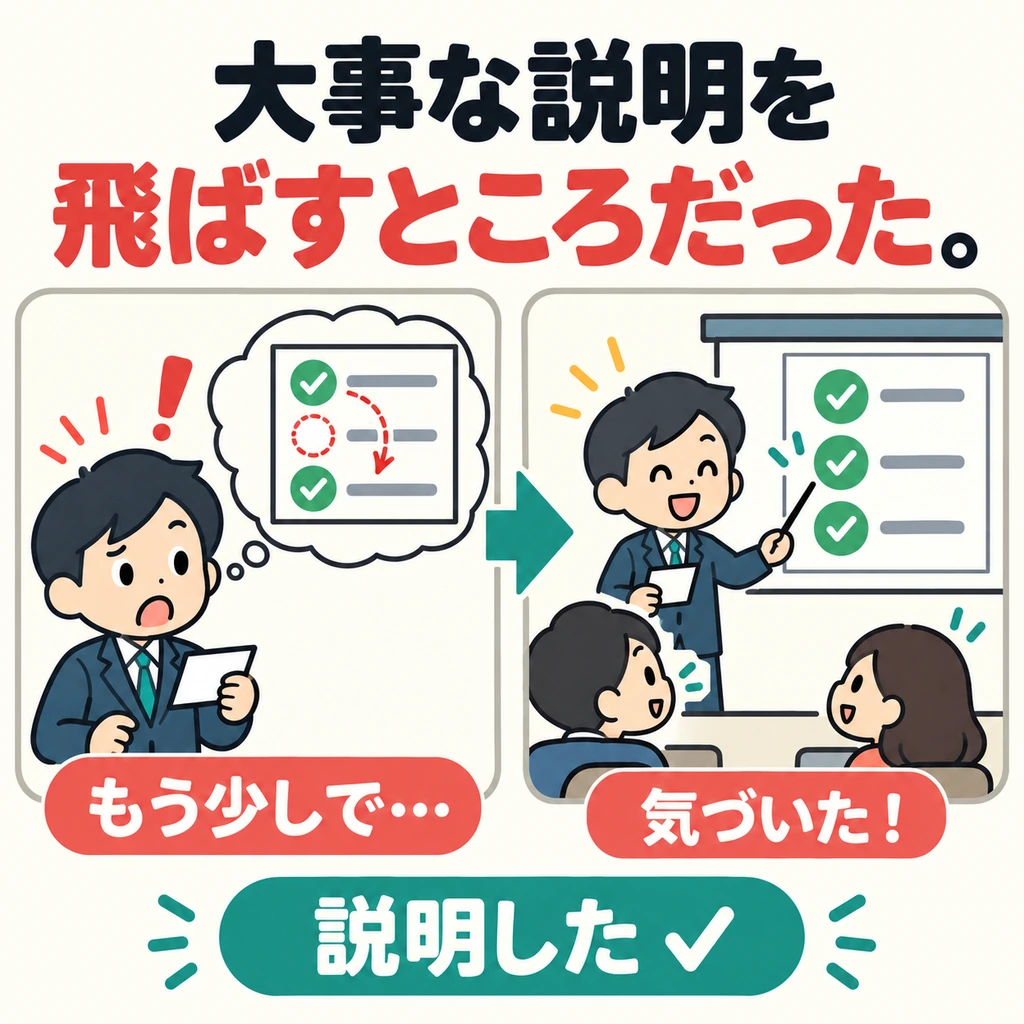
Look on the right: he finished the explanation. Did the skipped explanation imagined on the left really happen?
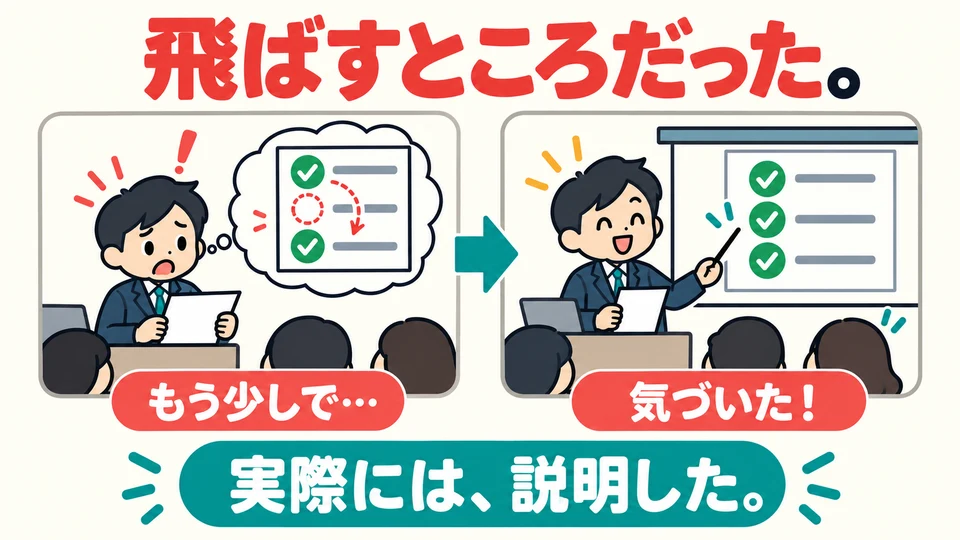
Use it to look back on something that nearly happened: it came very close, but was avoided in time.
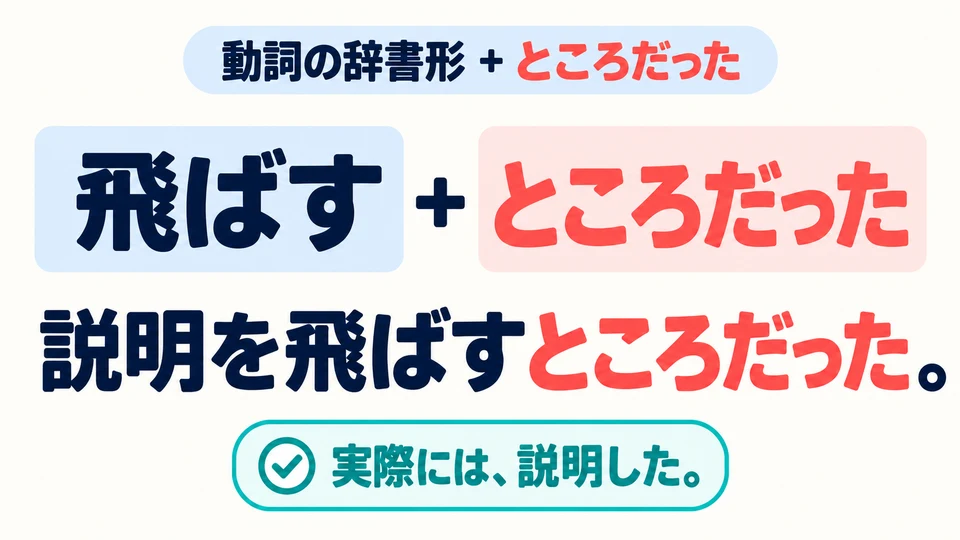
Attach it to the verb’s dictionary form: 飛ばす+ところだった. Here, it means he almost skipped the explanation.
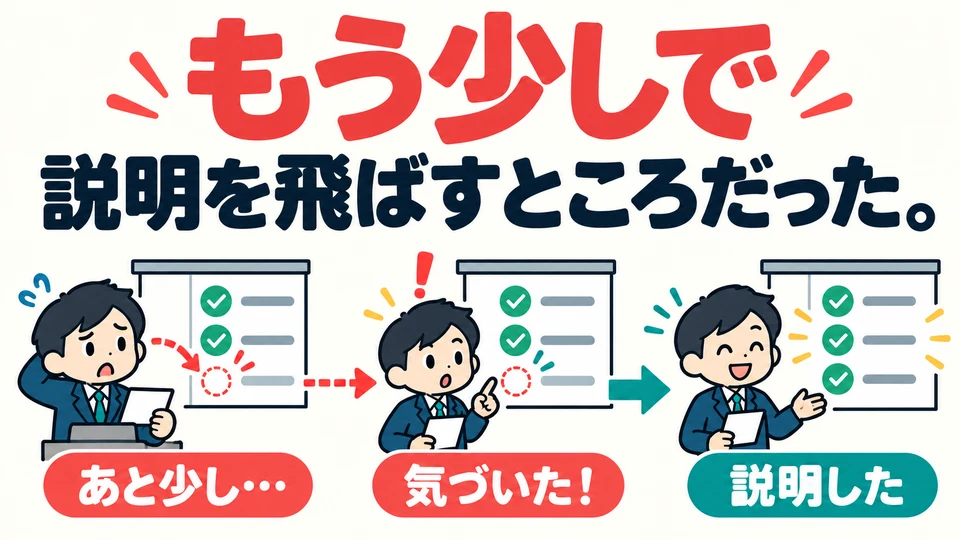
もう少しで emphasizes how close it was. It often goes with ところだった to describe a close call.
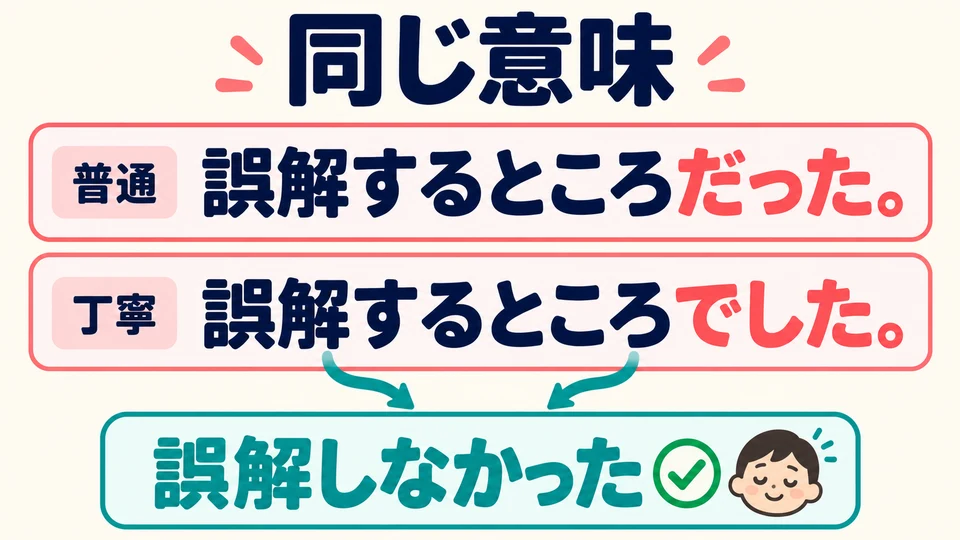
ところでした is the polite form of ところだった. It still means something almost happened.
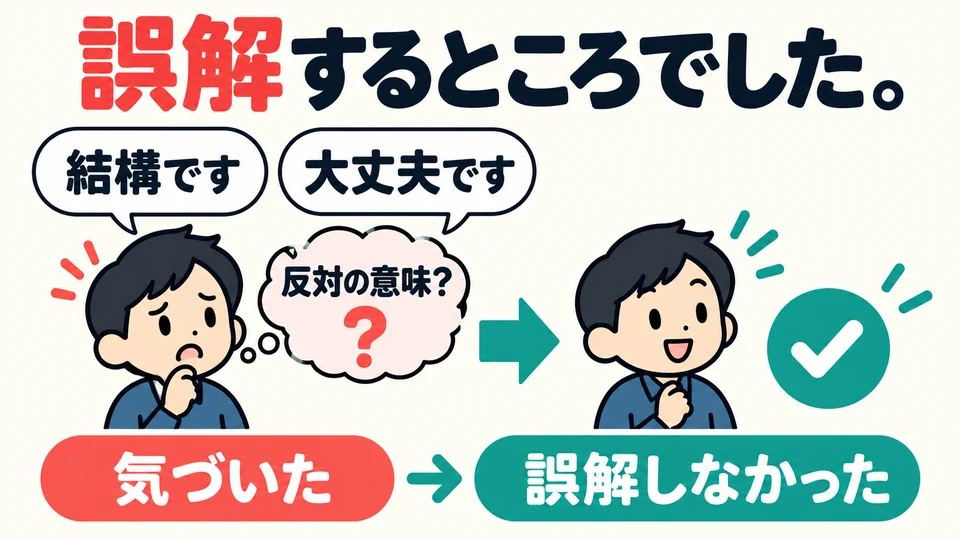
In the examples, “taking it in the opposite sense” and “misunderstanding” nearly happened; they did not actually happen.
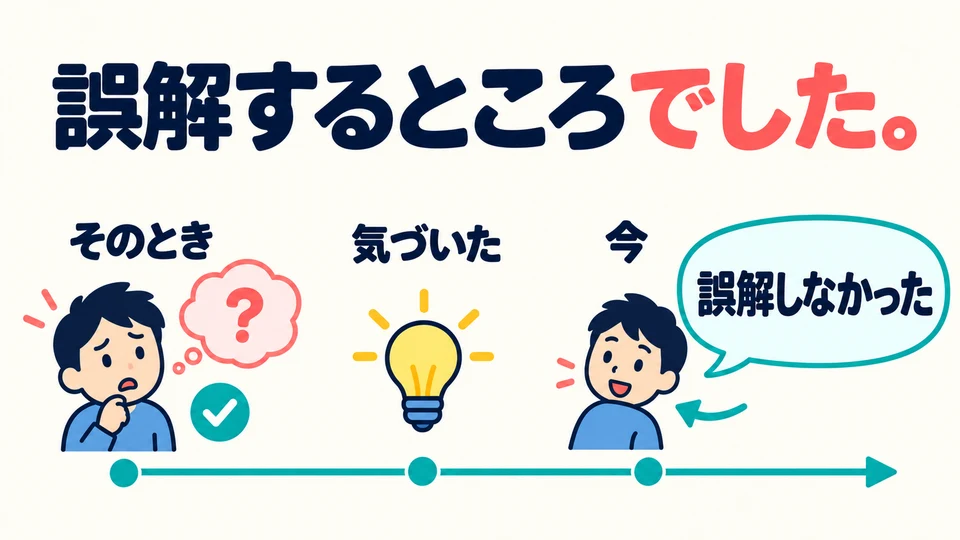
Although ところでした is in the past tense, it looks back on a close call: the misunderstanding was avoided in the end.
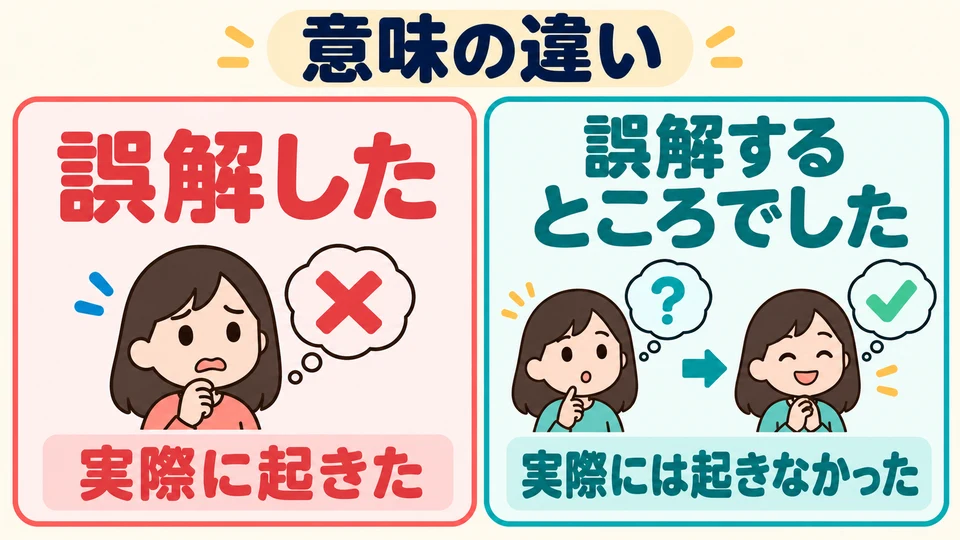
誤解した means the misunderstanding actually happened; 誤解するところでした means it almost happened.
Example sentences
- 「結構です」kekkoudesuのno意味imiをo勘違いkanchigaiしshiて、te、反対hantaiのno意味imiでde
In a conversation

Check yourself
Level 1 · Recognise
Which sentence is correct?
Level 1 · Recognise
Listen and choose the meaning
Level 2 · Build
Put the words in order
I almost misunderstood the meaning of "kekkou desu" and took it to mean the opposite.
Level 3 · Use
What goes in the blank?
「結構です」の意味を勘違いして、反対の意味で受け取る____。
I almost misunderstood the meaning of "kekkou desu" and took it to mean the opposite.
More grammar in this theme
- 〜ところだったsomething almost happened