JPEDLAB iconJPEDLAB
Save history

Create an account and play

Explore first, then save your progress whenever you are ready. No email address is required.

Start free
Read as articleCards
1/11

Look on the right: he finished the explanation. Did the skipped explanation imagined on the left really happen?

››

Lesson notes · ≈ JLPT N3 · Intermediate 3

〜ところだった~tokoro datta

something almost happened

Use 「〜ところだった」 to look back on something that nearly happened but was avoided in time.

How it works
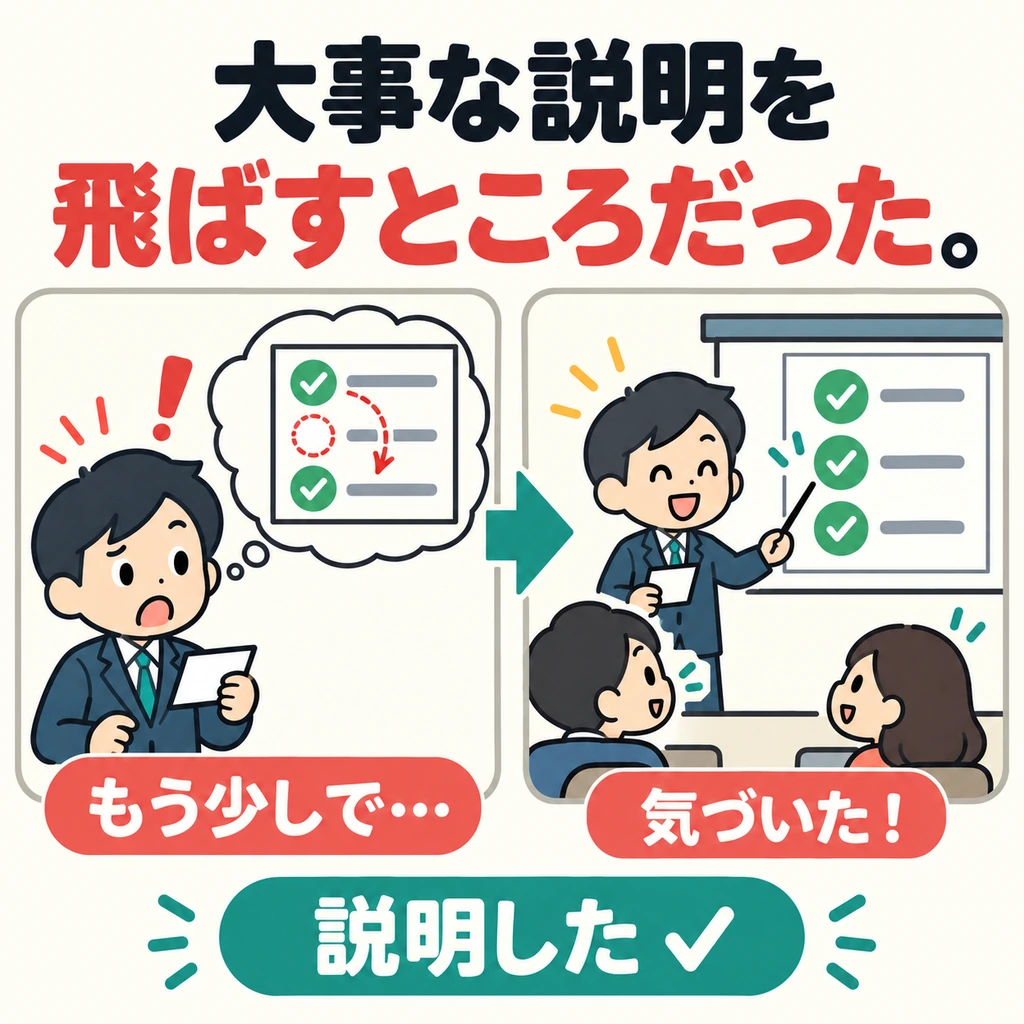
  1. Look on the right: he finished the explanation. Did the skipped explanation imagined on the left really happen?
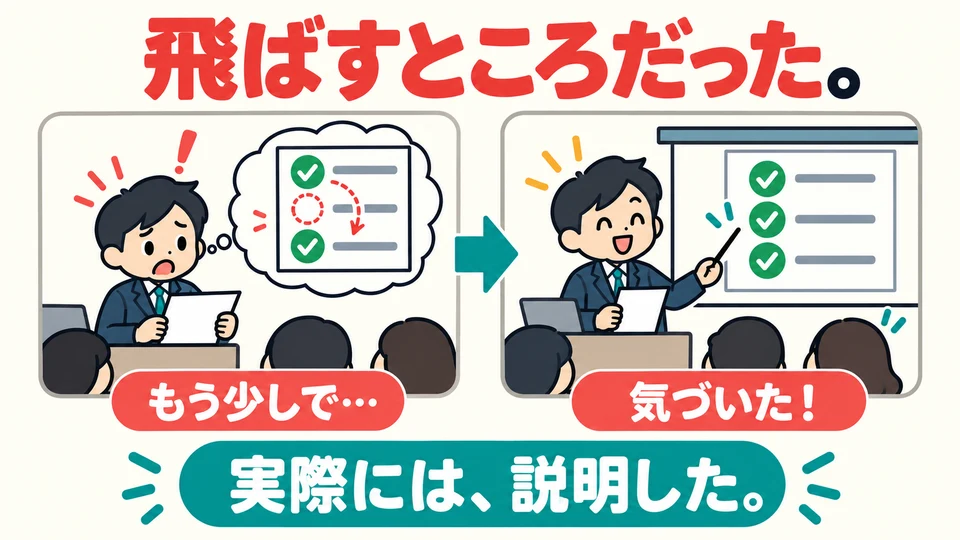
    Look on the right: he finished the explanation. Did the skipped explanation imagined on the left really happen?

  2. Use it to look back on something that nearly happened: it came very close, but was avoided in time.
    Use it to look back on something that nearly happened: it came very close, but was avoided in time.

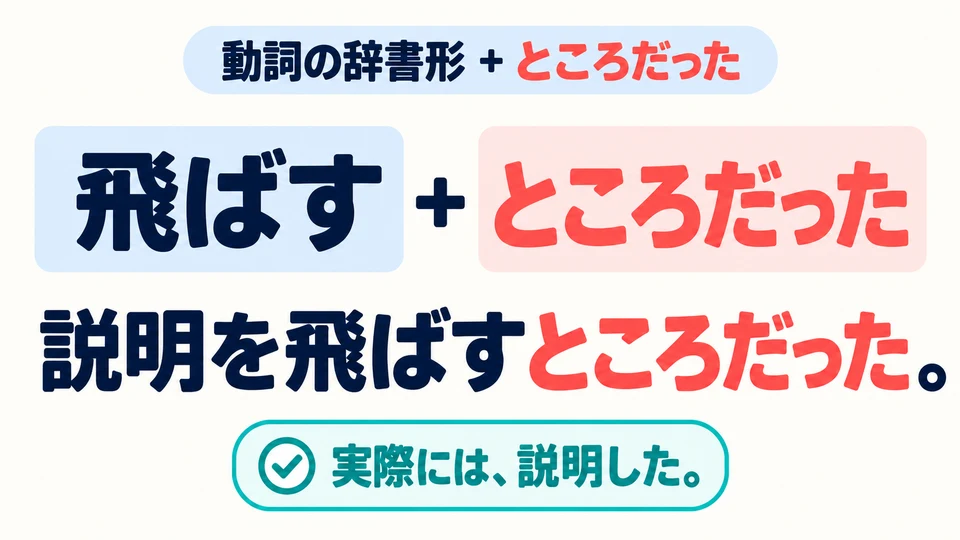
  3. Attach it to the verb’s dictionary form: 飛ばす+ところだった. Here, it means he almost skipped the explanation.
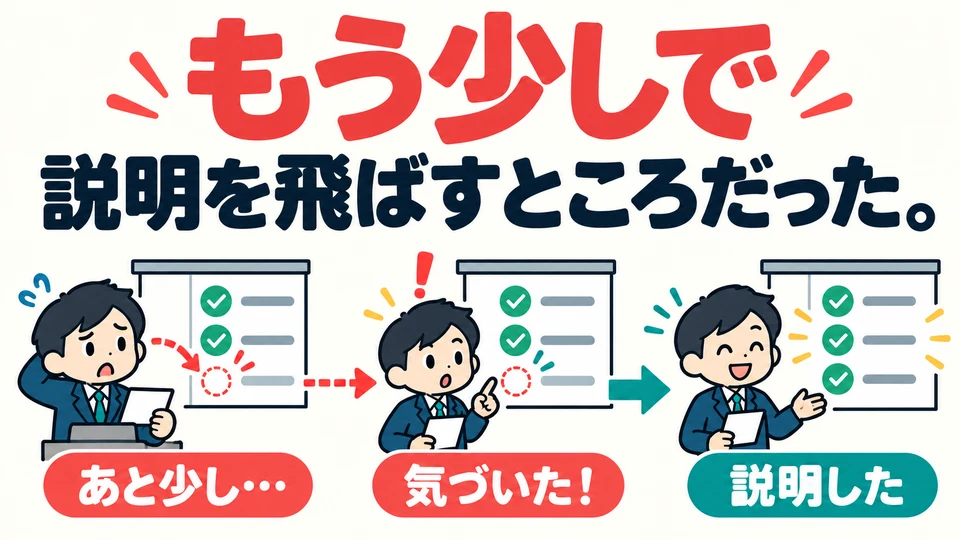
    Attach it to the verb’s dictionary form: 飛ばす+ところだった. Here, it means he almost skipped the explanation.

  4. もう少しで emphasizes how close it was. It often goes with ところだった to describe a close call.
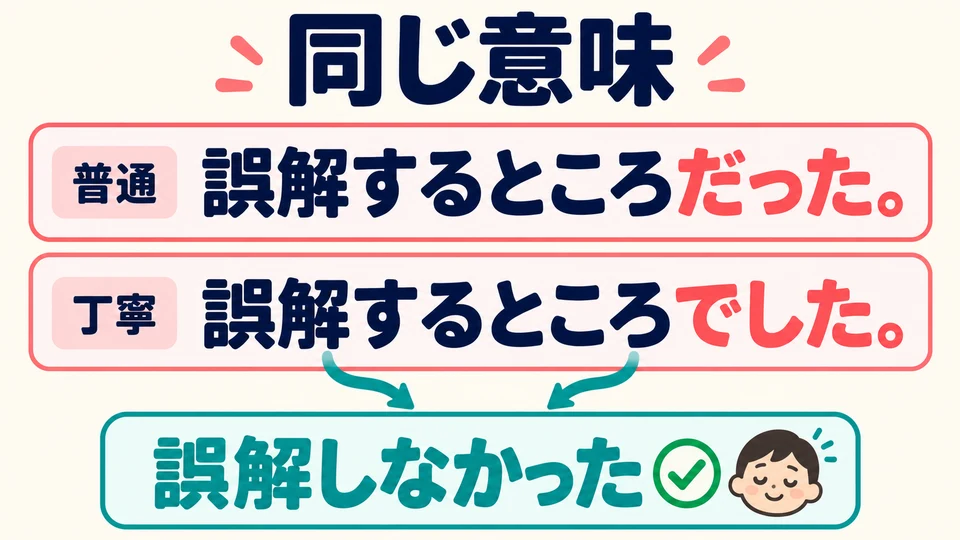
    もう少しで emphasizes how close it was. It often goes with ところだった to describe a close call.

  5. ところでした is the polite form of ところだった. It still means something almost happened.
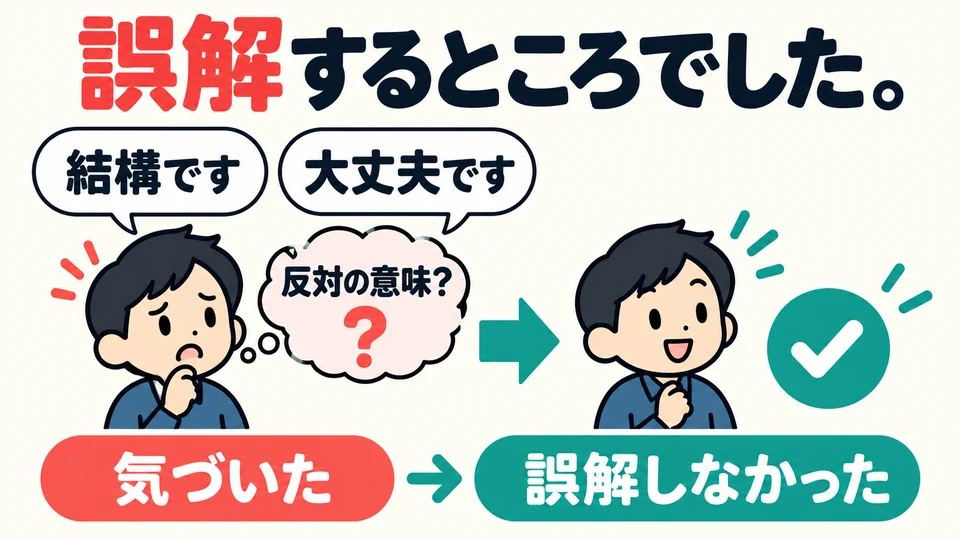
    ところでした is the polite form of ところだった. It still means something almost happened.
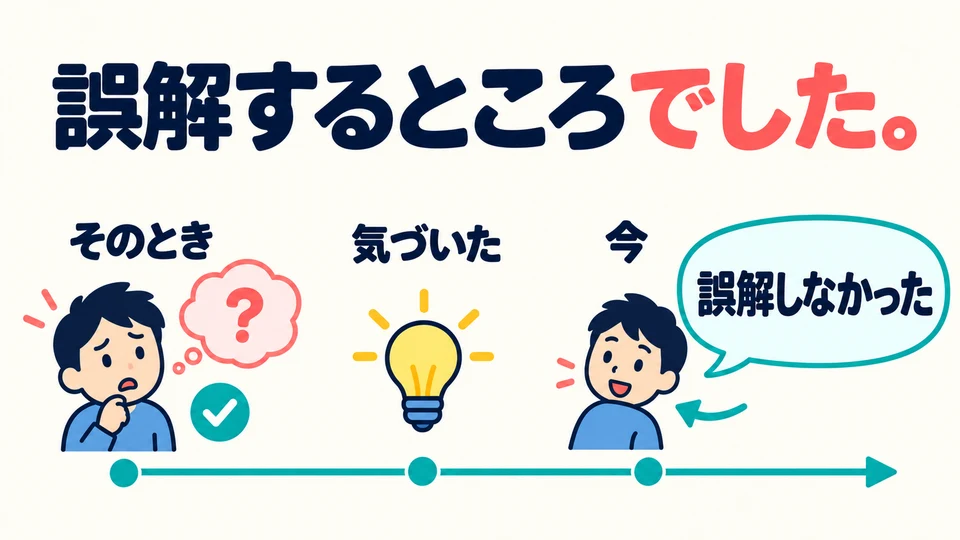
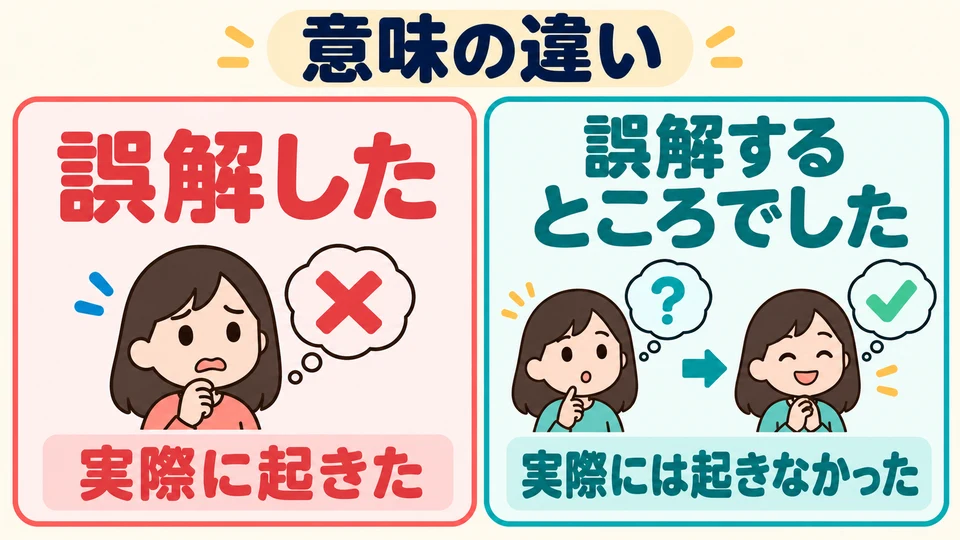
  6. In the examples, “taking it in the opposite sense” and “misunderstanding” nearly happened; they did not actually happen.

In the examples, “taking it in the opposite sense” and “misunderstanding” nearly happened; they did not actually happen.

  • Although ところでした is in the past tense, it looks back on a close call: the misunderstanding was avoided in the end.

    Although ところでした is in the past tense, it looks back on a close call: the misunderstanding was avoided in the end.

  • 誤解した means the misunderstanding actually happened; 誤解するところでした means it almost happened.

    誤解した means the misunderstanding actually happened; 誤解するところでした means it almost happened.

  • Example sentences

    • 「結構です」けっこうですkekkoudesuのno意味いみimiをo勘違いかんちがいkanchigaiしshiて、te、反対はんたいhantaiのno意味いみimiでde受けうけuke取るとるtoruところtokoroでした。deshita。

      I almost misunderstood the meaning of "Kekkou desu" and took it in the opposite way.

    • 「大丈夫です」だいじょうぶですdaijoubudesuをoそのままsonomama肯定こうていkouteiのno意味いみimiだdaとto思っおもっomoて、te、誤解ごかいgokaiするsuru

    In a conversation

    • A
      昨日きのうのミーティング、みーてぃんぐ、うまくいった?いった

      A: Did yesterday's meeting go well?

    • B
      もう少しすこしで大事な説明だいじなせつめいを全部ぜんぶ飛ばすとばすところだったよ。メモめもを忘れわすれてきて。

      B: I was on the verge of skipping all the important explanations. I forgot to bring my notes.

    • A
      それはわ焦ったあせったね。気づいきづいてよかった。

      A: That must have been panicky. I'm glad you noticed.

    Check yourself

    1. Level 1 · Recognise

      Which sentence is correct?

    2. Level 1 · Recognise

      Listen and choose the meaning

    3. Level 2 · Build

      Put the words in order

      I almost misunderstood the meaning of "kekkou desu" and took it to mean the opposite.

    4. Level 3 · Use

      What goes in the blank?

      「結構です」の意味を勘違いして、反対の意味で受け取る____。

      I almost misunderstood the meaning of "kekkou desu" and took it to mean the opposite.

    More grammar in this theme

    • 〜がたいsubjectively hard to do
    • 〜のようにlike; in the manner of
    • 〜とともにalong with; as … changes
    • 〜をもとに(して)・〜をもとにしたbased on; using as a basis
    • 〜でしょう?seeking agreement
    • 〜っけrecalling and checking
    • 〜というわけだthat explains why
    • 〜っこないabsolutely impossible
    • 〜もん・〜んだもんemotional reason or plea
    • 〜ほど・〜くらい・〜ぐらいdegree shown by an example
    • 〜ところだったsomething almost happened
    • 〜てたまらないoverwhelmingly intense feeling
    • 〜というわけではないthat does not mean
    • 〜くらい・〜ぐらいdegree shown by a situation
    Previous〜ほど・〜くらい・〜ぐらいNext〜てたまらない

    Keep practising

    Test your Japanese vocabulary12 adaptive questions, freeCheck your pronunciationRead aloud and get a scorePractise verb forms10-question conjugation quizSee the whole courseGrammar, vocabulary and quizzes by theme
    See the whole course
    Intermediate 3
    Richness and Beauty of Japanese Expression
    ところtokoro
    でした。deshita。

    I almost thought "Daijoubu desu" was a positive response and misunderstood it.