
〜とともに~ to tomo ni
To tomo ni (〜とともに) means “along with; as … changes”.
As we get older, even the same poem can feel like it has a different meaning.
Use 「〜とともに」 when two changes progress together; it does not by itself say one causes the other.
In the course
How it works
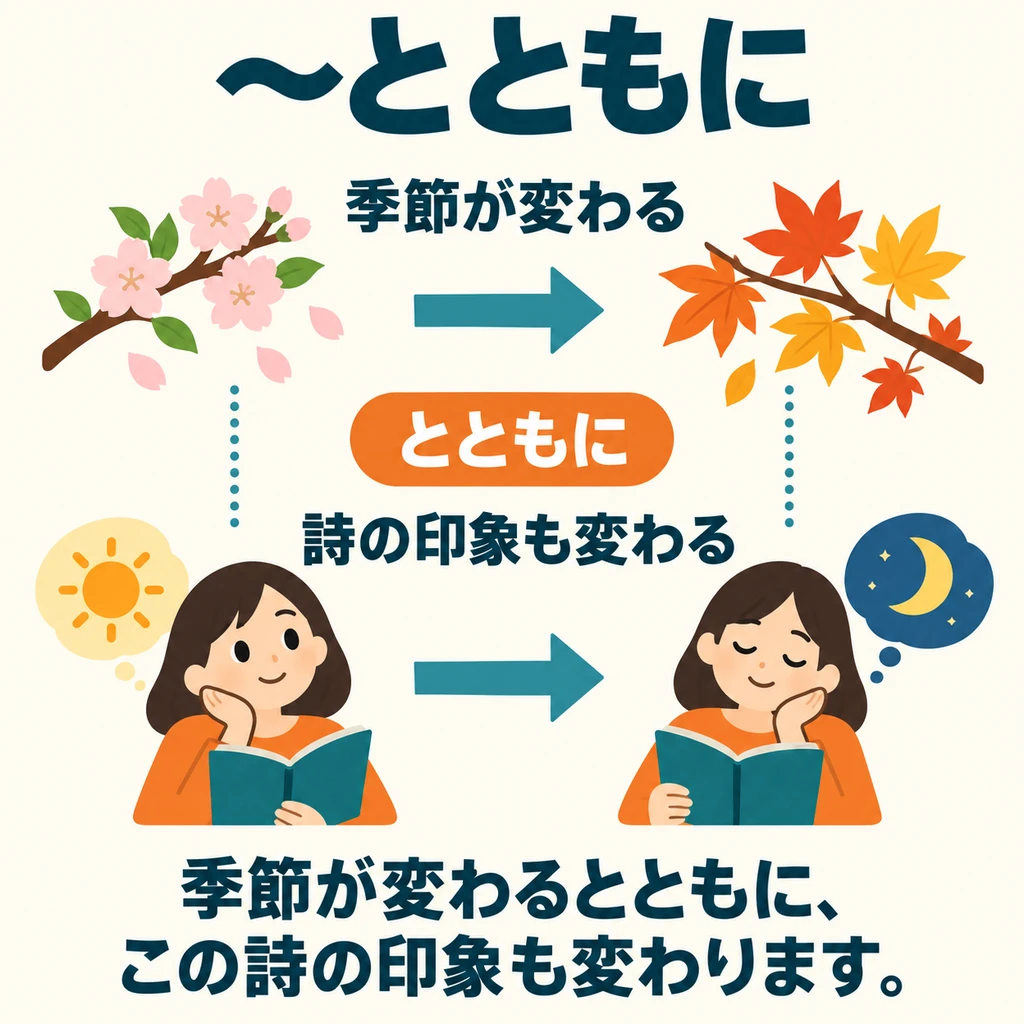
The season changes, and so does the feeling you get from the same poem. How do the two arrows in the picture correspond?
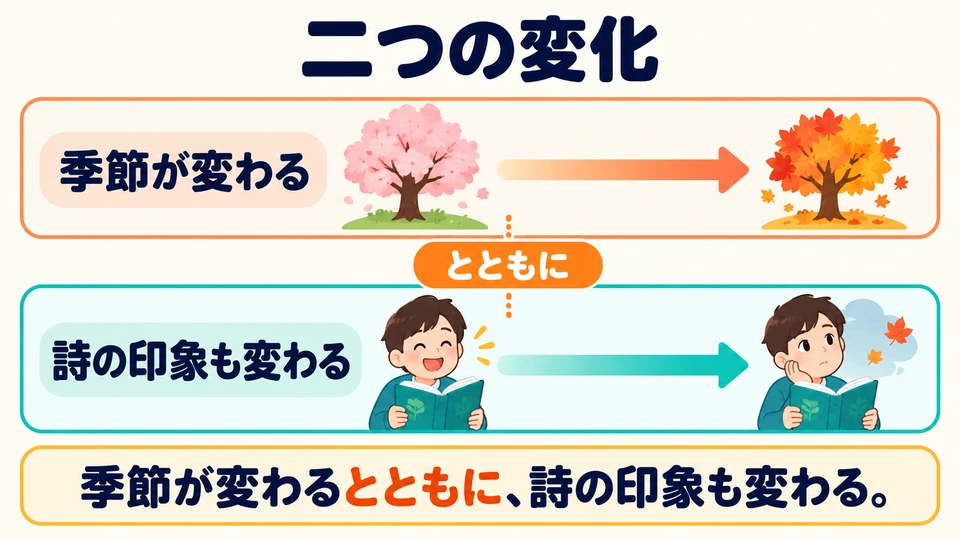
Here, the focus is on how two changes progress together, rather than on two people doing the same thing together.
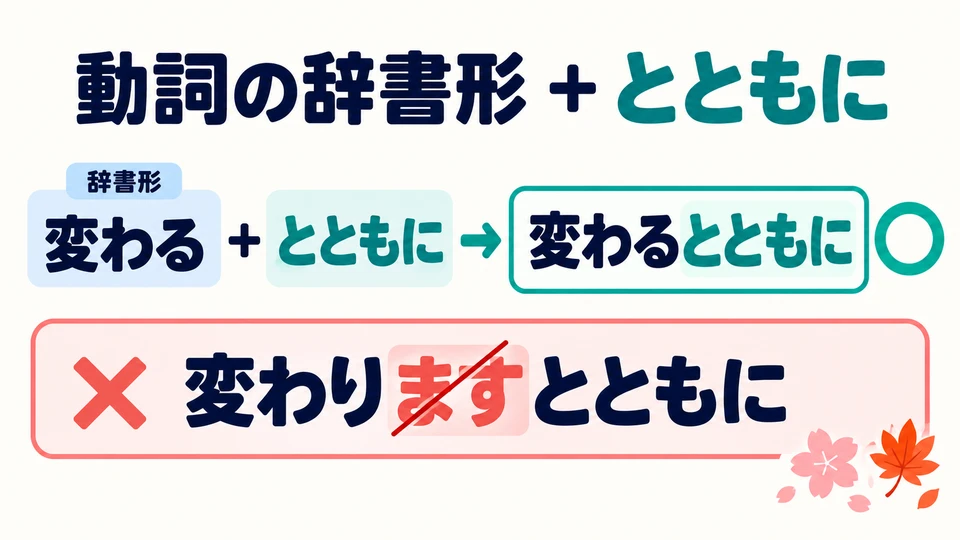
Attach it directly to the dictionary form of a verb, as in 「変わるとともに」. Do not use 「変わります」 here.
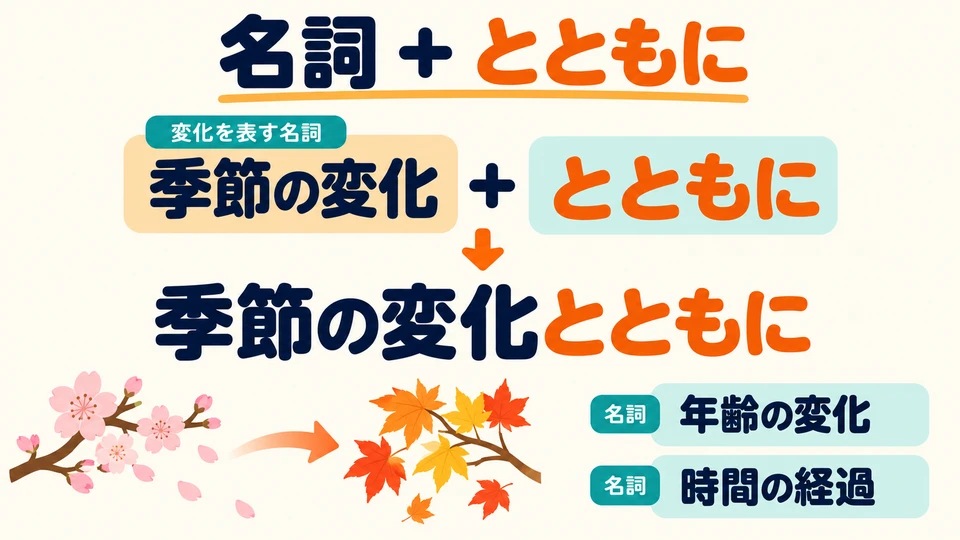
「とともに」 can also follow a noun. Nouns describing a change are common here, such as 「季節の変化」.
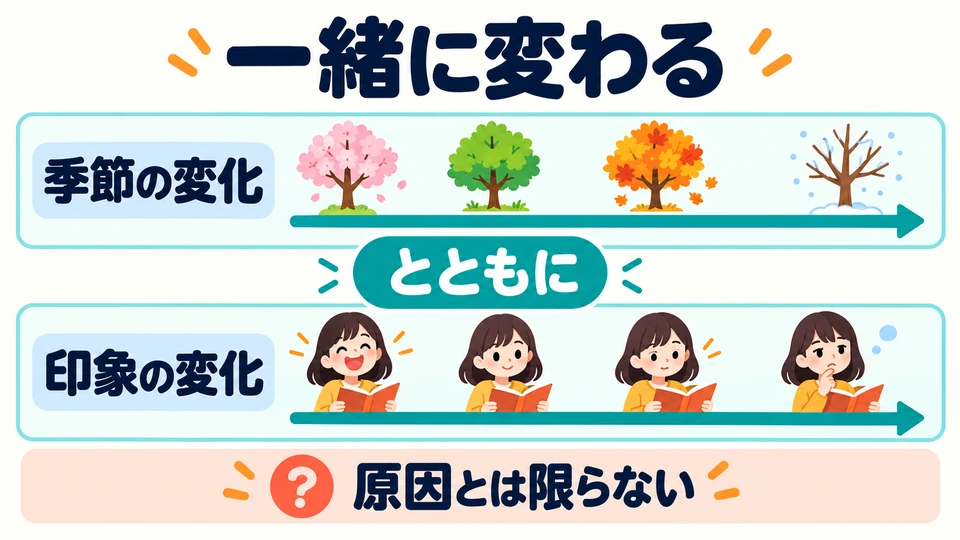
It highlights two changes progressing together. This pattern alone does not establish that the first change causes the second.
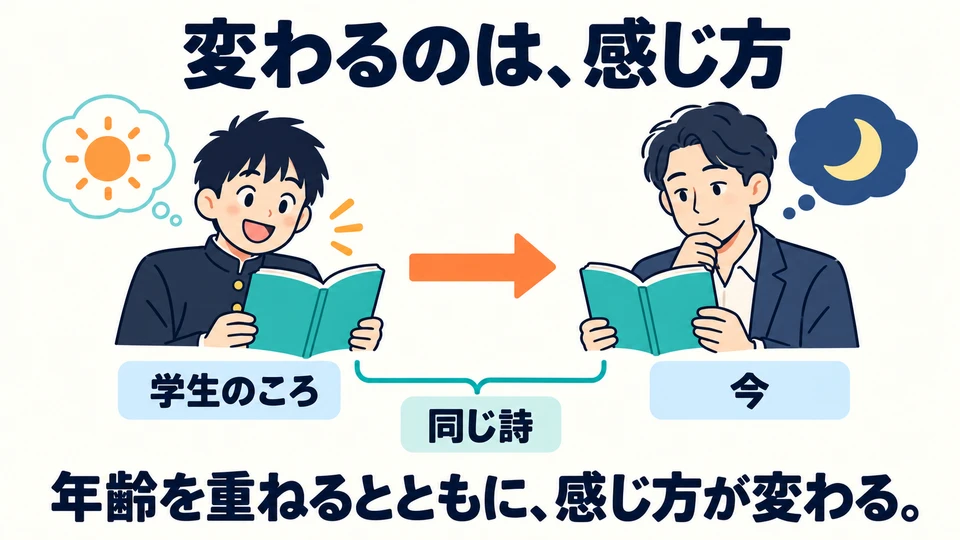
In the examples, the poem itself stays the same. As the reader grows older or the seasons change, it is the reader’s response that changes.
Example sentences
- 年齢nenreiをo重ねるkasaneruとtoともtomoに、ni、同じonaji詩shiでdeもmo違うchigau意味imi
In a conversation
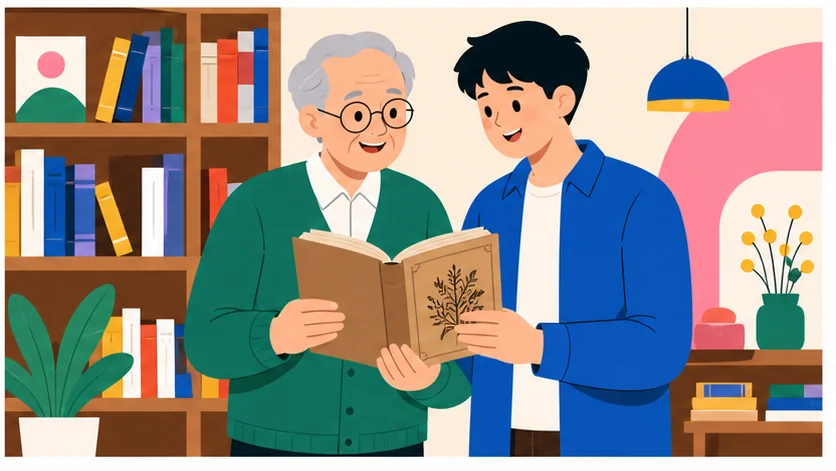
- Aこの詩、学生のころに読んだ時と印象が全然違う。
A: This poem leaves a completely different impression than when I read it as a student.
- B詩っ
Check yourself
Level 1 · Recognise
Which sentence is correct?
Level 1 · Recognise
Listen and choose the meaning
Level 2 · Build
Put the words in order
As you grow older, even the same poem feels like it has a different meaning.
Level 3 · Use
What goes in the blank?
年齢を重ねる____、同じ詩でも違う意味に感じられます。
As I grow older, even the same poem feels to have a different meaning.
More grammar in this theme
- 〜とともにalong with; as … changes