JPEdLab iconJPEdLab
Save history

Create an account and play

Explore first, then save your progress whenever you are ready. No email address is required.

Start free
  1. Japanese grammar
  2. JLPT N2 grammar
  3. 〜といったら

〜といったら~to ittara

To ittara (〜といったら) means “typical association with a topic”.

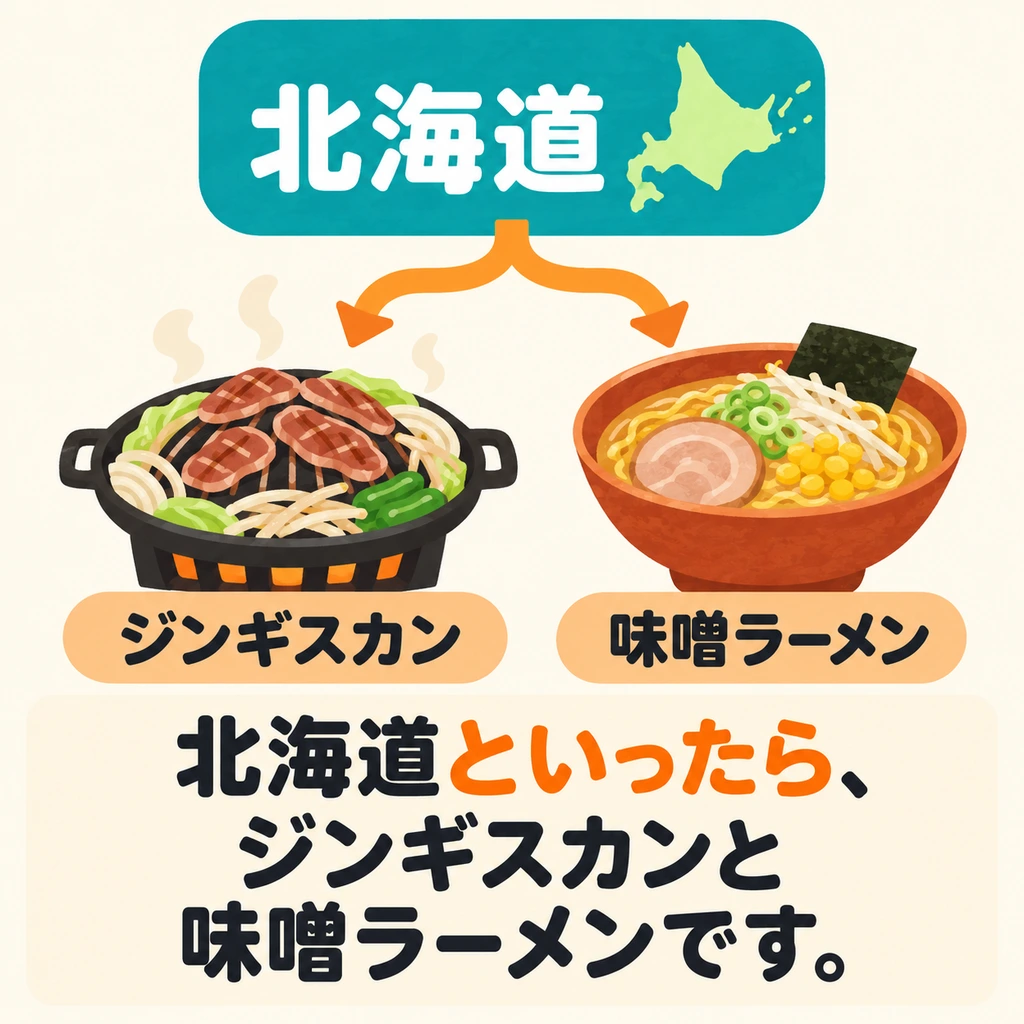
北海道ほっかいどうhokkaidouとtoいったら、ittara、ジンギスカンじんぎすかんjingisukanとto味噌みそmisoラーメンらーめんraamenです。desu。

Speaking of Hokkaido, it's Jingisukan and miso ramen.

Use 「〜といったら」 after a topic noun to introduce something that you or others naturally associate with it.

In the course›

How it works

  1. What comes to mind when you see Hokkaido? The arrows link the topic to typical foods associated with it.
    What comes to mind when you see Hokkaido? The arrows link the topic to typical foods associated with it.

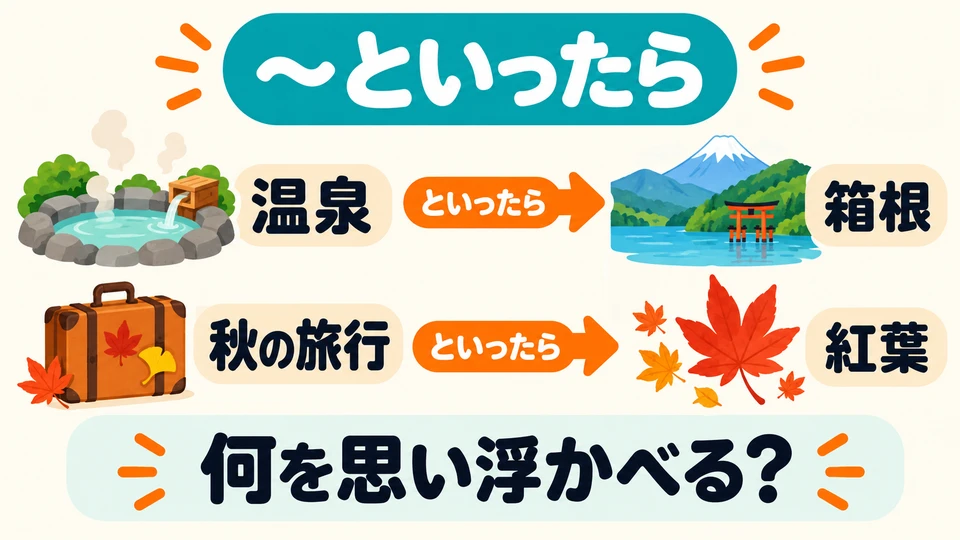
  2. When talking about travel, food, or other topics, use it to introduce typical things that naturally come to mind for you or others.
    When talking about travel, food, or other topics, use it to introduce typical things that naturally come to mind for you or others.

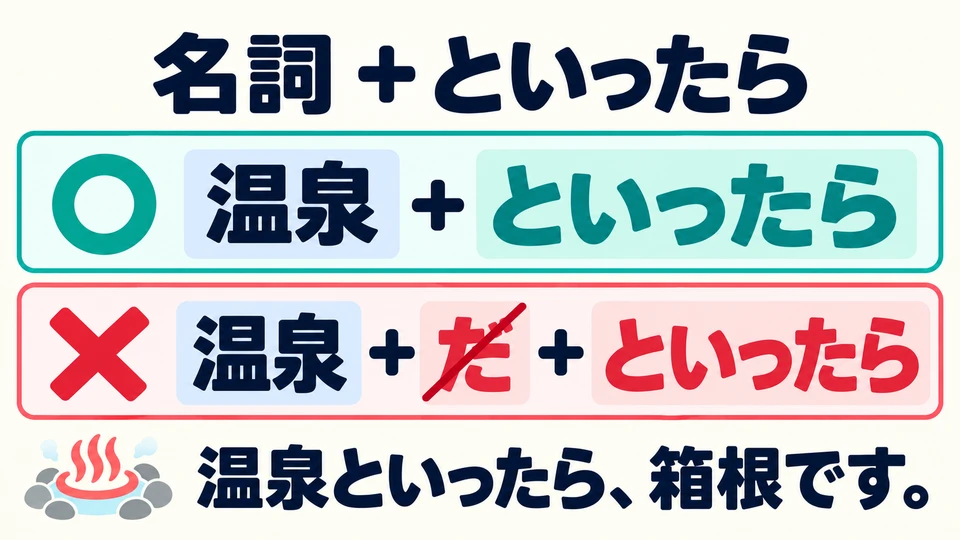
  3. Attach 「といったら」 directly to the noun naming the topic, then say what it brings to mind. Do not add 「だ」 in between.
    Attach 「といったら」 directly to the noun naming the topic, then say what it brings to mind. Do not add 「だ」 in between.

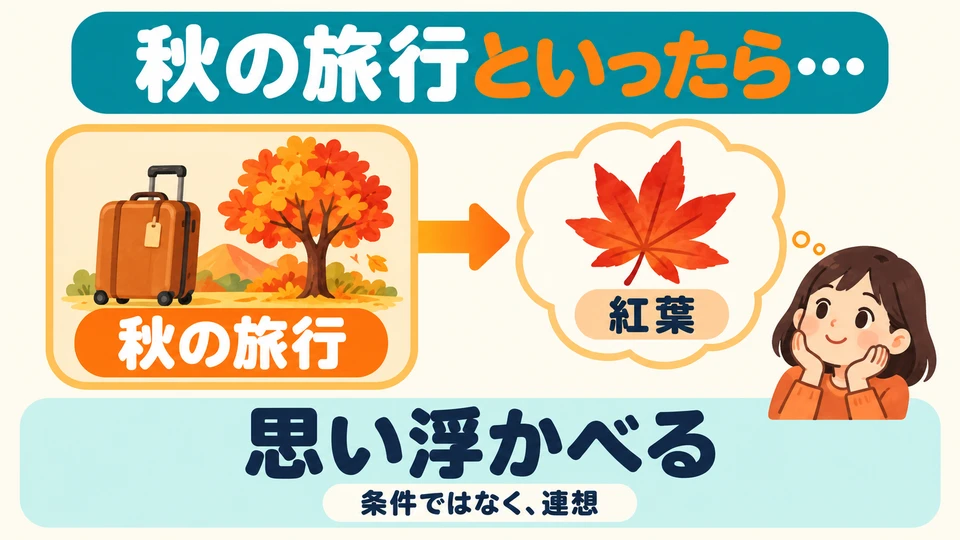
  4. The autumn-leaves example expresses what autumn travel brings to mind. Here, 「たら」 does not mark a hypothetical condition.
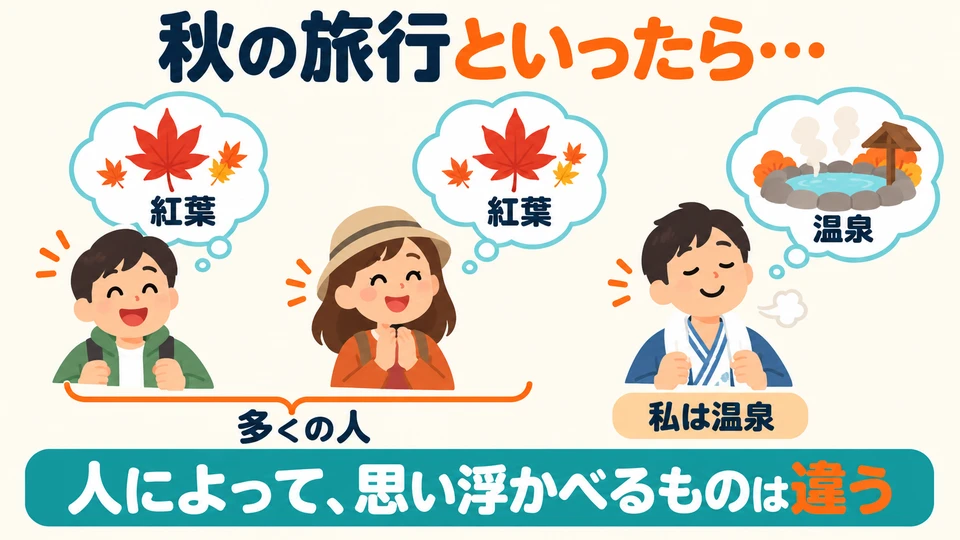
    The autumn-leaves example expresses what autumn travel brings to mind. Here, 「たら」 does not mark a hypothetical condition.

  5. The example says “many people” think of autumn leaves. Associations can differ from person to person; it does not mean everyone thinks this way.

    The example says “many people” think of autumn leaves. Associations can differ from person to person; it does not mean everyone thinks this way.

Example sentences

  • 北海道ほっかいどうhokkaidouとtoいったら、ittara、ジンギスカンじんぎすかんjingisukanとto味噌みそmisoラーメンらーめんraamenです。desu。

    Speaking of Hokkaido, it's Jingisukan and miso ramen.

  • 日本にっぽんnippon

In a conversation

  • A
    来週らいしゅうの旅行りょこうといったら、どんな場所ばしょを思いおもい浮かべる?うかべる

    A: Speaking of next week's trip, what kind of place comes to mind?

  • B
    私わたしはわ温泉おんせん

Check yourself

  1. Level 1 · Recognise

    Which sentence is correct?

  2. Level 1 · Recognise

    Listen and choose the meaning

  3. Level 2 · Build

    Put the words in order

    Speaking of Hokkaido, it's Genghis Khan and miso ramen.

  4. Level 3 · Use

    What goes in the blank?

    北海道____、ジンギスカンと味噌ラーメンが有名です。

    Speaking of Hokkaido, jingisukan and miso ramen are famous.

More grammar in this theme

  • 〜といったらtypical association with a topic

More JLPT N2 grammar

Keep practising

Test your Japanese vocabulary12 adaptive questions, freeCheck your pronunciationRead aloud and get a scorePractise verb forms10-question conjugation quizSee the whole courseGrammar, vocabulary and quizzes by theme
のno
秋あきaki
のno
旅行りょこうryokou
とto
いったら、ittara、
紅葉こうようkouyou
をo
連想れんそうrensou
するsuru
人ひとhito
がga
多いです。おおいです。ooidesu。

Speaking of autumn travel in Japan, many people associate it with autumn leaves.

と
いったら、
やっぱり
箱根はこね
が
一番いちばん
好きだすきだ
よ。

B: Speaking of hot springs, I still like Hakone the best.

  • A
    そうだね、箱根はこねはわ食事付きしょくじつきのプランぷらんも充実じゅうじつしていて、思い出おもいでに残るのこる旅たびになりそうだね。

    A: That's true, Hakone has a great variety of plans including meals, so it looks like it will be a memorable trip.

  • Intermediate 3
    Travel Information and Trip Sharing
    More quizzesOpen this lesson’s quizzes in the course
    とても〜ないcannot possibly do
    〜はもちろん・〜はもとよりnot only; but also
    〜させていただきますhumbly do with permission
    ご〜いたします・お〜いたしますhumbly provide a service
    〜つもりだintend to; believe one did
    〜ように思うseem; I think
    〜ておりますformal humble action or state
    〜かねますcannot accommodate a request
    〜ことに(は)to one’s surprise; interestingly
    〜だけあって・〜だけのことはあるas expected; worth it
    〜ついでにwhile at it; taking the opportunity
    Nextとても〜ない
    See all 55
    〜というわけだthat explains why
    〜っこないabsolutely impossible
    〜てたまらないoverwhelmingly intense feeling
    〜というわけではないthat does not mean
    〜のみならずnot only, but also
    〜だけにprecisely because
    〜としてもeven if; supposing that
    〜に先立って・〜に先立ちbefore; prior to an event