
〜はもちろん・〜はもとより~ wa mochiron / ~ wa motoyori
Wa mochiron / wa motoyori (〜はもちろん・〜はもとより) means “not only; but also”.
On this tour, you can visit local markets as well as tourist attractions, of course.
With 〜はもちろん, treat the first item as expected and add another item, which receives the focus.
In the course
How it works
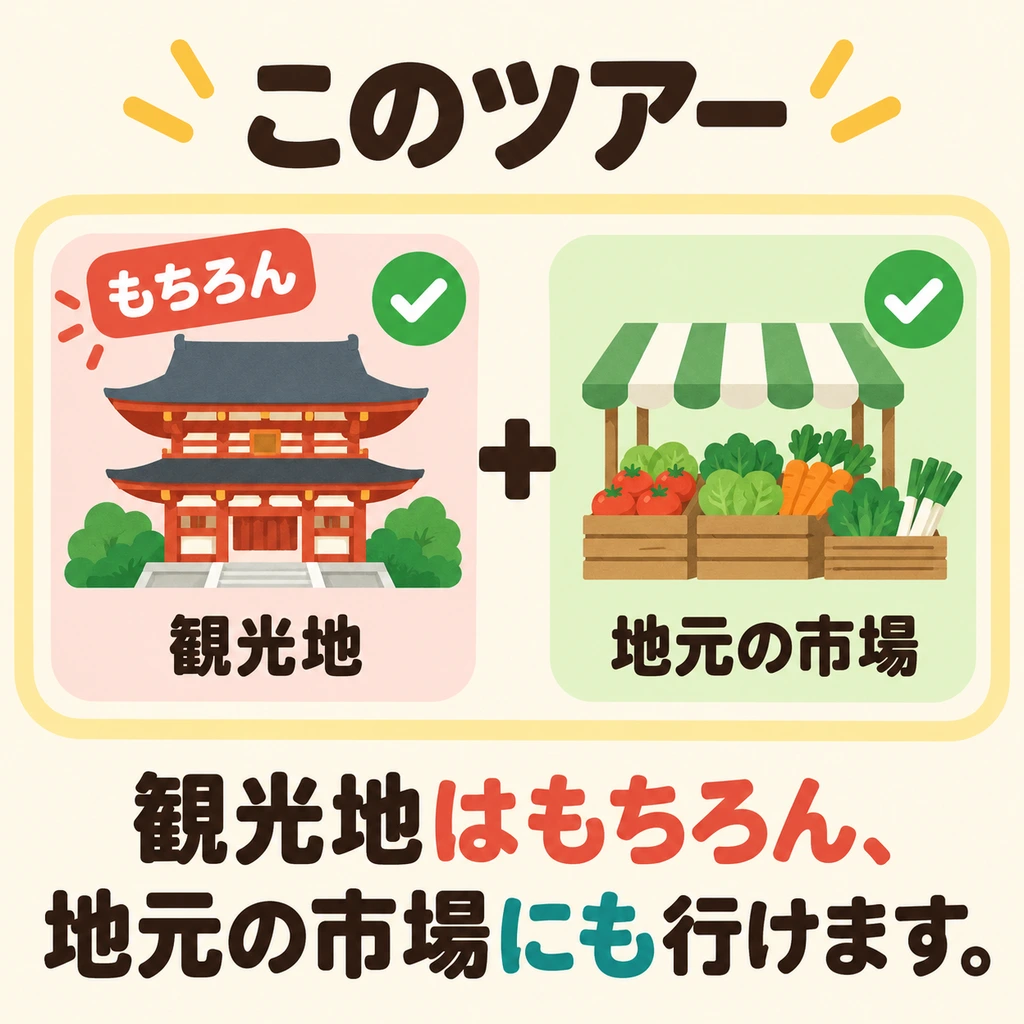
Tourist spots are included, of course. The picture adds a local market, showing that the tour also visits other places.
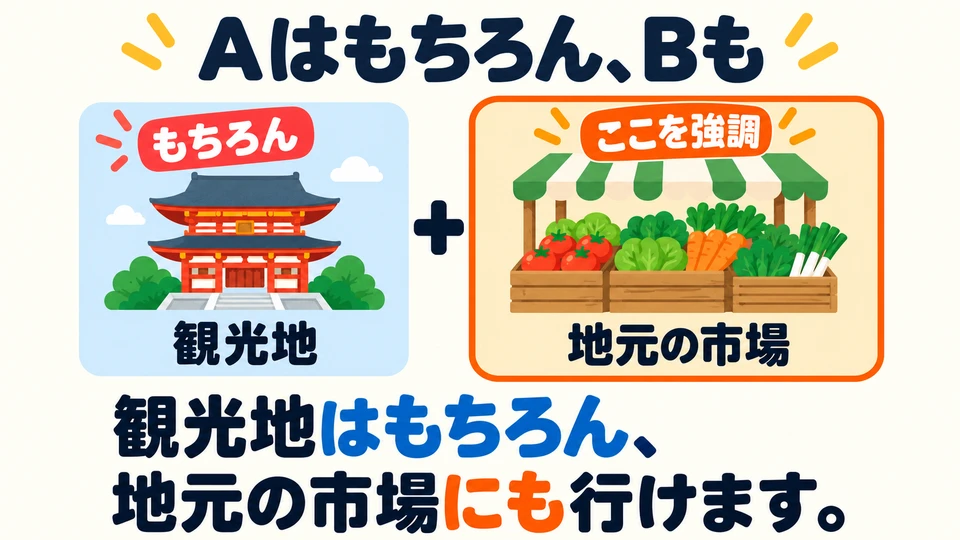
The first item is taken for granted, then the second is emphasized as also true. The focus is on the newly added second item.
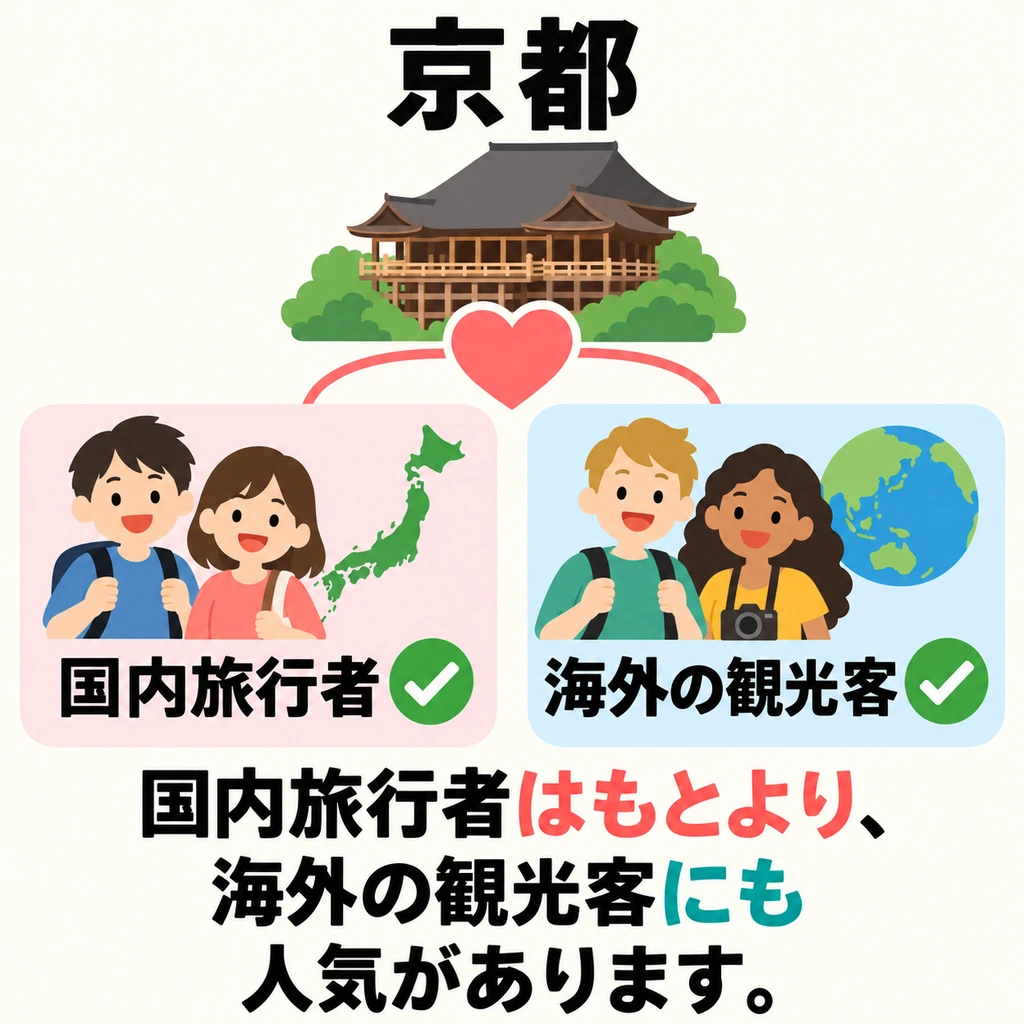
Kyoto is popular with domestic travelers and with overseas tourists too. Both groups are included.
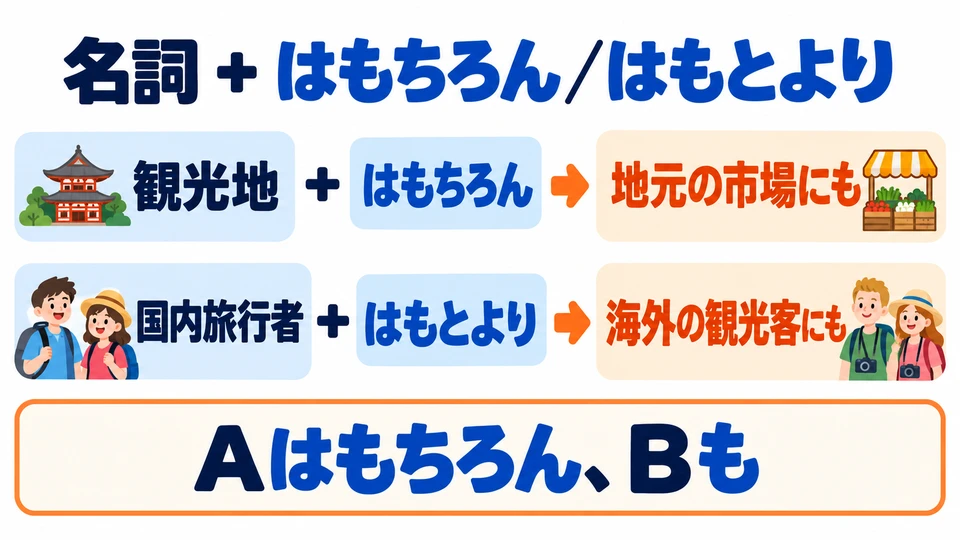
In both examples, 「はもちろん/はもとより」 follows a noun, and another item is added afterward.
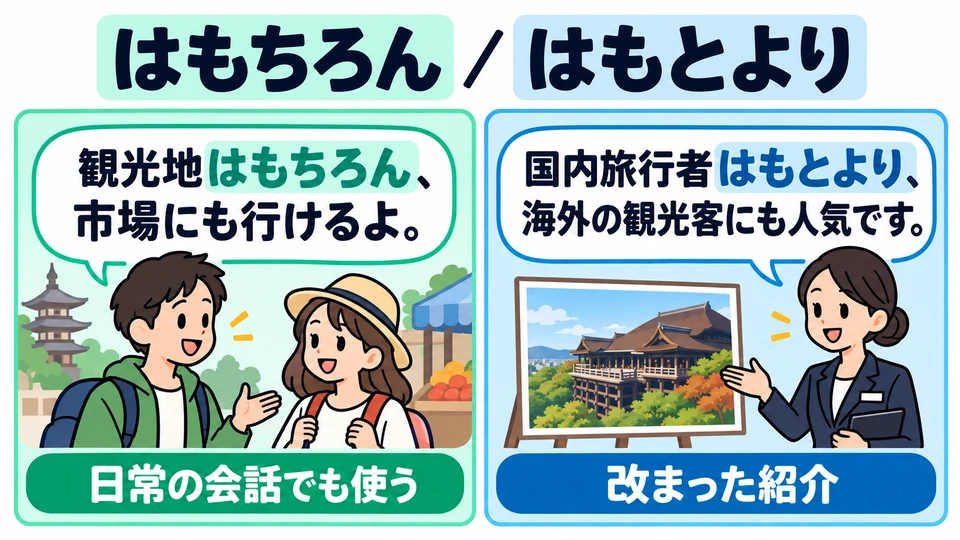
The Kyoto example sounds like a formal introduction. 「はもとより」 is more formal; 「はもちろん」 is also common in everyday use.
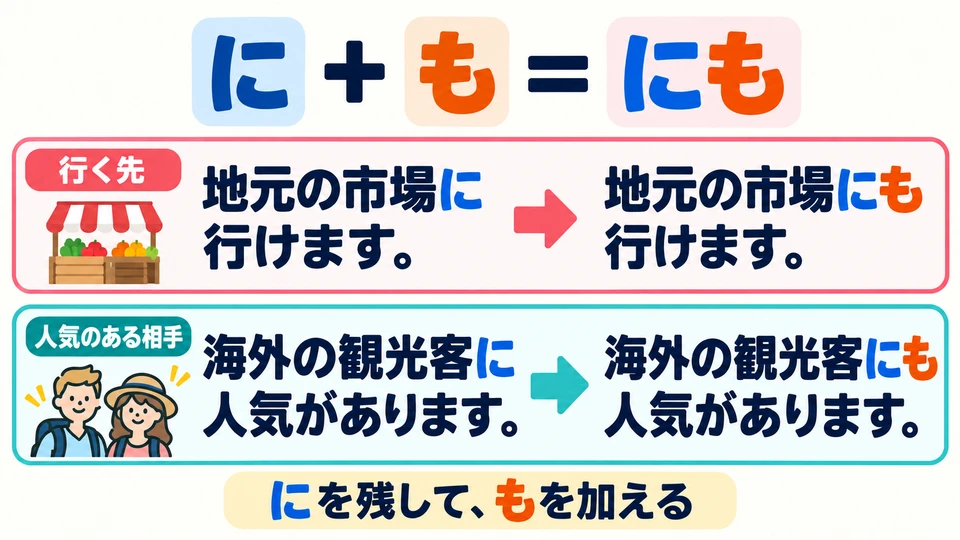
In the examples, 「にも」 keeps 「に」 for the destination or the people concerned, and adds 「も」 to show that this item is included too.
Example sentences
- このkonoツアーtsuaaでdeは、wa、観光kankou地chiはwaもちろん、mochiron、地元jimotoのno市場ichibaに
In a conversation

- Aこのツアーって、観光地はもちろん自由行動の時間もあるの?
A: Does this tour have free time as well as visiting tourist attractions?
- B
Check yourself
Level 1 · Recognise
Which sentence is correct?
Level 1 · Recognise
Listen and choose the meaning
Level 2 · Build
Put the words in order
Kyoto is popular not only among domestic travelers but also among tourists from overseas.
Level 3 · Use
What goes in the blank?
このツアーでは、観光地____(「もちろん」を使って)、地元の市場にも行けます。
On this tour, you can visit local markets as well as sightseeing spots.
More grammar in this theme
- 〜はもちろん・〜はもとよりnot only; but also