
〜ずにはいられない~zu ni wa irarenai
Zu ni wa irarenai (〜ずにはいられない) means “can't help doing”.
When I hear that something is a limited-time offer, I can't help but check it out.
「〜ずにはいられない」 says you cannot hold back an action driven by your own feelings.
In the course
How it works
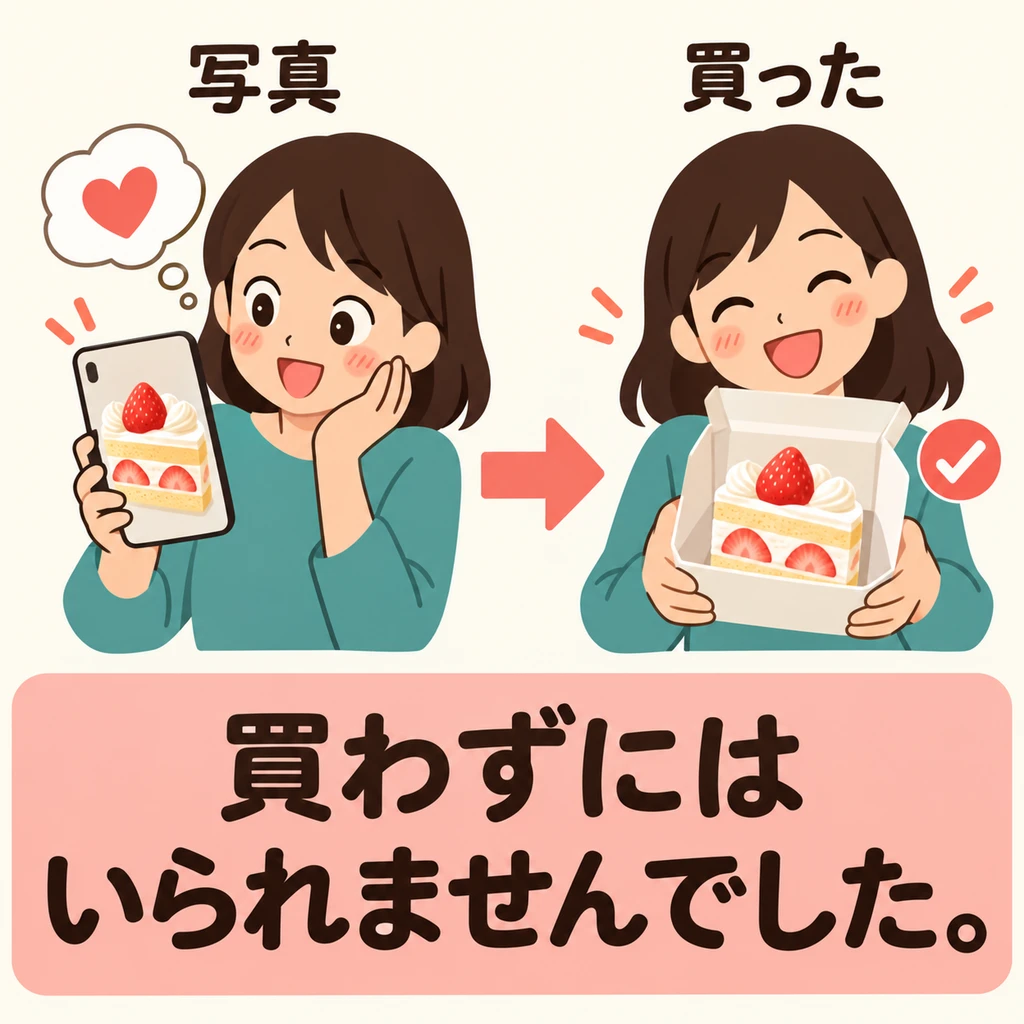
After seeing the cake photo, they could not resist the urge to buy it—and ended up buying it.
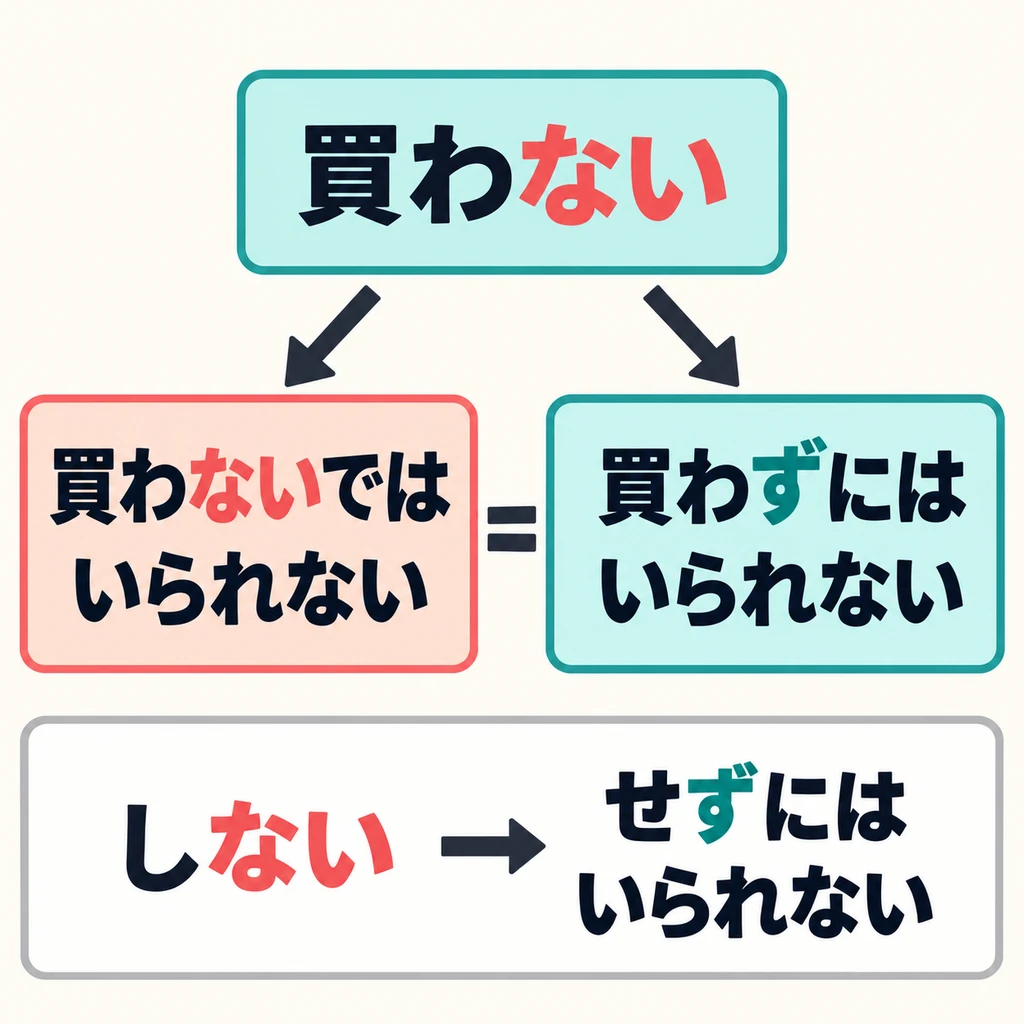
The two forms in the diagram mean the same thing: you cannot resist doing something.
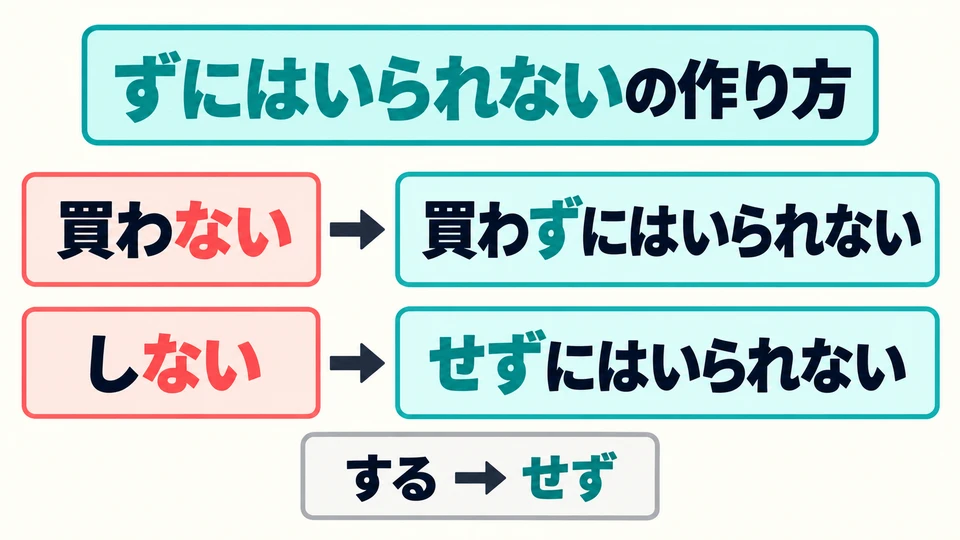
To form it, remove ない and add ずにはいられない. The special form of する is せず.
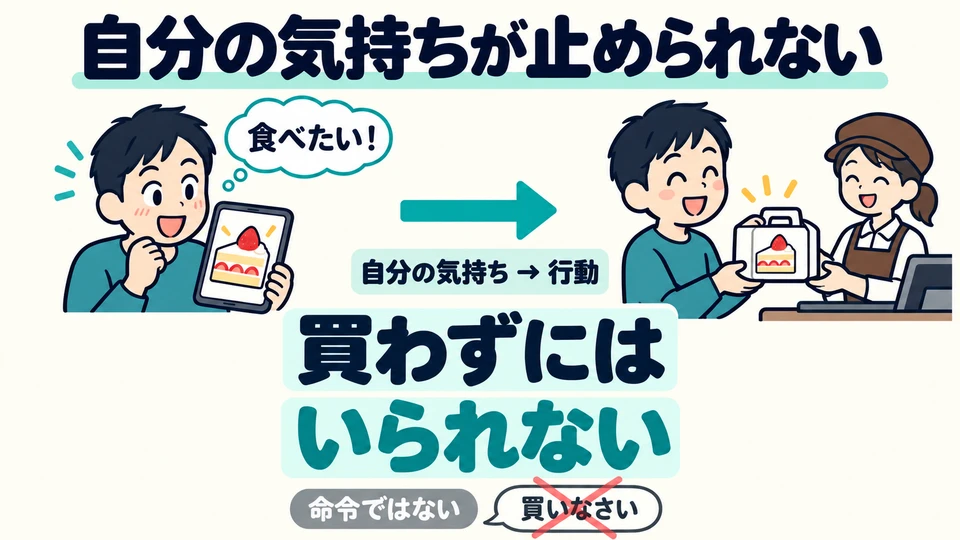
Here, you act because you cannot hold back your own feelings, rather than because someone ordered you to.
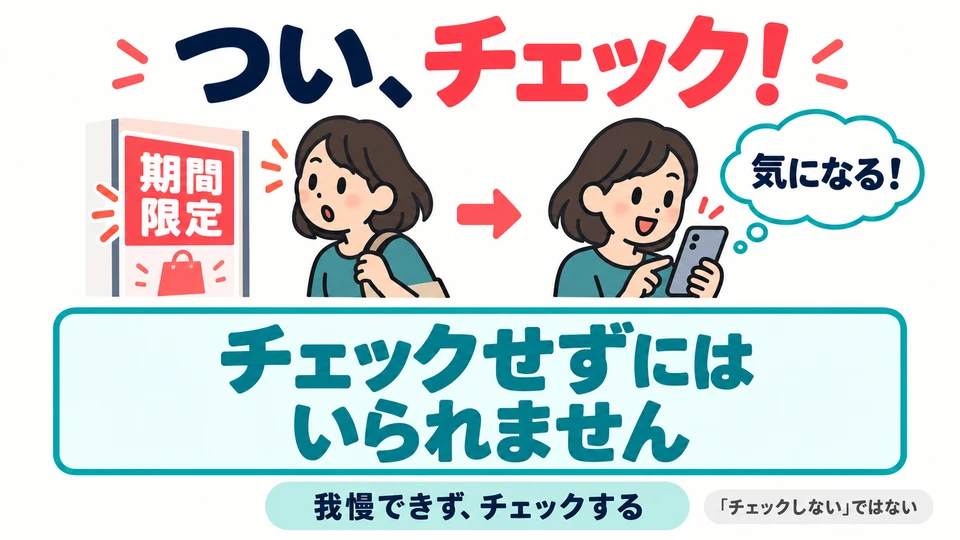
The example does not mean “not checking.” Hearing that an offer is for a limited time makes the speaker unable to resist checking it out.
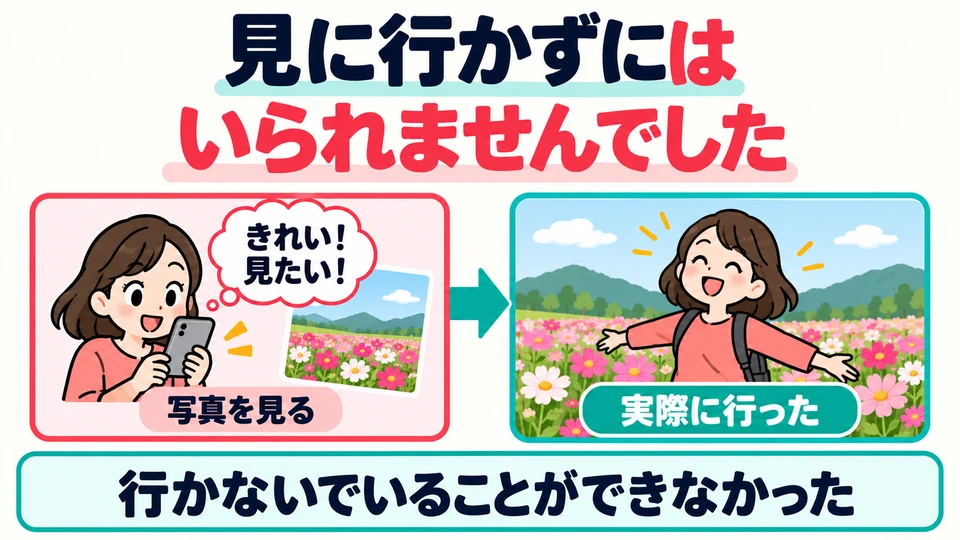
The speaker could not keep from going to see it. So in the past-tense example, they actually did go.
Example sentences
- 期間kikan限定genteiとto聞くkikuと、to、ついtsuiチェックchekkuせずsezuにniはwaいられません。iraremasen。
When I hear that something is a limited-time offer, I can't help but check it out.
In a conversation

- Aあの期間限定のケーキ、もう食べましたか。
A: Have you already eaten that limited-time cake?
- Bはい、写真を見たらとても美味しそうで、
Check yourself
Level 0 · Conjugate
Change to 〜ずにはいられない: “cannot resist”. ずに
期間限定のケーキがおいしそうで、(食べる)はいられませんでした。
Level 1 · Recognise
Which sentence is correct?
Level 1 · Recognise
Listen and choose the meaning
Level 2 · Build
Put the words in order
When I hear that something is limited-time only, I can't help but check it.
Level 3 · Use
What goes in the blank?
期間限定と聞くと、つい____(「チェックする」を使い、「~ずにはいられない」の丁寧形で)。
When I hear it's limited-time, I can't help but check it out.
More grammar in this theme
- 〜ずにはいられないcan't help doing