JPEDLAB iconJPEDLAB
Save history

Create an account and play

Explore first, then save your progress whenever you are ready. No email address is required.

Start free
Read as articleCards
See the whole course›Intermediate 3›School Systems and Educational Experiences

Japanese grammar · ≈ JLPT N3 · Intermediate 3

〜きる・〜きれる~kiru / ~kireru

finish completely; be able to finish

「〜きる」 emphasizes completing an entire action, while 「〜きれる」 asks whether you can finish it all.

Start the interactive lessonIllustrated cards, audio and speaking practice

How it works

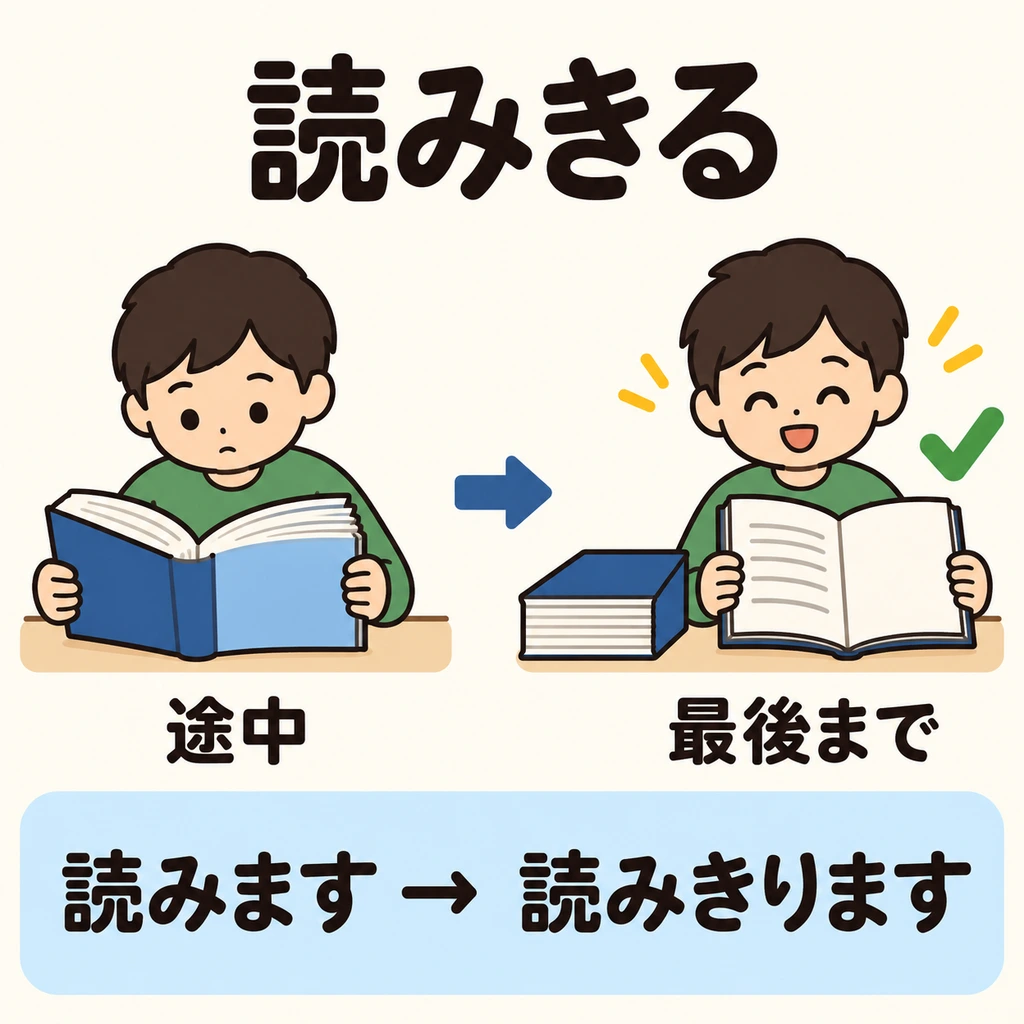
  1. Reading a reference book to the last page: 「読みきる」 emphasizes completing the whole action.
    Reading a reference book to the last page: 「読みきる」 emphasizes completing the whole action.

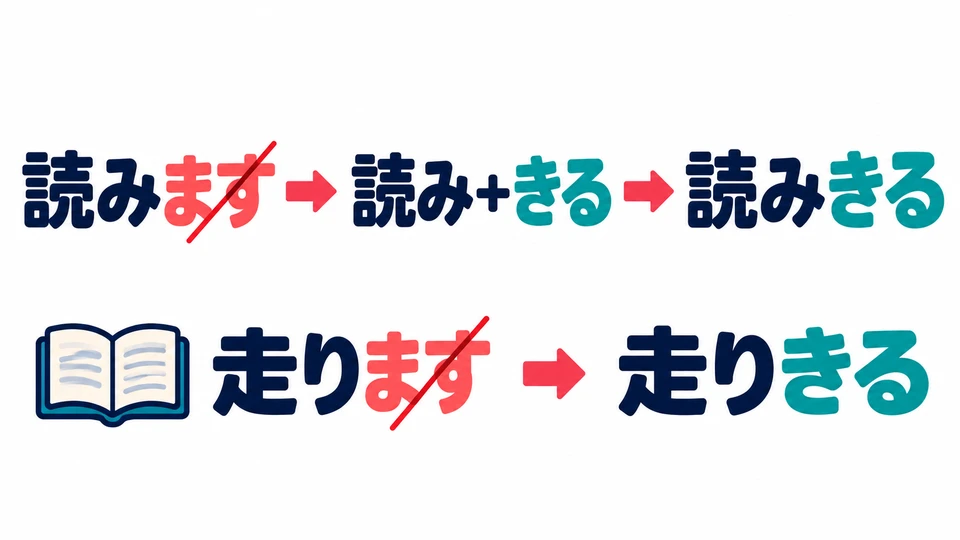
  2. Remove 「ます」 from the verb and add 「きる」: 読みます→読みきる.
    Remove 「ます」 from the verb and add 「きる」: 読みます→読みきる.

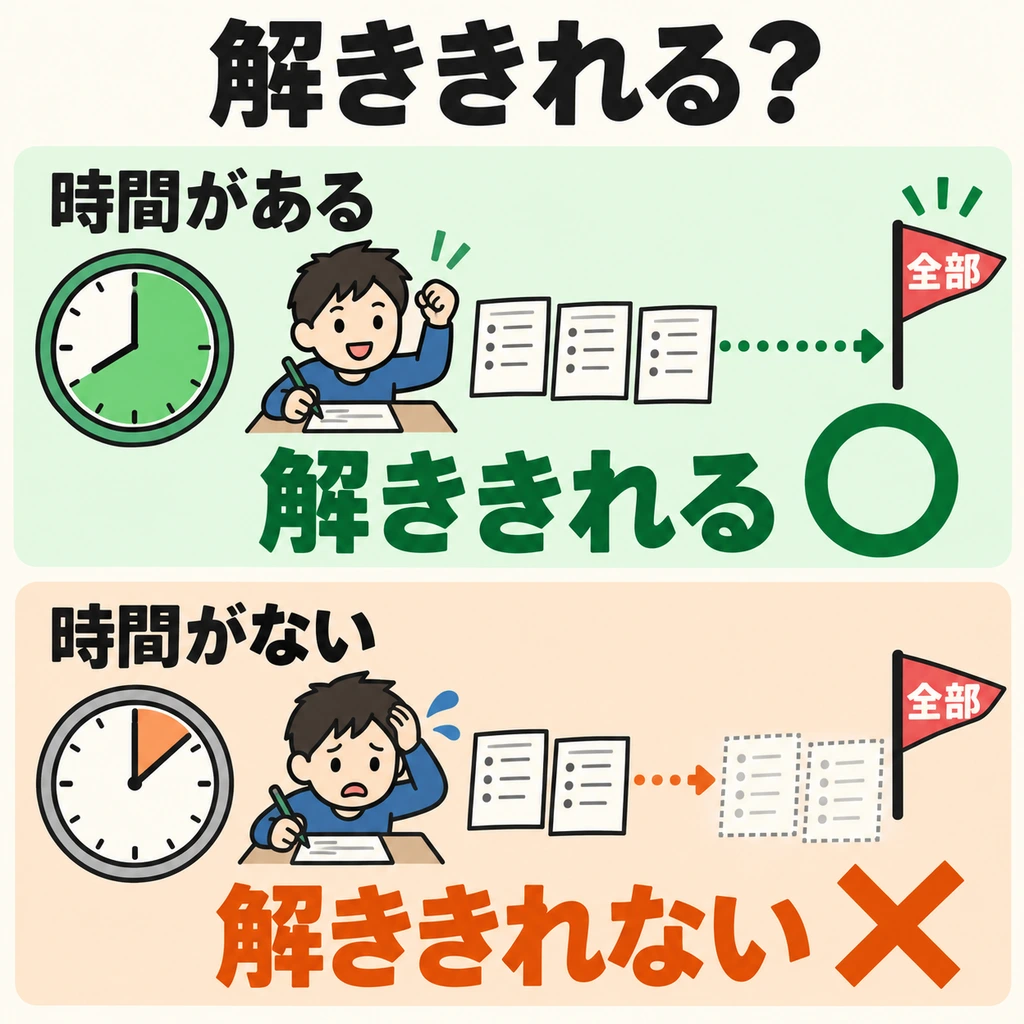
  3. 「きれる」 is the potential form. It focuses on whether you can finish everything, given conditions such as time.
    「きれる」 is the potential form. It focuses on whether you can finish everything, given conditions such as time.

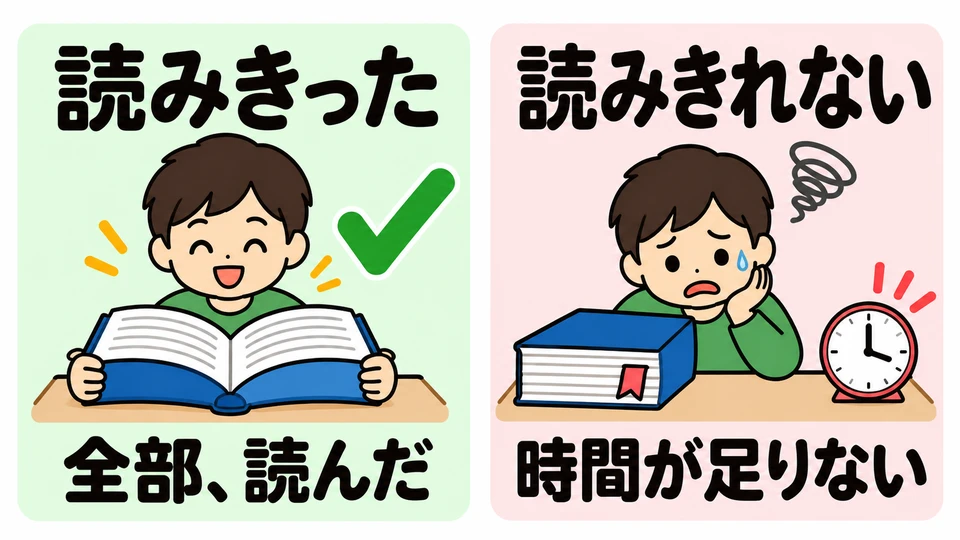
  4. 「きった」 means it has all been completed; 「きれない」 means you cannot complete it all.
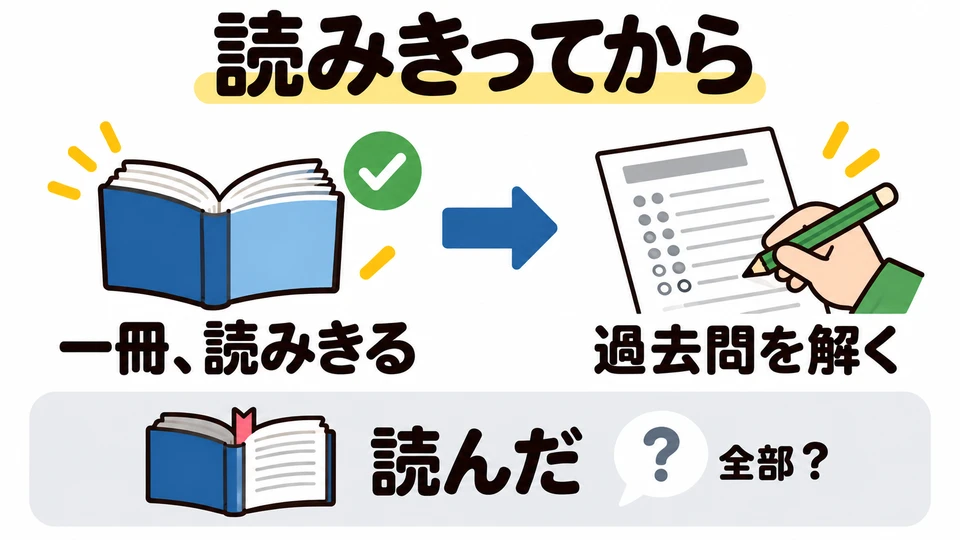
    「きった」 means it has all been completed; 「きれない」 means you cannot complete it all.

  5. In the example, he finishes the entire book before starting past exam questions. 「読んだ」 alone does not necessarily mean he read the whole book.
    In the example, he finishes the entire book before starting past exam questions. 「読んだ」 alone does not necessarily mean he read the whole book.

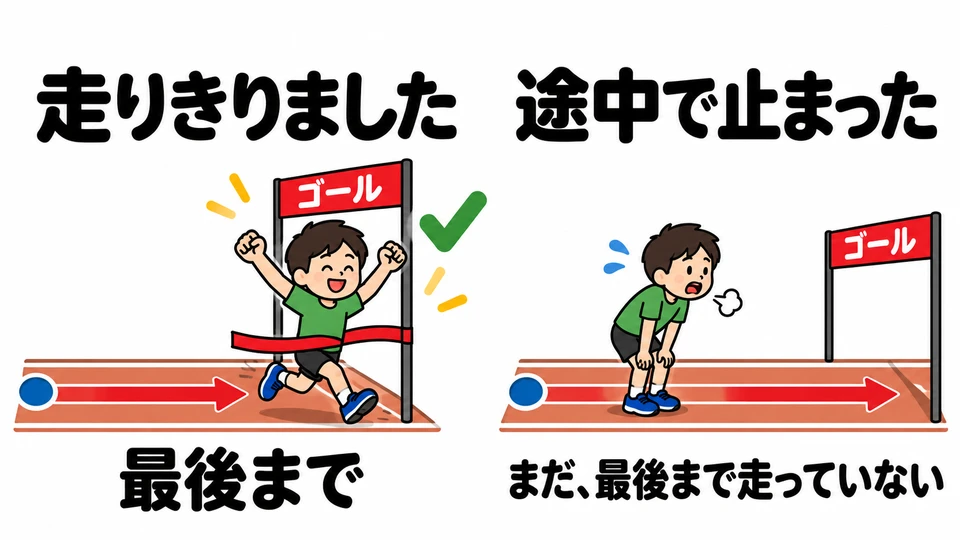
  6. 「走りきりました」 also emphasizes reaching the finish. Stopping halfway does not count as completing the run.

    「走りきりました」 also emphasizes reaching the finish. Stopping halfway does not count as completing the run.

Example sentences

  • 受験生じゅけんせいjukenseiは、わ、wa、最後さいごsaigoまでmadeあきらめずakiramezuにni走りはしりhashiriきりました。kirimashita。

    The examinee ran to the very end without giving up.

In a conversation
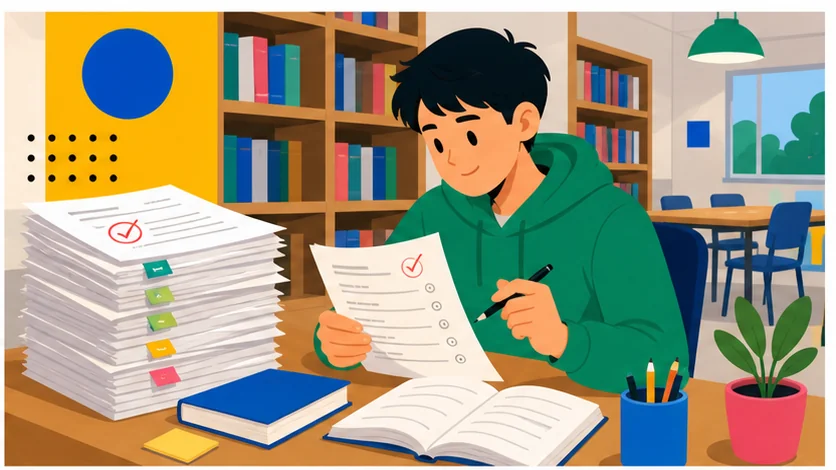
  • A
    模擬もぎ試験しけんの過去問かこもんは、わ、もう全部ぜんぶ解きとききりましたか?か

    A: Have you already solved all the past mock exam questions?

  • B
    いいえ、苦手にがて分野

Check yourself

  1. Level 1 · Recognise

    Which sentence is correct?

  2. Level 1 · Recognise

    Listen and choose the meaning

  3. Level 2 · Build

    Put the words in order

    The examinee made it to the end without giving up.

  4. Level 3 · Use

    What goes in the blank?

    受験生は、最後まであきらめずに____。

    The examinee kept going without giving up and ran to the very end.

More grammar in this theme

  • 〜きる・〜きれるfinish completely; be able to finish

Keep practising

Test your Japanese vocabulary12 adaptive questions, freeCheck your pronunciationRead aloud and get a scorePractise verb forms10-question conjugation quizSee the whole courseGrammar, vocabulary and quizzes by theme
彼かれkare
はわwa
参考書さんこうしょsankousho
をo
一冊いちさつichisatsu
読みよみyomi
きっki
てte
から、kara、
過去問かこもんkakomon
にni
入りました。はいりました。hairimashita。

He read through the entire reference book before starting the past exam questions.

ぶんや
が
多くおおく
て、
まだ
半分はんぶん
しか
終わっおわっ
て
いません。

B: No, because I have many weak areas, I've only finished half of them.

  • A
    本番ほんばんまで時間じかんはわありませんから、焦らずあせらずにできるところからやりきりましょう。

    A: Since there is not much time left until the actual exam, let's complete what we can do without rushing.

  • 〜ものだ・〜もんだas things usually are
    〜にかけてはwhen it comes to; strong at
    〜はともかくset aside and focus
    〜ないことはない・〜ないこともないqualified yes; not impossible
    〜も〜ば、〜もlisting different situations
    〜にわたって/〜にわたり/〜にわたるspan a period, area, or occasions
    〜にもかかわらずdespite; contrary to expectation
    〜からいうと・〜からいって・〜からいえばjudging from; from a perspective
    〜となると・〜となれば・〜となったらwhen facing a situation
    〜次第だ・〜次第でdepends on; depending on
    〜ぬくpersevere to the end
    〜つつwhile doing; simultaneous actions
    Previous〜にわたって/〜にわたり/〜にわたる
    Next〜にもかかわらず