
〜ものだ・〜もんだ~mono da / ~mon da
Mono da / mon da (〜ものだ・〜もんだ) means “as things usually are”.
Once you start a part-time job, you tend to realize the importance of money.
「〜ものだ」 generalizes common experience or what naturally happens; 「〜もんだ」 is its casual spoken form.
In the course
How it works
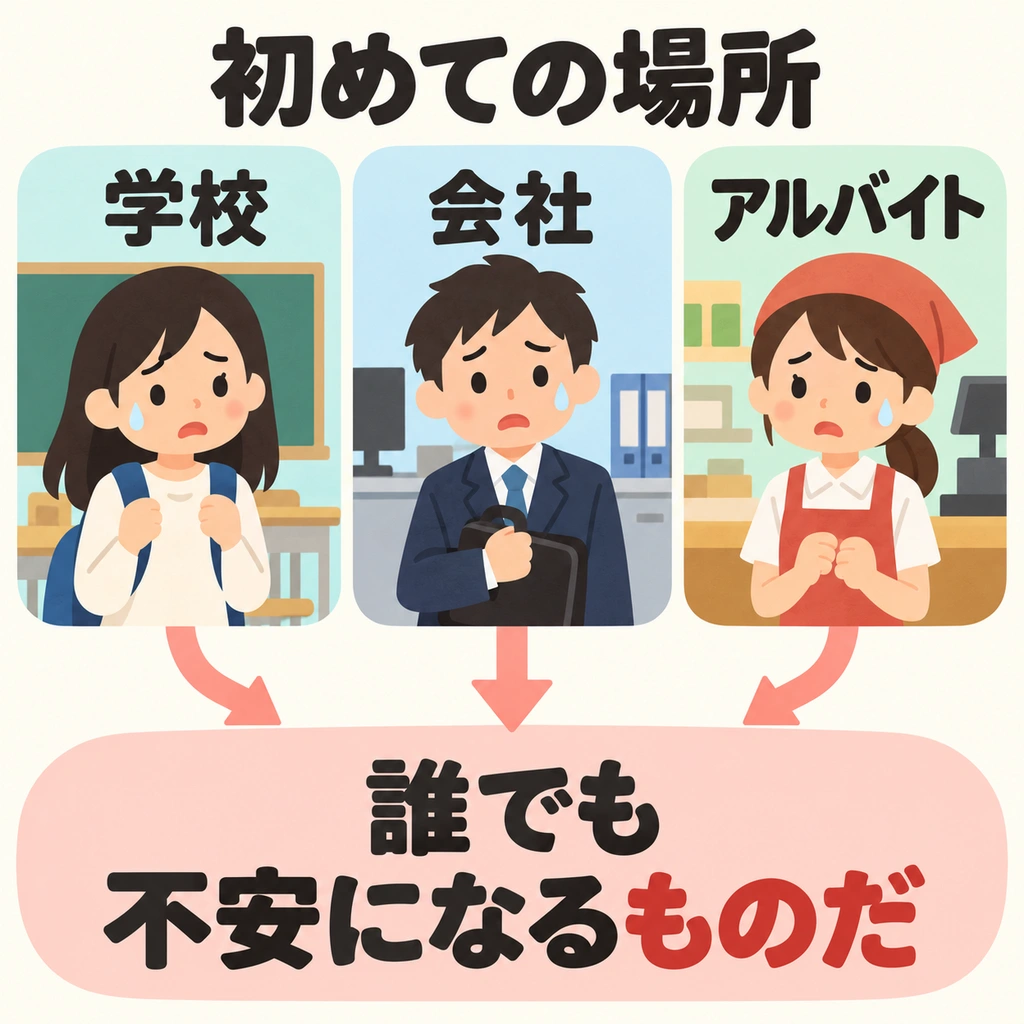
All three feel anxious in a new environment. How can we sum up this common experience?
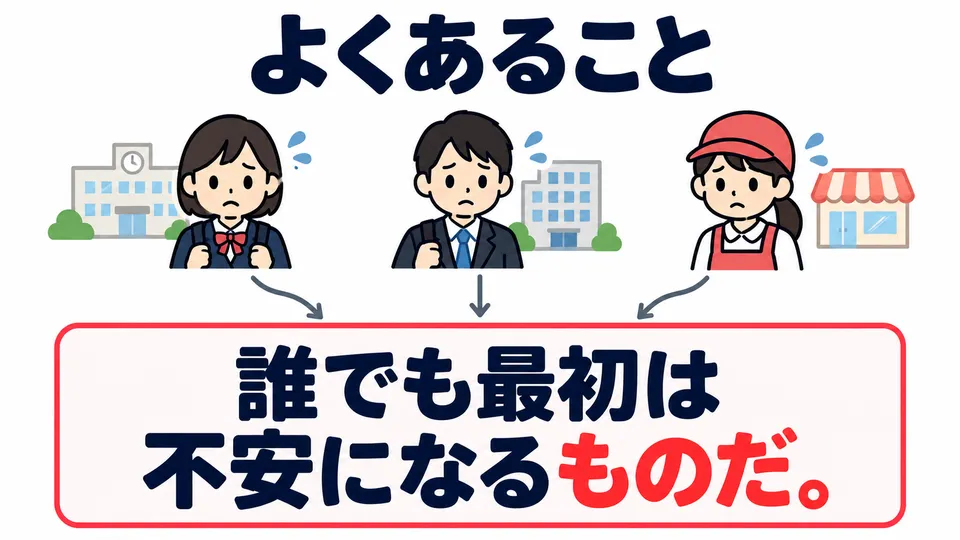
It expresses general truths, common social knowledge, or things people naturally expect to happen.
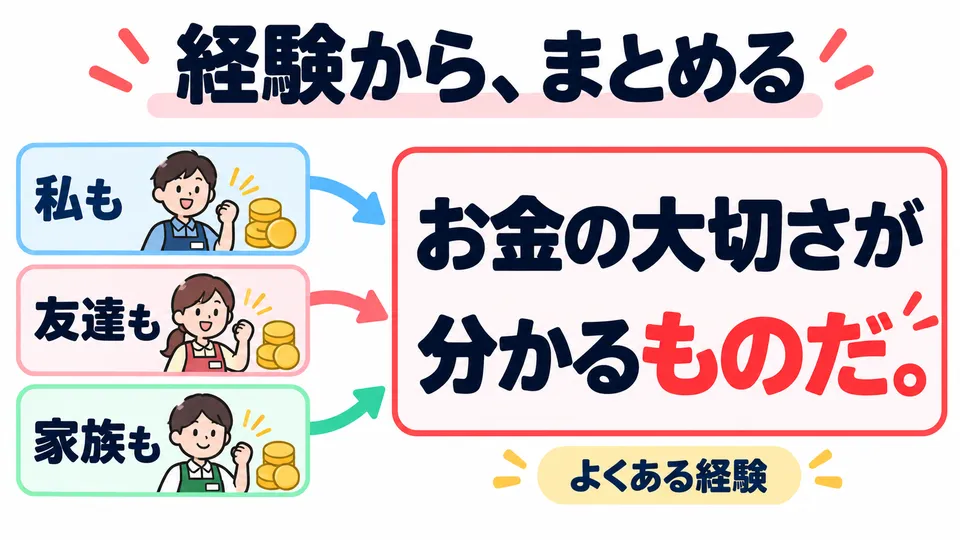
It generalizes from experience: “this is how things usually are,” sometimes with a reflective tone. It does more than report one personal experience.
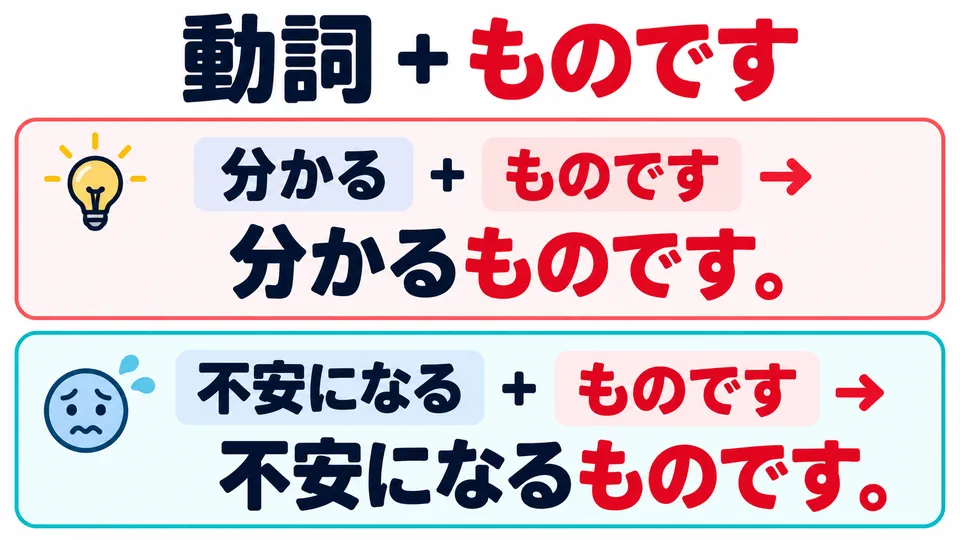
The examples use 「分かる/不安になる+ものです」 to generalize common experiences.
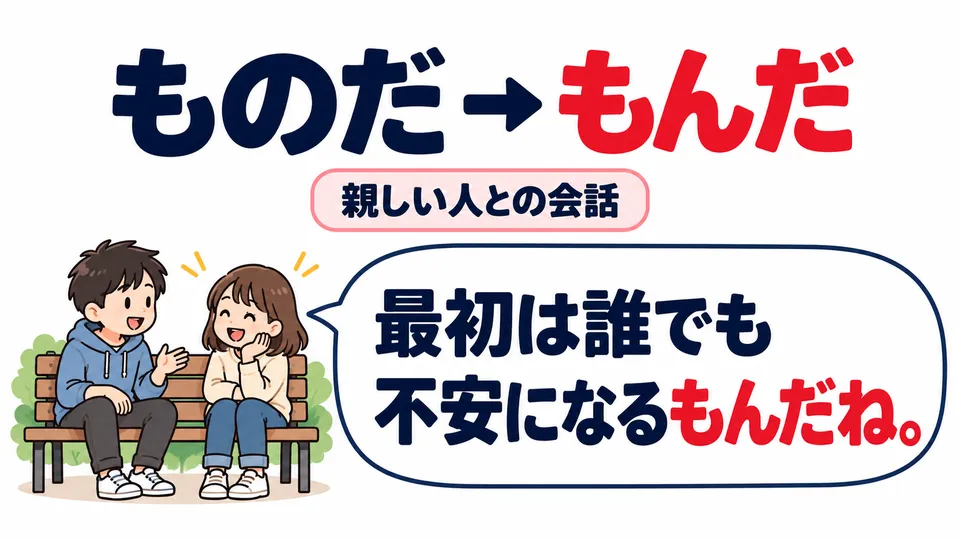
「もんだ」 is a more casual spoken form of 「ものだ」, suitable for talking with people you know well.
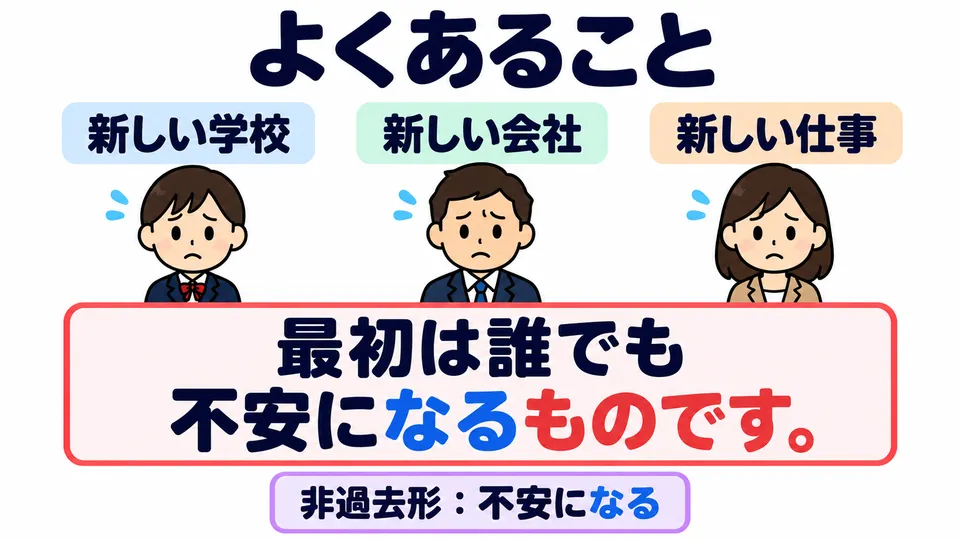
In the example, 「不安になる」 is in the present (non-past) form. It generalizes a common experience, rather than recalling one specific moment of anxiety.
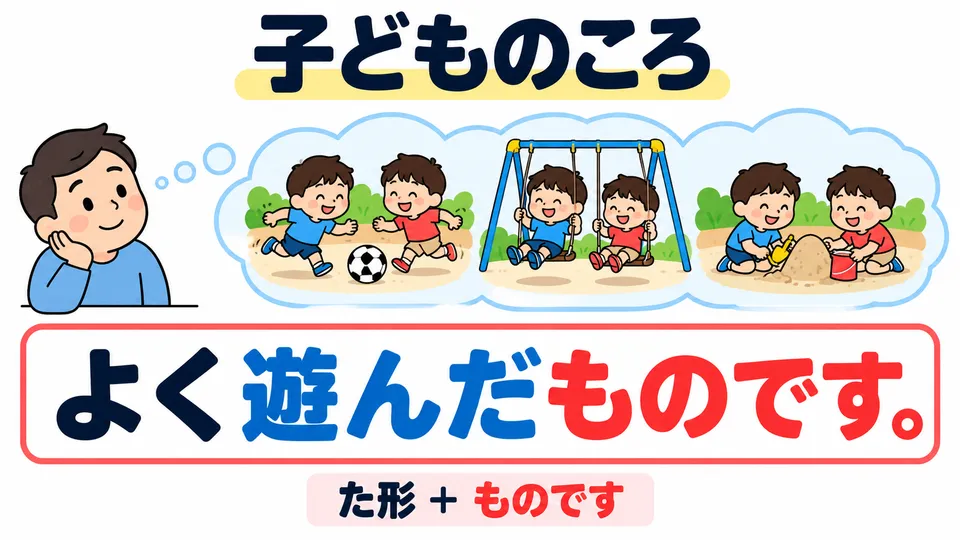
The previously learned 「よく遊んだものです」 uses the た-form. In its childhood context, it recalls a repeated habit.
Example sentences
- アルバイトarubaitoをo始めるhajimeruと、to、お金okaneのno大切さtaisetsusaがga分かるwakaruものmonoです。desu。
Once you start a part-time job, you tend to realize the importance of money.
In a conversation

- A一人暮らしを始めると、色々なことにお金がかかるよね。
A: Once you start living alone, everything costs money, doesn't it?
- B本当に
Check yourself
Level 1 · Recognise
Which sentence is correct?
Level 1 · Recognise
Listen and choose the meaning
Level 2 · Build
Put the words in order
When you start a part-time job, you come to understand the value of money.
Level 3 · Use
What goes in the blank?
アルバイトを始めると、お金の大切さが分かる____です。
When you start a part-time job, you realize how important money is.
More grammar in this theme
- 〜ものだ・〜もんだas things usually are