
Japanese grammar · ≈ JLPT N3 · Intermediate 3
どちらかというと〜・どちらかといえば〜dochira ka to iu to ~
if I had to choose; rather
「どちらかというと〜」 gently shows which option you prefer or which group something suits more.
How it works
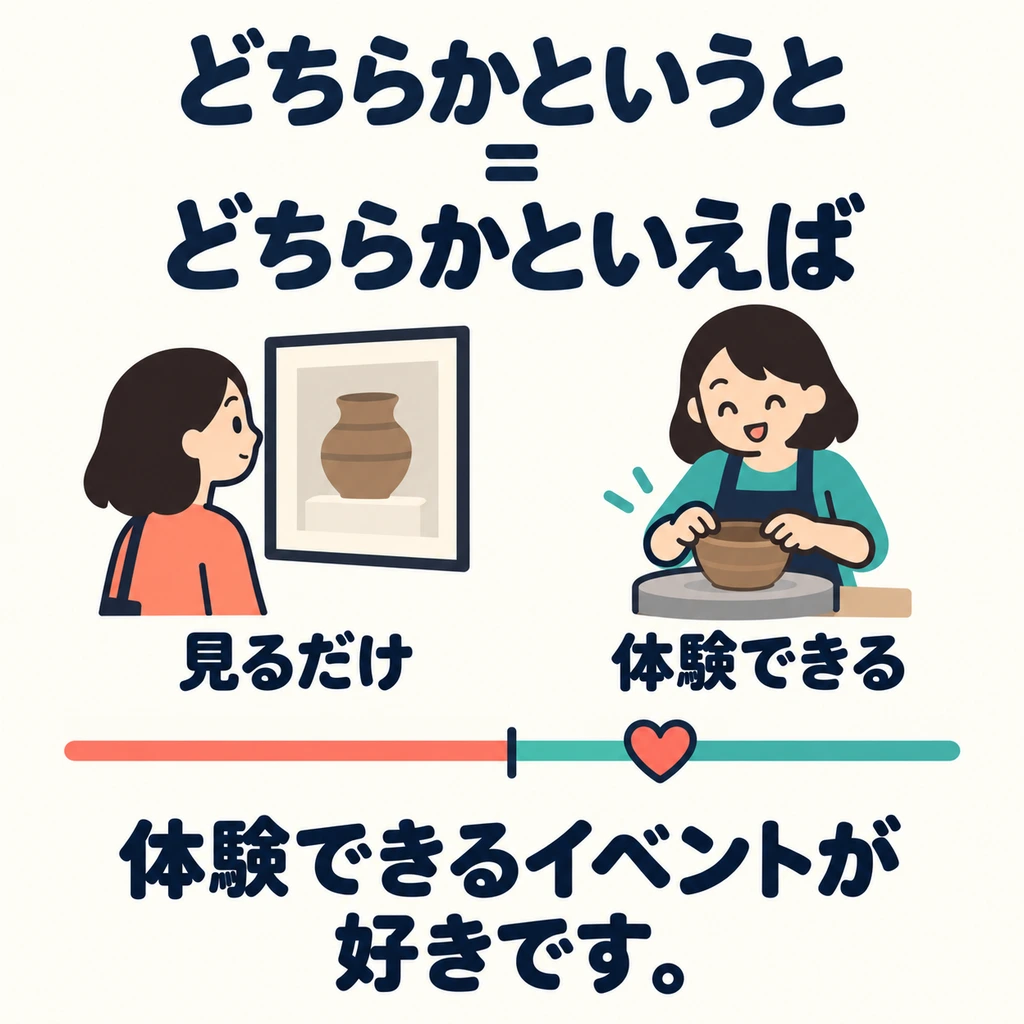
After comparing the two options, you lean toward one. Which activity does the person in the picture prefer?
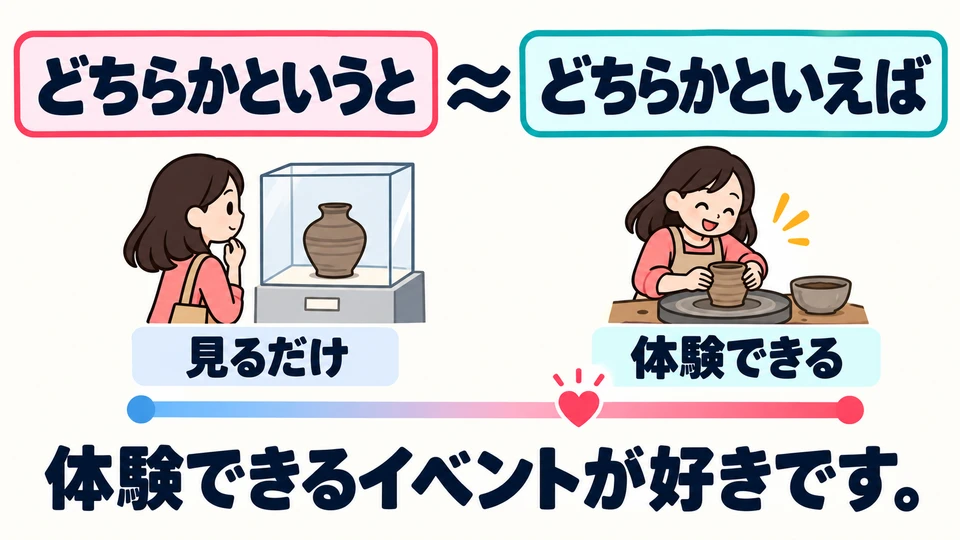
The two sentence openings in the picture have similar meanings: if you had to compare, you would lean more toward this option.
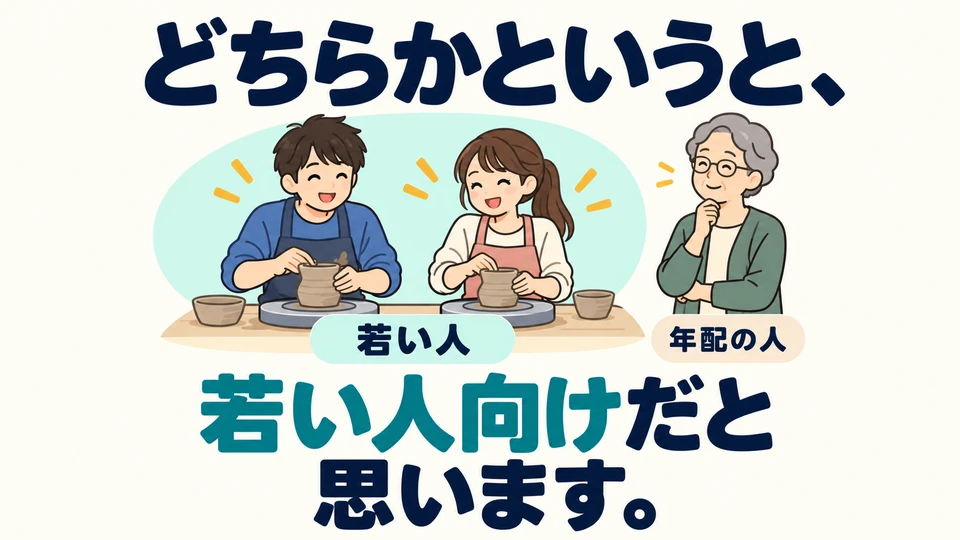
Besides expressing preferences, you can also give a gentle assessment: overall, this event is more suited to young people.
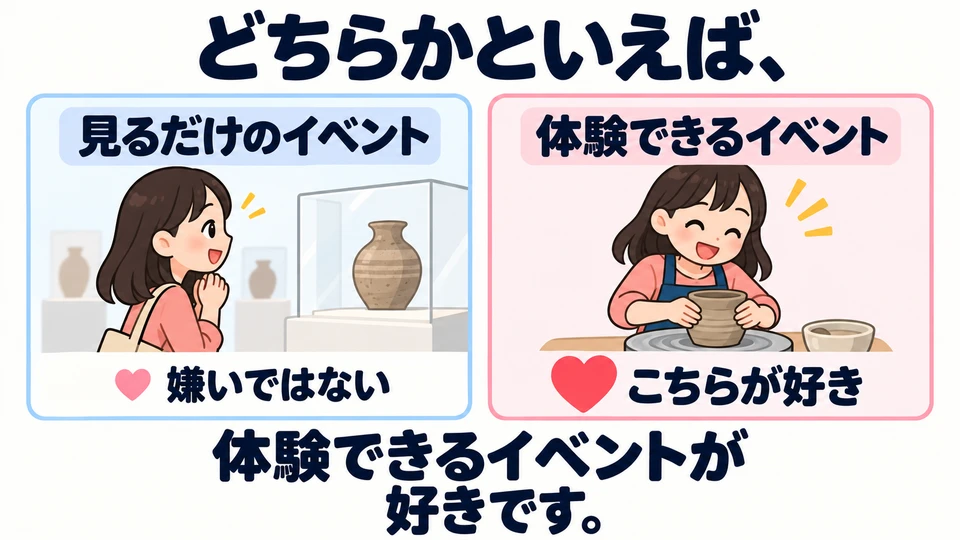
Preferring hands-on events in the example does not mean disliking events where you just watch. It only expresses a preference.
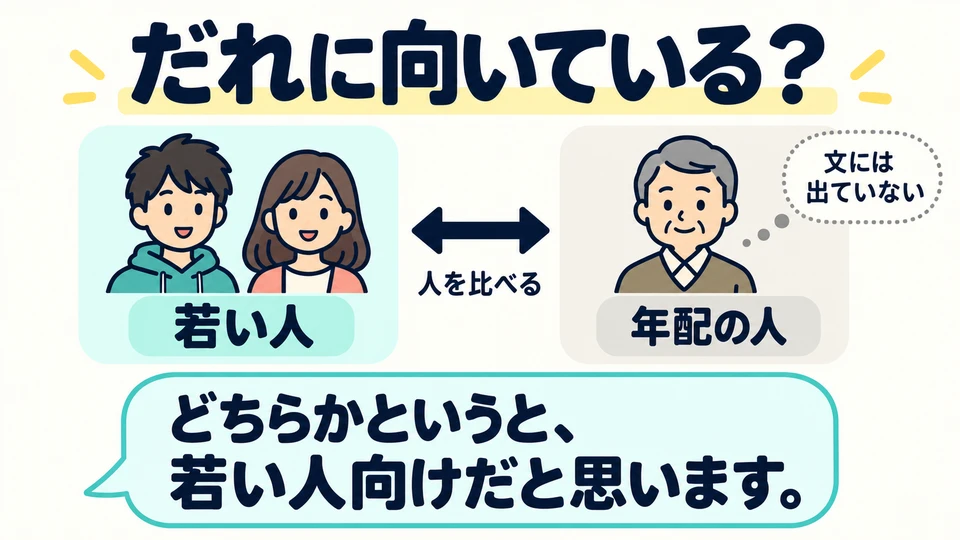
The sentence about young people does not state the other side of the comparison, but the context shows that it compares who the event is suited to.
Example sentences
- 私watashiは、wa、どちらdochiraかkaとtoいえieばba見るmiruだけdakeのnoイベントibentoより、
In a conversation

Check yourself
Level 1 · Recognise
Which sentence is correct?
Level 1 · Recognise
Listen and choose the meaning
Level 2 · Build
Put the words in order
Rather than events you just watch, I prefer events you can experience hands-on.
Level 3 · Use
What goes in the blank?
このイベントは、____若い人向けだと思います。
I think this event is more geared toward young people.
More grammar in this theme
- どちらかというと〜・どちらかといえば〜if I had to choose; rather