JPEdLab iconJPEdLab
Save history

Create an account and play

Explore first, then save your progress whenever you are ready. No email address is required.

Start free
  1. Japanese grammar
  2. JLPT N3 grammar
  3. 〜とともに

〜とともに~ to tomo ni

To tomo ni (〜とともに) means “together with”.

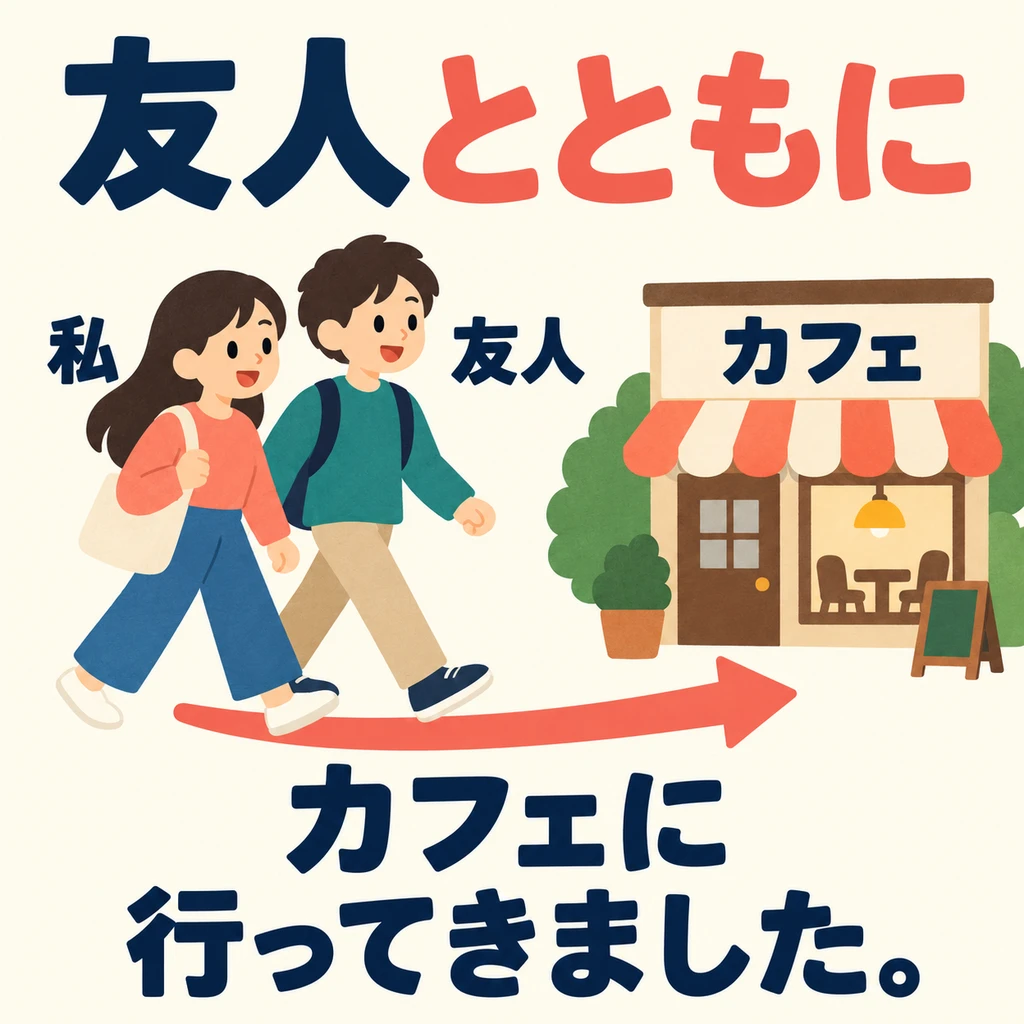
友人ゆうじんyuujinとtoともtomoに、ni、話題わだいwadaiのnoカフェかふぇkafeにni行っいっiてteきました。kimashita。

I went to a trendy cafe with my friend.

Place a person before 〜とともに to describe an activity done together, in a fairly formal style often used in writing.

In the course›

How it works

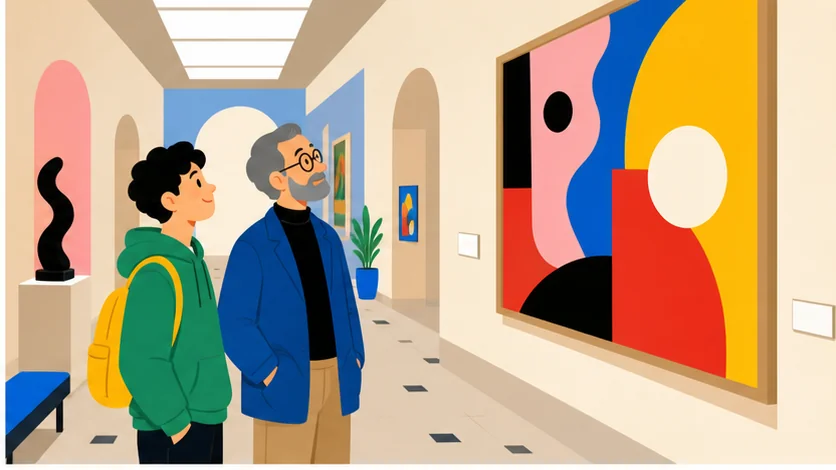
  1. Look at the two people: who am I going to the café with? 「とともに」 tells us who comes along.
    Look at the two people: who am I going to the café with? 「とともに」 tells us who comes along.

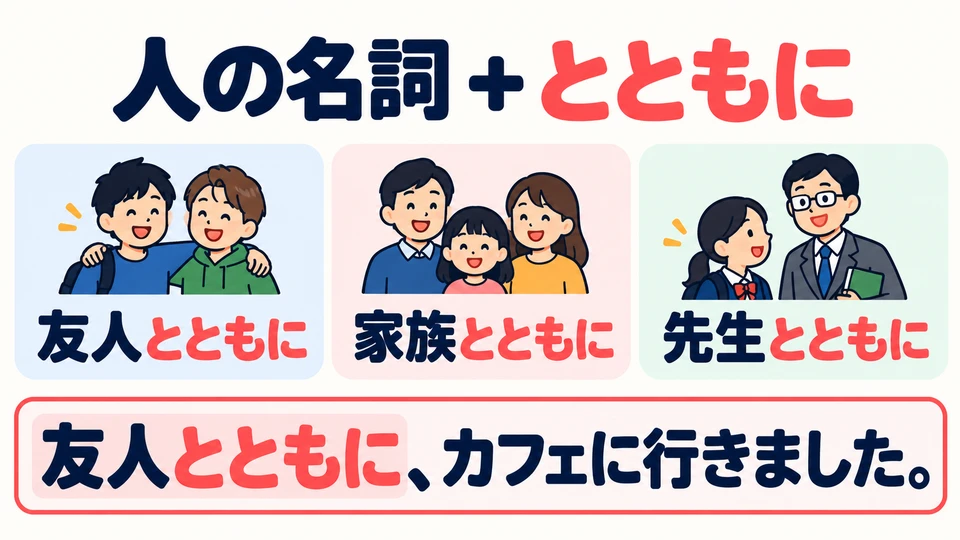
  2. Put a noun referring to a person before 「とともに」 to show who you do the action with.
    Put a noun referring to a person before 「とともに」 to show who you do the action with.

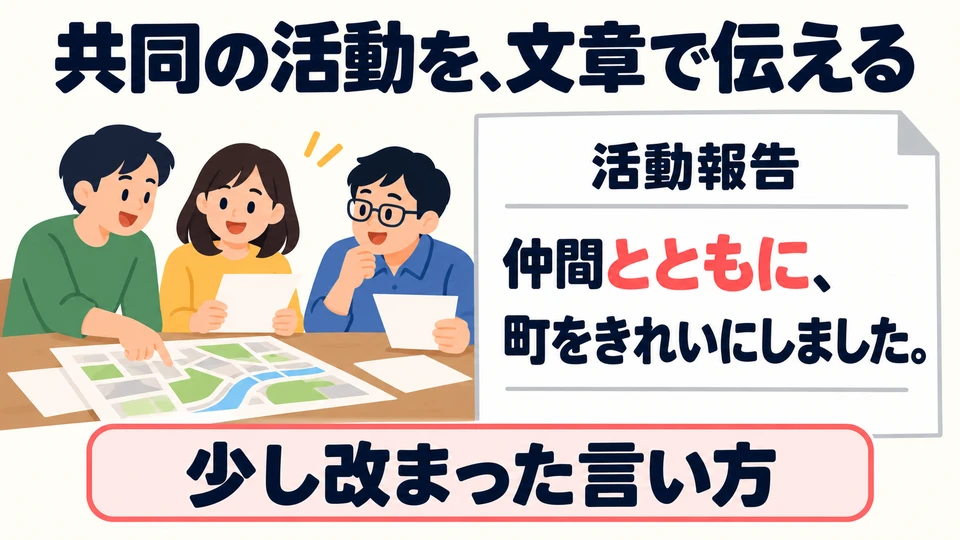
  3. Use it to describe activities done with others. It sounds fairly formal and is common in writing.
    Use it to describe activities done with others. It sounds fairly formal and is common in writing.

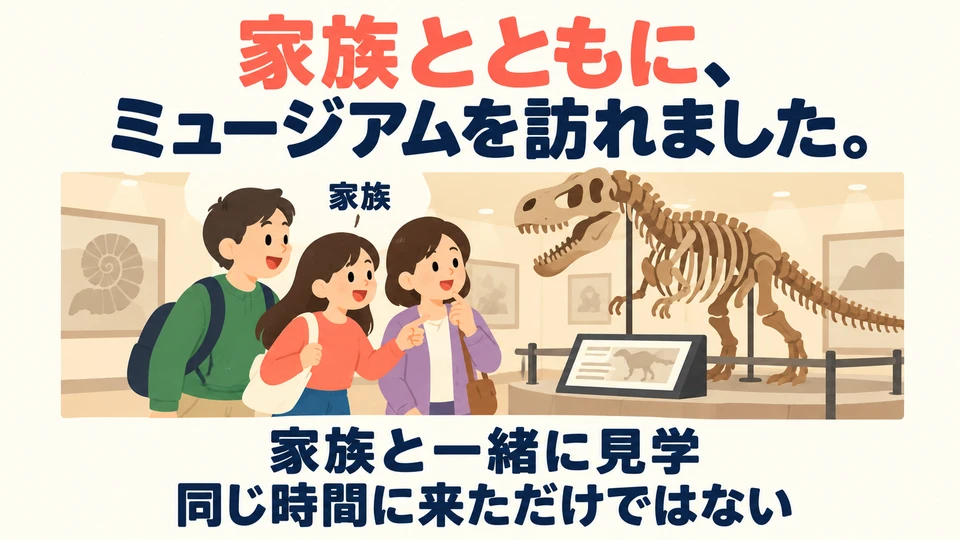
  4. The museum example emphasizes visiting together with family, not simply happening to arrive at the same time.

    The museum example emphasizes visiting together with family, not simply happening to arrive at the same time.

Example sentences

  • 友人ゆうじんyuujinとtoともtomoに、ni、話題わだいwadaiのnoカフェかふぇkafeにni行っいっiてteきました。kimashita。

    I went to a trendy cafe with my friend.

In a conversation
  • A
    来週らいしゅうの展覧てんらん会かいは、わ、誰だれと行くいく予定よていですか。

    A: Who are you planning to go to next week's exhibition with?

  • B
    美術びじゅつの

Check yourself

  1. Level 1 · Recognise

    Which sentence is correct?

  2. Level 1 · Recognise

    Listen and choose the meaning

  3. Level 2 · Build

    Put the words in order

    I went to the popular cafe with a friend.

  4. Level 3 · Use

    What goes in the blank?

    友人____、話題のカフェに行ってきました。

    I went to a trendy cafe together with my friend.

More grammar in this theme

  • 〜とともにtogether with

More JLPT N3 grammar

Keep practising

Test your Japanese vocabulary12 adaptive questions, freeCheck your pronunciationRead aloud and get a scorePractise verb forms10-question conjugation quizSee the whole courseGrammar, vocabulary and quizzes by theme
  • 家族かぞくkazokuとtoともtomoに、ni、新しくあたらしくatarashikuできた体験型できたたいけんがたdekitataikengataミュージアムみゅーじあむmyuujiamuをo訪れました。おとずれました。otozuremashita。

    I visited a newly opened interactive museum with my family.

  • 先生せんせい
    と
    とも
    に、
    有名な絵ゆうめいなえ
    を
    見み
    に
    行くいく
    予定よてい
    です。

    B: I plan to go see the famous paintings with my art teacher.

  • A
    いいですね、私わたしもその先生せんせいとともに作品さくひんを見学けんがくしたいです。

    A: That's nice, I also want to view the artworks with that teacher.

  • Intermediate 3
    Trends and Everyday Topics
    More quizzesOpen this lesson’s quizzes in the course
    〜しかないhave no choice but to
    〜ずにはいられないcan't help doing
    〜一方でwhile also showing another side
    〜させられるbe prompted to feel or think
    〜のみならずnot only, but also
    〜と同時にat the same time; while also
    〜によって・〜により・〜によるby means of; due to
    〜だけにprecisely because
    〜としてもeven if; supposing that
    〜に先立って・〜に先立ちbefore; prior to an event
    どちらかというと〜・どちらかといえば〜if I had to choose; rather
    Next〜しかない
    See all 114
    〜つもりだintend to; believe one did
    〜ように思うseem; I think
    〜ておりますformal humble action or state
    〜ついでにwhile at it; taking the opportunity
    〜ものだ・〜もんだas things usually are
    〜ないことはない・〜ないこともないqualified yes; not impossible
    〜も〜ば、〜もlisting different situations
    〜きる・〜きれるfinish completely; be able to finish