
Japanese grammar · ≈ JLPT N2 · Intermediate 3
〜のみならず~nomi narazu
not only, but also
「〜のみならず」 adds another quality or scope to a true first point, in a fairly formal style.
How it works

Is this product praised only for its looks? 「のみならず」 adds another quality, too.
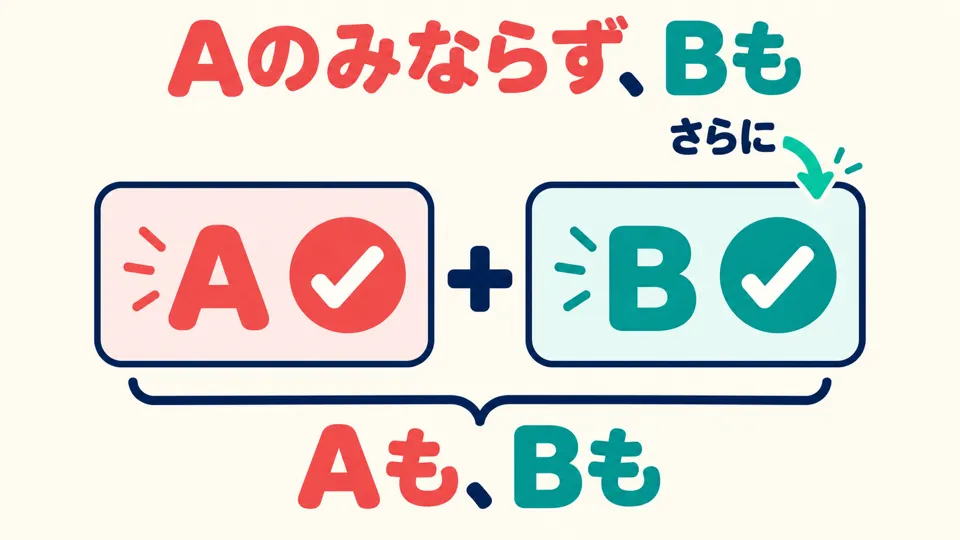
It means “not only … but also …”. The first point is true, and the scope or qualities extend to the second.
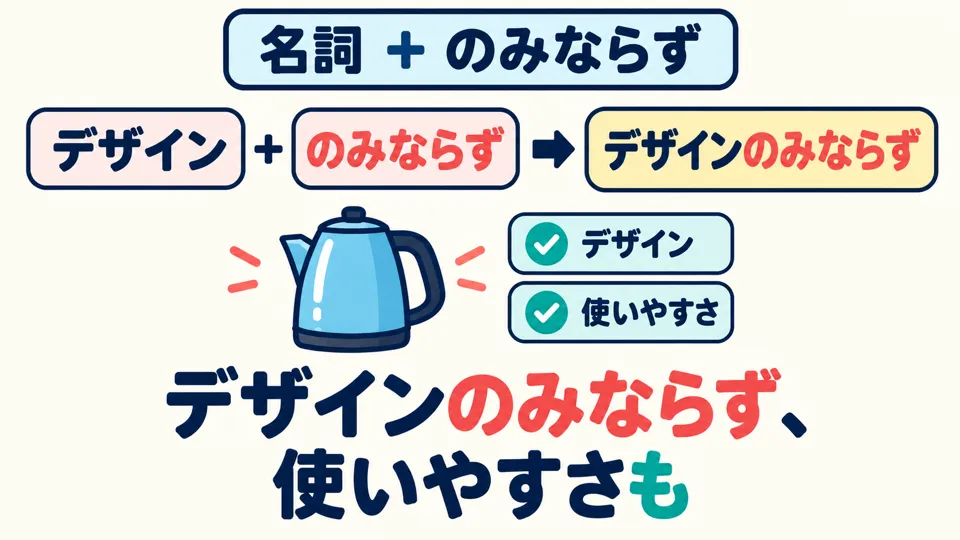
Attach 「のみならず」 directly to a noun. The example pairs 「デザイン」 with another advantage.
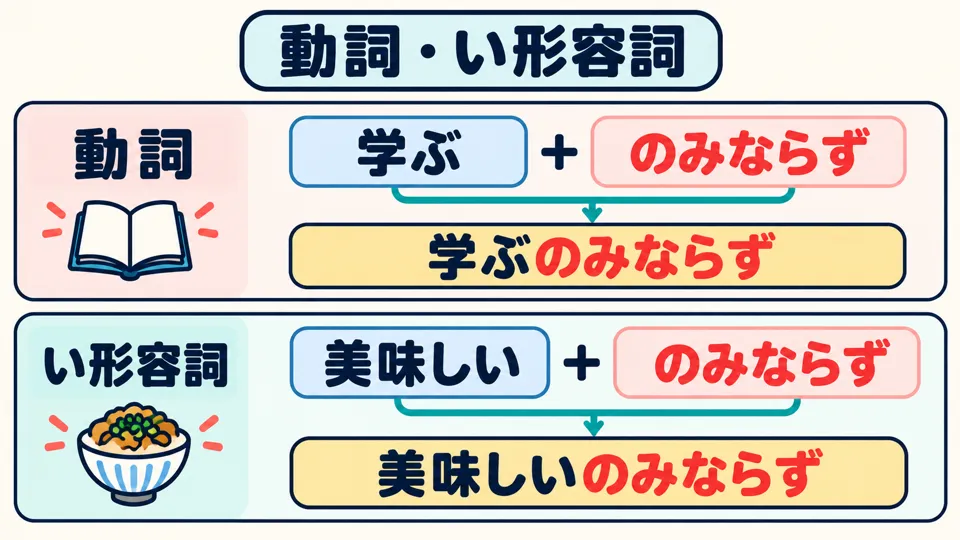
Use the plain form with verbs and い-adjectives. 「美味しいのみならず」 in the dialogue follows this rule, too.
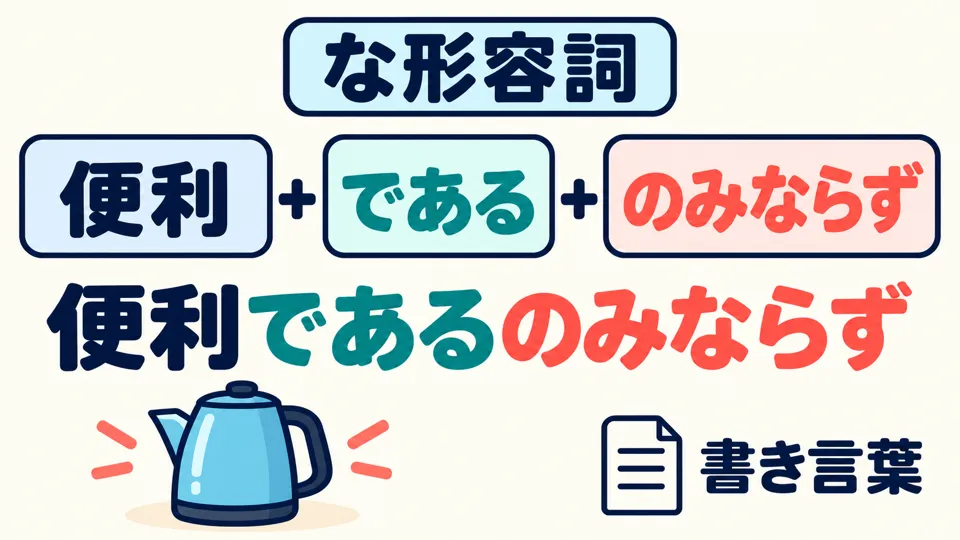
With な-adjectives, you can use 「であるのみならず」 to keep the written style.

It sounds fairly formal and is common in reports, writing, or formal explanations. It is less common in casual chats.
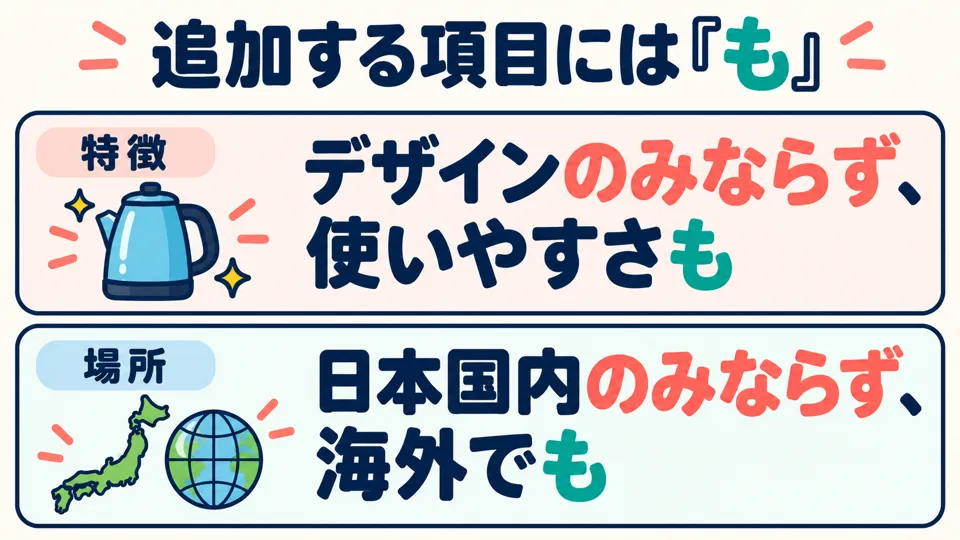
In the examples, 「も」 marks the added item: 「使いやすさも」 for a quality, and 「海外でも」 for a location.
Example sentences
- そのsonoアニメanimeはwa日本nippon国内kokunaiのみnomiならず、narazu、海外kaigaiでdeもmo注目chuumoku
In a conversation

Check yourself
Level 1 · Recognise
Which sentence is correct?
Level 1 · Recognise
Listen and choose the meaning
Level 2 · Build
Put the words in order
That anime is attracting attention not only in Japan but also overseas.
Level 3 · Use
What goes in the blank?
この新しい宣伝方法は若年層____中高年層にも効果があります。
This new advertising method is effective not only for younger people but also for middle-aged and older people.
More grammar in this theme
- 〜のみならずnot only, but also