
Japanese grammar · ≈ JLPT N2 · Intermediate 3
〜に先立って・〜に先立ち~ni sakidatte / ~ni sakidachi
before; prior to an event
「〜に先立って」 describes preparations or related activities done before an important event; 「〜に先立ち」 is more written.
How it works
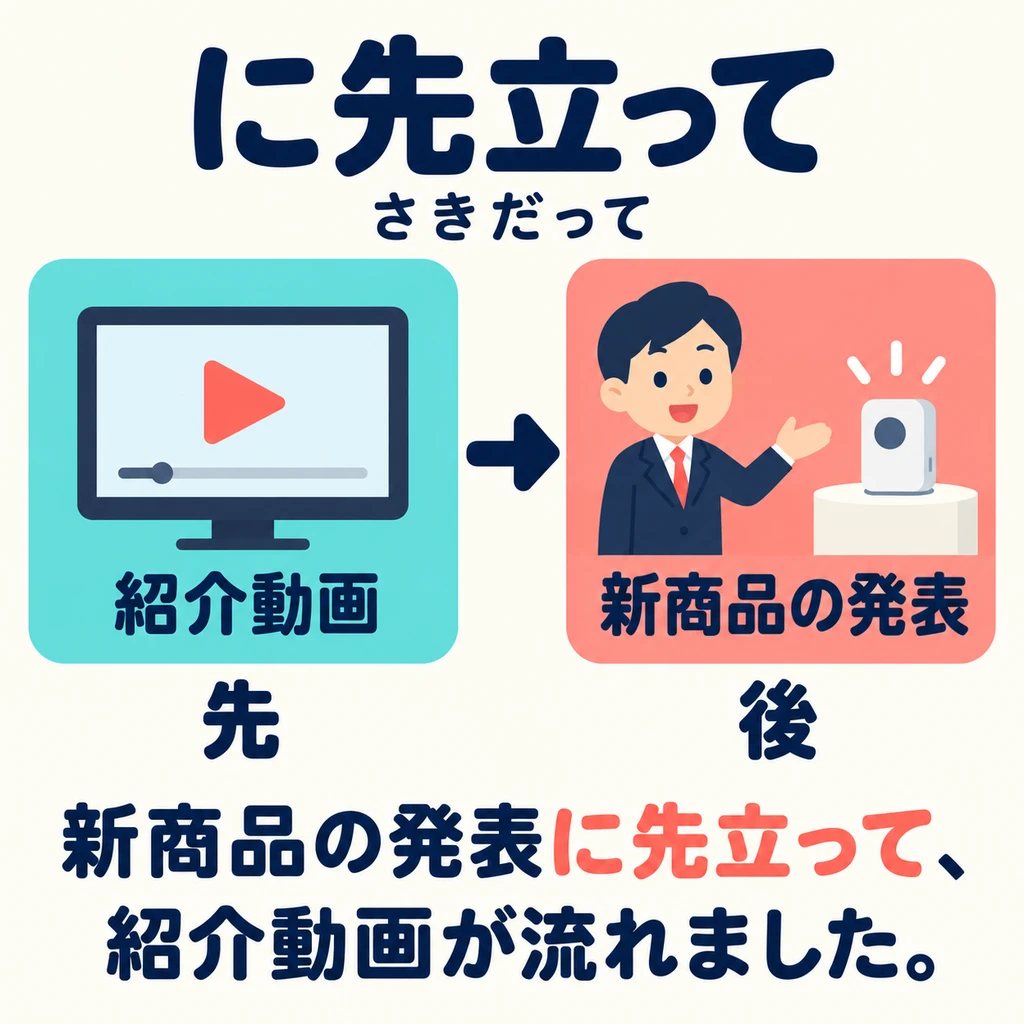
First, the introductory video plays; then the new product is announced. This expresses preparations or related activities done before an important event.
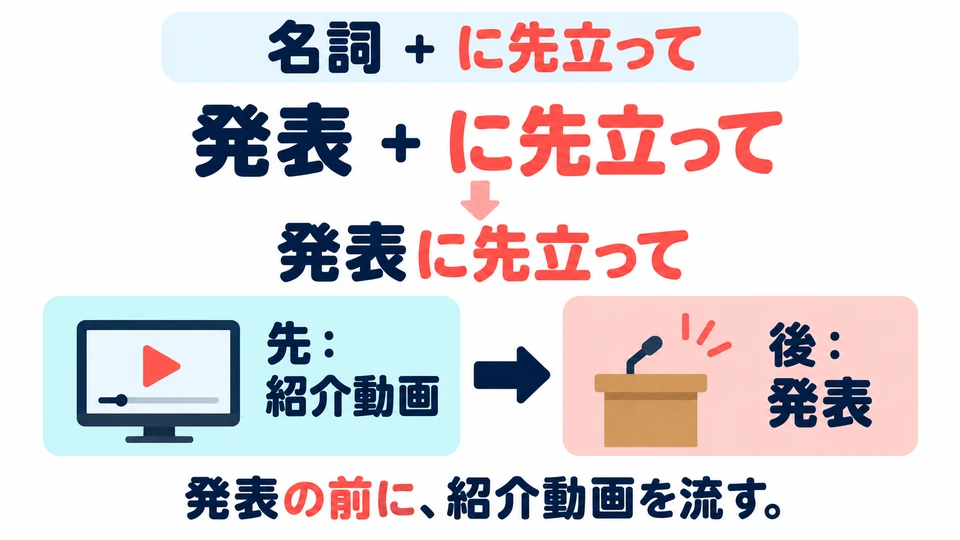
Attach it to a noun naming an event, as in 「発表に先立って」. It refers to activities done before the announcement.
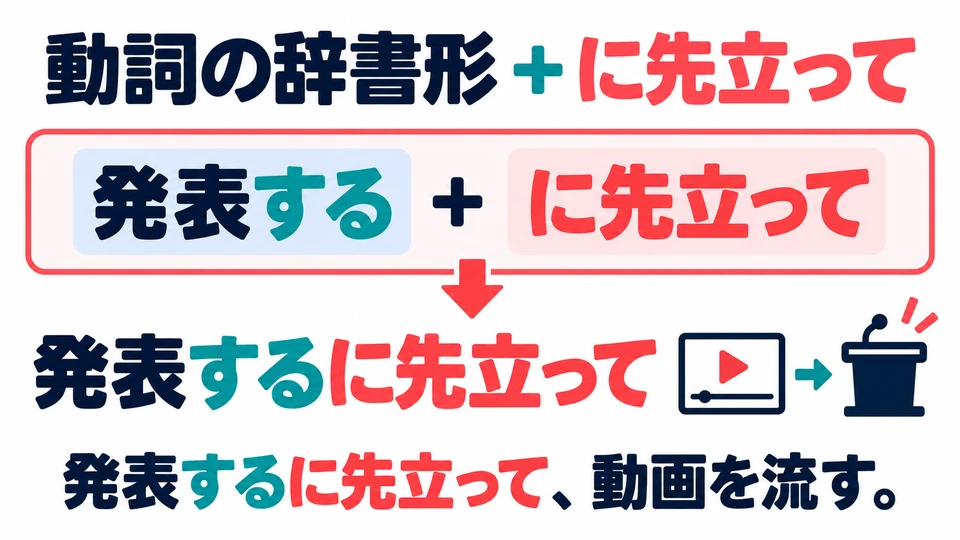
It can also follow a verb in its dictionary form, as in 「発表するに先立って」, meaning before doing that action.
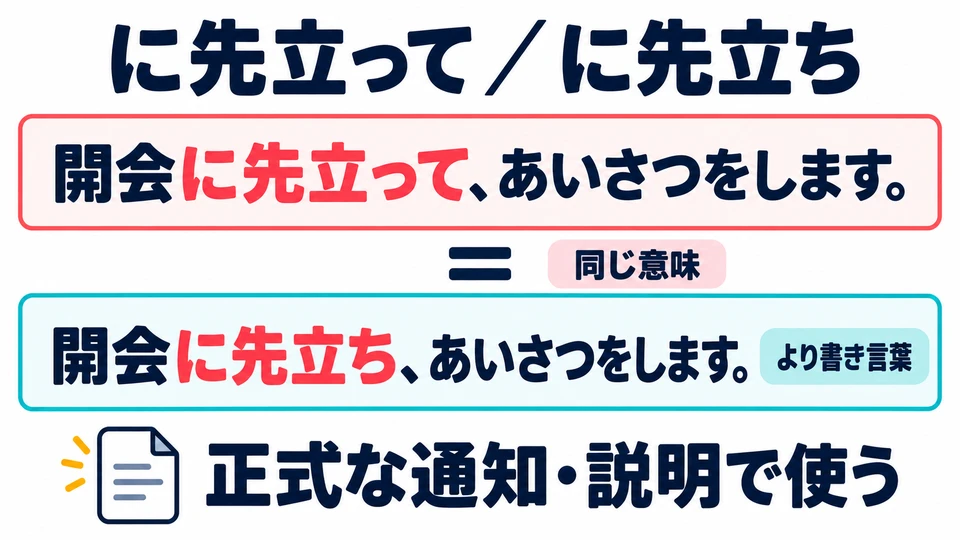
「に先立ち」 has the same meaning but sounds more like written language. Both forms often appear in formal notices and explanations.
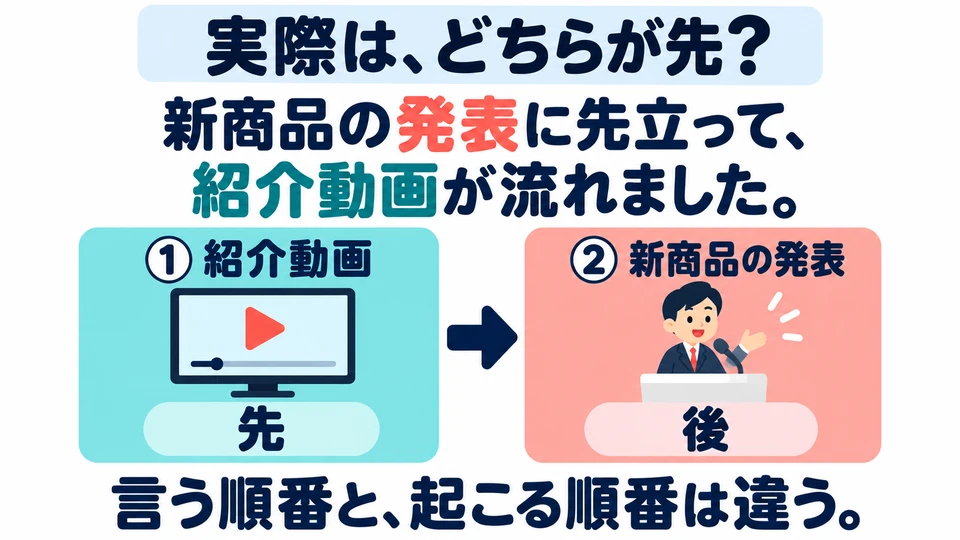
The examples mention the announcement or livestream first, but playing the video or introducing the highlights happens first. Word order is not the order of events.
Example sentences
- 新商品shinshouhinのno発表happyouにni先立っsakidattて、te、短いmijikai紹介shoukai動画dougaがga流れました。
In a conversation

Check yourself
Level 1 · Recognise
Which sentence is correct?
Level 1 · Recognise
Listen and choose the meaning
Level 2 · Build
Put the words in order
Ahead of the new product announcement, a short introductory video was shown.
Level 3 · Use
What goes in the blank?
新商品の発表____、短い紹介動画が流れました。
Before the new product announcement, a short introduction video was shown.
More grammar in this theme
- 〜に先立って・〜に先立ちbefore; prior to an event